
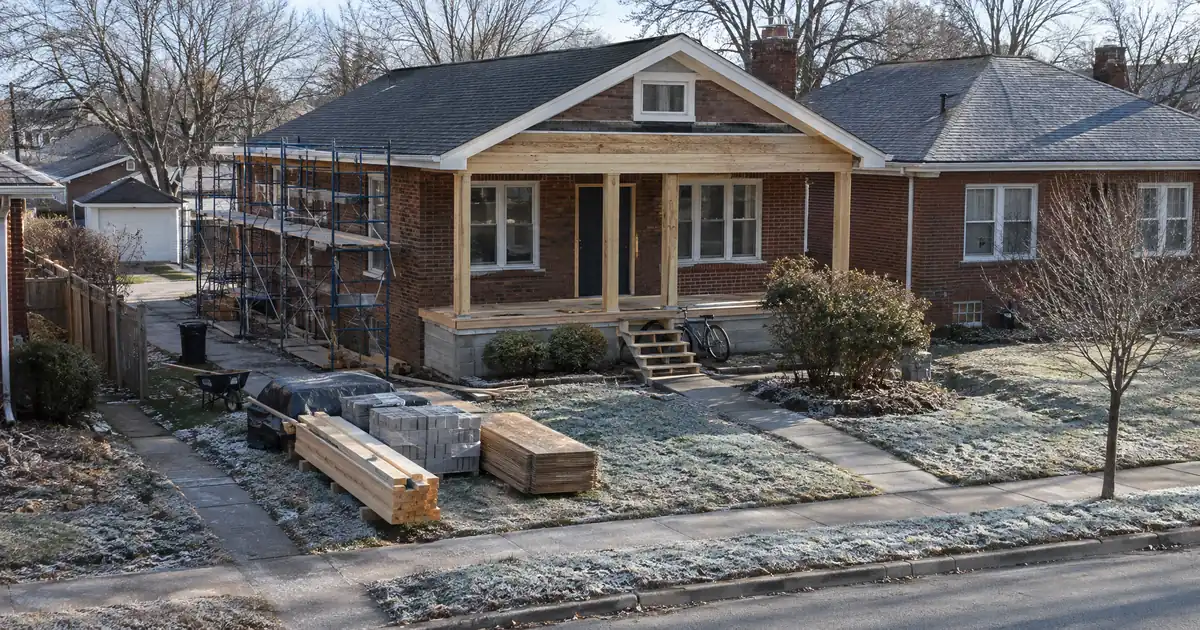
The Quick Read: On a hard money flip loan, the minimum down payment is not a flat percentage; it is whatever cash remains after the lender funds the lesser of a percentage of total project cost or 75% of after-repair value, so you size it by running both tests, then add closing costs, reserves, and draw float on top.
- The cost-based loan typically runs 85%, 90%, or 93% of project cost, depending on how many projects you have completed.
- Every tier is capped at 75% of after-repair value, and that cap often decides the real number on tight deals.
- Up to 100% of the documented rehab budget funds in draws, but there is no true 100% purchase program.
- Cash to close is larger than the down payment, so budget for fees, reserves, and money to front the work.
All of this varies by lender, property, and experience, and nothing here is a commitment to lend.
What this loan actually costs to carry.
Hard money is sized against the project and priced by time. Enter the deal and see how much the program will lend, the cash required at closing, the carry while you hold it, and what is left at the exit.
Leverage tiers on the current program: 85% with fewer than 2, 90% with 2 or more, 93% with 5 or more completed projects — every tier capped at 75% of after-repair value. Loan amounts up to $5,000,000, larger by exception; terms of 6 to 18 months, interest-only, no prepayment penalty. The rehab portion funds in draws against completed work, not at closing.
Program parameters shown update from Lendmire’s centralized guideline source. Rate, points, and months are editable assumptions, not quoted terms.
Cost cap sets the loan · positive spread
Illustrative estimate only — not a quote, Loan Estimate, approval, or commitment to lend. Rate, points, and months are editable assumptions. Hard money is business-purpose financing for real estate investors, not a consumer mortgage. Leverage on the current program tops out at 93% of project cost for investors with a documented track record, capped at 75% of after-repair value, with rehab funding up to 100% of the documented budget released in draws; actual terms vary by lender, borrower experience, property, and exit. Lendmire is a mortgage broker, not a lender.
Key Terms Defined
Loan-to-cost (LTC): The loan divided by purchase price plus rehab budget. Hard money flip tiers are quoted this way.
After-repair value (ARV): What the property should be worth once the renovation is finished. Lenders cap the loan against it.
Loan-to-value (LTV): The loan divided by the property’s value.
Draw: A release of rehab money after a stretch of work is finished and checked.
Float: The cash you carry while waiting for a draw to reimburse completed work.
Reserves: Liquid funds the lender wants you to hold after closing, beyond what you put down.
How the Minimum Is Calculated
The minimum is a leftover. The lender sizes the loan two ways, funds the smaller result, and the gap between that loan and the total cost is your cash.
Here is the sequence across the wholesale network of lenders Lendmire works with:
1. Total up project cost. That is the purchase price plus the documented rehab budget. You need a written scope of work and a budget a lender can follow.
2. Apply your experience tier. The loan is a percentage of that cost: typically 93% at 5 or more completed projects, 90% at 2 or more, and 85% with fewer than 2.
3. Test the ARV cap. Multiply your ARV by 75%. If the cost-based loan is bigger than that number, the cap wins and your cash goes up.
4. Separate the rehab money. Up to 100% of the rehab budget funds in draws against completed work. That is a rehab-budget figure, not a purchase LTV.
5. Add everything else. Closing costs, fees, reserves, and float all sit outside the down payment.
A common mix-up is reading 93% as a 93% LTV. It is loan-to-cost. Ask any lender which basis a quote uses, because the two can differ by a wide margin. Terms depend on the lender’s guidelines, the property type, the leverage, and a full review of the credit profile.
Worked Example: Where the Tier Helps and Where It Stops
These are modeled assumptions, expressed as percentages of ARV so the math stays portable.
Say all-in cost is 70% of ARV. A first-timer at 85% of cost borrows about 59.5% of ARV and brings about 10.5% of ARV in cash. A borrower with 5 or more projects at 93% borrows about 65.1% of ARV and brings about 4.9%. Both numbers come before closing costs and reserves.
Now squeeze the margin. If all-in cost is 90% of ARV, a 93% tier would imply a loan near 83.7% of ARV. The 75% cap overrides it, so the borrower covers the difference.
The tier stops helping once the cost-based loan would exceed 75% of ARV. The higher the tier, the sooner that happens. Below that point, experience lowers your cash. Above it, the cap sets the loan for everyone.
| Deal shape | What sets the loan | Effect on your cash |
|---|---|---|
| Cost well under ARV | Cost tier | Experience lowers it |
| Cost closer to the cap | Cost tier or cap, by tier | Tier matters less |
| Cost near ARV | 75% ARV cap | Same for every tier |
This is why two flips with the same purchase price can need very different cash. The rehab size and the ARV drive the answer.
What Cash to Close Really Includes
The down payment is one line of a longer bill. A first flip often stalls because the investor budgeted only that one line.
| Line item | What it covers |
|---|---|
| Down payment | Project cost not covered by the loan |
| Closing costs and fees | Third-party and lender charges |
| Reserves | Liquid funds held after closing |
| Draw float | Cash to front work before reimbursement |
| Contingency | Overruns and carrying costs |
Draws release against completed work. That means you fund the first stretch of renovation yourself and get reimbursed. Skip the float line and your contractor may stop mid-project.
Where the Cash Can Come From
Lenders care about two things: whether you have the money and whether it is really yours. The common sources look like this.
| Source | Documentation | How lenders tend to view it |
|---|---|---|
| Savings or brokerage cash | Recent statements | Strongest |
| Sale of another asset | Closing statement, deposit trail | Strong |
| Equity partner’s cash | Operating agreement, disclosure | Acceptable if disclosed |
| Gift | Letter and transfer records | Uncommon on business-purpose loans |
| Borrowed funds | Loan terms, disclosure | Often disliked, varies by lender |
Most hard money lenders want your own money at risk. Borrowed cash is not automatically disqualifying at every lender, but it must be disclosed. Hiding it is the quickest way to lose a file.
Some lenders may accept equity in another free-and-clear property as extra collateral instead of cash. Treat that as a lender-by-lender exception, not something to plan around.
How to Document the Funds
Underwriters trace your cash back to where it came from. Keep it simple and visible.
- Pull recent statements for every account holding your down payment.
- Keep funds in place instead of moving them between accounts right before closing.
- Write a short explanation for any large deposit, with a paper trail behind it.
- Put any partner’s money in writing and disclose the arrangement.
Conventional mortgages set a useful benchmark here. Those rules do not govern a hard money flip loan. They show the level of paper trail that cash from someone else usually has to survive.
Timeline: What to Do and When
Work backward from your contract’s due-diligence and closing dates.
1. Before you make an offer: build the budget, estimate ARV, and run the cost-tier and 75% cap math.
2. Before you sign the contract: confirm your liquid funds cover the down payment, fees, reserves, and float.
3. At contract: send the scope of work, budget, and ARV support to the lender, and note your earnest money exposure.
4. During due diligence: collect statements and explanations, and disclose any partner funds.
5. Before closing: confirm the final cash figure, keep your accounts steady, and move funds only as the lender instructs.
6. After closing: track draws against the budget so reimbursement does not lag behind your contractor.
Where the General Rule Breaks
The tier math holds for most flips. These cases bend it.
- A bigger rehab budget. If purchase plus rehab pushes past the 75% ARV cap, required cash rises, even with a top tier.
- Thin-margin deals. Once all-in cost nears the cap, experience stops reducing your cash.
- No-rehab bridge purchases. These use a different structure: up to 80% of purchase price, not cost-based tiers.
- Refinances. A cash-out or rate-and-term refinance on a hard money loan runs up to 65% of value.
- Credit. A 620 minimum score applies, with additional conditions below 660. First-time investors qualify at the lower leverage tiers.
- Condos. Condo flips bring their own down payment questions; Lendmire’s piece Can You Use Hard Money for a Condo Flip Down Payment? covers them.
Ways to Lower the Cash You Need
Four levers move the number before you apply.
1. Negotiate the purchase price. A lower price cuts both project cost and the gap above the cap.
2. Trim or phase the scope. A smaller rehab budget reduces cost and the draw float you must carry.
3. Move up a tier. Completing documented projects can unlock a better cost tier over time. A partner with a track record may help, subject to lender review.
4. Pressure-test your ARV. An inflated ARV makes the cap look friendlier than an appraiser will confirm.
The honest tradeoff: the strongest-looking deal on paper is often the one with the thinnest margin. A low down payment on a 90%-of-ARV project is not a bargain. The cap would have you covering the gap anyway, and you have no room for overruns.
Mistakes That Sink a File
- Budgeting the down payment but not fees, reserves, or float.
- Quoting a tier percentage as if it were a purchase LTV.
- Moving large sums right before closing with no explanation.
- Counting on an undisclosed partner or borrowed money.
- Assuming a 100% rehab draw means 100% financing.
- Using a rosy ARV that the cap quietly overrides.
Tax treatment varies; consult a qualified professional.
What Comes After the Flip
If you plan to hold rather than sell, the flip loan is a short runway. Many investors refinance into long-term DSCR financing once the property is stabilized, and that step is a separate underwriting event with its own leverage and coverage tests. Lendmire’s complete DSCR loans guide walks through how that works.
For deeper background on the mechanics discussed here, see Corporate Finance Institute: Loan to Value Ratio.
Frequently Asked Questions
Is there a flat minimum down payment on a hard money flip loan?
No. The loan is the lesser of a cost-based percentage and 75% of after-repair value, and your cash is what remains. Typical tiers fund 85%, 90%, or 93% of project cost by experience, but terms vary by lender, property, and experience.
Can I get a flip loan with no money down?
There is no true 100% purchase program. Up to 100% of the documented rehab budget can fund in draws, which is different from financing the purchase. Zero-down structures generally depend on other equity as collateral, which varies by lender.
Does my experience change how much I bring?
Yes, up to a point. More completed projects move you to a higher cost tier and lower your cash, as long as the deal sits below the 75% ARV cap. On tight deals the cap sets the loan regardless of experience.
Can a partner’s money count toward my down payment?
Often yes, if it is disclosed and documented. Lenders want to know who put cash in and under what agreement. Undisclosed third-party funds are a common reason files stall.
What if I come up short near closing?
Review the budget first: price, scope, and ARV. Options include renegotiating, trimming the rehab, bringing in a disclosed partner, or moving the deal to another lender in the network. Second-position gap funding is often unavailable and costly.
Next Step
If you are buying, rehabbing or refinancing an investment property on a short timeline and want to see how the numbers work, Lendmire can help you compare hard money options based on the project, the exit plan, leverage, and your goals. Call 828-256-2183 or request a quote through the site.
About Lendmire
Lendmire (NMLS# 2371349) is a mortgage brokerage focused on DSCR investor financing, helping arrange programs through wholesale and investor-lending channels in 41 markets, including Washington, D.C. DSCR loans are evaluated by the lender on property cash flow rather than personal income, subject to lender guidelines, supporting LLC closings and accommodating investors with four or more financed properties. Scotsman Guide Top Mortgage Workplace in both 2025 and 2026.
Many investors treat hard money as the acquisition tool and plan the exit up front – see the hard money loan overview.
Get Started
Ready to find the right loan for you?
In about 30 seconds you can review financing options available for your investment property. No commitment required.
Informational only. Not a Loan Estimate, approval, or commitment to lend. Program availability and eligibility are subject to lender guidelines, credit approval, property review, and underwriting.
References
1. Corporate Finance Institute: Loan to Value Ratio
This article is part of Lendmire’s hard money loan program — full qualification details, guidelines, and scenarios live on the program page.
Related reading: Hard Money Maximum Loan Amount Requirements for a Flip · How a Hard Money Lender Counts a Seller-Financed Down Payment · How a Hard Money Lender Counts Equity as a Flip Down Payment
Brandon Miller
Founder & CEO, Mortgage Loan Originator, Lendmire LLC
- Mortgage Loan Originator · NMLS# 1129696 · Verify on NMLS Consumer Access
- North Carolina Real Estate Broker · License# 343312 · Verify on NCREC
- North Carolina Insurance Producer · License# 19053198 · Property, Casualty, Life, Health · Verify on NAIC SBS
- Lendmire LLC · Firm NMLS# 2371349 · Verify firm licensure
Compliance and disclosures. Lendmire (NMLS# 2371349) is a licensed mortgage broker and is not a direct lender, depository institution, financial advisor, or tax professional. Content in this article is general market analysis and educational information — not financial, legal, or tax advice for any specific situation. Lendmire does not guarantee loan approval; every transaction is subject to underwriting by the funding lender. Mortgage pricing and loan program guidelines are subject to change at any time without notice and vary by borrower characteristics, property type, and state regulations. Lendmire complies with Equal Housing Opportunity. Licensure verification: NMLS Consumer Access.