
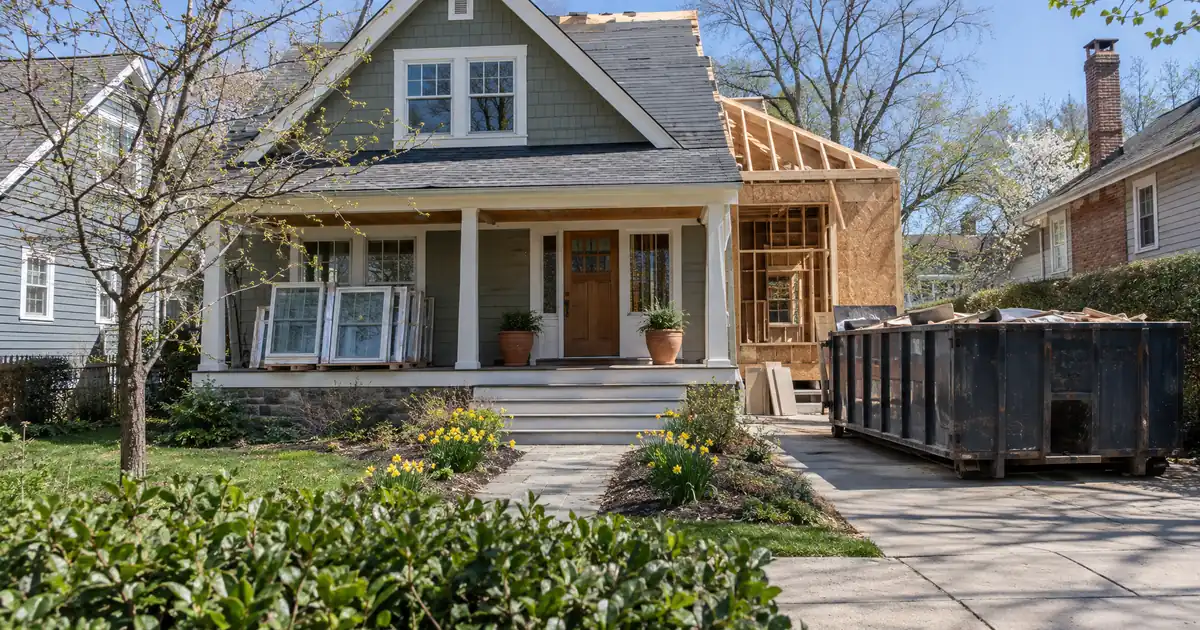
The Quick Read: Your margin is the distance between your planned after-repair value and the lowest appraisal at which the loan still funds at full cost-based leverage, and you find it by dividing the loan sized on project cost by the 75% after-repair-value cap that sits on each leverage tier. Below that line, every dollar of missed value removes 75 cents of loan. You cover the difference in cash, up front. Figures vary by lender, property, and experience, and nothing here is a commitment to lend.
- Margin is a break-even appraisal, not a gut feeling. The formula is below.
- The most experienced borrowers, at the highest cost-based leverage, carry the thinnest appraisal cushion.
- An appraisal below cost and an appraisal below your projected value hit different caps and create different cash needs.
- A short appraisal at entry can repeat at exit, so the margin has to survive both.
Key Terms Defined
As-is value is what the property is worth in its current condition, before any work. After-repair value (ARV) is the appraiser’s opinion of value once the planned work is finished, based on renovated comparable sales. Project cost is the purchase price plus the approved rehab budget. Loan-to-cost is the loan divided by project cost. Draws are installments of the rehab budget released as work is completed. Break-even appraisal is the lowest ARV at which your loan does not shrink.
What this loan actually costs to carry.
Hard money is sized against the project and priced by time. Enter the deal and see how much the program will lend, the cash required at closing, the carry while you hold it, and what is left at the exit.
Leverage tiers on the current program: 85% with fewer than 2, 90% with 2 or more, 93% with 5 or more completed projects — every tier capped at 75% of after-repair value. Loan amounts up to $5,000,000, larger by exception; terms of 6 to 18 months, interest-only, no prepayment penalty. The rehab portion funds in draws against completed work, not at closing.
Program parameters shown update from Lendmire’s centralized guideline source. Rate, points, and months are editable assumptions, not quoted terms.
Cost cap sets the loan · positive spread
Illustrative estimate only — not a quote, Loan Estimate, approval, or commitment to lend. Rate, points, and months are editable assumptions. Hard money is business-purpose financing for real estate investors, not a consumer mortgage. Leverage on the current program tops out at 93% of project cost for investors with a documented track record, capped at 75% of after-repair value, with rehab funding up to 100% of the documented budget released in draws; actual terms vary by lender, borrower experience, property, and exit. Lendmire is a mortgage broker, not a lender.
What Does an Under-Cost Appraisal Actually Mean?
The phrase covers two different problems, and they need different fixes.
The first is an as-is value that lands below your purchase price. The lender sizes the loan on the lesser number, so you bring cash for the gap or renegotiate the price. This is the classic low appraisal.
The second is an ARV below your projection. Here the purchase may be fine, but your total project cost now sits closer to the lender’s value cap, or above it. The loan shrinks, or you fund the difference.
These are separate valuation questions. As Authority Appraisals explains, appraisers use a subject-to basis when the value assumes specified repairs are finished. As-is and as-repaired answer different questions, and one report can carry both.
Your own ARV is a planning input. The appraiser’s number is the one the lender uses. When the two disagree, the gap is your problem to solve.
How Does the Lender Size the Loan?
The lender runs two tests and takes the lower result.
Test one is loan-to-cost. Across most programs in the wholesale network we place files with, fix-and-flip leverage is tiered by documented completed projects. It runs about 93% of project cost at five or more completed projects, about 90% at two or more, and about 85% with fewer than two. First-time investors qualify at the lower tiers.
Test two is the value cap. Every one of those tiers is capped at roughly 75% of after-repair value. Up to 100% of the rehab budget funds in draws against completed work, which is a rehab-budget figure and not a purchase leverage figure.
Whichever test produces the smaller loan governs. If the cost test binds, a modest appraisal miss changes nothing. If the value cap already binds, every dollar of missed ARV cuts the loan by 75 cents.
Lenders that finance renovation use the same vocabulary the banking agencies use. The Interagency Appraisal and Evaluation Guidelines describe requesting an as-is value and, as applicable, a prospective value on completion. The Federal Register copy defines as-is value as value in the property’s current condition, and as-completed value as a prospective value at expected completion. Those guidelines govern federally regulated banks and credit unions, so treat them as shared vocabulary rather than a rule that binds a private lender.
The file the underwriter reviews usually includes:
- The purchase contract.
- The contractor’s scope of work with line-item costs.
- The ARV appraisal, which may carry an as-is value.
- The renovated comparable sales.
- The draw schedule.
The shortfall lands at closing, before any rehab draw is released. That timing is why a low appraisal feels like a cash emergency and not a slow leak.
What Is the Margin Formula?
The margin is a break-even calculation. Start with the loan the cost test allows, then ask what ARV the 75% cap needs to support that loan.
Break-even appraised ARV equals the loan-to-cost percentage times project cost, divided by 0.75.
Miss tolerance equals one minus the break-even ARV divided by your planned ARV.
Any appraisal above break-even leaves your cost-based loan intact. Any appraisal below it shrinks the loan by 0.75 for every point of missed value, and the cash in the deal rises by the same amount.
To keep this free of dollar amounts, the examples below use index numbers. Planned ARV is 100, and every other figure is a share of it. These are modeled assumptions, not market data.
What Does the Math Look Like at Three Appraisals?
Say project cost is 80 against a planned ARV of 100, and you sit in the 90% loan-to-cost tier. The cost test allows a loan of 72. The value cap allows 75 at an appraisal of 100. The lower figure, 72, governs.
Break-even is 72 divided by 0.75, or 96. You can miss by 4% before anything changes.
| Appraised ARV | Loan (cap or cost) | Your cash in the deal |
|---|---|---|
| 100 (at plan) | 72 | 8 |
| 96 (break-even) | 72 | 8 |
| 90 | 67.5 | 12.5 |
| 85 | 63.75 | 16.25 |
Look at the 90 row. A 10% miss in value raised your cash from 8 to 12.5, a jump of more than half. Thin margins make small misses expensive.
How Thin Is Too Thin?
Thin depends on two things: how much of the ARV your project cost consumes, and which leverage tier you use. This table shows miss tolerance as a share of planned ARV, using the typical tiers above.
| Project cost as % of planned ARV | 85% tier | 90% tier | 93% tier |
|---|---|---|---|
| 70% | 20.7% | 16.0% | 13.2% |
| 75% | 15.0% | 10.0% | 7.0% |
| 80% | 9.3% | 4.0% | 0.8% |
Two patterns stand out.
First, the highest tier gives the least cushion. A borrower at 93% of project cost with costs at 80% of ARV has almost no room. The top tier is reserved for experienced investors, and it works best on deals where cost sits well under the cap.
Second, costs near 85% of ARV break the model before an appraisal arrives. At the 90% tier, that cost level produces a cost-based loan above the 75% cap even if the appraisal hits your number exactly. You are writing a larger check at the start.
A rough read: tolerance above 10% is comfortable, between 5% and 10% is thin, and under 5% is a deal that needs a cash reserve or a better price. That is a practitioner’s screen, not a lender rule. Thin deals can still work. They need cash on hand and a price that can move.
What Happens When an Appraisal Miss Meets an Overrun?
Appraisal risk rarely arrives alone. Rehab overruns are usually funded from your pocket, and a longer timeline adds interest on an interest-only loan. Stack them on the same deal (cost 80, 90% tier, planned ARV 100):
| Scenario | Cash in the deal |
|---|---|
| Plan holds | 8 |
| Appraisal at 90 | 12.5 |
| Overrun of 5, appraisal at plan | 13 |
| Appraisal at 90 plus overrun of 5 | 17.5 |
| Any of the above plus a delay | Higher, by the extra carry |
The combined case needs more than double the planned cash. An overrun hurts differently from a value miss. It adds to cost without adding to value, so it pushes your break-even upward while also draining your cash.
Test your deal against the combined row, not each risk alone. If that row breaks you, the margin is too thin for the cash you hold.
What Must the Margin Pay For?
Break-even tells you when the loan shrinks. It does not tell you whether the deal still makes money. The gap between value and cost has to cover several things:
- Interest and carry while the work runs.
- Closing costs at purchase.
- Selling costs at resale, or refinance costs at exit.
- Your target profit.
A deal that clears break-even with room to spare can still fail on profit if carry and selling costs eat the spread. Treat the break-even number as a loan-sizing screen and run the profit math separately. Tax treatment varies; consult a qualified professional.
What Are Your Options When the Appraisal Comes In Low?
A low appraisal rarely ends the deal. It changes the loan sizing, and the question becomes whether you can fund the gap and still hit your returns. Which remedy fits depends on the size of the gap and which kind of miss it is.
| Situation | Best first move |
|---|---|
| Miss inside your tolerance | Proceed; loan is unchanged |
| Missed comps, report errors | Request a reconsideration |
| As-is value below price | Renegotiate the price |
| ARV short, scope heavy | Trim scope or finish level |
| Large miss, thin cash | Walk away |
The lender ordered the appraisal, so a new one or a review is usually the lender’s call. A reconsideration request goes through the lender and works best with evidence the appraiser missed. Read the report first for:
- Closed sales in the same area that are more comparable than the ones used.
- Renovation features the report left out.
- An as-is value applied where the report should have used a subject-to-completion value.
- Stale comps from a market that has since moved.
If the new value holds, your remaining moves are more cash, a lower price, or a smaller project.
Where Does the General Rule Break?
Wholesale chains. When the buyer uses hard money, the lender funds only on appraised value. As Dealrun’s wholesaling education notes, the buyer covers the difference or renegotiates. Check that your assignment fee and contract price survive a lower number.
Mid-renovation appraisals. A half-finished house can appraise as-is far below its finished worth, because unusable kitchens and baths depress value. If your lender orders an as-is value mid-project, expect a number that looks worse than the finished product will.
Unusual properties. Conversions, unit additions, and odd layouts have few clean comps. That makes ARV less reliable and widens the gap between your number and the appraiser’s. Add margin on these.
Over-improving. A renovation can cost more than the value it adds. Cap the finish level at what renovated comps support. An improvement may support a higher appraised value, depending on comps and underwriter review, but never assume it will.
Collateral limits. Hard money here covers non-owner-occupied residential property of one to four units. Terms typically run 6 to 18 months, interest-only, with no prepayment penalty. A 620 credit score is the typical minimum, with added conditions below 660. All of it varies by lender, property, and experience.
How Do You Build the Margin at the Offer?
The margin is set when you make the offer, not when the appraisal arrives. Before you commit, run this go or no-go check:
1. Re-price your ARV using only closed, renovated sales close to the property and close in size.
2. Drop that ARV by 5% to 10% and recompute break-even for your leverage tier.
3. Add a rehab overrun to project cost and recompute cash in the deal.
4. Confirm you hold enough cash for the combined stress case.
5. Check that the scope matches what renovated comps actually show.
6. Confirm the seller or contract has room to move on price.
Then check the exit. Many investors refinance out of hard money into long-term rental financing once the property is stabilized, and Lendmire brokers that path. The next lender sizes its loan on its own appraisal, so a short ARV can hurt twice: the bridge shrinks, and the exit loan may not retire it. Select programs in the network start at 1.00 rent coverage, and cash-out on a standard rental tops out around 75% LTV, with about 6 months of seasoning the common expectation. Rent coverage compares rent to the full monthly obligation only, so clearing it is not the same as positive cash flow. The exact numbers vary by lender and program and follow a full review of property, leverage, and credit.
For the exit side in detail, see Lendmire’s piece Can a Rehabber Exit Hard Money With an Appraisal Under All-In Cost?. For the margin needed to hand a finished project to a rental lender, read how much margin a BRRRR rehab needs to exit hard money. The complete DSCR loans guide covers the long-term side.
Underwriting stays asset-based, meaning it looks at the property, the plan, and the exit. A stronger file carries both enough equity and a plan that survives a lower value. This is where a broker who sees many lenders’ guidelines can help, because caps and tiers differ from one lender to the next, so the same project can carry a different margin at each.
Frequently Asked Questions
Does a low appraisal kill the deal?
Rarely. The lender lends its agreed ratio against the appraised value, so a lower value means a smaller loan. The deal survives if you can fund the gap and still reach your target return. If the extra cash breaks the numbers, renegotiate the price or trim the scope before you walk.
Who pays for the appraisal?
Typically the borrower pays the valuation fee, though this varies by lender. A reconsideration or second appraisal may carry its own fee and usually runs through the lender. Ask for the fee policy before you order anything.
How much cash will I need if the appraisal misses?
Multiply the missed value by 0.75 and add it to your planned cash, but only for the portion below your break-even appraisal. A miss that stays above break-even costs you nothing extra. A miss below it adds 75 cents of cash for each dollar of lost value.
Does experience change how much cushion I get?
Yes, in a counterintuitive way. Experience unlocks higher cost-based leverage, but the 75% value cap stays fixed. A higher tier with the same cost leaves a thinner appraisal cushion, so experienced borrowers need cleaner comps and a lower cost-to-ARV ratio. Exact terms depend on lender and investor guidelines, credit profile, reserves, and property review.
What if my rehab overruns as well?
Overruns usually come out of your own cash, and they raise your break-even at the same time. Stress your deal with an overrun and an appraisal miss together. Keep a cash reserve sized to that combined case.
What to Do Next
If you are buying, rehabbing or refinancing an investment property on a short timeline and want to see how the numbers work, Lendmire can help you compare hard money options based on the project, the exit plan, leverage, and your goals. As a broker, it arranges financing through select lenders in its wholesale network across 41 markets, including Washington, D.C. Terms depend on lender guidelines, property review, and credit approval.
The next time you price an offer, compute the break-even before you compute the profit, because the appraisal only has to miss once for that number to decide the deal.
For current guidelines and terms, see Lendmire’s DSCR loan programs page.
About Lendmire
Lendmire — NMLS# 2371349 — is a DSCR and non-QM mortgage brokerage with investor loan programs in 41 markets, including Washington, D.C. DSCR eligibility is commonly reviewed by the lender around property-level rent rather than personal income documentation, subject to lender guidelines, and the brokerage helps arrange financing for LLC-owned portfolios beyond conventional financed-property limits. Recognized by Scotsman Guide as a Top Mortgage Workplace in 2025 and 2026.
Get Started
Ready to find the right loan for you?
In about 30 seconds you can review financing options available for your investment property. No commitment required.
Informational only. Not a Loan Estimate, approval, or commitment to lend. Program availability and eligibility are subject to lender guidelines, credit approval, property review, and underwriting.
References
1. As-Is vs. As-Repaired Appraisals: What’s the Difference
2. Interagency Appraisal and Evaluation Guidelines
3. Interagency Appraisal and Evaluation Guidelines
4. What If the Appraisal Comes in Low
This article is part of Lendmire’s hard money loan program — full qualification details, guidelines, and scenarios live on the program page.
Related reading: Can a Two-Project Rehabber Use Gap Funding With Hard Money? · Hard Money Lender Requirements for the Seller of a Flip · Does a Hard Money Lender Cap Loan to Cost on a Flip?
Brandon Miller
Founder & CEO, Mortgage Loan Originator, Lendmire LLC
- Mortgage Loan Originator · NMLS# 1129696 · Verify on NMLS Consumer Access
- North Carolina Real Estate Broker · License# 343312 · Verify on NCREC
- North Carolina Insurance Producer · License# 19053198 · Property, Casualty, Life, Health · Verify on NAIC SBS
- Lendmire LLC · Firm NMLS# 2371349 · Verify firm licensure
Important disclosures. Lendmire (NMLS# 2371349) is a licensed mortgage brokerage. Lendmire is not a direct lender, depository institution, or financial advisor. All loan inquiries are subject to lender underwriting; this article does not constitute a commitment to lend. Rates, terms, and program guidelines are subject to change without notice and vary by borrower profile, property type, and state. Information in this article is general in nature and is not financial, legal, or tax advice. Equal Housing Opportunity. NMLS Consumer Access: nmlsconsumeraccess.org.