
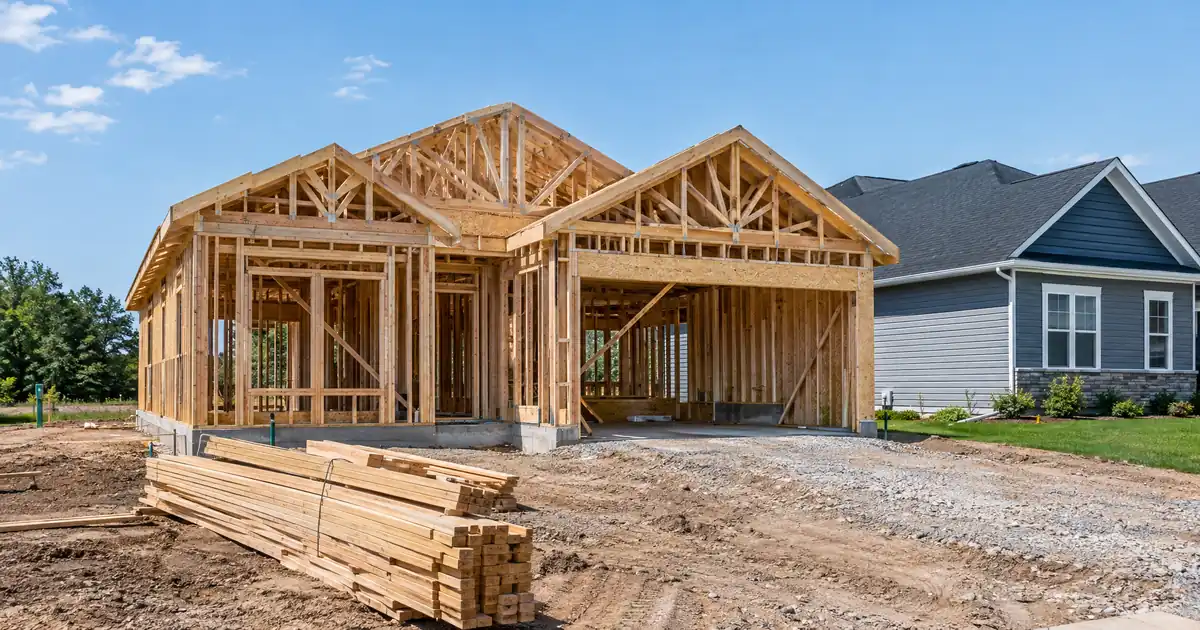
The Quick Read: As of September 28, 2026, buyers hold more leverage than they have in a decade, and the first look at your house decides whether they ever see the second. Existing-home sales slipped below a 4 million pace in August, and supply is the deepest in over ten years. Mortgage rates rose four weeks running. A buyer who is stretched on financing and has plenty of options screens homes out fast, and the curb is where the screening starts.
Key Takeaways
- NAR’s August report, released September 10, showed sales at a 3.98 million annual pace and months of supply at 4.9.
- Freddie Mac’s 30-year average rose four straight weeks, from the survey released September 3 through the one released September 24.
- Most builders are discounting, so your listing competes with new construction as well as with the house down the street.
- Presentation is one lever a seller controls, and it is a more affordable one. Price is the other one.
- Active listings are still below pre-pandemic levels, so this is a tougher market, not a collapse.
What changed this month?
Three things moved at once: sales, supply and rates.
NAR’s August existing-home sales report, published September 10, put the seasonally adjusted annual pace at 3.98 million. That is a 2.0% drop from July and the first reading under 4.0 million since June 2025. Inventory reached 1.62 million homes, up 5.9% from a year earlier. Months of supply, which is how long the current stock would last at the current sales pace, rose to 4.9 from 4.6. NAR calls that the highest in over ten years. NAR’s chief economist said the ample supply gives buyers better chances to negotiate.
Now rates. Freddie Mac’s survey put the 30-year fixed at 7.03% for the week ending September 24, up from 6.95% the week before. A year earlier the same survey read 6.30%. The path since early September was 6.71% on September 3, 6.76% on September 10, 6.95% on September 17 and 7.03% on September 24. Four straight increases. The move from the August 27 reading of 6.66% adds up to 37 basis points.
The Mortgage Bankers Association measures rates differently. Its survey for the week ending September 18 had the contract 30-year at 7.12%, the highest since May 2024. Purchase applications ran 11% below a year earlier in the MBA’s September 23 release. Those two figures are different measures of different loan pools. Treat them as two readings, not one “the rate.”
The Fed also moved. Its September 16 statement raised the target range by 25 basis points to 3.75%–4.00%, on a 12–0 vote. But the MBA’s chart of the week points to energy prices, inflation and federal debt as the drivers of Treasury yields, and the 10-year was already climbing before the Fed acted. The MBA put it near 5.2%. Don’t blame the hike alone.
What does it mean for homeowners with equity?
It means your buyer has more choices and less patience. Supply is up, and the buyer’s payment got heavier this month. That combination makes a buyer quick to say no.
Here is the pool you are fishing in. Purchase applications are 11% below a year ago. More buyers are reaching for adjustable-rate loans, which hit a 9.8% share of applications in the MBA’s latest commentary. That is what payment stress looks like. These buyers look at a lot of listings and tour few.
Now add the new-home competition. Per Inman’s September 25 report, citing the builder survey from NAHB and a large national bank, 38% of builders cut prices in September and 66% used incentives, the highest share since December. The Census Bureau’s August data put the median new-home price at $393,700, down 5.8% from a year earlier. NAR’s all-types existing median sits at $429,100. Your house may be priced against a builder who is buying down the buyer’s financing.
Don’t overread it, though. Active listings are still about 11% below pre-pandemic levels, per Realtor.com’s seasonal release. Prices nationally are up 1.6% from a year ago. Nobody is calling a glut. Buyers just have room to walk.
Why does the curb matter more now?
Because the curb is the first filter, and buyers have more filtering to do. When there are more homes to look at, the first photo and the first drive-up decide who gets a showing.
Think of a buyer with a shortlist of ten. Each house gets a few seconds online and a few more from the street. Peeling paint, a dead lawn or a dark entry gives that buyer an easy reason to cross you off. In a tight market, the buyer forgives it. In this one, the buyer has nine other choices.
There is a timing angle too. Realtor.com’s release named the week of September 27 through October 3 as the seasonal peak for listing competition, with 13.3% more active listings than the average week. That’s this week. Your listing is sharing shelf space with the most inventory of the year.
Here is my read on the psychology. A stretched buyer is hunting for reasons to feel safe. A clean, cared-for exterior says the house has been looked after. A neglected one says the buyer will be writing checks after closing, and a buyer already worried about the monthly bill hears that loudly.
My take
I think curb appeal has become a pricing tool, not a decoration.
Here is the logic. In a strong seller’s market, a rough exterior costs you little because buyers overlook it. In this market, it costs you either showings or price. A modest fix can protect the list price. Skipping it invites a price cut later, and price cuts announce weakness.
I also think sellers are underrating how much of this is about trust. The buyer cannot see your furnace or your roof from the street. What they can see is whether you’ve bothered. Presentation stands in for everything they can’t inspect yet.
Honest counterpoint: curb work is not magic. If the price is wrong for the local competition, fresh mulch will not fix it. Spend a little, price to the market you have and don’t expect the front door to carry the whole sale. It’s a genuine toss-up on some houses whether a small price adjustment does more than a larger exterior project. Compare both before you commit money.
What I’d do now
Start with what the buyer sees first, and do it in this order.
1. Look at your listing the way a buyer does. Pull up the first photo. Then look at the homes listed near you. What do they have that you lack?
2. Clean before you build. Pressure-wash the walks, siding and driveway. Clear leaves and dead plants. Trim anything touching the house. Fall debris makes a house look tired fast.
3. Fix the entry. Paint or refinish the front door, replace tired hardware and make the house number easy to read. It’s the focal point of the photo and the first thing a buyer touches.
4. Light it. Days are getting shorter, and many showings will now happen near dusk. Working porch and walkway lights make the house look safe and warm.
5. Keep it simple. Neat beds and healthy greenery beat a big landscaping job. Buyers want a place that looks easy to maintain.
Two more points. First, skip projects you can’t finish well before showings begin. A half-done project looks worse than none. Second, talk to your listing agent about how your price compares with the homes you are competing against. I’m a mortgage broker, not a real estate agent, and that call belongs to them.
If you plan to tap equity to fund the prep work, or to buy your next place, the mortgage side matters. Buyers are more sensitive to financing costs than they were a month ago, and so are you when you buy. Look at the loan options available for your situation. Eligibility depends on lender guidelines, and the loan options page carries the current details.
One mechanic worth knowing if you’re buying again: a rate lock is an agreement that holds a quoted rate for a set period while your loan is processed. When rates have risen four weeks in a row, floating leaves you exposed to another jump. If the deal works at the quoted terms, lock it. Also remember that quotes gathered on different days are not comparable, because the market moves between them.
If you’re weighing a purchase or a refinance this fall, Lendmire can walk you through how the current programs fit your file.
Is this a buyer’s market or not?
Partly. The data is mixed, and anyone who tells you otherwise is selling a narrative.
The bearish evidence is real: sales fell to a 3.98 million pace, supply hit its highest in over a decade, refinance activity was the slowest since February 2025 and builders are cutting prices. HousingWire reported that the new-home discounts are producing deals but not a broader demand recovery.
The steadier evidence is real too. NAR says sales are still up 1.6% year to date. Freddie Mac’s chief economist said the market remains supported by a solid labor market. Census reported new-home sales up 6.4% in August, but that gain sits inside a wide margin of error, so I wouldn’t lean on it.
My conclusion: buyers have leverage, but not overwhelming leverage. Well-presented, correctly priced homes will still sell. The ones that stumble are the ones that ask for a premium and show a tired face.
What might change from here?
Rates are the big variable, and nobody knows the path. The MBA forecasts rates near 6.8% in coming quarters, but that’s a forecast, and this month’s data ran the other way. The 10-year Treasury was reported at 5.234% on September 28, up more than 5 basis points, per CNBC.
Whether the Fed hikes again is an open question. I won’t hand you odds from secondary sources. Watch the next Freddie Mac release and the next NAR report. If sales slip further while supply keeps building, sellers will need sharper pricing as well as better presentation. If rates ease, buyers return and the pressure lifts.
Either way, the exterior work is cheap insurance. Do it once, do it early and don’t let a quiet September become a quiet winter.
For the end-to-end picture of how DSCR loans work — qualification, structures, and the full process — see Lendmire’s complete DSCR loans guide.
Frequently Asked Questions
Does curb appeal still matter when the market is this slow?
Yes, and more than it did a year ago. With supply at 4.9 months per NAR’s September 10 report, buyers compare more homes and reject more of them. The exterior is the first thing they judge. It won’t rescue a wrong price, but it helps keep showings coming.
Should I cut my price or spend on the exterior first?
Do the low-cost cleanup first, then check your price against nearby competing listings. Cleaning and a fresh entry cost little compared with a price cut. If showings stay thin after that, price is the next lever. Your listing agent can read the local comparison better than any national report.
How do rising mortgage rates affect my sale?
They shrink the pool of buyers who can stretch to your price. Freddie Mac’s 30-year average rose from 6.71% on September 3 to 7.03% on September 24. Each step makes payments heavier for buyers, which is why they screen out homes that look like extra work.
Is this the worst time of year to list?
Not the worst, but a crowded one. Realtor.com’s release named September 27 through October 3 as the week with the most listing competition. That means more homes for buyers to compare, so presentation counts. Fewer buyers shop as winter nears, which is another reason to finish exterior work early.
Can I use my home equity to prepare the house or buy my next one?
Possibly. Options depend on your file, your property and lender guidelines. Our loan options page is the place for current details, and we can compare programs with you.
Investors who want the broader program framework can review how DSCR loans work.
About Lendmire
Lendmire — NMLS# 2371349 — is a mortgage brokerage whose founder writes this column. DSCR investor programs reach 41 markets, including Washington, D.C.; consumer programs such as bank statement, HELOC and down payment assistance loans are arranged in 16 states; every loan is placed with, and underwritten by, a wholesale lender under that lender’s guidelines. Scotsman Guide named Lendmire a Top Mortgage Workplace in both 2025 and 2026.
Get Started
Ready to find the right loan for you?
In about 30 seconds you can review financing options available for your home or investment property. No commitment required.
Informational only. Not a Loan Estimate, approval, or commitment to lend. Program availability and eligibility are subject to lender guidelines, credit approval, property review, and underwriting.
References
1. NAR: August existing-home sales report
2. Freddie Mac Primary Mortgage Market Survey
4. MBA Weekly Applications Survey
5. Federal Reserve FOMC statement
6. Inman: August new-home sales
This article is part of Lendmire’s Mortgage News series — every loan program’s qualification details, guidelines, and scenarios live on the loan options page.
Related reading: Boost Your Curb Appeal This Summer: 5 Essential Tips for Homeowners · Sell Your Home Faster: 7 Staging Techniques for Every Seller · Spring Cleaning Tips That May Boost Your Home’s Value
Brandon Miller
Founder & CEO, Mortgage Loan Originator, Lendmire LLC
- Mortgage Loan Originator · NMLS# 1129696 · Verify on NMLS Consumer Access
- North Carolina Real Estate Broker · License# 343312 · Verify on NCREC
- North Carolina Insurance Producer · License# 19053198 · Property, Casualty, Life, Health · Verify on NAIC SBS
- Lendmire LLC · Firm NMLS# 2371349 · Verify firm licensure
Disclosure information. Lendmire is a state-licensed mortgage brokerage under NMLS# 2371349. Lendmire is not a depository institution, direct lender, or financial advisor — all loans referenced are placed through wholesale lender partners and are subject to each lender's underwriting standards. This article is provided for general informational purposes and is not a commitment to lend, nor does it constitute financial, legal, or tax advice. Loan programs, terms, rates, and qualification standards change without notice and depend on borrower profile, property type, and the state in which the subject property is located. Equal Housing Opportunity provider. NMLS Consumer Access: nmlsconsumeraccess.org.