
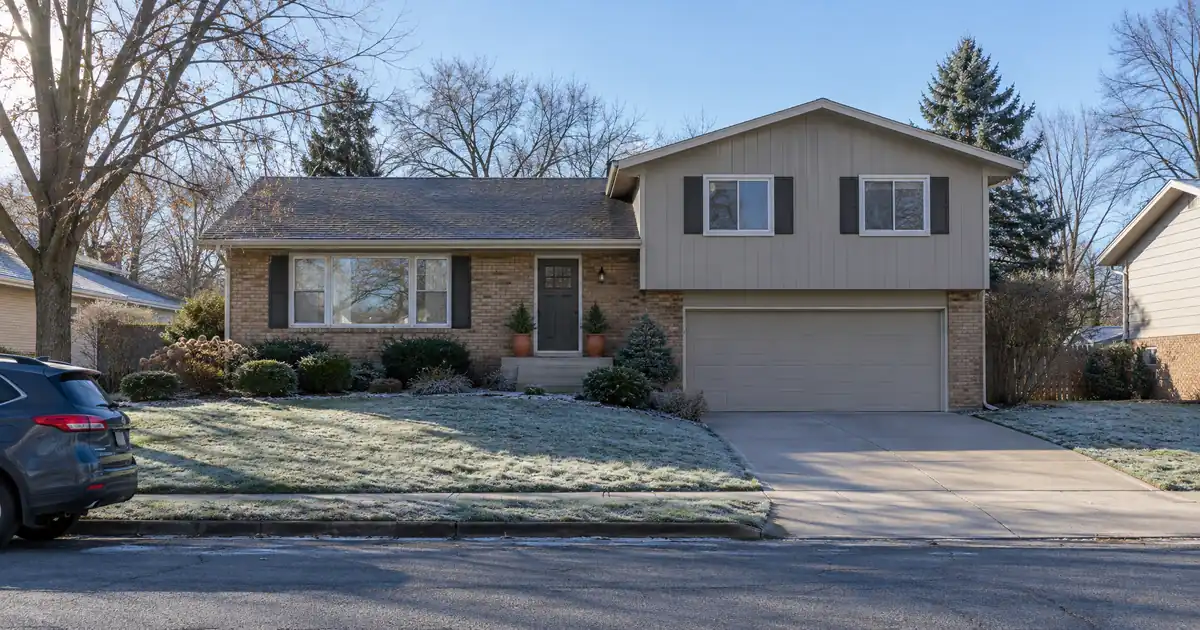
The Quick Read: A house that was never pledged to a blanket loan can carry its own home equity line, because the line is a separate loan secured only by that one property. The blanket lender holds no lien on it, so the line draws on nothing in the blanket’s collateral pool. It is underwritten on the borrower’s credit, income, and combined leverage, not on rent.
- The line is a stand-alone loan with its own lien, in first or second position depending on what already sits on that house.
- On an investment property, the network ceiling is 70% combined loan-to-value, with a line of up to $500,000, subject to lender guidelines.
- Qualification leans on personal credit and debt-to-income, not rental coverage.
- Check the blanket documents first, because covenants can matter even when the house is not pledged.
- Vesting matters: these lines are written to individuals or revocable trusts, not LLCs.
Most investors who ask this question are in one of three spots. They own several rentals under one blanket note and kept one house out on purpose. They released a house from the pool. Or they assume a house is outside the pool and have never checked. The mechanics differ for each, and the first job is figuring out which one you are.
Which Situation Are You Actually In?
Three cases get lumped together under “left out,” and only one is clean. The house was never pledged, it was released, or it is still pledged and nobody noticed.
A blanket loan, also called a cross-collateralized or portfolio DSCR loan, is one note secured by several rentals. Nav’s explainer on cross-collateralization describes how a blanket lien lets multiple properties secure a single loan. Because every pledged house secures the whole debt, a house outside the pledge can carry separate financing.
Here is a quick way to sort yourself:
1. Never pledged. No security instrument on the blanket loan names the house. This is the clean case.
2. Released. The house was in the pool and was removed under the loan’s release terms. The release should be recorded. Confirm that it was.
3. Still pledged. The house appears in the deed of trust or mortgage, perhaps in a legal-description schedule. A new line would collide with the blanket lender’s lien.
Title work settles it. A title search shows what is recorded against the house, and the blanket loan’s security instruments show what they name. Do not rely on memory or on how the closing felt.
Key Terms Defined
Blanket loan: one note secured by several rentals, also called a cross-collateralized or portfolio DSCR loan.
Cross-collateralization: a setup where every pledged property secures the full balance, not just its own share.
Release clause: a contract term that lets one property leave the pool when specified conditions are met.
Lien position: whether a loan is paid first (first lien) or after another loan (second lien) if the property is sold or foreclosed.
HELOC: a revolving line of credit secured by one property’s equity, with a draw phase followed by repayment.
Combined loan-to-value (CLTV): all loans secured by the property, plus the new line, divided by the property’s value.
How a HELOC Works on That One House
The line is an open-end credit line. The CFPB’s HELOC explainer describes it as borrowing against the equity in the property, meaning value minus what you owe on the mortgage. You can draw repeatedly up to the limit during the draw period. After that, you repay.
Bankrate’s guide to the end of a draw period notes that draw periods typically run up to 10 years with interest-only payments, and repayment then covers principal plus interest. The CFPB adds a warning worth taking seriously: payments are often significantly higher once repayment begins, and lines usually carry variable pricing.
On the network’s investment-property line, the structure is narrower than the consumer examples you will see online. It runs a 5-year interest-only draw followed by a 25-year fully amortizing repayment. At least 75% of the line is drawn at closing. Pricing floats through both phases and never converts to fixed. Those are program terms for the investment line specifically, subject to lender guidelines and full file review.
The sizing rules for an investment property are tight:
- Maximum combined leverage is 70% CLTV on an investment property, for borrowers at 700 or better, with a maximum line of $500,000.
- The minimum credit profile on an investment line is 700.
- A standalone line can sit in first or second lien position.
- Lines at or below $500,000 ordinarily run automated valuation, though a borrower can request a full appraisal.
Compare that with primary residences and second homes, where ceilings reach higher and lines run larger. An investment house gets the most conservative treatment. Market-wide, some credit unions advertise higher combined leverage on investment-property lines, but that describes the broader market, not this network.
How the Line and the Blanket Loan Interact
The line neither touches the blanket’s collateral nor changes its lien. Underwriting still connects the two, through the borrower.
Lien position. If the left-out house has a first mortgage, the line typically is a second lien behind it. If the house is free and clear, the line is a first lien. Only liens on that house count toward its CLTV. Blanket debt does not count against the house’s leverage unless the house is pledged under the blanket.
Review basis. The line qualifies the borrower, not the rent. Credit and debt-to-income drive the decision. The network’s maximum debt-to-income is 50%, with 45% for profiles between 600 and 679, and the line is qualified on the interest-only payment calculated on the maximum draw. Your blanket loan’s payment and other obligations will show up in personal obligations. How each lender treats a pooled DSCR note inside that ratio varies, and it is a question to ask before applying, not after.
Covenants. This is the quiet risk. Some blanket notes carry cross-default language or limits on new borrowing. The house may be unpledged and the note may still say something about additional debt. Read the loan documents, and treat this as a due-diligence item rather than a settled rule.
Risk isolation. A default on the line puts that one house at risk, not the pool. A default on the blanket puts every pledged house at risk. That separation is the reason investors leave a house out in the first place.
Step by Step: From Documents to Funded Line
1. Pull the blanket loan documents and read the collateral schedule, release terms, and any covenants on additional debt.
2. Order title work on the left-out house to confirm no blanket lien attaches and to list existing liens.
3. Confirm vesting. Title must be held by you individually or by a revocable living trust. An LLC, corporation, partnership, or irrevocable or land trust cannot hold title on these lines.
4. Compute CLTV using only liens on that house plus the proposed line.
5. Check credit and debt-to-income. The investment line needs at least a 700 profile, and the credit report cannot be more than 90 days old at closing.
6. Valuation. Expect automated valuation at or below $500,000 unless a higher combined leverage calls for a second look.
7. Record the lien. The line’s lender records against that house only.
The vesting step catches more investors than any other. Many hold rentals in LLCs for liability reasons. A house deeded to an LLC needs a vesting change before the line can work, or it is a candidate for a DSCR cash-out instead.
HELOC, Cash-Out, Blanket Add, or Wait?
| Option | What it touches | Reviewed on | Effect on blanket |
|---|---|---|---|
| HELOC on left-out house | That house only | Personal credit, DTI | None on collateral |
| DSCR cash-out on that house | That house only | Property rent coverage | None on collateral |
| Add house to blanket | Whole pool | Pooled coverage | Pool grows, risk spreads |
| Wait | Nothing | N/A | None |
The choice often comes down to entity structure and income. A borrower with strong personal income and individual title tends to find the line simple. An LLC-held portfolio operator, or someone whose personal debt-to-income is stretched, often finds a DSCR cash-out cleaner, because it qualifies primarily on property-level rental income covering the payment, subject to lender guidelines. Lendmire’s piece DSCR Cash-Out vs HELOC vs Blanket Loan for One High-Equity Rental works through that decision in more depth.
Adding the house to the blanket is the opposite move. It can simplify the debt, but it pulls the house into cross-collateral risk and may require subordinating or paying off an existing line first. For investors who left the house out on purpose, that usually defeats the purpose.
A Worked Scenario (Modeled, Not Market Data)
Picture an investor holding four rentals under a blanket note and a fifth house in personal name with a modest first mortgage. The fifth house has appreciated, and the investor wants working capital for the next purchase.
Say the house’s value supports a combined leverage under the investment ceiling of 70% CLTV once the first mortgage and the new line are counted together. The investor has a 740 credit profile, so the 700 minimum clears. Personal debt-to-income, including the blanket note, stays under the 50% limit. The line is a second lien on that one house, and the blanket lender is untouched.
Now change one fact. The investor holds that fifth house in an LLC. The structure stops working until title moves to the individual or a revocable trust, or the investor pursues a DSCR cash-out on the house instead. One vesting detail flips the whole answer.
Now change another. Suppose the blanket note has language restricting additional liens on any property the borrower owns. The house is unpledged, but the note may still be triggered. That is why the document review comes first.
Where the General Rule Breaks
The house is quietly pledged. If the blanket documents list it as additional collateral, the line would sit behind or alongside the blanket lien. That is a different loan with a different problem.
No release clause on the blanket. This hurts the pooled houses, not the left-out one. A release clause is a contract term, not a legal right. Federal law on due-on-sale clauses, 12 U.S.C. § 1701j-3, governs when a lender may call a loan on transfer, and it does not hand borrowers a partial release. Release terms live in your note.
Selling the left-out house. The line is paid off and its lien released at closing. That is standard and needs no release clause, unlike the pooled houses.
Property type. Single-family, 2-4 units, PUD, townhome, and condominium are eligible. Manufactured homes, co-ops, condotels, log homes, commercial, mixed-use, and agricultural zoning are not.
Portfolio size and exposure. A borrower can hold up to three lines, and an owner of more than 15 financed properties is not eligible. Large portfolio operators can hit that wall.
Variable pricing at repayment. If the line funds a down payment or reserves for the blanket, the jump into repayment lands on top of the blanket’s payment. Stress-test that before drawing.
What the Decision Looks Like in Practice
The line fits the borrower with individual title, strong credit, and personal income that absorbs the extra obligation. It is a poorer fit for the investor whose personal debt-to-income is already carrying a large blanket note, or whose house sits in an LLC. The alternatives are not worse, only different.
Whichever way you go, the sequence matters more than the product: documents, then title, then vesting, then leverage, then the application. Investors who skip the first step are the ones who discover a cross-default clause after the line is open. For the broader picture of how these structures fit together, the complete DSCR loans guide covers the core programs. Lendmire’s piece Can You Sell One Rental From a Two-Property Blanket Cash-Out Refinance? covers the release side of the same structure.
If you are considering a home equity line and want to see how the numbers work, Lendmire can help you compare HELOC options based on the property, the equity available, credit profile, combined leverage, and your goals. Equity lines through the network are available in Lendmire’s 16 full-service states only, narrower than the DSCR footprint, and every figure is subject to lender guidelines and not a commitment to lend. Reach the team at 828-256-2183.
Frequently Asked Questions
Can I take a HELOC on a house that is not part of my blanket loan?
Generally yes, provided the blanket documents do not restrict additional debt and the house is not named as collateral. The line is a separate loan secured by that house alone. Confirm with title work and a document review, since covenants can apply even to unpledged property.
Does the HELOC count against my blanket loan’s coverage?
No, the pooled coverage test looks at the pooled rents and debt service of the blanket loan. The line is underwritten on personal credit and debt-to-income, so the effect shows up there rather than in pooled coverage. How a given lender treats the blanket payment in personal obligations varies.
Will the line be a first or second lien?
It depends on what already sits on the house. With an existing first mortgage, the line typically is a second lien. If the house is free and clear, the line can be a first lien. Only liens on that house count toward its combined leverage.
Can my LLC hold the house and still get the line?
Not on these programs. Title must be held by an individual borrower or a revocable living trust. A house already in an LLC needs a vesting change first, or a DSCR cash-out may be the better path.
What happens if I sell the left-out house?
The line is paid off and the lien released at closing, which is standard. No release clause is needed because the house was never part of the pool.
About Lendmire
Lendmire (NMLS# 2371349) is a mortgage brokerage serving homeowners and real estate investors in its 16 full-service states. Home equity lines of credit are arranged through wholesale lending channels; Lendmire brokers the line and the lender underwrites each application under its occupancy-based guidelines. Scotsman Guide named Lendmire a Top Mortgage Workplace in both 2025 and 2026.
Get Started
Ready to find the right loan for you?
In about 30 seconds you can review financing options available for your home or investment property. No commitment required.
Informational only. Not a Loan Estimate, approval, or commitment to lend. Program availability and eligibility are subject to lender guidelines, credit approval, property review, and underwriting.
References
1. Nav – Cross collateralization
3. Bankrate – HELOC draw period
4. Cornell LII – 12 U.S.C. § 1701j-3
This article is part of Lendmire’s home equity line of credit program — full qualification details, guidelines, and scenarios live on the program page.
Related reading: How to Decide on a Blanket DSCR Loan for LLC-Held Rentals · How a DSCR Portfolio Term Loan Balloon Works for an Early Sale · How to Consolidate Rental Loans Into One DSCR Loan Without Cash Out
Brandon Miller
Founder & CEO, Mortgage Loan Originator, Lendmire LLC
- Mortgage Loan Originator · NMLS# 1129696 · Verify on NMLS Consumer Access
- North Carolina Real Estate Broker · License# 343312 · Verify on NCREC
- North Carolina Insurance Producer · License# 19053198 · Property, Casualty, Life, Health · Verify on NAIC SBS
- Lendmire LLC · Firm NMLS# 2371349 · Verify firm licensure
Important disclosures. Lendmire (NMLS# 2371349) is a licensed mortgage brokerage. Lendmire is not a direct lender, depository institution, or financial advisor. All loan inquiries are subject to lender underwriting; this article does not constitute a commitment to lend. Rates, terms, and program guidelines are subject to change without notice and vary by borrower profile, property type, and state. Information in this article is general in nature and is not financial, legal, or tax advice. Equal Housing Opportunity. NMLS Consumer Access: nmlsconsumeraccess.org.