
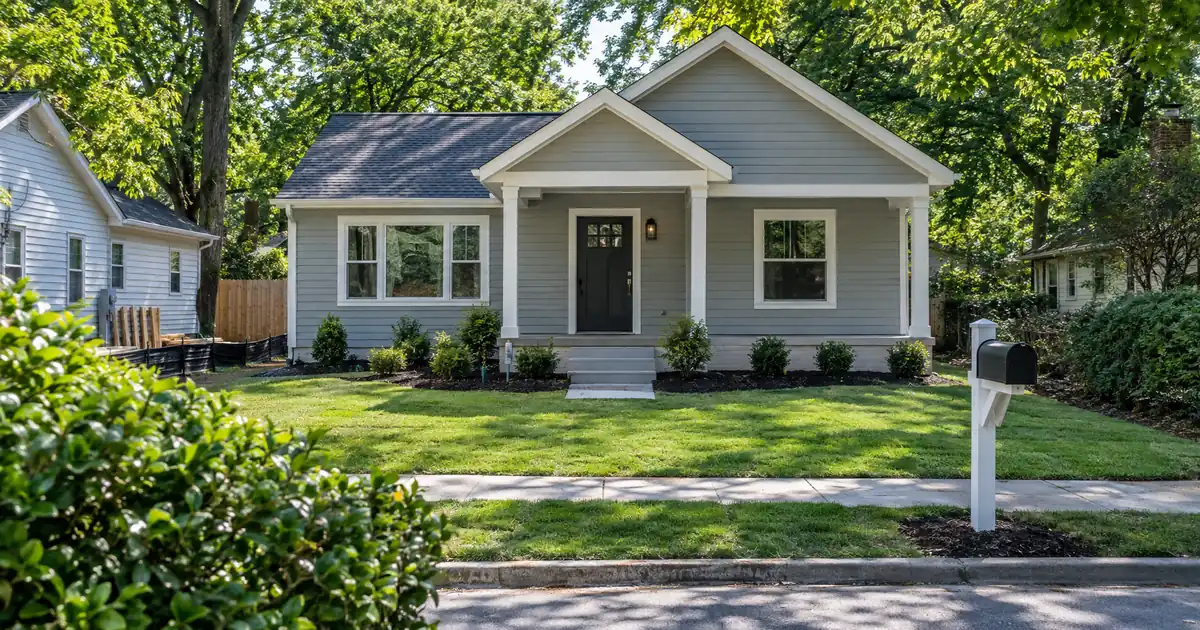
The Quick Read: Yes, an out-of-state investor can qualify for a fix-and-flip loan, because these loans are underwritten on the property, the rehab plan, and the exit rather than on where the borrower lives. The real question is execution risk: lenders look harder at your team, your budget, and your track record when you are not nearby. Typical network guidelines work like this, and they vary by lender, property, and experience:
- Leverage on a flip runs 85% to 93% of project cost depending on completed projects, always capped at 75% of after-repair value (ARV).
- Credit starts at a 620 minimum, with extra conditions below 660.
- Terms run 6 to 18 months, interest-only, with no prepayment penalty.
- Collateral is non-owner-occupied 1-4 unit residential property.
- Nothing in these programs asks where you live. Everything asks whether the project and the people running it are believable.
Lendmire is a mortgage broker that arranges these loans through select lenders in a wholesale network covering 41 markets, including Washington, D.C. Nothing here is a commitment to lend, and every file is reviewed individually.
What this loan actually costs to carry.
Hard money is sized against the project and priced by time. Enter the deal and see how much the program will lend, the cash required at closing, the carry while you hold it, and what is left at the exit.
Leverage tiers on the current program: 85% with fewer than 2, 90% with 2 or more, 93% with 5 or more completed projects — every tier capped at 75% of after-repair value. Loan amounts up to $5,000,000, larger by exception; terms of 6 to 18 months, interest-only, no prepayment penalty. The rehab portion funds in draws against completed work, not at closing.
Program parameters shown update from Lendmire’s centralized guideline source. Rate, points, and months are editable assumptions, not quoted terms.
Cost cap sets the loan · positive spread
Illustrative estimate only — not a quote, Loan Estimate, approval, or commitment to lend. Rate, points, and months are editable assumptions. Hard money is business-purpose financing for real estate investors, not a consumer mortgage. Leverage on the current program tops out at 93% of project cost for investors with a documented track record, capped at 75% of after-repair value, with rehab funding up to 100% of the documented budget released in draws; actual terms vary by lender, borrower experience, property, and exit. Lendmire is a mortgage broker, not a lender.
Does Your Home State Matter to the Lender?
Not as an eligibility test. Hard money lending used to be a local business, with lenders funding only inside their own metro. Today many lenders work across a wide footprint, and a borrower’s mailing address is not a qualifying factor.
What does matter is the property’s location. Not every state is covered. Across Lendmire’s network, programs are not available in Louisiana, Minnesota, North Dakota, or South Dakota, or in the cities of Baltimore, Chicago, and Detroit. So the footprint question is about the property, not about you. Confirm your target market is covered before you spend money on an offer.
One distinction worth making: an out-of-state investor is a U.S. borrower buying in a different state. A foreign national is a different borrower type with different documentation. This article covers the first.
What Lenders Actually Check When You Are Not Local
The loan is asset-based. Lenders weigh the property, the plan, and the exit more than your paycheck. When you are far away, each of those items gets more scrutiny, because nobody at the lender can drive past the house.
| What the lender reviews | Why it matters at a distance | What you provide |
|---|---|---|
| Deal margin against ARV | Thin margins leave no room for surprises | Comps and a clear sale-price case |
| Rehab budget | Scope errors are costlier when you cannot inspect | Itemized budget with contractor bids |
| Borrower experience | Sets leverage tier, not eligibility | Record of completed projects |
| Liquidity | Shows you can absorb overruns | Proof of funds for cash to close |
| Entity | Most flips are held in an LLC | Entity documents, subject to program terms |
| Local team | Your eyes on the ground | Agent, contractor, title contact |
Experience is the biggest lever. Leverage runs 93% of project cost with five or more completed projects, 90% with two or more, and 85% with fewer than two, each capped at 75% of ARV. A first-time investor can qualify at the lower tier. If you are both new and out of state, expect the most conservative structure, and treat that as a pricing and leverage reality rather than a rejection.
Credit still counts. A 620 score is the minimum, with additional conditions below 660. The loan stays asset-based, but a clean borrower profile helps.
How Experience and Distance Interact
Distance changes how much a lender trusts your budget and your contractor. Experience changes how much it will lend. Put the two together and you get four profiles:
| Profile | Practical path |
|---|---|
| Local, experienced | Standard terms at the higher leverage tiers |
| Out of state, experienced | Usually fine; show your team and past projects |
| Local, first flip | Lower leverage tier; a lighter scope helps |
| Out of state, first flip | Hardest case; consider a partner or a smaller project |
Investor communities are blunt about the last row. Treat that as opinion, not a rule.
If you are out of state and new, you have options. Start with a cosmetic scope instead of a structural rehab. Partner with a local investor who has completed projects. Or buy in a market close enough to visit. Lenders reward a simpler project they can understand.
The Document Package for a Remote Deal
Your paperwork stands in for your physical presence. Lenders typically ask for:
- The signed purchase contract.
- An itemized rehab budget with contractor bids.
- A scope of work and timeline.
- Entity documents, if you buy through an LLC.
- Proof of funds for the down payment and closing costs.
- A record of completed projects, if any.
- A written exit plan: sale or refinance.
Contractor bids carry extra weight when you are remote. Lenders scrutinize them and often expect a cushion for overruns, so a budget with room built in reads as more credible than one cut to the bone.
How the Loan Works When You Are Not on Site
The structure helps remote borrowers more than most expect. The lender orders its own valuation, usually an appraisal or a broker price opinion, so you do not need to be there. The rehab portion of the loan is held back, and up to 100% of the rehab budget funds in draws against completed work. That is a rehab-budget figure, not a purchase LTV.
Draws are tied to progress inspections. Those inspections are how the lender verifies work in a place you cannot see. They also protect you, because you only release money for work that is done.
Closing is handled through a local title or closing agent, and most signing logistics can be done remotely. Plan for a mobile notary and confirm wire instructions by phone with a known number.
One more structural point. There is no true 100% purchase financing. The high-leverage tiers are measured against project cost, and the 75% ARV cap still applies, so you need real cash in the deal.
Building the Team Lenders Want to See
A good team in an average market beats a great market with no team. Build that into your margin math.
The team underwriters want to see usually includes:
- A local agent who knows resale values street by street.
- A contractor with a verifiable record, not just a low bid.
- A title or closing agent comfortable with remote signings.
- A property manager, if the exit might become a rental.
Document these relationships. A contractor’s license, past project references, and a signed bid do more for an underwriter than a promise that you trust the person.
A Worked Scenario
Picture an investor in one state buying a dated single-family house in another. The investor has completed three flips at home. The file includes a signed contract, a contractor bid with a built-in cushion, proof of funds, and a local agent’s comps supporting the ARV.
Because the investor has two or more completed projects, the file sits in the 90% of project cost tier, still capped at 75% of ARV. The rehab money is held back and released in draws as inspections confirm progress. The investor never visits the site during construction, but does fly in once at the start.
Now change one fact: the investor has no completed projects. The deal works to the 85% tier, the lender will look harder at the contractor, and the investor is wise to shrink the scope. Same borrower, same state, different experience. Experience moved the terms, not the address.
Edge Cases Worth Knowing
Owner-occupied properties. If you plan to live in the property, the loan may not be business purpose at all. The CFPB’s Regulation Z, section 1026.3 exempts credit extended primarily for a business purpose, and it applies different unit-count rules where a rental will be owner-occupied. Compliance Alliance explains that the loan’s purpose controls, not the collateral. Lendmire’s hard money programs cover non-owner-occupied property only.
Entity borrowers. Credit extended to a non-natural person, such as an LLC, is also outside the consumer rules, per the OCC’s TILA handbook. That is why most flippers borrow through an entity, subject to program terms.
Local banks. A local bank or credit union may offer construction-style loans, and some investors report success there. Out of state, those lenders tend to favor local borrowers, so this is usually a harder road.
Where DSCR Fits In
A flip loan is not a DSCR loan. DSCR financing is built for stabilized, rent-ready property, not heavy rehab. But it matters at the exit. If you finish the project and decide to keep it as a rental, many investors refinance out of hard money into long-term DSCR financing, which qualifies primarily on property-level rental income covering the payment, subject to lender guidelines. Lendmire brokers that path. The complete DSCR loans guide explains how it works.
Plan the exit before you buy. A flip you intend to sell needs a resale price that supports the 75% ARV cap. A flip you intend to hold needs rent that will cover the future payment. Lenders like seeing that you thought it through. For a related look at out-of-state qualification on the long-term side, see Lendmire’s piece How to Qualify for a 40-Year DSCR Loan as an Out-of-State Investor.
Common Reasons Out-of-State Files Stall
- The target market is outside the footprint. Confirm coverage first.
- A thin or vague budget. No itemized bids means no confidence.
- No visible team. Underwriters want names, licenses, and references.
- Too little cash. Leverage is capped on cost and ARV, so you still need real equity in the deal.
- A heavy scope on a first flip. A big rehab plus distance plus no experience is the hardest combination.
- Assuming the loan is consumer credit. Owner-occupied plans change everything.
Readiness checklist: confirm your market is covered, assemble the document package, line up a local agent and contractor, size cash for overruns, and write down the exit.
Key Terms Defined
ARV (after-repair value): The estimated market value of the property once the rehab is complete.
Loan-to-cost: The loan amount measured against total project cost, meaning purchase price plus rehab budget.
Draw: A staged release of rehab funds after the lender confirms completed work.
Asset-based underwriting: Review that centers on the property, plan, and exit rather than the borrower’s income.
Non-owner-occupied: A property the borrower does not live in, which is required for these programs.
Frequently Asked Questions
Can I get a fix-and-flip loan for a property in a state where I do not live?
Yes, borrower residency is not an eligibility test. What matters is that the property sits in a covered market and the project is sound. Leverage, pricing, and terms vary by lender, property, and experience, and every file is underwritten individually.
Do I have to visit the property?
No rule requires it, but one early visit often helps you judge the neighborhood and meet your contractor. After that, lender-ordered valuations and inspection-based draws verify the work. A trusted person on site matters more than your own presence.
Is it harder as a first-time flipper out of state?
Usually, yes. Experience sets the leverage tier, and first-time investors qualify at the lower tier with a 620 minimum score. Add distance and a heavy scope and lenders get cautious. A lighter project, a local partner, or a closer market can make the file stronger.
How do I pay contractors from another state?
Through draws. The rehab budget is held back and released in stages after progress inspections confirm the work. Up to 100% of the rehab budget can fund this way. Avoid paying large sums up front outside that process.
Can I use a DSCR loan to fund the flip itself?
Generally no. DSCR loans suit stabilized, rent-ready property rather than heavy rehabs. They work as the exit if you decide to hold, since the loan is sized on the property’s rental coverage.
If you are buying, rehabbing, or refinancing an investment property on a short timeline and want to see how the numbers work, Lendmire can help you compare hard money options based on the project, the exit plan, leverage, and your goals. Reach the team at 828-256-2183 or request a quote.
For current guidelines and terms, see Lendmire’s DSCR loan programs page.
About Lendmire
Lendmire is a DSCR-focused mortgage brokerage, NMLS# 2371349, placing investor loans across 41 markets, including Washington, D.C. DSCR eligibility is generally reviewed by the lender around a property’s rental income rather than personal income documentation, which fits LLC-held rentals, self-employed investors, and portfolios scaling past conventional financed-property limits. Scotsman Guide named Lendmire a Top Mortgage Workplace in both 2025 and 2026.
Get Started
Ready to find the right loan for you?
In about 30 seconds you can review financing options available for your investment property. No commitment required.
Informational only. Not a Loan Estimate, approval, or commitment to lend. Program availability and eligibility are subject to lender guidelines, credit approval, property review, and underwriting.
References
1. CFPB, Regulation Z § 1026.3
2. Compliance Alliance, Regulation Z and Investment Properties
3. OCC, Truth in Lending Act Comptroller’s Handbook
This article is part of Lendmire’s hard money loan program — full qualification details, guidelines, and scenarios live on the program page.
Related reading: Can a Single-Family Flip Qualify for a DSCR Loan Instead of a Sale? · Seller Financing vs. a DSCR Loan for a W-2 Investor With Rentals · Should an Investor Choose a Hard Money Loan or a Flip Loan?
Brandon Miller
Founder & CEO, Mortgage Loan Originator, Lendmire LLC
- Mortgage Loan Originator · NMLS# 1129696 · Verify on NMLS Consumer Access
- North Carolina Real Estate Broker · License# 343312 · Verify on NCREC
- North Carolina Insurance Producer · License# 19053198 · Property, Casualty, Life, Health · Verify on NAIC SBS
- Lendmire LLC · Firm NMLS# 2371349 · Verify firm licensure
Compliance and disclosures. Lendmire (NMLS# 2371349) is a licensed mortgage broker and is not a direct lender, depository institution, financial advisor, or tax professional. Content in this article is general market analysis and educational information — not financial, legal, or tax advice for any specific situation. Lendmire does not guarantee loan approval; every transaction is subject to underwriting by the funding lender. Mortgage pricing and loan program guidelines are subject to change at any time without notice and vary by borrower characteristics, property type, and state regulations. Lendmire complies with Equal Housing Opportunity. Licensure verification: NMLS Consumer Access.