
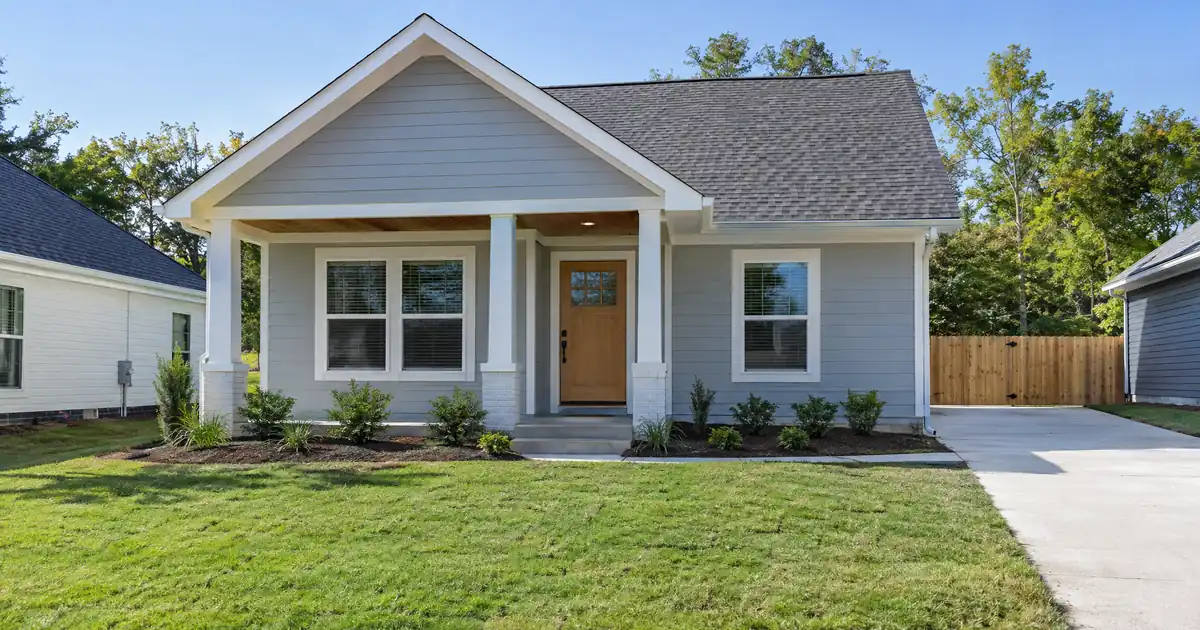
Overspent Rehab Meets Slipping Value — The Quick Read: As of October 3, 2026, a rehab budgeted to a hoped-for value is a risk, because values in some areas are slipping while financing costs climb. A flip that costs more than the market will appraise leaves you with a loan that is too big for the property when you go to refinance. A refinance is a new loan sized on today’s appraised value, not on what you spent. Budget to the value the market will support, and treat anything above that as a gift to the house.
Market Snapshot
A quick read on the investor landscape — figures come from the cited sources below. Confirm current property-level numbers before underwriting.
| Metric | Detail |
|---|---|
| Home prices | Median sale price +2% y/y (Redfin pending sales release) |
| Recent appreciation | +0.25% Aug (RISMedia) |
Key Takeaways
- Values are soft in specific metros, not nationally. The national index is still up, but the decliners are real.
- Flip margins are narrowing, and the reported spread comes before rehab and carrying costs.
- A refinance sizes the new loan on appraised value. Overspend does not earn you extra loan.
- Refinance demand is weak this fall, so a refinance is a poor rescue plan for a blown budget.
- Set your rehab ceiling from the value comparable sales support. Then test the exit at a lower number.
What changed
Rates moved the wrong way again. Freddie Mac’s survey put the 30-year fixed at 7.28% for the week of October 1, 2026, up from 7.03% the week before. That is 25 basis points in one week. A year earlier the same survey showed 6.34%.
The MBA saw the same pressure in its Weekly Applications Survey released September 23, 2026. The MBA’s chief economist put the 30-year rate at 7.12% for the week ending September 18, the highest since May 2024. The refinance index fell 3% on the week. It stood 62% lower than a year earlier.
The Fed added to it. At its September 16, 2026 meeting, the Committee voted 12–0 to raise the target range by a quarter point, to 3-3/4 to 4 percent. Advisor Perspectives called it the first increase since 2023. Mortgage rates track the 10-year Treasury more than the Fed funds rate. Per FRED, the 10-year yield was 5.24% on October 1, after 5.29% the day before.
Now the value side. The national picture is not a crash. S&P Cotality Case-Shiller’s July data, released September 29, 2026, showed the national index up 1.9% year over year, up from 1.6% in June. Chicago led at 6.9%. Seattle posted the largest annual decline at 1.6%, then Las Vegas at 1.3% and Denver at 1.1%. The same release noted home values fell in real terms for the 14th straight month, with inflation at 3.4%.
Cotality’s companion release named persistent yearly declines in Seattle, Las Vegas, Denver, Tampa, Portland and Dallas. It also warned that recent spikes in mortgage rates could disrupt momentum into the fall.
Sellers are blinking. Redfin reported September 30, 2026 that 21.1% of sellers with active listings cut their asking price in the four weeks ending September 20. A year earlier it was 19.8%. Redfin said it was the highest share for this time of year in its records. Denver led at 30.9%, followed by Indianapolis, San Antonio, Dallas and Austin.
Supply is building. NAR’s August existing-home sales report, released September 10, 2026, showed sales at a 3.98 million annual pace, the first reading below 4.0 million since June 2025. Inventory reached 1.62 million, up 5.9% from a year earlier. That is 4.9 months of supply. NAR’s chief economist called it the highest level in over ten years. The national median price still rose 1.6% to $429,100.
Both things are true. The national median is up, and the weak spots are real.
The flip margin is thinner than it looks
ATTOM’s Q2 2026 Home Flipping Report, released October 1, 2026, found the typical flip profit margin at 21.5%. That was down from 25.7% in the prior quarter and 27.6% a year earlier. Flips totaled 77,991, or 6.2% of home sales. The typical flip took 161 days from purchase to resale.
ATTOM’s CEO said flippers are still making money in most markets, but the typical return continues to narrow. I agree with that read. I also want you to see what that margin is.
It is the spread between purchase price and resale price. It is measured before rehab costs, carrying costs and selling costs. So it is not net profit. That spread has to pay for the rehab, the interest, the taxes, the insurance and the sale. Then it has to leave something for you.
A spread that shrinks by several points across a year does not leave much room for a rehab that runs long or heavy.
What I’m seeing
In certain areas, appraised values are starting to slip. Not flip. Slip.
Because values are slipping in those areas, clients end up spending too much money on the flip. They can’t recoup it. Then the loan-to-value is off when they go to refinance.
That is the whole problem, and I’d call it the spreadsheet problem. The spreadsheet had an after-repair value in a cell. Someone typed that number in when the market was a little better, or a little more hopeful. The rehab scope was built to reach it. Then the market moved, and the cell did not.
One caution on the public data. Case-Shiller, FHFA and Redfin measure repeat sales and listings, and they lag. No public source I found measures appraised values directly. What I’m describing is what I see at the appraisal, and the public data is context for it. I would not claim more than that.
What it means for real estate investors
The after-repair value is a forecast. It is built from sales that closed weeks or months ago. An appraiser, working in a market where sellers are cutting prices and supply is rising, may lean on the weaker comparables. You should expect that.
Think through what happens in the exit. Hard money on the way in is sized against project cost and capped against after-repair value. It is also generally tied to the experience of the investor. Terms vary by lender, property and experience.
Long-term financing on the way out works differently. A DSCR cash-out refinance sizes the new loan against today’s appraised value, subject to lender guidelines. It also looks at seasoning, rental coverage, credit and reserves. The current DSCR loan programs page carries the guidelines. I won’t restate figures here.
The two loans are measuring two different things. The first looks at what you are spending. The second looks at what the house is worth when the appraiser walks through.
When values hold, the gap between those two measures can close on its own. When values slip, it opens. Every dollar you put into the property beyond what the market will support does not come back as loan proceeds. It simply sits in the house as sunk cost.
Think about what that does to your exit. You planned to pay off the short-term loan with the long-term one. Now the new loan, sized on a lower value, may not cover the old one. You then need cash at the table, or a different exit. Neither was in the spreadsheet.
Coverage also tightens. A DSCR loan tests whether the property’s rent covers its debt service. A larger balance against a lower value is harder to cover. So a heavy rehab can hurt twice, once on loan-to-value and again on coverage.
Why can’t a refinance rescue an overspent rehab?
A refinance cannot rescue an overspent rehab, because the lender sizes the loan on appraised value, not on your receipts. It also lands in a weak refinance market this fall. Overspend that the appraisal does not recognize stays your money.
First, the appraisal. The lender does not ask what you spent. It asks what the property is worth, and what it can rent for. A kitchen that cost more than the neighborhood supports does not add that cost to value.
Second, the market. That MBA survey showed refinance applications 62% below a year earlier. Fewer people are refinancing at these rates. That does not close the door to a refinance out of a bridge or rehab loan. It does mean you are not going to be carried by a wave of easy refinance activity.
Third, the clock. Most programs want some ownership seasoning before a cash-out refinance. I wrote about the practical side of that in why a rehab purchase may need seasoning before a jumbo DSCR. The point is timing. If you overspend and the short-term loan comes due before the long-term loan fits, you are refinancing under pressure. That is a bad time to negotiate with an appraiser.
There is another thing a refinance cannot fix. Buyers are getting selective. Redfin reported on September 17, 2026 that pending sales fell 3.5% week over week to their lowest level in almost three years. The same release shows the median sale price up 2% year over year, so prices are not collapsing. But a house that sits is a house that carries interest. Slow sales stretch the hold. A longer hold eats more of that already-thin margin.
I wrote separately about the other direction, refinancing a rehab into a DSCR loan when the numbers do work. That path is real. It depends on the budget being right in the first place.
Don’t confuse this with a national crash
I want to be careful here. Prices are not crashing. The Case-Shiller national index is up. NAR’s median is up. Redfin’s home price index, as reported by RISMedia on September 29, 2026, showed prices rising 0.25% month over month in August. That was down from 0.26% in July and 0.27% in June.
That is growth, just slower growth. Redfin’s own take was that slowing price growth is good news for buyers, since waiting is less likely to bring a rapidly rising price tag.
The weakness is regional. Realtor.com data, reported by Inman on September 30, 2026, showed the West fastest for price-cut increases. It also showed 36 of the 50 largest metros above their year-ago price-cut rates.
Sources also disagree on what this is. Some see a plateau. Others see the start of declines. Cotality called the momentum fragile. I don’t know which is right, and I distrust anyone who claims to.
The practical point is narrower. You buy and renovate one house in one submarket. The national number does not close your deal. The appraiser’s comparables do.
One more data point that matters for the investor crowd. NAR said 15% of August transactions were individual investors or second-home buyers, down from 21% a year earlier. When fewer investors are buying, the pool of buyers for a flipped house is a little thinner. That is another reason not to count on a hot exit.
My take
Here’s my read. The hoped-for value is the most expensive number in a flip.
Investors tend to anchor on the best comparable. They find the one sale that closed high, fully renovated, with everything right. Then they price their own project to match it. Everything in the spreadsheet is built backward from that number.
That works when values rise. A rising market forgives a lot. It will pay for a heavier scope and a longer timeline. When values slip, it forgives nothing.
I think the old habit of “just finish it nicely and it will appraise” is dangerous right now. Scope creep is a budget problem in any market. In a softening market, it is also a valuation problem. You spend more, and the house is worth less than you assumed. The two errors multiply.
This is a genuine judgment call, and I could be wrong on timing. If the market firms up, a few conservative budgets will look too cautious. I would rather explain a missed upside than a refinance that does not fit. One of those is a story. The other is a cash call.
What I’d do now
Here is how I’d approach a rehab project in this market. None of this is advice on any specific property. It is how I’d structure the thinking.
Start from the value the market will support. Pull recent, closed comparables, not listings. Weight the lower and middle ones. Then ask how a lender and an appraiser would see them. Budget the rehab to that number, not to the best sale on the block.
Test the exit at a lower value. Run the refinance at a value that is several points under your target. If the loan still fits, good. If it only fits at your hoped-for value, you have found a fragile deal. Call that out before you close, not after.
Run the exit on the rent, too. A DSCR refinance looks at coverage. Check that the rent covers the new debt service with room to spare. Do this on the market rent for the area, not the rent you wish for. DSCR loan programs review the file on the property’s income, subject to lender guidelines, so the rent matters as much as the value.
Keep a reserve for the unexpected. Overruns come from hidden conditions, material swings and delays. A reserve that covers them is cheaper than an overspend you cannot recover. Size the reserve against the exit, not just the scope.
Decide the exit before you start. Flip or hold? If you plan to hold, confirm the long-term loan path while the project is still a plan. If you plan to sell, assume the days on market run longer than they did a year ago.
Lock when you like the number. A rate lock is a mechanic that fixes the rate for a set period. In a market where the weekly average rose 25 basis points in a single week, floating is a bet. If you like where a quote sits, lock it. And remember that quotes gathered on different days are not comparable. The market moved between them.
Stop spending when the market stops paying. This is the hardest one. When the next upgrade costs more than the market will credit, stop. A good rehab leaves a little value on the table. A great flip leaves the buyer a reason to say yes.
If you’re weighing a purchase or a refinance this fall, Lendmire can walk you through how the current programs fit your file. Call 828-256-2183 or request a quote.
For the end-to-end picture of how these loans work — qualification, structures, and the full process — see Lendmire’s complete DSCR loans guide.
Frequently Asked Questions
Are home values falling?
In some metros, yes. Nationally, no. Case-Shiller’s July data showed the national index up 1.9% year over year, while Seattle, Las Vegas and Denver were down. Cotality also names Tampa, Portland and Dallas among the persistent decliners. Values fell in real terms for the 14th straight month, once inflation is counted.
Does a refinance pay off the cost of a rehab?
Not by itself. A refinance sizes the new loan on appraised value, subject to lender guidelines. If the rehab cost more than the market will credit, that excess does not come back as loan proceeds. You may need cash at the table to retire the short-term loan.
Why is the flip margin a misleading number?
ATTOM’s 21.5% for Q2 2026 is the spread between purchase and resale, measured before rehab and carrying costs. It is not net profit. The spread has to pay for the work, the interest and the sale first.
What should I budget the rehab to?
Budget to the value the market will support, as shown by closed comparables, not the best sale nearby. Then test the exit at a lower value. If the numbers only work at the hoped-for value, the deal is fragile.
Should I wait for rates to fall before refinancing out of a short-term loan?
That depends on your loan term, and I can’t promise where rates go. Freddie Mac’s survey showed the 30-year up for the week of October 1, 2026, and the Fed raised its target range on September 16. Waiting is a bet that can lose. Build the exit so it works at today’s market, and treat any improvement as a bonus.
The strongest rehab budgets I can imagine this fall are the plain ones, built on what a neighborhood has actually paid, with room left over when the appraisal comes in.
About Lendmire
Lendmire, NMLS# 2371349, is a mortgage broker with two platforms: DSCR investor lending across 41 markets, including Washington, D.C., and consumer mortgage programs in 16 states, all arranged through wholesale lending partners. This column is written by Lendmire’s founder and reflects the market as of its publication date; program terms and availability are set by the lender on each file. Scotsman Guide named Lendmire a Top Mortgage Workplace in both 2025 and 2026.
Get Started
Ready to find the right loan for you?
In about 30 seconds you can review financing options available for your home or investment property. No commitment required.
Informational only. Not a Loan Estimate, approval, or commitment to lend. Program availability and eligibility are subject to lender guidelines, credit approval, property review, and underwriting.
References
1. Redfin pending sales release
2. RISMedia
3. Mortgage Bankers Association, Weekly Applications Survey, September 23, 2026
4. Federal Reserve, FOMC statement, September 16, 2026
5. Cotality, Case-Shiller commentary, September 29, 2026
6. Redfin, price-drop report, September 30, 2026
7. NAR, existing-home sales for August, September 10, 2026
8. ATTOM, Q2 2026 Home Flipping Report, October 1, 2026
9. Inman, home price cuts, September 30, 2026
10. 2025
11. 2026
This article is part of Lendmire’s Mortgage News series — every loan program’s qualification details, guidelines, and scenarios live on the loan options page.
Related reading: Listings Swell And Sellers Blink: Buyers Gain Negotiating Room This Fall · Five Rentals, Five Loans: Why Bundled Collateral Costs Investors Later · The Big Cash-out Refinance Is The Cleanest Loan In Lending
Brandon Miller
Founder & CEO, Mortgage Loan Originator, Lendmire LLC
- Mortgage Loan Originator · NMLS# 1129696 · Verify on NMLS Consumer Access
- North Carolina Real Estate Broker · License# 343312 · Verify on NCREC
- North Carolina Insurance Producer · License# 19053198 · Property, Casualty, Life, Health · Verify on NAIC SBS
- Lendmire LLC · Firm NMLS# 2371349 · Verify firm licensure
Important disclosures. Lendmire (NMLS# 2371349) is a licensed mortgage brokerage. Lendmire is not a direct lender, depository institution, or financial advisor. All loan inquiries are subject to lender underwriting; this article does not constitute a commitment to lend. Rates, terms, and program guidelines are subject to change without notice and vary by borrower profile, property type, and state. Information in this article is general in nature and is not financial, legal, or tax advice. Equal Housing Opportunity. NMLS Consumer Access: nmlsconsumeraccess.org.