
The Quick Read: The exit works when a long-term DSCR loan replaces the hard money note, and that loan is sized by the new lender’s own appraisal and rent figure, not by the investor’s after-repair estimate. Four tests must clear on their own: time owned, appraised value, rent coverage, and payoff size.
- A DSCR cash-out refinance typically tops out at 75% LTV on a standard rental, with about 6 months of seasoning from title recording.
- Rent coverage is tested against the new, larger payment. The old hard money payment is not part of it.
- The loan is the smaller of what value allows and what rent supports.
- A refinance that returns no cash is rate-and-term, which carries different leverage and timing rules.
- Subject to lender guidelines. Nothing here is a commitment to lend.
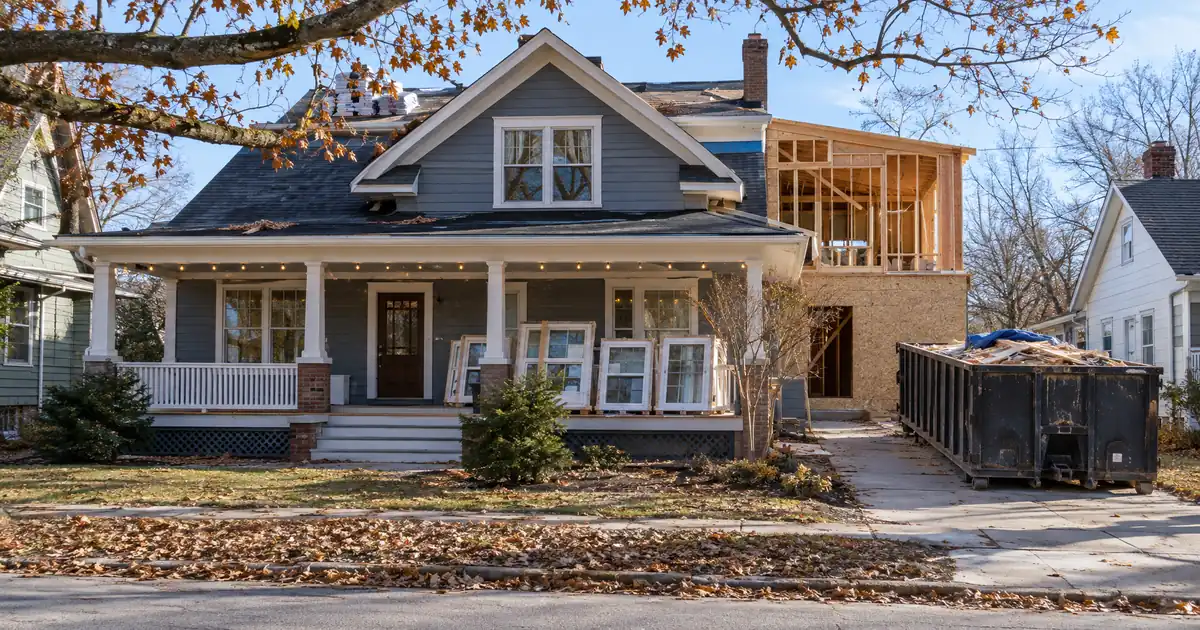
BRRRR is a strategy, not a loan product. The investor buys, rehabs, rents, refinances, and repeats. Hard money funds the buy and the rehab. A long-term loan then takes it out. AirDNA describes the same pattern: short-term loans to buy and renovate, then a refinance into long-term financing. The non-QM version of that long-term loan is the DSCR loan, which qualifies primarily on property-level rental income covering the payment, subject to lender guidelines. The complete DSCR loans guide covers the product in full. This article covers the exit.
DSCR Cash-Out Calculator
Run the cash-out numbers in your market
Rate source: Freddie Mac 30-yr average via FRED® — Federal Reserve Bank of St. Louis · effective Oct 22, 2026
Prefilled with starting assumptions — enter your property’s value, balance, taxes, and insurance for a more accurate picture.
Program parameters update from Lendmire’s centralized guideline source. Taxes and insurance are editable estimates.
As of Oct 22, 2026 · General Freddie Mac market benchmark, not a Lendmire loan offer. Property value, balance, taxes, and insurance are editable estimates. Maximum loan-to-value varies by lender, program, property type, and seasoning. Not a Loan Estimate, approval, or commitment to lend. Program availability and eligibility are subject to lender guidelines, credit approval, property review, and underwriting.
Key Terms Defined
- Payoff: the total owed to the hard money lender at closing: principal drawn, accrued interest, extension fees, and any exit fee.
- Seasoning: how long you must own the property before the new lender sizes the loan on appraised value instead of cost.
- Cash-out refinance: a refinance that returns cash to the borrower after the payoff and closing costs.
- Payoff-only refinance: a refinance that covers only the payoff and closing costs, with no cash back.
- Break-even appraisal: the lowest appraised value at which the new loan clears the payoff and exit costs.
- DSCR: monthly rent used for lender review divided by the full monthly payment (principal, interest, taxes, insurance, and any HOA dues).
Why Does the Exit Exist?
Hard money is short-term, interest-only paper. Terms on the hard money program run 6-18 months, with no multi-year options, and the figures vary by lender, property, and experience. The note has to outlast the rehab, the lease-up, the seasoning clock, the appraisal, and underwriting. A term that is too short is a real problem, and extension fees stack up fast.
That is why the exit lender gets picked before the hard money closes. Investors who shop for the takeout after the rehab is done tend to discover a maturity date and a seasoning clock pointing at each other. Many investors refinance out of hard money into long-term DSCR financing once the property is stabilized, and Lendmire brokers that path through select lenders in its network. The hard money exit refinance program page lays out that route.
The Four Tests, in Underwriting Order
Each test is independent. Strength on one does not waive another.
Test 1: Time owned
Across the wholesale network, cash-out typically requires about 6 months of ownership. The clock normally runs from the recorded deed, not from the end of the rehab or the signing of a lease. Seasoning is lender policy, not law. AirDNA notes that some investor-friendly lenders waive it, so the specific program matters. What fails here: assuming the clock started at rehab completion.
Test 2: Appraised value
The new lender orders its own appraisal. It sets the value cap and produces the market-rent opinion. DSCR means no personal-income verification, but it does not mean no appraisal. The appraiser looks at comparable sales of similar finish level, not at what you paid the contractor. Improvements may support a higher appraised value, depending on comps and underwriter review. Renovated comps, the scope of work, invoices, and before-and-after photos help the file. What fails here: treating your after-repair estimate as the number.
Test 3: Rent coverage
The DSCR compares rent used for lender review to the full payment on the new loan. The more cash you pull, the bigger the payment, and the lower the ratio. The lender may use the lower of the lease rent and the appraiser’s market rent. A ratio around 1.00 is the floor on select programs, and stronger ratios open better pricing and leverage. A separate select-lender path takes coverage below 1.00, with leverage and terms adjusted.
One caution. Clearing 1.00 is not positive cash flow. The ratio compares rent to PITIA only. Repairs, vacancy, management, utilities, and capex sit outside it. What fails here: a cash-out sized to the value cap that the rent cannot carry.
Test 4: Loan size against payoff
The loan is the smaller of what value allows and what rent supports. That smaller number then has to cover the payoff, closing costs, and any cash you want back. What fails here: a payoff that grew while the file sat in review.
The Payoff Math
Two formulas do most of the work. Both are plain arithmetic.
- Break-even appraisal = (payoff + exit costs) ÷ cash-out LTV cap.
- Cash back = new loan − payoff − closing costs. A negative result means cash to close.
Run the break-even with index units to see the shape. Say the payoff plus exit costs equals 100 units. Against a 75% cash-out LTV cap on a standard rental, the appraisal has to reach about 133 units just to clear the note with nothing back. At 120 units, the same file is short. At 160 units, there is room for cash back, subject to rent coverage. Terms depend on the lender’s guidelines, the property type, the leverage, and a full review of the credit profile.
The payoff is not a fixed number. It grows each month with accrued interest, and it picks up extension fees if the maturity date slips. Each month of delay raises the break-even appraisal. A payoff letter, not an estimate, is the real figure.
The White Coat Investor makes the point plainly: BRRRR is not a zero-down method, you need cash on hand, and a poor appraisal can cause trouble at the refinance. Hard money leverage itself is loan-to-cost, not a free ride. Fix-and-flip tiers run up to 85%, 90%, or 93% of project cost depending on completed projects, are always capped at 75% of after-repair value, and vary by lender, property, and experience.
Payoff-Only or Cash-Out?
Any cash back makes it a cash-out. That brings the lower leverage ceiling and the seasoning rule. A loan that covers only the payoff and closing costs is generally treated as rate-and-term, which on the DSCR sheet allows a higher leverage ceiling (up to 85%) and no cash back.
| Factor | Payoff-only | Cash-out |
|---|---|---|
| Cash back | None | Yes, if value and rent allow |
| DSCR LTV ceiling | Up to 85% | Up to 75% |
| Seasoning | Often more lenient | About 6 months |
| Best fit | Appraisal uncertain, clock not done | Equity proven, rent covers |
The decision rule is simple. If the appraisal is uncertain or seasoning is not finished, refinance only the payoff and leave the equity in the deal. The cost is a second closing later. Two closings mean two sets of costs, and refinance costs eat margin.
Step-by-Step Execution
1. Choose the exit lender first. Confirm program fit before the hard money closes, so the note’s maturity and the seasoning clock do not collide.
2. Rehab and lease. Keep the scope of work, invoices, photos, and the signed lease with deposit proof.
3. Confirm the seasoning date. Pull the recorded deed and settlement statement. The date on those is the clock.
4. Classify the refinance. Payoff-only or cash-out. Decide before the application, not after the appraisal.
5. Order the appraisal and rent opinion. The appraiser needs access and the rehab documentation.
6. Run the coverage test on the new payment. Rent used for lender review over full PITIA on the larger loan.
7. Request a payoff letter. It should itemize principal, interest, extension fees, and any exit fee. Ask for a per-diem so the number can be updated.
8. Close and release. The hard money lien is released at closing and the new lien takes its place.
The documents that stall files are predictable: lease and deposit proof, entity documents, the payoff letter, the recorded deed, rehab invoices, and proof of reserves. Reserves on DSCR cash-out typically run about 6 months of PITIA, and about 9 months above $1,500,000. LLC-held properties are generally acceptable, subject to program terms, but the operating agreement and entity paperwork must match the title.
Working Backward From Maturity
Count back from the hard money maturity date. Subtract underwriting, the appraisal, and the seasoning clock. Then add a cushion. A file that needs every day of the note to work has no room for a late appraisal or a missing document. The Hemlane BRRRR guide describes the cash-out refinance as the step that replaces the short-term loan, and that step only works if the note outlasts it.
Where the General Rule Breaks
Inside the seasoning window. A lender willing to close early typically sizes on the lower of appraisal or cost basis, meaning purchase plus documented rehab. The equity the rehab created stays locked until the clock runs. Early options are lender-specific.
Delayed financing. This is an agency exception for cash buyers, not a DSCR feature. It waives a waiting period only. Appraisal, coverage, credit, and reserves still apply, and it recovers documented cost, never after-repair value. A hard money lien on the subject property generally disqualifies it, because the purchase was financed. It rarely rescues a hard money buyer.
Rent limits the loan before value does. On many rehabs the appraisal looks fine and the coverage ratio is what caps the loan. Clearing the floor is still not the same as cash flow.
Overspent rehab. The appraiser does not automatically credit extra spend. Comps decide.
Maxed-out bridge. A hard money loan sized at its own ARV cap leaves no room for interest, fees, and exit costs. A rule of thumb in the investor community is to avoid investing more than 75% of ARV, and a bridge at the edge of its cap is where exits break.
Ineligible property types. Manufactured homes (single- and double-wide), log homes, and barndominiums are not offered in the network’s DSCR programs, so a rehab on one of those has no DSCR exit.
Credit. A 620 floor exists in parts of the network, most programs want around 660, and 700+ unlocks the strongest leverage tiers. Credit is its own test. Strong credit does not waive seasoning.
If the Appraisal Comes In Short
Bridge interest keeps running while you decide, so pick a path fast and document it.
| Path | Cash back | Main risk | When it fits |
|---|---|---|---|
| Bring cash to close | None | Capital stays tied up | Small gap, strong rent |
| Smaller loan | Less | Less capital recycled | Gap is moderate |
| Payoff-only | None | Second closing later | Seasoning not done |
| Wait and reappraise | Possible | Interest and fees keep growing | Note has runway |
| Challenge value with comps | Possible | Appraiser may hold firm | Clear comp evidence |
An appraisal reconsideration request is a routine step. A packet with recent renovated sales, condition adjustments, and the scope of work recovers value more often than a phone call does.
Common Mistakes on the Exit
- Sizing the plan on the ARV estimate instead of the new lender’s appraisal.
- Starting the seasoning clock at rehab completion instead of deed recording.
- Ignoring that the payoff grows every month.
- Pulling maximum cash and leaving no contingency.
- Choosing the exit lender after the hard money has already closed.
- Assuming a strong coverage ratio waives the waiting period.
- Reading 1.00 coverage as proof the property cash flows.
If you are buying or refinancing a rental property and want to see how the numbers work, Lendmire can help you compare DSCR loan options based on the property income, credit profile, leverage, and investor goals. Tax treatment varies; consult a qualified professional.
Frequently Asked Questions
Can I pay off hard money with a cash-out refinance right after the rehab?
Usually not on a cash-out basis. DSCR cash-out typically expects about 6 months of ownership from title recording. A lender that closes inside that window generally sizes on the lower of appraisal or cost basis, so rehab equity stays locked. A payoff-only refinance is often more flexible on timing.
What LTV applies when a DSCR loan pays off hard money?
Cash-out on a standard rental tops out at 75% LTV across most of the network. A rate-and-term refinance with no cash back can go up to 85% LTV. Short-term rental collateral is lower. Both are subject to lender guidelines, rent coverage, credit, and reserves.
Does my after-repair value size the new loan?
No. The new lender’s appraisal sets the value cap, and its market-rent opinion drives the coverage test. Your ARV is a planning number. Hard money tiers cap at 75% of after-repair value, but the DSCR lender runs its own numbers.
What if the hard money loan matures before seasoning ends?
Plan for it before purchase. Options include an extension, a payoff-only refinance, or bringing cash to close. Extensions add fees to the payoff, which raises the break-even appraisal. Choosing the exit lender before the hard money closes avoids most of this.
Does meeting the 1.00 coverage floor mean the property cash flows?
No. DSCR compares rent to PITIA only. Repairs, vacancy, management, utilities, and capex sit outside the ratio. Clearing the floor is a lender test, not a profit measure.
About Lendmire
Lendmire, NMLS# 2371349, is a non-QM mortgage broker serving real estate investors in 41 markets, including Washington, D.C., through DSCR investor loan programs. Qualification is generally reviewed around the subject property’s rental income, not the borrower’s W-2 history — a practical fit for LLC-titled portfolios and self-employed investors. All scenarios remain subject to lender review and program guidelines. Two consecutive Scotsman Guide Top Mortgage Workplace recognitions (2025, 2026).
Get Started
Ready to find the right loan for you?
In about two minutes you can review financing options available for your investment property. No commitment required.
Informational only. Not a Loan Estimate, approval, or commitment to lend. Program availability and eligibility are subject to lender guidelines, credit approval, property review, and underwriting.
References
2. The White Coat Investor: What is the BRRRR method
3. Hemlane: BRRRR method guide
This article is part of Lendmire’s hard money loan program — full qualification details, guidelines, and scenarios live on the program page.
Related reading: Can an Investor Do a Cash-Out Refinance on an Investment Property? · Hard Money Flip Loan Cash to Close and Reserve Requirements · How Much Hard Money Cash a Borrower With No Flip History Must Bring
Brandon Miller
Founder & CEO, Mortgage Loan Originator, Lendmire LLC
- Mortgage Loan Originator · NMLS# 1129696 · Verify on NMLS Consumer Access
- North Carolina Real Estate Broker · License# 343312 · Verify on NCREC
- North Carolina Insurance Producer · License# 19053198 · Property, Casualty, Life, Health · Verify on NAIC SBS
- Lendmire LLC · Firm NMLS# 2371349 · Verify firm licensure
Disclosures. The information presented in this article is general market commentary, not financial, legal, or tax advice. Lendmire is a mortgage brokerage (NMLS# 2371349) — not a direct lender or depository institution — and loan placement is subject to lender underwriting. Nothing in this content represents a commitment to lend. Loan terms, pricing, and program availability vary based on borrower qualifications, property characteristics, and state of subject property, and are subject to change at any time. Lendmire complies with Equal Housing Opportunity requirements. Consumer access: nmlsconsumeraccess.org.