
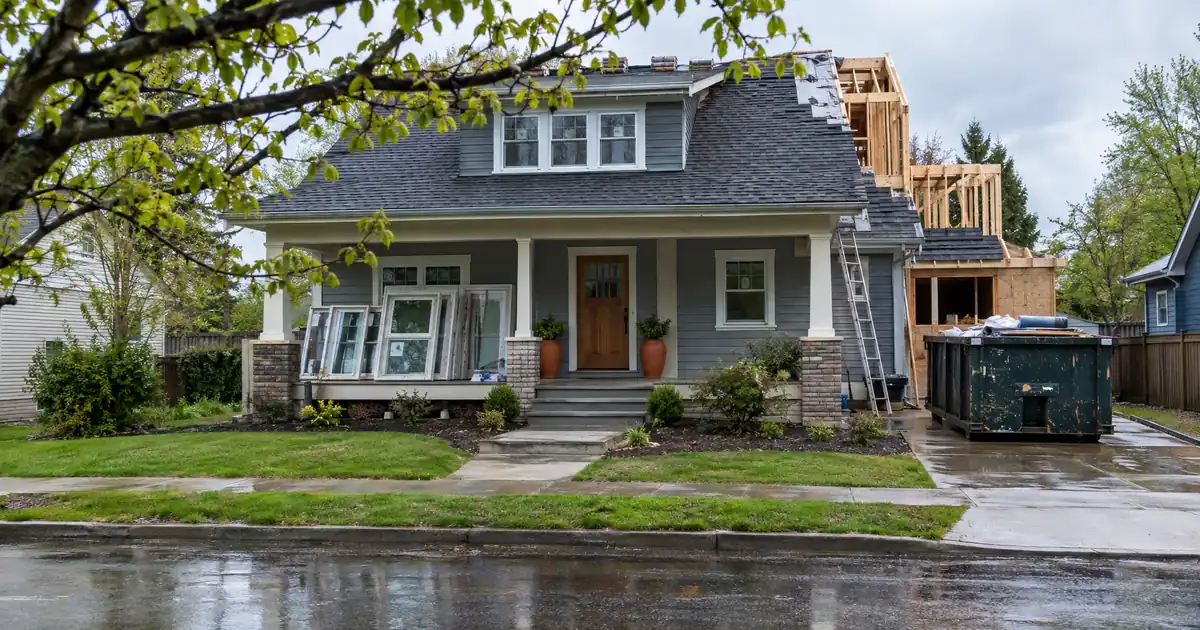
The Quick Read: A permitted ADU is a legal dwelling unit that a hard money lender can usually count in collateral value, while an unpermitted ADU is a collateral problem that lenders often exclude from value or rent, condition on permitting or removal, or decline, depending on the lender, the appraisal, and local rules. The safe plan is to underwrite the deal as if the unit does not exist. Whatever the unit adds beyond that is a bonus, not a foundation.
- Permitted ADU: it can be treated as real space, so it can support value and exit planning, subject to the appraisal and lender review.
- Unpermitted ADU: it may be left out of value and rent, so the deal has to work without it.
- The exit matters: a hard money loan is short-term, and the long-term lender who pays it off runs its own value and rent tests.
- Pricing the risk: an unpermitted unit makes sense mainly when the purchase price already reflects the risk, and the numbers hold with zero credit for the unit.
An accessory dwelling unit (ADU) is a second, self-contained living space on a lot: a garage conversion, a backyard cottage, a basement apartment. Hard money lenders look at it very differently depending on its legal status. This page lays out both options side by side so you can see which one fits your deal.
What this loan actually costs to carry.
Hard money is sized against the project and priced by time. Enter the deal and see how much the program will lend, the cash required at closing, the carry while you hold it, and what is left at the exit.
Leverage tiers on the current program: 85% with fewer than 2, 90% with 2 or more, 93% with 5 or more completed projects — every tier capped at 75% of after-repair value. Loan amounts up to $5,000,000, larger by exception; terms of 6 to 18 months, interest-only, no prepayment penalty. The rehab portion funds in draws against completed work, not at closing.
Program parameters shown update from Lendmire’s centralized guideline source. Rate, points, and months are editable assumptions, not quoted terms.
Cost cap sets the loan · positive spread
Illustrative estimate only — not a quote, Loan Estimate, approval, or commitment to lend. Rate, points, and months are editable assumptions. Hard money is business-purpose financing for real estate investors, not a consumer mortgage. Leverage on the current program tops out at 93% of project cost for investors with a documented track record, capped at 75% of after-repair value, with rehab funding up to 100% of the documented budget released in draws; actual terms vary by lender, borrower experience, property, and exit. Lendmire is a mortgage broker, not a lender.
Side-by-Side
Hard money is sized on the property’s collateral value and your exit plan, not on personal income. Legal status therefore lands directly on the number the lender trusts. The table shows published industry norms and how files usually play out across lenders; each lender’s own review controls.
| Factor | Permitted ADU | Unpermitted ADU |
|---|---|---|
| Basis of review | Collateral value and exit plan | Same, but the unit may be excluded |
| Value treatment | Can count as a legal unit | Often left out of value or ARV |
| Rent credit | Supported by lease or rent schedule | Often not counted in the rent test |
| Documentation | Permit, final sign-off, certificate of occupancy | Permit history, plan to legalize or remove |
| Property type | Fits the 1-4 unit scope when unit count works | Unit count and legal use must be confirmed |
| Entity vesting | LLC vesting is common, per lender program terms | Same, with added collateral review |
| Timeline risk | Low, since the paperwork exists | Higher, if legalization must finish before payoff |
| Reserves | Vary by lender and experience | Lenders may want more liquidity cushion |
| Exit into long-term loan | Appraisal can credit the unit | Exit test may fail if the unit is excluded |
Two notes on the table. Terms, leverage, and reserves vary by lender, property, and experience, and nothing here is a commitment to lend. Also, the table says “may” and “often” on the unpermitted side for a reason: no single rule governs how every hard money lender treats these units.
Key Terms Defined
Certificate of occupancy: the local sign-off that says a space meets code and may be lived in.
Legal nonconforming: a unit that predates today’s zoning rules and is allowed to remain, which is a different status from never having been permitted.
After-repair value (ARV): the estimated value of the property once the planned work is finished.
Collateral value: the value the lender is willing to count when it sizes the loan against the property.
Exit: how the hard money loan gets repaid, usually through a sale or a refinance into long-term financing.
Why Legal Status Changes the Loan
Hard money lenders say “asset-based.” Many borrowers hear “the lender ignores the paperwork.” The reality runs the other way. Because the property is the whole story, the lender cares about exactly what portion of it is real, insurable, and sellable.
An unpermitted unit raises three questions in a collateral review. Can it be counted as a legal dwelling? Would the city approve it if it were applied for today? And does the deal still work without it? A lender that answers “no” to the first two will usually answer the third question for you by sizing the loan to the property without the unit.
Some hard money lenders skip a full appraisal and use an internal valuation or a broker price opinion. That makes treatment depend on one lender’s collateral review instead of a standard form. Two lenders can look at the same unpermitted garage conversion and reach different conclusions. That is why the safe underwriting move is to assume the unit contributes nothing until a lender says otherwise in writing.
The appraiser is not a code inspector. An appraiser reports what is observed, comments on quality and market effect, and does not issue permits or condemn work. As an appraiser forum discussion of unpermitted additions notes, the appraiser’s job on work done without permits is to comment on quality, appearance, and any effect on market value. The lender then decides what to do with that commentary.
Agency Contrast, Briefly
Federal mortgage agency rules do not govern hard money or DSCR loans, so treat this as contrast only. Fannie Mae’s Selling Guide says an ADU allowed under current zoning should be considered legal. It also recognizes ADUs that predate the zoning ordinance as legal nonconforming. Its appraisal reporting policy has appraisers classify the unit as legal, legal nonconforming, or covered by a zoning exception.
The takeaway for an investor is simple. Even the most standardized corner of mortgage lending treats a grandfathered unit differently from a never-permitted one. Private lenders have no shared rulebook, so the distinction matters even more.
When a Permitted ADU Is the Better Fit
A permitted ADU is the better fit whenever your plan depends on the unit counting. That covers three common situations.
You are buying to rehab and refinance. A permitted unit can be part of the story the appraisal tells. Across hard money lenders, fix-and-flip leverage is typically 85% to 93% of project cost depending on completed projects, always capped at 75% of after-repair value. Bridge purchases without rehab run up to 80% of purchase price. Cash-out and rate/term refinances go up to 65% of value. All of that varies by lender, property, and experience, and every figure is a ceiling, not a promise. A permitted unit means the value the cap applies to is less likely to shrink at the lender’s review.
You plan to rent the unit and hold. If the ADU’s rent matters to your long-term refinance, permits matter far more than the hard money step. The long-term lender runs its own appraisal and rent schedule, and a permitted unit has the documentation to support both.
You want a clean sale. A permitted unit appears in the property’s records and can be marketed to a later buyer as a legal rental. An unpermitted unit often turns into a negotiation about price, disclosure, and what the buyer’s own lender will accept.
Permitted does not mean problem-free. A detached structure may have been approved as storage or an office, not a dwelling. A bedroom with a kitchenette is not automatically a legal separate unit. Always check what the permit actually authorizes, and ask for the final inspection and certificate of occupancy, not just the original permit application.
Unit count also matters. Hard money collateral scope is non-owner-occupied residential property of 1-4 units, so a legal second or third dwelling on a small property counts toward that total. Confirm the legal unit count with your lender before you rely on the unit.
When an Unpermitted ADU Is the Better Fit
An unpermitted ADU is the better fit only when you can answer yes to all of these questions.
- The purchase price already reflects the risk, and the deal pencils with zero credit for the unit.
- A lender has agreed in writing to the treatment of the unit in value and rent.
- You know whether the unit can be legalized under current zoning, or whether it must be removed.
- You can carry the loan long enough if legalization takes longer than planned.
The most useful discipline is to model the property as though the ADU does not exist. If the deal survives, then any value or rent the unit does contribute is upside. If it only works with the unit, the deal is leaning on the weakest piece of the collateral.
A modeled example. Say a seller prices a house with a backyard unit, and a meaningful slice of that asking price rests on the unit. Assume the lender’s valuation leaves the unit out. The leverage cap, such as 75% of after-repair value on a flip, now applies to a smaller base. You fund the gap from your own cash, and you cannot count on the unit’s rent at exit. This example is a modeled assumption, not market data, but the mechanics hold whenever a lender excludes the unit.
Some deals call for a middle path: buy at a discount that reflects the risk, then legalize. Local governments can help owners bring existing ADUs into compliance. Berkeley, California’s amnesty program, for example, has two pathways to legalization, and fee waivers and lender partnerships are among the tools such programs use. Programs like these are local and not available everywhere, so check with the building department before assuming any exist for your property.
Be careful with the legalization step itself. Whether a unit can be permitted after the fact depends on zoning and on whether the original build met code. Some jurisdictions would require opening walls or tearing the work out. Asking the city to legalize a unit that cannot be permitted can invite code enforcement, and the worst case is demolition. Test the question informally with the local building department, and ideally with a contractor or architect, before you rely on legalization as part of the plan.
An open code violation is a separate and harder problem than a quiet unpermitted unit. If the city has issued a notice with a compliance deadline, treat the property as a different deal altogether, because the clock is no longer yours.
How It Plays Out by Deal Type
Purchase with a bridge loan. A permitted unit lets you negotiate and plan with the unit in the picture. An unpermitted unit means you negotiate as if it were worth little and budget for legalization or removal.
Fix-and-flip. The resale buyer’s lender will ask the same questions yours did. A permitted unit widens your buyer pool. An unpermitted unit narrows it, and disclosure obligations can shape the price.
Refinance of an existing hard money loan. If the payoff depends on a refinance, the replacement lender will run its own appraisal and rent test. For a permanent rental loan, select programs in Lendmire’s wholesale network start at 1.00 coverage, while a separate select-lender path takes coverage below 1.00 with leverage and terms adjusted. Cash-out refinances on investment rentals top out around 75% LTV across most of the network, with about six months of seasoning a common expectation. All of it is subject to lender guidelines and property review.
Rental hold. DSCR (debt service coverage ratio) compares the property’s rent to its full monthly obligation. Clearing 1.00 is not the same as positive cash flow, because repairs, vacancy, management, utilities, and capital expenses sit outside the calculation. If the unit’s rent is excluded, the ratio is calculated on the main house alone.
The Exit Problem Nobody Models
Hard money terms run 6 to 18 months, interest-only, and the long-term refinance has to land inside that window. That is where an unpermitted unit hurts most. The loan is sized on one valuation, and the take-out is sized on another.
Think of it as two separate tests: the property’s value and the rent it produces. Both need to clear the long-term lender’s review. If your first loan assumed the unit counted and the second lender excludes it, the payoff can fail to clear, and you are left covering the gap or extending the loan.
Many investors refinance out of hard money into long-term DSCR financing once a property is stabilized, and Lendmire brokers that path. For the wider picture of how long-term investor loans work, the complete DSCR loans guide covers the program basics.
Size the short-term loan backward from the long-term one. Ask what value and rent the second lender is likely to credit, then confirm the first loan still works at that level.
Risks Beyond the Loan
Legal status affects more than the lender’s number. Insurance is the first issue, since coverage for a second unit may be limited or denied when the unit is unpermitted. Tenants are the second, because rent collection and habitability claims get harder when a unit lacks permits. A California law firm lists fines, insurance problems, and tenant lawsuits among the risks of ADU construction, though its discussion is state-specific.
Disclosure is the third issue. Sellers in many places must disclose known unpermitted work, and that shapes what a buyer will pay later. Enforcement also varies widely, sometimes even within one city. The absence of enforcement is not the same as lender acceptance, and an unpermitted unit that has been rented for years can still be excluded from the appraisal.
Short-term rental rules can vary by city, county, HOA, and property type, so investors should confirm local rules before relying on projected rental income from any unit.
Documents to Bring to the Lender Conversation
A short, organized package helps a lender evaluate either option. Gather the following.
- The permit, final inspection, and certificate of occupancy for the unit, or a written statement that none exist.
- Any municipal letter confirming legal nonconforming status, where the unit predates current zoning.
- Photos, a floor plan, and a description of kitchen, bath, sleeping area, and separate entrance.
- Lease history if the unit has been rented.
- Insurance confirmation that covers the second unit.
- A legalization plan, budget, and realistic timeline, if the unit is unpermitted.
Which Option Wins?
Neither option wins in the abstract. A permitted ADU is the better fit when the unit is part of your value story or your rent story, because it gives the lender something it can count. An unpermitted ADU is a fit only when you have priced the risk, verified that legalization is possible, and built a deal that works with zero credit for the unit.
If you cannot say yes to all three of those conditions, treat the unit as a liability on the file. Buy the house, not the unit. When a deal depends on the unit, the permit paperwork is not a detail to sort out after closing; it is the first thing to settle.
A last practical point on taxes: tax treatment varies; consult a qualified professional before relying on any deduction.
If you are buying, rehabbing or refinancing an investment property on a short timeline and want to see how the numbers work, Lendmire, a mortgage broker arranging financing through select lenders across 41 markets, including Washington, D.C., can help you compare hard money options based on the project, the exit plan, leverage, and your goals. The site’s illustrative calculator can give you a rough estimate before you talk to anyone.
Frequently Asked Questions
Can I get a hard money loan on a property with an unpermitted ADU?
Often yes, but the unit may not count. Lenders commonly exclude it from value or rent, condition the loan on permitting or removal, or decline the file. Terms vary by lender, property, and experience, and nothing here is a commitment to lend.
Will a lender count the ADU’s rent?
Not reliably. Treatment depends on the appraisal, the lender’s guidelines, the unit’s legal status, and its marketability, not on whether tenants are actually paying. Plan the deal so it works without the unit’s rent.
Does legalizing an ADU always raise value?
No. A legal unit may support a higher appraised value, depending on comparable sales and underwriter review. Legalization also costs money and time, and not every unit can be legalized under current zoning.
What if the city will not approve the unit?
Then the unit may have to be removed, and the deal has to be priced for that outcome. Check feasibility with the building department before you commit, because asking the city to legalize a unit that cannot be permitted can invite enforcement.
Do the rules vary by state?
Yes. Zoning, permits, and enforcement come from the city or county, and amnesty or streamlining programs exist in some places and not others. Each lender then applies its own guidelines on top of the local rules.
For current guidelines and terms, see Lendmire’s hard money loan programs page.
About Lendmire
Lendmire is a non-QM mortgage brokerage (NMLS# 2371349) arranging DSCR investor loans in 41 markets, including Washington, D.C. DSCR eligibility is generally reviewed around property-level rental income rather than personal income, subject to lender and program guidelines, a fit for self-employed investors and LLC-owned portfolios. Lendmire was recognized as a Scotsman Guide Top Mortgage Workplace in 2025 and 2026.
Many investors treat hard money as the acquisition tool and plan the exit up front – see the hard money loan overview.
Get Started
Ready to find the right loan for you?
In about 30 seconds you can review financing options available for your investment property. No commitment required.
Informational only. Not a Loan Estimate, approval, or commitment to lend. Program availability and eligibility are subject to lender guidelines, credit approval, property review, and underwriting.
References
1. Appraisers Forum, Calling Unpermitted an ADU
2. Fannie Mae Selling Guide, Special Property Eligibility Considerations
3. Fannie Mae UAD 3.6 appraisal policy
4. GLG Attorneys, Risks of ADU Construction
This article is part of Lendmire’s hard money loan program — full qualification details, guidelines, and scenarios live on the program page.
Related reading: Renegotiate vs Reconsideration When a DSCR Loan Comes in Short · How to Make a DSCR Cash-Out Cover Your Hard Money Note and Rehab Cards · No-Reserves DSCR Loan vs Standard DSCR Loan on Pricing and LTV
Brandon Miller
Founder & CEO, Mortgage Loan Originator, Lendmire LLC
- Mortgage Loan Originator · NMLS# 1129696 · Verify on NMLS Consumer Access
- North Carolina Real Estate Broker · License# 343312 · Verify on NCREC
- North Carolina Insurance Producer · License# 19053198 · Property, Casualty, Life, Health · Verify on NAIC SBS
- Lendmire LLC · Firm NMLS# 2371349 · Verify firm licensure
Legal disclosures. Lendmire (NMLS# 2371349) is a state-licensed mortgage brokerage that arranges financing through wholesale lender relationships. Lendmire is not a direct lender, depository institution, or registered financial advisor. The discussion above is general informational content about real estate financing — it is not financial, legal, or tax advice, and readers should consult licensed professionals for guidance on their individual circumstances. Loan inquiries are subject to lender underwriting; this article does not represent a commitment to lend. Loan terms, rates, and qualification standards vary by borrower, property, and state, and are subject to change at any time. Equal Housing Opportunity. NMLS Consumer Access: nmlsconsumeraccess.org.