
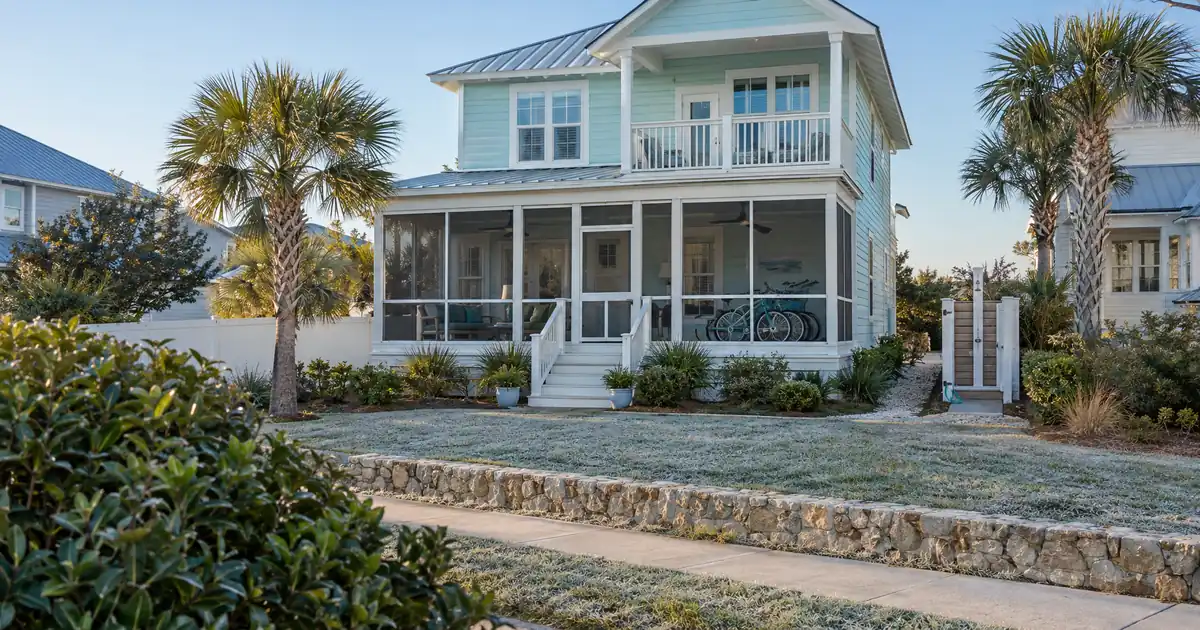
The Quick Read: No, a primary residence financed with bank statements cannot operate as a full-time Airbnb if you do not live there, because you certify at closing that you will occupy the home, and how you document income never changes that promise made to the lender. The legitimate version is a host who really lives in the home and rents a room, a suite, or the whole place during limited absences. A pure short-term rental belongs on an investment-property loan.
- Bank statements describe how income is proven. They say nothing about whether you live in the property.
- Renting a room, a basement suite, or an ADU while you live there is generally consistent with owner occupancy.
- Buying a home you never intend to live in, while calling it your primary residence, is an occupancy misrepresentation.
- A full-time Airbnb is usually financed as an investment property, using a bank statement loan on a rental or a DSCR loan.
- Moving out later, after a good-faith purchase, is different from misstating your plans at signing.
What Does “Primary Residence” Mean to a Lender?
A primary residence is the home where you actually live most of the year. The lender prices and underwrites the loan on that assumption. Owner-occupied loans carry the best leverage and the most flexible terms, and the lender gives them because borrowers who live in a home tend to protect it.
What your deposits qualify you for.
Alt-doc programs read 12 months of business or personal bank deposits instead of tax returns. Enter your average monthly deposits and see the income a lender would credit you.
The expense factor is set by the lender from your business type and profit-and-loss statement; it is not a number you choose. This widget quotes no rate and no payment.
Program parameters shown update from Lendmire’s centralized guideline source.
Estimate
Illustrative estimate only — not a quote, Loan Estimate, approval, or commitment to lend. Deposit average, expense factor, and housing ratio are editable assumptions; the expense factor a lender applies is set from your business type and documentation. No interest rate or monthly payment is quoted here. Purchase capacity is a simplified illustration and does not account for taxes, insurance, HOA dues, or other debts. Alt-doc income documentation is available on consumer mortgages in the states where Lendmire is licensed for consumer lending; actual terms vary by lender, borrower, and property.
Occupancy is a promise about intent. You sign an occupancy declaration on the application and again at closing. Conventional loan documents commonly add a clause requiring you to move in within 60 days and live there for at least one year. Bank statement programs follow their own program sheets on this point. Across the wholesale network, the pattern is the same: the occupancy terms in the loan documents are what you are held to, and they differ by lender.
That promise is the whole story here. A full-time Airbnb that you do not live in is a business. The loan was written for a home.
Do Bank Statements Change the Occupancy Rules?
No. Bank statement loans describe how a lender verifies your income. They do not set occupancy rules.
Here is the plain mechanics. The lender reads 12 months of business or personal bank statements. It averages the eligible deposits and applies an expense factor to estimate income. A borrower is reviewed on documented income under the applicable program, subject to lender guidelines. Expense factors differ by lender, so no universal formula exists.
“Non-QM” is the label for loans that use this kind of alternative documentation instead of traditional personal-income documentation and pay stubs. It is a family name for how income is documented, not a ruling on occupancy. A bank statement loan can sit on a primary residence, a second home, or an investment property. Each carries its own occupancy declaration.
Many self-employed borrowers assume the flexible paperwork comes with flexible occupancy. It does not. Documentation flexibility and occupancy flexibility are separate questions, and only the first one is on offer.
For leverage, select lenders in the network typically go up to 90% LTV on a primary-residence purchase or rate-and-term refinance, and the strongest files earn the top of that range. LTV, short for loan-to-value, is the loan balance divided by the property’s value. An asset-depletion alternative, which is reviewed against liquid assets instead of deposits, typically runs up to about 80% LTV on a primary residence. Reserves commonly sit around six months of the housing payment. All of this is subject to lender guidelines, credit, and property review.
Where Does Hosting Fit on a Primary-Home File?
Hosting fits when you live there and the rental is incidental to your own use. It stops fitting when the home becomes a full-time rental that you do not occupy. The table shows the spectrum as lenders tend to read it.
| Hosting pattern | Fits a primary file? | Better lane if not |
|---|---|---|
| Rent a room, suite, or ADU while living there | Generally yes | Not needed |
| Rent the whole home during limited absences | Often yes, if it is truly your home | Not needed |
| Live elsewhere most of the year, rent full-time | No | Investment-property loan |
| Buy a home only to run as an Airbnb | No | Investment-property loan |
An investor-education guide on how long to live in a home before renting it notes that the one-year clause is not triggered when only part of the house is rented. Roommates and room rentals are not occupancy fraud. The risk starts when your own use of the home shrinks to the point that it is not a residence anymore.
There is no published bright line for how much hosting is too much. Lenders and reviewers read the overall picture: where you sleep, where your mail goes, and where your life is. If you can honestly say you live there, you are on firm ground. If you have to build a story to say it, you are not.
How Do Hosting Deposits Count on a Bank Statement File?
Whether a given borrower’s Airbnb deposits count as qualifying income is a program-level question, and answers differ by lender. Some programs count rental deposits you have a documented history of receiving. Others treat them differently or exclude them. Never assume your hosting payouts count as income until the program says so.
Two situations get confused. The first is a host who has run other properties for a year or more, with platform payouts showing up in their bank statements. That history is part of the income picture under programs that count it. The second is projected hosting income from the home being bought. A history of deposits is evidence. A projection is a forecast, and lenders treat the two very differently.
Deposit hygiene matters on any bank statement file. A few habits make a file cleaner:
- Keep hosting payouts in one account, separate from personal transfers.
- Match platform earnings reports to the deposits that actually landed.
- Label or document transfers between your own accounts, since lenders typically exclude them from income.
- Do not mix unrelated large deposits into the account you plan to submit.
Consider a self-employed designer who hosts two rooms in the home she lives in. Her statements show steady business deposits plus platform payouts. She qualifies, if she does, on the documented income under the applicable program. The occupancy declaration stays honest, because she lives there. That is the clean version of this story.
How Do Lenders Spot a Mismatch Between Stated and Actual Occupancy?
They rely on evidence of behavior. A claimed residence can be contradicted by a driver’s license address, voter registration, utility accounts, and the address on a tax return. Commentary from law firms lists these as the kinds of records that tend to surface in a dispute.
Why do lenders care so much? An FDIC-hosted Federal Reserve Bank of Philadelphia paper studied loans from the mid-2000s housing boom. Borrowers who claimed owner occupancy but behaved like investors defaulted at nearly twice the rate of comparable true owner-occupants. That is historical data, but it explains why occupancy sits at the center of pricing and underwriting. The better terms on owner-occupied loans exist because of how those borrowers behave.
False statements to a federally insured lender are also a matter of federal criminal law. Prosecutors must show the statement was material and knowingly made. An honest mistake does not automatically qualify. Most occupancy problems that surface get resolved through lender demands rather than prosecution. The point is not to scare anyone. The point is that a signed certification is a real statement, and the borrower owns it.
Why Is a Pure Rental Treated as a Different Product?
Because the law treats an owner-occupied home and a business rental differently. An owner-occupied file is a consumer mortgage, so consumer disclosure rules (TRID) apply to it. A bank statement loan on a non-owner-occupied rental, including a short-term rental, is a business-purpose loan and is exempt from those rules. Occupancy decides which regime applies. You cannot hold both on one loan for one property.
The CFPB’s Regulation Z commentary draws the line. Credit to acquire a rental property that is not owner-occupied is business-purpose. If the owner expects to occupy the property for more than 14 days in the coming year, it can no longer be treated as non-owner-occupied. A compliance trade explainer adds that non-owner-occupied rental credit is exempt even for a single unit.
So a primary residence and a pure business rental are legally different products. A home cannot be both on one loan. This is the structural reason the primary-residence lane and the investor lane exist.
What If the Plan Really Is a Full-Time Airbnb?
Finance it as an investment property. Two lanes are common.
DSCR loans are designed for non-owner-occupied investment properties. Because they are business-purpose investor loans, they are reviewed differently from a standard owner-occupied mortgage. DSCR stands for debt service coverage ratio, which measures whether a property’s rent covers its full monthly obligation. A DSCR loan is reviewed primarily on property-level rental income covering the payment, subject to lender guidelines. The complete DSCR loans guide walks through the mechanics.
A bank statement loan on a non-owner-occupied rental is the other lane. It suits an investor whose income is easier to prove through deposits than through the property’s rent. Leverage for an investment purchase on bank statement documentation varies by lender, so there is no single number to quote. Investment-property cash-out on bank statements tops out around 75% LTV.
| Factor | Bank statement, primary home | Rental lane (DSCR or bank statement) |
|---|---|---|
| Occupancy | You live there | You do not live there |
| Income basis | Your documented deposits | Property rent, or your deposits |
| Leverage cue | Up to 90% LTV on a primary purchase | Varies; investment cash-out near 75% |
| Disclosure regime | Consumer mortgage | Business-purpose |
| Fits full-time Airbnb? | No | Yes |
Lendmire’s comparison of a bank statement loan versus DSCR for a full-time Airbnb host goes deeper on choosing between those two investor lanes. A DSCR above 1.00 also does not mean a short-term rental cash-flows, since management, maintenance, and capital reserves sit outside the ratio.
One more point on scale. DSCR files do not stack your personal debt the way income-based files do, so they tend to scale better for an investor adding properties. Terms and eligibility vary by program, and some lenders allow closing in an LLC, subject to program terms.
The short-term rental side of this deserves a plain warning. Short-term rental rules can vary by city, county, HOA, and property type, so investors should confirm local rules before relying on projected rental income. Insurance policies also need to match actual use. A plan can fail on any of these even when the loan is the right one.
Which Loan Lane Fits Your Situation?
Match the table to what you will actually do with the home.
| If you are… | Then the likely lane is… |
|---|---|
| A live-in host renting a room or suite | Bank statement, primary residence |
| A house-hacker living in one unit of a small multifamily | Primary residence, owner-occupied |
| A relocating host who may move out later | Primary now; convert honestly when you move |
| A first-time host unsure about hosting | Primary residence; document hosting later |
| A full-time host who will not live there | Investment lane: DSCR or bank statement rental |
| A host wanting part-time personal use | Second home, if real part-time use and control |
A second home is a legitimate fit when you truly use it part-time and keep exclusive control. Rental income cannot be what qualifies you under a second-home program. Programs differ on how much rental use a second home can have, so ask before you rely on it.
What If Plans Change After Closing?
Changed circumstances after a good-faith purchase are not fraud. The test is your intent at signing. If you bought a home to live in, then took a job elsewhere, moving out and renting the property is a legitimate path. Keep the paperwork honest and check your loan documents for notice or consent language.
The reverse also applies. Declaring a property as an investment and then moving in is also a misrepresentation. Occupancy has to match the declaration in both directions.
If you want to keep the home and buy another primary residence, the sequence matters. Establish the new home first, show you really live there, and then treat the old home as a rental. Some lenders require time in the new home before they count the old property’s rent. A DSCR loan can then refinance the old home as an investment property, based on its rent.
What Else Can Block the Plan Besides the Loan?
Several things sit outside the loan entirely:
- HOA rules. Many associations restrict or ban short-term rentals regardless of your financing.
- Local rules. Permits, caps, and registration requirements vary widely by location.
- Insurance. A standard homeowner policy may not cover commercial hosting activity.
- Lease and covenant terms. Deed restrictions and loan covenants can limit rental use.
Check all four before you commit to a hosting plan. Tax treatment can depend on how the funds are used and how the property is held; borrowers should keep clear records and speak with a qualified tax professional before relying on any deduction.
Key Terms Defined
Occupancy: how you use the property, as your primary home, a second home, or an investment property.
Bank statement loan: a mortgage that is reviewed around documented income from 12 months of bank deposits instead of traditional personal-income documentation, under the applicable program.
Non-QM: a loan type that uses alternative documentation, which is a statement about paperwork and not about occupancy.
DSCR: the ratio of a property’s rent to its full monthly obligation, used on investment property loans.
LTV: the loan balance as a percentage of the property’s value.
Business-purpose loan: a loan made to buy or hold a property for investment, which follows different disclosure rules than a consumer mortgage.
Reserves: liquid savings, commonly around six months of the housing payment, held after closing.
Frequently Asked Questions
Can I rent my whole primary home on Airbnb while I travel?
Often yes, if the home is truly your residence and the rental is limited to periods when you are away. The occupancy promise is about where you live, not whether the house is ever empty. Check your loan documents, your HOA rules, and your insurance before listing.
Do I have to tell the lender I plan to host?
Answer every application question honestly. If you plan to rent rooms while living there, say so when asked, and program guidelines will determine how that affects the file. Hiding a plan that contradicts your occupancy declaration is the problem, not the hosting itself.
Can my Airbnb deposits count as income on a bank statement loan?
It depends on the program. Some count a documented history of rental deposits, and others do not. Projected income from the home you are buying is treated differently from deposits you have already received.
Is there a legal 12-month rule before I can rent a primary home?
The one-year clause comes from the loan documents rather than a statute, so your actual paperwork controls. Conventional loan documents commonly require occupancy for at least a year. Bank statement programs follow their own program sheets, and terms vary by lender.
What loan should I use if I want a full-time Airbnb I will not live in?
Use an investment-property loan. A DSCR loan is reviewed primarily on the property’s rent covering the payment, subject to lender guidelines. A bank statement loan on a non-owner-occupied rental is the other path for investors who prefer to document their own deposits. Consumer bank statement programs for primary homes are available in 16 states.
Next Steps
Decide the occupancy first, because everything else follows from it. Every file is underwritten individually, and nothing here is a commitment to lend.
Investors focused on short-term rentals can review DSCR loans for Airbnb and short-term rentals.
About Lendmire
Lendmire — NMLS# 2371349 — is a mortgage broker that arranges bank statement, P&L-only, 1099-only and asset-based home financing in 16 states through wholesale lenders, on primary residences, second homes and investment properties. Every option is subject to the lender’s guidelines and full underwriting. Scotsman Guide named Lendmire a Top Mortgage Workplace in both 2025 and 2026.
Get Started
Ready to find the right loan for you?
In about 30 seconds you can review financing options available for your home or investment property. No commitment required.
Informational only. Not a Loan Estimate, approval, or commitment to lend. Program availability and eligibility are subject to lender guidelines, credit approval, property review, and underwriting.
References
1. iPropertyManagement – How Long Before Renting a Primary Residence
2. FDIC-hosted Federal Reserve Bank of Philadelphia paper on occupancy misrepresentation
3. CFPB – Regulation Z § 1026.3 and commentary
4. Compliance Alliance – Regulation Z and Investment Properties
This article is part of Lendmire’s bank statement loan program — full qualification details, guidelines, and scenarios live on the program page.
Related reading: How a 24-Month Bank Statement Loan Works in an LLC · Can You Combine W-2 Income With Bank Statement Income on a Jumbo Loan? · How Much Down Payment Does a Golf Community Home With a Bank Statement Loan Need?
Brandon Miller
Founder & CEO, Mortgage Loan Originator, Lendmire LLC
- Mortgage Loan Originator · NMLS# 1129696 · Verify on NMLS Consumer Access
- North Carolina Real Estate Broker · License# 343312 · Verify on NCREC
- North Carolina Insurance Producer · License# 19053198 · Property, Casualty, Life, Health · Verify on NAIC SBS
- Lendmire LLC · Firm NMLS# 2371349 · Verify firm licensure
Important disclosures. Lendmire (NMLS# 2371349) is a licensed mortgage brokerage. Lendmire is not a direct lender, depository institution, or financial advisor. All loan inquiries are subject to lender underwriting; this article does not constitute a commitment to lend. Rates, terms, and program guidelines are subject to change without notice and vary by borrower profile, property type, and state. Information in this article is general in nature and is not financial, legal, or tax advice. Equal Housing Opportunity. NMLS Consumer Access: nmlsconsumeraccess.org.