
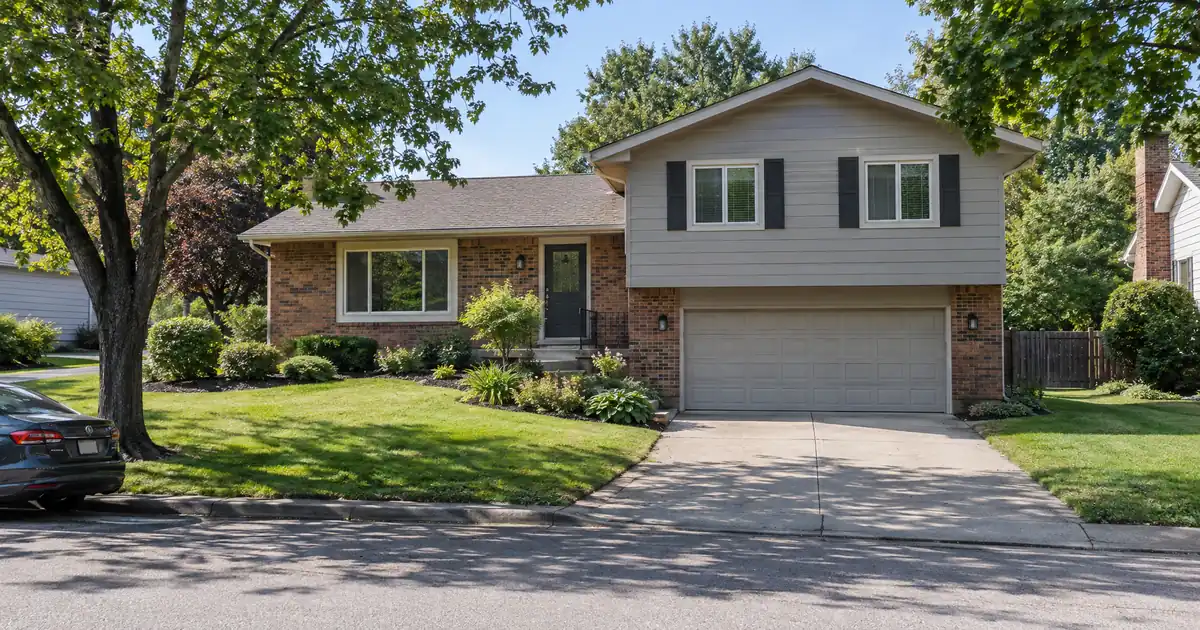
The Quick Read: Usually neither is the first decision, because the real choice is whether to replace your cheap first mortgage at all; a cash-out refinance, DSCR or bank statement, reprices the entire balance, while a second lien prices only the new money, so test that first and pick the qualifying method second. A DSCR loan is reviewed primarily on property-level rental income covering the payment, subject to lender guidelines. A bank statement loan is reviewed on documented income under the applicable program, subject to lender guidelines.
- Small draw against a large, cheap balance: keep the first mortgage and add a second lien.
- Large draw, or a rental held in an LLC: a DSCR cash-out is usually the cleaner route, program permitting.
- Thin rent coverage but strong personal deposits: a bank statement cash-out may be the door that opens. On an investment property it tops out around 75% LTV on a cash-out; owner-occupied cash-out reaches up to 80%.
- Rent, not equity, often sets the cap on a DSCR cash-out. Check coverage before you count your equity.
Key Terms Defined
Six terms come up again and again below. Here they are in plain words.
- DSCR (debt service coverage ratio): monthly rent divided by the full monthly housing payment, meaning principal, interest, taxes, insurance and any HOA dues. A ratio of 1.00x means rent matches the payment.
- LTV (loan-to-value): the loan balance as a percentage of the property’s appraised value. CLTV is the same math with every loan on the property added together.
- Cash-out refinance: a new loan that pays off the old one and hands you the difference in cash.
- Second lien: a separate loan or credit line recorded behind your first mortgage. The first mortgage stays untouched.
- Bank statement qualification: income built from 12 months of deposits, with the lender applying an expense factor. Factors vary by lender.
- Seasoning: how long you must own a property before a lender will lend against its current value. It is lender policy, not law.
DSCR Cash-Out Calculator
Run the cash-out numbers in your market
Rate source: Freddie Mac 30-yr average via FRED® — Federal Reserve Bank of St. Louis · effective Oct 8, 2026
Prefilled with starting assumptions — enter your property’s value, balance, taxes, and insurance for a more accurate picture.
Program parameters update from Lendmire’s centralized guideline source. Taxes and insurance are editable estimates.
As of Oct 8, 2026 · General Freddie Mac market benchmark, not a Lendmire loan offer. Property value, balance, taxes, and insurance are editable estimates. Maximum loan-to-value varies by lender, program, property type, and seasoning. Not a Loan Estimate, approval, or commitment to lend. Program availability and eligibility are subject to lender guidelines, credit approval, property review, and underwriting.
Which Fork Comes First?
Keep-or-replace comes first. Whether the first mortgage stays or goes is a structure decision, and DSCR versus bank statements is a documentation decision that only matters once you have chosen replacement.
Most people shop these in reverse. They compare qualifying methods, pick a favorite, and only later discover the loan wipes out the cheap debt they came in with. A replacement loan pays off the old mortgage entirely. Net cash is the new loan, minus the payoff, minus closing costs, minus any prepayment charge on the old note.
So check the old note first. A prepayment charge comes straight out of your proceeds.
A second lien works differently. The old first mortgage keeps running. You pay market pricing only on the new money. The catch is that second liens have their own gates: title restrictions, a combined LTV limit, and, on a rental, underwriting that leans on you rather than the rent.
Why the Lock-In Is Worth Protecting
Cheap debt is an asset, and a cash-out refinance spends it. The blended-cost test shows how much. Weight the old balance and the new money by size, then compare that mix to one brand-new loan on the whole amount.
When the old balance is big and the draw is small, the old low coupon dominates the blend. Replacing it makes little sense. When the draw is large against a modest old balance, the gap narrows, and a single replacement loan can win outright.
You are not unusual if you hold sub-4% debt. Wolf Street’s analysis of federal mortgage database figures shows 19.5% of outstanding mortgages sit below 3% and 49.9% sit below 4%, and it reports that the unwinding of the lock-in has stalled. Those figures cover all mortgages, not only investor loans.
DSCR or Bank Statements: Which Side of Your File Is Stronger?
If a replacement loan is the right answer, pick the method that fits the stronger side of your file. DSCR asks whether the property can carry the debt. Bank statements ask whether your deposits show a better income picture than your traditional personal-income documentation do.
Across the select lenders in Lendmire’s wholesale network, the split looks like this.
| Factor | DSCR cash-out | Bank statement cash-out |
|---|---|---|
| What is tested | Property rent vs. payment | Your deposits and DTI |
| Core documents | Lease or rent schedule, appraisal | 12 months of statements |
| Occupancy | Investment property only | Primary, second home, investment |
| Entity title | LLC often fits, program permitting | Usually personal title |
| What binds first | Coverage ratio | DTI ceiling |
| Leverage on investment cash-out | Set by program; lower for STR collateral | Around 75% LTV |
Two rows deserve a second look.
DSCR’s advantage is scale. Each property stands on its own rent, so a sixth or tenth rental does not drag down the seventh. Bank statements stack every new mortgage against one income base. You can hit a DTI ceiling long before you run out of equity.
Bank statements, meanwhile, are not limited to your home. On an owner-occupied cash-out, programs reach up to 80% LTV, by loan size and credit. If you are a self-employed landlord whose traditional personal-income documentation understates your cash flow, that route may suit you better than the property’s rent does. Leverage, reserves, and pricing vary by lender and program; the final terms follow the full file review.
A Worked Example: Rent Caps the Draw Before Equity Does
Run the numbers on a modeled landlord. These are assumptions for illustration, not market data.
Assume the existing first mortgage is about 45% of the property’s value. Rent covers that cheap payment at roughly 1.9x. Investment cash-out tops out around 75% LTV, so the equity test alone leaves about 30 points of value to draw. Terms vary by lender guidelines, property type, leverage, credit profile, and full file review.
Now pull half of that room, taking the balance to roughly 60% of value. The balance is bigger, and the whole thing is repriced. Coverage drops to something near 1.1x. That clears a 1.00x floor, which is the floor on select programs, with a little room.
Pull the full 30 points and the balance reaches 75%. Coverage on the modeled math falls to around 0.9x. Equity still allows it. Rent does not.
Here’s the catch: the second test, not the first, set the limit. Equity is a ceiling. Coverage is the one people forget.
At 0.9x, the file is not dead, but it is no longer a standard-floor DSCR file. Select lenders in the network do offer programs below 1.00x coverage, but LTV and terms adjust. Other paths include a smaller draw, a bank statement cash-out if your deposits are strong, or a second lien that leaves the cheap first alone. Each is reviewed subject to lender guidelines, credit approval and property review.
Where Bank Statements Still Matter in a DSCR File
They matter, just not as the income source. A DSCR file does not ask for personal income documentation, but lenders still look at your accounts. Statements commonly show reserves, the source of your down payment or cleared funds, and proof that rent is actually arriving.
Many investors skip this step. They assume DSCR means no paperwork. It doesn’t.
Strip away traditional personal-income documentation, and you still need a lease or rent schedule, a full appraisal, entity papers, reserves and a credit check. Statements keep earning their place. They just do a different job. Bank statement reserves on alt-doc files run around 6 months of the housing payment, and DSCR cash-out files commonly test reserves too, so the cushion is yours either way.
A 1.00x ratio also does not mean the property is profitable. Repairs, vacancy, management and capex sit outside the ratio.
What If Your Rent Falls Short?
You have three realistic moves. Shrink the draw, change the documentation, or change the structure.
A smaller draw raises coverage, because a smaller new balance means a smaller payment. A bank statement cash-out swaps the property test for a borrower test, which helps if your deposits are stronger than the rent. Or leave the first mortgage in place and add a second lien, which is underwritten on you rather than the rent.
For a closer look at that middle option, Lendmire’s piece Can a Lock-In Landlord Use Bank Statements for a DSCR Cash-Out? walks through it.
One caution on second liens. Equity lines on the network generally require title in your own name or a revocable trust, not an LLC. A landlord whose rental sits in an LLC may have no line option at all. That alone can decide the product before income ever comes up.
DSCR vs. conventional financing
There are two common ways to finance an investment property, and they qualify you differently — here’s how investors weigh them.
Why investors choose it
- Qualifies on the property’s rental income — no personal tax returns, W-2s, or pay stubs needed to document income.
- No personal debt-to-income ceiling to clear, so existing mortgages and obligations don’t cap your borrowing the same way.
- Can be closed in an LLC, keeping the property inside a business entity.
- Built for scaling — not held to the limit on number of financed properties that conventional financing applies.
- Underwriting centers on the deal: generally qualifies when the rent covers the payment, a 1.00x coverage ratio being a common baseline (confirmed in underwriting).
- Designed specifically for investment property, including long-term and, where the program allows, short-term rentals.
Where it’s strong
- Often the lowest ongoing financing cost for a buyer who fully qualifies on personal income — a fit for a first property or a cost-first purchase.
Trade-offs for investors
- Requires full personal income documentation and must fit within a debt-to-income limit — salary, existing debts, and other mortgages all count.
- Typically held in your personal name rather than a business entity.
- Caps how many financed properties you can carry, which can become a ceiling as a portfolio grows.
- Evaluates you as a borrower as much as the property, which usually means more paperwork.
How investors usually choose: a first or single property often optimizes for the lowest financing cost; portfolio builders often optimize for leverage, vesting in an LLC, and scaling past conventional caps. The right answer depends on your goals, the property, and current guidelines — both paths run through select lenders in Lendmire’s wholesale network, with eligibility and terms confirmed in underwriting.
Title, Occupancy and What the Cash Is For
Occupancy decides which rulebook applies to your file. DSCR loans are designed for non-owner-occupied investment properties. Because they are business-purpose investor loans, they are reviewed differently from a standard owner-occupied mortgage.
Owner-occupied bank statement files are consumer mortgages, and the consumer disclosure regime applies. A bank statement loan on a rental, including a short-term rental, is business-purpose and exempt from TRID.
Purpose is not automatic, though. Credit to acquire, improve or maintain non-owner-occupied rental property is treated as business purpose under Regulation Z, but the lender decides the primary purpose in each case. A law-firm analysis makes the related point that business purpose does not mean compliance-exempt. Describe your use of funds accurately. Proceeds spent on personal needs can change the answer.
Tax treatment can depend on how the funds are used and how the property is held; investors should keep clear records and speak with a qualified tax professional before relying on any deduction.
If You Are This, Lean That
| Your situation | Lean toward |
|---|---|
| Small draw, large cheap first | Keep the first, add a second lien |
| Large draw, strong rent coverage | DSCR cash-out |
| Rental held in an LLC | DSCR cash-out (program permitting) |
| Thin rent, strong deposits | Bank statement cash-out |
| Equity in the home you live in | Owner-occupied bank statement cash-out |
| Cash earns less than repricing costs | Do nothing |
Two more rows are worth saying out loud.
Do nothing is a legitimate answer. If the cash does not earn more than it costs to reprice the whole balance, or you will not hold the property long enough to outlast the costs, the low first mortgage is worth more than the cash.
Both routes is another. Plenty of landlords own a home and a rental. A bank statement loan may suit the equity in the home you live in, while DSCR suits the equity in the rentals. They are separate files.
Prep and Sequencing
For a DSCR cash-out, gather the lease or rent schedule, entity papers, proof of reserves and a payoff statement on the existing loan. For a bank statement route, gather 12 months of statements, and keep business and personal accounts separate where you can. Explain lumpy deposits and transfers between your own accounts before the lender asks.
If the cash will fund your next purchase, sequence it. Pull the equity first, hold reserves for both properties, and then buy. Lendmire’s article How to Tap Home Equity on Bank Statements to Buy a Rental covers that order of operations.
Seasoning deserves a quick check too. Lenders commonly want about six months from the date the deed was recorded, but that is lender policy. A recent cash purchase may have other options.
Loan sizes on the bank statement side run roughly $125,000 to $3,500,000, though each file is underwritten individually. The complete DSCR loans guide covers the rental-income side in more depth.
Frequently Asked Questions
Can I pull equity from the home I live in with a DSCR loan?
No. DSCR is investment-property only. Equity in your primary residence needs an owner-occupied path, such as a bank statement cash-out at up to 80% LTV, or a second lien. Exact terms depend on the lender’s guidelines, property type, leverage, and a full review of the borrower’s file.
Can an LLC take out a home equity line?
Generally not on the network Lendmire works with. Lines typically require title in your own name or a revocable trust. DSCR often accepts LLC vesting, subject to program terms.
Do bank statements count in a DSCR file?
Not as income. They commonly show reserves, source of funds and rent receipts. Income comes from the property’s rent covering the payment, subject to lender guidelines.
Which is cheaper, DSCR or bank statements?
Neither wins on every file. Pricing moves with leverage, credit, property type and the lender. Compare full terms on your own scenario, and remember the biggest cost is often repricing the old first mortgage.
What if my rent does not cover the new payment?
Shrink the draw, switch to a bank statement route, or keep the first and add a second lien. Select lenders also offer programs below 1.00x coverage, with adjusted LTV and terms, subject to lender guidelines.
The Balanced Verdict
Start with the lock-in. If the old mortgage is cheap and the draw is small, protect it. If you need big money, or the property sits in an LLC, DSCR is usually the cleaner fit. If rent is thin but your deposits tell a strong story, a bank statement cash-out deserves a look.
If you want to see how the numbers work, Lendmire can help you compare DSCR and bank statement options based on your rent, deposits, the property, credit profile, leverage and your goals. Lendmire is a broker that arranges financing through select lenders in its wholesale network. Any estimate from the site’s calculator is illustrative, not a quote.
The sub-4% mortgage will not stay scarce forever, but it will not disappear on a schedule either. Treat it as an asset you spend deliberately.
About Lendmire
Lendmire, NMLS# 2371349, is a non-QM mortgage broker serving real estate investors in 41 markets, including Washington, D.C., through DSCR investor loan programs. Qualification is generally reviewed around the subject property’s rental income, not the borrower’s W-2 history — a practical fit for LLC-titled portfolios and self-employed investors. All scenarios remain subject to lender review and program guidelines. Two consecutive Scotsman Guide Top Mortgage Workplace recognitions (2025, 2026).
Get Started
Ready to find the right loan for you?
In about 30 seconds you can review financing options available for your home or investment property. No commitment required.
Informational only. Not a Loan Estimate, approval, or commitment to lend. Program availability and eligibility are subject to lender guidelines, credit approval, property review, and underwriting.
References
1. Wolf Street: lock-in effect update
2. CFPB: Regulation Z, 12 CFR 1026.3
3. Hunton: Beware of Business Purpose
This article is part of Lendmire’s bank statement loan program — full qualification details, guidelines, and scenarios live on the program page.
Related reading: Self-Employed Friendly HELOC Lenders 2026 Multi-Stream Income · Self Employed Trying to Get a HELOC Loan · How to Document a Super Jumbo Cash-Out on a Profit-and-Loss Statement
Brandon Miller
Founder & CEO, Mortgage Loan Originator, Lendmire LLC
- Mortgage Loan Originator · NMLS# 1129696 · Verify on NMLS Consumer Access
- North Carolina Real Estate Broker · License# 343312 · Verify on NCREC
- North Carolina Insurance Producer · License# 19053198 · Property, Casualty, Life, Health · Verify on NAIC SBS
- Lendmire LLC · Firm NMLS# 2371349 · Verify firm licensure
Legal disclosures. Lendmire (NMLS# 2371349) is a state-licensed mortgage brokerage that arranges financing through wholesale lender relationships. Lendmire is not a direct lender, depository institution, or registered financial advisor. The discussion above is general informational content about real estate financing — it is not financial, legal, or tax advice, and readers should consult licensed professionals for guidance on their individual circumstances. Loan inquiries are subject to lender underwriting; this article does not represent a commitment to lend. Loan terms, rates, and qualification standards vary by borrower, property, and state, and are subject to change at any time. Equal Housing Opportunity. NMLS Consumer Access: nmlsconsumeraccess.org.