
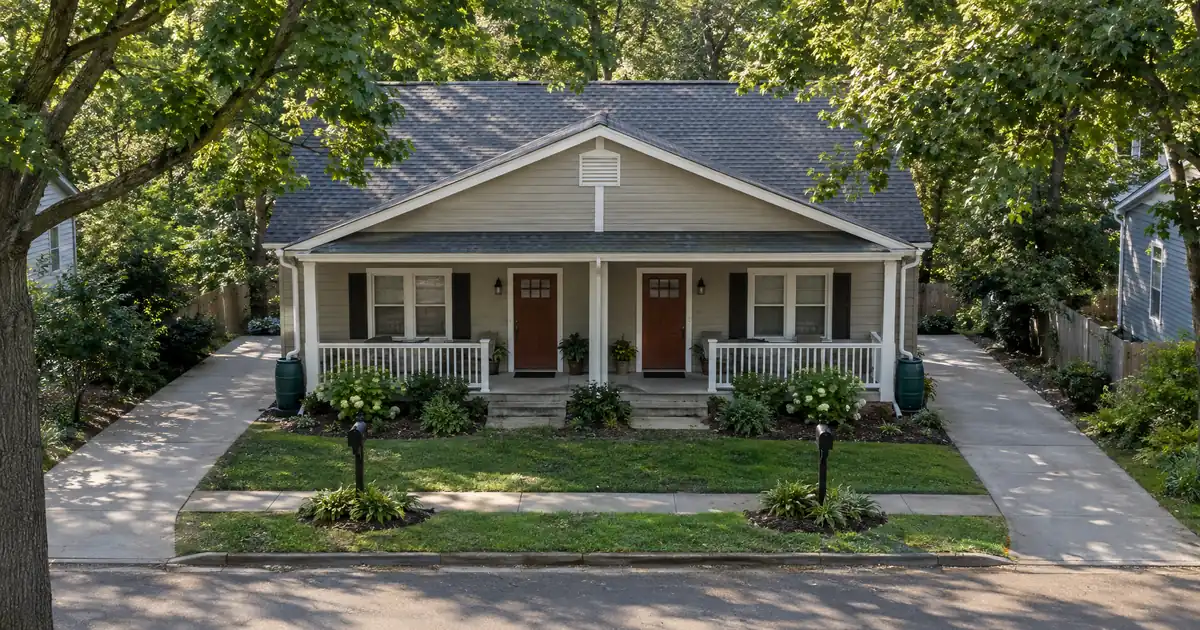
The Quick Read: Qualifying means picking the right documentation path for the property, then proving your contract income with one to two years of 1099 forms (depending on the program), a lender-applied expense factor, solid credit, and cash reserves. Your occupancy plan decides how the rest of the file is reviewed. A lender then looks at the 2-4 unit itself through an appraisal.
- A 1099-only loan is reviewed against your own documented income. It is not a DSCR loan, which looks at the property’s rent instead.
- It fits best when you will live in one unit of the duplex, triplex, or fourplex. A pure rental purchase usually moves to DSCR.
- Lenders do not use gross 1099 receipts as-is. They apply an expense factor, and that factor varies by program.
- Across the wholesale network Lendmire works with, loan amounts on alt-doc programs run roughly $125,000 to $3,500,000. Reserves commonly sit around six months of the housing payment.
- Clients who paid you less than the 1099 reporting threshold may never send a form. That income may not count on paper.
What a 1099-Only Loan Actually Is
A 1099-only loan is an alternative-documentation mortgage for people paid as contractors. Instead of traditional personal-income documentation full of write-offs, the file leans on Forms 1099 that show what payers sent you. The borrower is reviewed on documented income under the applicable program, subject to lender guidelines.
What your deposits qualify you for.
Alt-doc programs read 12 months of business or personal bank deposits instead of tax returns. Enter your average monthly deposits and see the income a lender would credit you.
The expense factor is set by the lender from your business type and profit-and-loss statement; it is not a number you choose. This widget quotes no rate and no payment.
Program parameters shown update from Lendmire’s centralized guideline source.
Estimate
Illustrative estimate only — not a quote, Loan Estimate, approval, or commitment to lend. Deposit average, expense factor, and housing ratio are editable assumptions; the expense factor a lender applies is set from your business type and documentation. No interest rate or monthly payment is quoted here. Purchase capacity is a simplified illustration and does not account for taxes, insurance, HOA dues, or other debts. Alt-doc income documentation is available on consumer mortgages in the states where Lendmire is licensed for consumer lending; actual terms vary by lender, borrower, and property.
The label is informal. No lender sells a single product called “the 1099 loan.” It is one documentation option on a menu that also includes bank statements, profit-and-loss statements, asset depletion, and DSCR. The menu exists because many self-employed people earn well but show little taxable income after deductions.
Here is the distinction that trips up new investors. A DSCR loan skips personal income documentation entirely. Qualification runs on the property’s income. A 1099-only loan does the reverse. Your earnings carry the file, and the property’s rent plays a smaller role.
Neither option skips underwriting. You still bring credit, reserves, a down payment, and property documents. Alternative documentation changes how income is established. It does not change whether the loan gets reviewed.
Key Terms Defined
1099-NEC and 1099-MISC: The tax forms a payer sends to a contractor, showing what the payer paid during the year. These are the usual forms behind a 1099-only file.
Expense factor: The percentage a lender subtracts from gross receipts to estimate what you keep. Each program sets its own.
DSCR (debt service coverage ratio): A property’s monthly rent divided by its monthly housing payment, which covers principal, interest, taxes, insurance, and association dues.
Owner-occupied: A property you will live in. On a 2-4 unit, that means you take one unit and rent the rest.
Reserves: Liquid savings left after closing, usually counted in months of the housing payment.
Business-purpose loan: A loan made for an investment or business use rather than for personal or household use.
Step 1: Decide Whether This Is a Home or a Rental
Occupancy comes first, because it picks your documentation path. If you will live in one unit, the file is an owner-occupied purchase, and personal income has to carry it. If you will not live there, DSCR is usually the natural fit, since the rent drives lender review.
Here is how the two paths split on a 2-4 unit:
- You live in one unit (a house hack): A 1099-only program can be reviewed against contract income. Some programs let part of the other units’ rent offset the payment. Treatment varies by program.
- You rent every unit: The property’s rent covers the payment on a DSCR file. A 1099-only file is still possible if you want to qualify on income, for example when a thin rent roll leaves coverage short.
That second case deserves a closer look. A weak-rent fourplex can fail a DSCR test and still pass on strong personal income. Programs below 1.00 coverage are also available through select lenders in the network, but leverage and terms adjust. Lendmire’s complete DSCR loans guide explains how that side of the menu works.
Step 2: How Underwriting Reads Your 1099s
Underwriters want to see that your contract income is real, steady, and likely to continue. They look at the forms, the payers, the history, and the trend. Each of those can help or hurt the file.
Forms and history. Most programs want 1099-NEC or 1099-MISC forms from each payer. Some accept one year of history, and others want two. A prior W-2 job in the same field can help a short 1099 history on some programs. It does not on others.
Proof the business is real. Many files ask for something that shows you operate as a contractor. That might be a prior return with a Schedule C, a signed contract, a business license, or a letter from a CPA. Lenders also reconcile your forms against bank deposits, year-to-date statements, and invoices. The pieces have to tell the same story.
The expense factor. This is the step most borrowers do not see coming. A lender takes your gross 1099 receipts and subtracts an expense factor to reach qualifying income. Programs differ widely here, and a CPA-supported ratio can change the result on some. No universal formula exists, so no one can honestly promise you a number before the lender reviews the file.
Payer concentration and trend. Income from one payer worries underwriters more than income from five. A falling trend worries them too. If your latest year dropped, the strongest documentation period matters a great deal.
Lendmire also keeps a separate piece, the complete guide for a 1099-only loan on 2-4 unit properties, if you want a second walkthrough.
Why the File Has to Be So Thorough
When you live in the property, the loan is a consumer mortgage. A federal rule requires the lender to make a good-faith determination that you can repay, based on factors such as income or assets, per the CFPB’s ability-to-repay compliance guide. That is why 1099s must be documented rather than assumed. Owner-occupied files also carry the standard consumer disclosure package, known as TRID.
A bank-statement or alt-doc loan on a non-owner-occupied rental, including a short-term rental, is a business-purpose loan. It is exempt from TRID. Whether a loan counts as business-purpose depends on your intended use, and lenders typically collect a business-purpose attestation. Keep the two regimes separate in your head. A house-hack duplex and a pure-rental triplex follow different tracks.
Step 3: Credit, Reserves, and Leverage
Credit, reserves, and leverage work as a package. A stronger score can buy more leverage, and thinner reserves can pull it back.
Here are the alt-doc figures that apply across the network, each tied to its program:
- Bank-statement loans on a primary residence: up to 90% LTV on a purchase or no-cash-out refinance through select lenders. Stronger files earn the top of that range.
- Owner-occupied cash-out (primary residence or second home): up to 80% LTV with a fixed expense ratio, or 75% with an accountant-prepared ratio, depending on loan size and credit.
- Investment-property cash-out: tops out around 75% LTV.
- Asset depletion: qualifying from liquid assets runs to about 80% LTV on a primary residence.
- Loan amounts: roughly $125,000 to $3,500,000, with reserves commonly around six months.
Those are bank-statement and asset-depletion parameters. A 1099-only program follows its own lender sheet, and its leverage can sit lower than the bank-statement ceiling. Leverage on an investment purchase using alt-doc varies by lender. All of it is subject to lender guidelines, credit review, and property review.
Step 4: How the 2-4 Unit Gets Reviewed
The appraiser values a 2-4 unit differently than a single-family home. The standard report is Form 1025, the Small Residential Income Property Appraisal Report. Fannie Mae’s Selling Guide describes it as the form for two- to four-unit properties. Form 1007 is a different document, the single-family comparable rent schedule, and Fannie Mae’s forms list gives both titles.
The agency forms matter only for their names. 1099-only and DSCR loans are not agency products, and Fannie Mae’s loan rules do not govern them.
The 1025 includes a rent schedule. The appraiser reconciles market rent for each unit. On a DSCR file, that rent schedule and the in-place leases often become the income figure. On a 1099-only file, rent matters less, because your documented income drives qualification.
On the 2-4 unit side, rent usually does one of two jobs. It offsets part of the property payment, or it shows cash flow that supports the file. How much credit you get is program-specific.
A Worked Example
Run this scenario with every input kept in plain terms, since lenders set the exact figures.
Picture a freelance electrician buying a triplex and living in one unit. She holds two years of 1099-NEC forms from four general contractors. No single payer dominates her receipts, and both years sit close together.
The underwriter starts with her gross receipts across the documented period. A lender-set expense factor reduces that figure to qualifying income. The underwriter then compares it to the full housing payment on the triplex plus her other monthly debts. Whatever rent treatment the program allows for the two rented units can ease that comparison.
Three things would change this picture:
- A down year. If her latest year fell, the lender may average the periods or use the lower one.
- One dominant payer. If one contractor supplied most of her receipts, the lender would scrutinize continuity.
- Income missing from forms. Payments from small clients who never issued a 1099 would typically be left out of qualifying income.
If she planned to rent all three units instead, a DSCR file would likely suit her better. Her own income would not matter. The rent would carry the review.
1099-Only vs Bank Statement vs Asset Depletion vs DSCR
Matching the documentation method to how you earn money is most of the decision. This table shows the structural differences.
| Factor | 1099-Only | Bank Statement | Asset Depletion | DSCR |
|---|---|---|---|---|
| What qualifies you | Forms 1099 | 12 months of deposits | Liquid assets | Property rent |
| Best occupancy fit | Owner-occupied | Owner-occupied or rental | Primary residence | Non-owner-occupied |
| Your income matters | Yes | Yes | Assets instead | Not for qualifying |
| Best-fit borrower | Contractors with clean forms | Mixed or lumpy deposits | Asset-rich, low income | Rental investors |
Bank statements often rescue contractors whose clients skipped 1099s, because deposits capture money the forms miss. Asset depletion suits borrowers with large balances and modest earnings. Extended and interest-only terms are DSCR-side offerings. Alt-doc terms follow each lender’s program sheet.
Where the General Rule Breaks
The steps above describe a clean file. Real files rarely look that tidy, and these edge cases come up most.
The reporting threshold moved. Tax publishers report that the 1099-NEC and 1099-MISC threshold rises from $600 to $2,000, with inflation indexing later, per Avalara. Income under the threshold is still earned. OnPay gives the example of a contractor paid $1,500 who gets no form but still has income to report. For your file, that means small payers may issue nothing. Payments without a 1099 are typically excluded from qualifying income, so your real earnings can look smaller on paper than they are.
Mixed income. Borrowers with W-2 pay plus 1099 income, or several payers, get treated differently by program. Some lenders blend them. Others want the 1099 income to stand on its own.
Form types. 1099-NEC and 1099-MISC are the usual basis. Other 1099s, such as those for interest or dividends, generally do not form a “1099-only” file. Programs differ, so confirm before you assume.
Short history. One year works on some programs. Two are required on others.
Cash-out and business purpose. On an investment property, cash-out proceeds that go to personal uses can blur the business-purpose line. Cash-out on an investment 2-4 unit tops out around 75% LTV, and a lender will want to know where the money goes. Exact terms depend on the lender’s guidelines, property type, leverage, and a full review of the borrower’s file.
Five or more units. Residential DSCR math changes at five units, and the income definition shifts toward net operating income. That falls outside this article.
Why Files Stall
Most stalled 1099 files share a few causes, and you can fix most of them before applying.
- Missing proof of the business. Gather a CPA letter, license, or contract early.
- Forms that do not match deposits. Reconcile them yourself first and keep invoices handy.
- One payer carrying everything. Document the relationship’s history and any signed agreement.
- Thin reserves. Six months is a common target, so build the cushion before you shop.
- Wrong occupancy path. Applying for owner-occupied financing on a property you plan to rent fails on purpose, not on paperwork. Pick the path first.
Document Checklist
Bring these before you talk to a lender:
- One to two years of 1099-NEC or 1099-MISC forms from every payer
- Proof of the business, such as a license, contract, CPA letter, or prior Schedule C
- Year-to-date deposit statements and recent invoices
- Credit information and a list of current debts
- Statements showing your reserves and down payment funds
- The purchase contract and property details, including unit count and existing leases
Next Step
If you are self-employed and want to see how the numbers work, Lendmire can help you compare bank statement and alternative-documentation loan options based on your deposits, the property, credit profile, leverage, and your goals. As a mortgage broker, Lendmire arranges these loans through select lenders in its wholesale network. Consumer mortgage licensing covers 16 states, and every file is underwritten individually. Calculator estimates are illustrative only, and nothing here is a commitment to lend.
This article is general education, not legal or tax advice. Tax treatment can depend on how the funds are used and how the property is held; investors should keep clear records and speak with a qualified tax professional before relying on any deduction. Consult an attorney or CPA about your own situation.
Frequently Asked Questions
Can I use a 1099-only loan on a duplex I will not live in?
Sometimes, but it is rarely the best tool. A non-owner-occupied rental is a business-purpose loan, and DSCR usually fits because the property’s rent drives lender review. A 1099-only file makes sense if the rent coverage is thin and your own income is strong.
How many years of 1099s do I need?
It depends on the program. Some accept one year, and others want two. A prior W-2 job in the same field can help a short history on certain programs. Confirm the requirement before you gather documents.
What if a client never sent me a 1099?
That income typically will not count on a 1099-only file. Small payers may fall under the reporting threshold and never issue a form. A bank-statement program may capture those deposits instead.
Does rent from the other units count toward my income?
On an owner-occupied 2-4 unit, some programs credit part of the other units’ rent as an offset to the payment. The credit varies by program, and the appraiser’s rent schedule on Form 1025 often supports it. Your own documented income still carries the file.
Should I choose a 1099-only loan or a DSCR loan?
Start with occupancy. If you will live in a unit, you need an income-based path like 1099-only or bank statements. If you will rent every unit, compare the property’s rent coverage with your income, and choose the path with the lighter documentation burden.
About Lendmire
Lendmire (NMLS# 2371349) is a DSCR-focused mortgage broker that helps arrange investor financing across 41 markets, including Washington, D.C., through wholesale and investor-lending channels. DSCR eligibility is generally reviewed by the lender around the property’s rental income rather than personal income documentation, subject to lender guidelines — which works for self-employed investors, LLC operators, and portfolios above four financed properties. Scotsman Guide named Lendmire a Top Mortgage Workplace in both 2025 and 2026.
Get Started
Ready to find the right loan for you?
In about 30 seconds you can review financing options available for your home or investment property. No commitment required.
Informational only. Not a Loan Estimate, approval, or commitment to lend. Program availability and eligibility are subject to lender guidelines, credit approval, property review, and underwriting.
References
1. CFPB ATR/QM Small Entity Compliance Guide
3. Avalara: 1099 Reporting Threshold Changes
4. OnPay: 1099 Reporting Threshold Updates
This article is part of Lendmire’s self-employed mortgage guides — full qualification details, guidelines, and scenarios live on the program page.
Related reading: How to Qualify on a 1099-Only Bank Statement Loan Using 12 or 24 Months · How to Qualify for a 24-Month Bank Statement Loan as a Business Owner · How to Qualify for a 1099-Only Loan on Short-Term Rental Properties
Brandon Miller
Founder & CEO, Mortgage Loan Originator, Lendmire LLC
- Mortgage Loan Originator · NMLS# 1129696 · Verify on NMLS Consumer Access
- North Carolina Real Estate Broker · License# 343312 · Verify on NCREC
- North Carolina Insurance Producer · License# 19053198 · Property, Casualty, Life, Health · Verify on NAIC SBS
- Lendmire LLC · Firm NMLS# 2371349 · Verify firm licensure
Important disclosures. Lendmire (NMLS# 2371349) is a licensed mortgage brokerage. Lendmire is not a direct lender, depository institution, or financial advisor. All loan inquiries are subject to lender underwriting; this article does not constitute a commitment to lend. Rates, terms, and program guidelines are subject to change without notice and vary by borrower profile, property type, and state. Information in this article is general in nature and is not financial, legal, or tax advice. Equal Housing Opportunity. NMLS Consumer Access: nmlsconsumeraccess.org.