
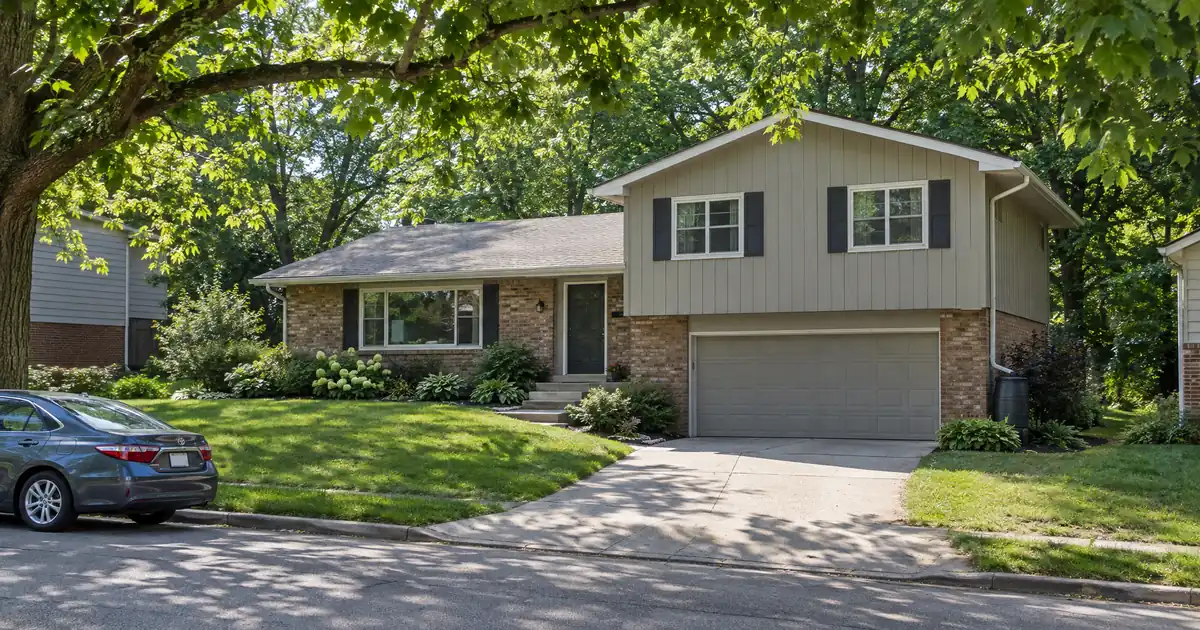
The Quick Read: Qualifying as a newly self-employed buyer comes down to two separate clocks: how many months of bank statements you can show, and how long you have been in business. A lender reviews your file on documented income under the applicable program, subject to lender guidelines. A short business history is usually the hardest part, and prior work in the same field is what helps most.
- Statements and business history are two different requirements. Having one does not satisfy the other.
- Across the wholesale network, the documentation base is 12 months of personal or business statements.
- Your qualifying income comes from averaged deposits, not from your tax return.
- Clean deposits, strong credit, reserves of roughly 6 months, and prior same-field experience carry the most weight on a young file.
- If the property is a pure rental, a different loan type may fit better than waiting.
You left a W-2 job, hung out a shingle, and now you want to buy. Your tax return shows little, and the first year’s deductions and ramp-up make it look worse. That gap is the reason bank statement loans exist. This article walks through how the loan works, how a young business gets evaluated, and where the path closes.
What your deposits qualify you for.
Alt-doc programs read 12 months of business or personal bank deposits instead of tax returns. Enter your average monthly deposits and see the income a lender would credit you.
The expense factor is set by the lender from your business type and profit-and-loss statement; it is not a number you choose. This widget quotes no rate and no payment.
Program parameters shown update from Lendmire’s centralized guideline source.
Estimate
Illustrative estimate only — not a quote, Loan Estimate, approval, or commitment to lend. Deposit average, expense factor, and housing ratio are editable assumptions; the expense factor a lender applies is set from your business type and documentation. No interest rate or monthly payment is quoted here. Purchase capacity is a simplified illustration and does not account for taxes, insurance, HOA dues, or other debts. Alt-doc income documentation is available on consumer mortgages in the states where Lendmire is licensed for consumer lending; actual terms vary by lender, borrower, and property.
What Is a Bank Statement Loan?
A bank statement loan is a mortgage that is reviewed against deposits rather than your tax-return income. The lender averages your deposits over a set window, applies an expense factor if the account is a business account, and treats the result as monthly income. It falls under non-qualified mortgage lending, often called non-QM, meaning it sits outside the standard agency documentation boxes.
It is alternative documentation, not no documentation. You still hand over statements, ID, asset records, and proof the business exists. The loan is reviewed on documented income under the applicable program, subject to lender guidelines.
Key Terms Defined
Expense factor: The percentage of business deposits a lender treats as operating costs rather than income. The lender sets it, and it varies by program.
Lookback period: The number of months of statements the lender averages. Across the wholesale network, the standard documentation base is 12 months.
Seasoning (business history): How long you have been self-employed. It is a separate requirement from the statement window.
Non-QM: A mortgage that falls outside standard agency documentation rules but is still fully underwritten for repayment-capacity.
Compensating factors: Strengths elsewhere in the file, such as credit, reserves, and prior experience, that offset a thin business history.
Asset depletion: Qualifying from liquid assets instead of deposits, converting your savings into a qualifying income figure.
The Two Clocks: Statements vs. Business History
Statements and business history are different clocks, and a new business owner can pass one while failing the other. The first clock is the statement window. The network’s base documentation is 12 months of statements. The second clock is how long you have been self-employed. Most programs want a longer record there, and the exact seasoning rule is set by each lender, not by any federal minimum.
Here is how that plays out. Say you opened your business account nine months ago. You have nine months of statements, which is short of a 12-month window. You cannot build a lookback that does not exist. Now say you worked in the same trade as an employee for six years, then went out on your own fourteen months ago. You have the statement history, and your experience tells the underwriter this is a continuation of a proven career, not a leap.
Underwriters treat those two files very differently, even though both borrowers are “newly self-employed.”
| Your situation | Likely read | Common fallback |
|---|---|---|
| Under about 12 months in business | Statement lookback usually can’t be built | Wait, or DSCR if it’s a rental |
| About 12 months, same-field background | Possible exception, strong file needed | Add reserves, credit, down payment |
| About 12 months, new field | Harder; thin story | Co-borrower, assets, or wait |
| 24+ months in business | Standard path | Choose the statement window |
Treat that table as a directional read, not a decision. Lender guidelines differ, and every file is underwritten individually. Most programs in the network lean toward a longer business record. A few lenders will look at a shorter one when the compensating factors are strong.
How Underwriting Treats Your Deposits, Step by Step
Underwriting turns your deposits into a monthly income number in a fixed sequence. Knowing the sequence tells you what to fix before you apply.
1. Account choice. You submit personal or business statements. Business deposits get discounted by an expense factor. Personal deposits generally count closer to full value, but they must trace back to the business.
2. Deposit scrub. The underwriter strips out transfers between your own accounts, loan proceeds, and one-time windfalls. A deposit has to be your income to count. The CFPB’s compliance guide for the ability-to-repay rule says funds flowing into an account are treated as the consumer’s personal income, and that a creditor must verify what it relies on with reasonably reliable third-party records. That is why unexplained deposits get removed.
3. Averaging. Eligible deposits are totaled and divided by the number of months in the lookback. Ownership percentage may also be applied if you share the business.
4. Expense factor. The lender sets it, based on business type, headcount, and contractor use. You do not pick it. Many programs let an accountant-prepared ratio support a different figure. No universal percentage exists, so be skeptical of anyone who quotes one.
5. Income to debt test. Your resulting monthly income is weighed against your debts plus the new housing payment. This is the key contrast with DSCR loans, which test the property’s rent against its own payment instead.
6. Credit, reserves, appraisal, and funds sourcing follow. Reserves commonly run around 6 months of the housing payment.
The same guide lists bank statements as an acceptable verification record in its earlier edition, so statement-based qualifying rests on solid footing. A self-prepared profit-and-loss sheet alone does not count as third-party verification, because the guide excludes records prepared by the consumer, the creditor, or the broker.
How Underwriters Weigh a Short-History File
A young file gets judged on four strengths, and they trade off against each other. Here they are in roughly the order they matter.
Prior same-field experience. This is the strongest signal. Six years as a W-2 electrician, then your own electrical business, reads as a career continuing. A career change reads as a fresh bet.
Deposit consistency. Steady or rising deposits help. A declining trend is a red flag, because the underwriter averages income that may keep shrinking.
Documented establishment. A business license, a CPA letter, and proof of ownership show the business is real and that you own it.
Credit, reserves, and leverage. A stronger score, deeper reserves, and a larger down payment all offset a thin record. On a primary residence, up to 90% LTV on a purchase or rate-term refinance is available through select lenders, and the stronger files earn the top of the range. A young file usually should not expect that ceiling.
One honest judgment call: strong credit cannot fully rescue a file with no business history, but a long same-field résumé can rescue a file with merely average credit. If you have to pick which to build first, build the record.
A Worked Example: From W-2 to Self-Employed
Run the numbers on a hypothetical borrower, labeled as a modeled scenario and not a market fact. She worked as a W-2 dental hygienist for years, then opened a mobile hygiene practice and has run it for about a year. She routes every client payment into one dedicated business account.
The underwriter pulls 12 months of statements. First the scrub: a one-time deposit from selling her old car comes out, and so do two transfers from her savings account. What remains is client income. The lender applies its expense factor for her business type, and the result is her qualifying monthly income.
Next comes the test. That income is weighed against her debts and the new housing payment. Her same-field history, her consistent deposits, her CPA letter, and her reserves make the argument that a one-year record represents stable income. Whether a particular lender accepts that argument depends on its guidelines and the strength of the whole file.
Notice what carried the file: the account she kept clean and the résumé she could prove. Neither required a high income.
What Makes a Young File Look Weak
Most weak files fail on hygiene, not income. These are the common problems and the fixes.
- Mixed accounts. Business and personal money flowing together make the scrub harder. Run all business income through one dedicated account.
- Large one-time deposits. A big unexplained deposit gets removed or questioned. Document the source, or avoid depositing it into the business account.
- Own-account transfers. Moving money between your accounts pads the deposits and gets stripped. Don’t bother.
- Single-client dependence. One client or one platform paying all your income is concentration risk. Lenders look at whether that income is likely to continue.
- Gaps and declining months. A dry month needs an explanation. A downward trend needs more than that.
- Transition-year sloppiness. Final W-2 paychecks, first client payments, and the new business account should each be traceable, so the file reads as one clear story.
Your Readiness Roadmap
If you are not ready yet, use the time. Build the file in this order.
1. From day one: open a dedicated business account and route all business income through it.
2. First few months: keep deposits steady and avoid mixing in personal funds. Save proof of your prior same-field work.
3. Mid-year: gather your business license, ownership documents, and a CPA letter. Build reserves toward roughly 6 months of the housing payment.
4. Before applying: check your credit, decide whether the property is a home or a rental, and talk to a broker about how your history fits the programs.
Where the Rule Breaks: Edge Cases
Under about 12 months in business. No lookback can be built, so this product generally doesn’t fit. Your options are waiting, using a different documentation type, or a DSCR loan if the property is a rental.
Profit-and-loss alternatives. These may suit someone whose statement history is short. Availability depends on the lender.
Partners and co-owners. If you share ownership, expect to document your percentage. Income may be pro-rated to your share.
A W-2 co-borrower. A spouse with steady employment income can strengthen the file. How the lender combines the two incomes depends on the program.
Asset depletion. If you have substantial liquid assets, qualifying from them is an alternative, with leverage up to 80% on a primary residence. Each figure is subject to lender guidelines and a complete review of property type, leverage, and credit.
Home or Rental: The Decision That Changes the Loan
Occupancy decides which loan fits. If you will live in the property, a bank statement loan is a natural tool. On a primary residence, leverage reaches up to 90% on a purchase or rate-term refinance through select lenders, and an owner-occupied cash-out tops out around 80% LTV. Loan sizes run roughly $125,000 to $3,500,000. Leverage, reserves, and pricing vary by lender and program; the final terms follow the full file review.
An owner-occupied file is a consumer mortgage, and consumer disclosure rules apply. A bank statement loan on a rental you will not occupy, including a short-term rental, is a business-purpose loan and is exempt from those consumer disclosure rules. Investment cash-out on bank statements tops out around 75% LTV. Leverage on an investment purchase varies by lender, so there is no single number to count on.
For a pure rental, the other route is a DSCR loan, which qualifies the property on its rent against its payment instead of qualifying you on personal income. It sidesteps the business-history problem entirely, because no one is averaging your deposits. The complete DSCR loans guide covers how that works. If rent is light but your personal cash flow is strong, a bank statement loan can still be the better fit. For help picking a lane, Lendmire’s piece How to Qualify for a Bank Statement Loan for a Newly Self-Employed House-Hacker covers the owner-occupied multifamily case.
Questions to Ask Your Loan Officer
Bring a short list.
- What business seasoning does this program require, and is there an exception path?
- Which statement window fits my timeline, 12 months or longer?
- How will you treat my business account’s expense factor, and can a CPA letter change it?
- Which of my deposits will be stripped?
- Would a co-borrower help?
- What leverage and reserves should I expect for my file?
Frequently Asked Questions
Can a first-time buyer qualify for a bank statement loan?
Yes, being a first-time buyer is not the obstacle. The documentation and business history are what matter. A first-time buyer with a clean 12-month statement record, solid credit, and reserves is reviewed like any other self-employed borrower, subject to lender guidelines.
Can my W-2 spouse help me qualify?
Often, yes. Adding a spouse with steady employment income as a co-borrower can strengthen the file. How the lender blends the two income types depends on the program, so ask before assuming.
Should I use personal or business statements?
Either can work, and the choice changes how income is calculated. Business statements are discounted by an expense factor. Personal statements generally count closer to full value, but the deposits must trace back to the business. A broker can compare both against your actual deposits.
Can gig-platform income count?
Platform payouts are deposits like any other, and they count if they are documented and consistent. Concentration matters, though. Income from a single platform can draw extra scrutiny about whether it will continue.
Does a past credit event rule me out?
Not automatically. A prior event affects credit tiers, leverage, and reserves, and how much depends on the lender and how long ago it happened. Expect a tougher file and a conversation about compensating strengths.
Next Step
Reach the team at 828-256-2183 or request a quote. Consumer mortgage availability covers 16 states, and every file is underwritten individually by the lender. This is not a commitment to lend.
About Lendmire
Lendmire (NMLS# 2371349) is a mortgage broker that arranges financing through select lenders in its wholesale network. It works with self-employed borrowers on bank statement and other alternative-documentation programs, qualifying on documented income under the applicable program, subject to lender guidelines. Scotsman Guide named Lendmire a Top Mortgage Workplace in both 2025 and 2026.
Get Started
Ready to find the right loan for you?
In about 30 seconds you can review financing options available for your home or investment property. No commitment required.
Informational only. Not a Loan Estimate, approval, or commitment to lend. Program availability and eligibility are subject to lender guidelines, credit approval, property review, and underwriting.
References
1. CFPB Ability-to-Repay and Qualified Mortgage Small Entity Compliance Guide
This article is part of Lendmire’s bank statement loan program — full qualification details, guidelines, and scenarios live on the program page.
Related reading: How to Qualify for a Bank Statement Loan in Ohio · How to Qualify for a Super Jumbo Bank Statement Loan in Georgia · How to Find a Lender When Newly Self-Employed
Brandon Miller
Founder & CEO, Mortgage Loan Originator, Lendmire LLC
- Mortgage Loan Originator · NMLS# 1129696 · Verify on NMLS Consumer Access
- North Carolina Real Estate Broker · License# 343312 · Verify on NCREC
- North Carolina Insurance Producer · License# 19053198 · Property, Casualty, Life, Health · Verify on NAIC SBS
- Lendmire LLC · Firm NMLS# 2371349 · Verify firm licensure
Important disclosures. Lendmire (NMLS# 2371349) is a licensed mortgage brokerage. Lendmire is not a direct lender, depository institution, or financial advisor. All loan inquiries are subject to lender underwriting; this article does not constitute a commitment to lend. Rates, terms, and program guidelines are subject to change without notice and vary by borrower profile, property type, and state. Information in this article is general in nature and is not financial, legal, or tax advice. Equal Housing Opportunity. NMLS Consumer Access: nmlsconsumeraccess.org.