
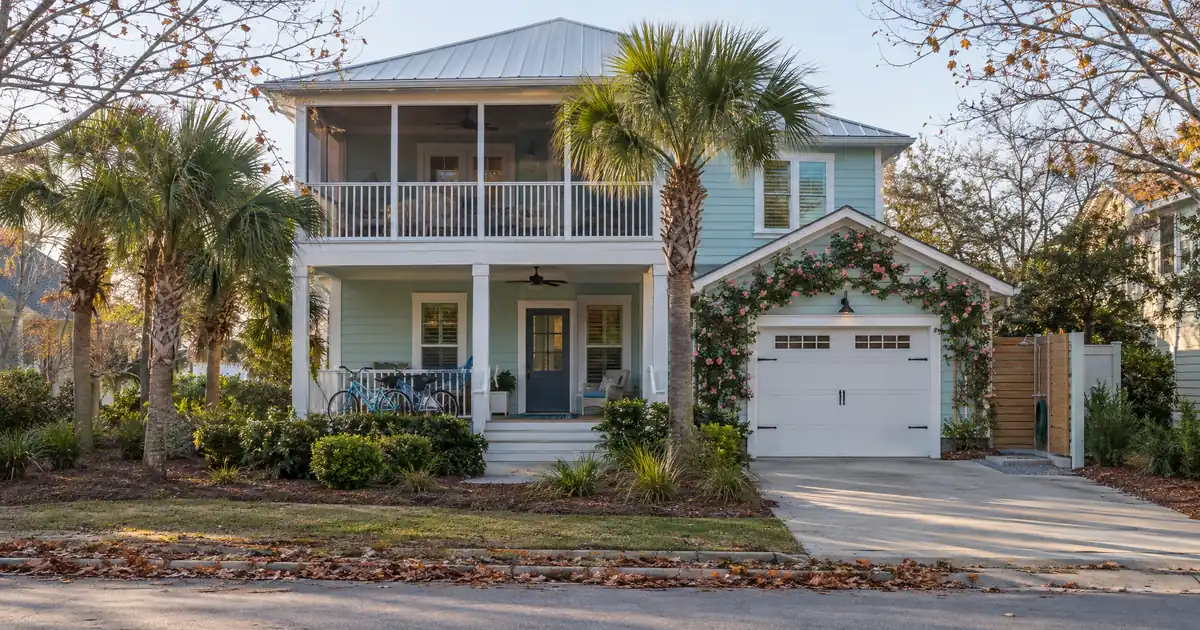
The Quick Read: You qualify by showing a lender 12 months of business or personal bank statements with steady, traceable deposits, plus workable credit, reserves, and a down payment. The lender averages your eligible deposits into monthly income and tests you, the borrower, not the rental’s projected revenue. A short-term rental (STR) that cash-flows well on paper can still fail this test if your own deposits are thin.
- Qualifying income comes from deposit averages after the lender removes transfers and applies an expense factor, subject to lender guidelines.
- The file tests you, not the property. A DSCR loan tests the property.
- Clean, consistent deposits with a documented source carry the file.
- Typical network guidance calls for about 6 months of reserves. Loan amounts run roughly $125,000 to $3,500,000.
- Investment-property leverage on bank statement documentation varies by lender. Investment cash-out tops out around 75% LTV.
Most STR buyers hear “bank statement loan” and assume it is a shortcut. It is not. It is a different way of proving income, and it fits a specific kind of borrower. This guide walks through what it is, how underwriting treats your deposits, the structures that exist, where the rules break, and how to decide.
What your deposits qualify you for.
Alt-doc programs read 12 months of business or personal bank deposits instead of tax returns. Enter your average monthly deposits and see the income a lender would credit you.
The expense factor is set by the lender from your business type and profit-and-loss statement; it is not a number you choose. This widget quotes no rate and no payment.
Program parameters shown update from Lendmire’s centralized guideline source.
Estimate
Illustrative estimate only — not a quote, Loan Estimate, approval, or commitment to lend. Deposit average, expense factor, and housing ratio are editable assumptions; the expense factor a lender applies is set from your business type and documentation. No interest rate or monthly payment is quoted here. Purchase capacity is a simplified illustration and does not account for taxes, insurance, HOA dues, or other debts. Alt-doc income documentation is available on consumer mortgages in the states where Lendmire is licensed for consumer lending; actual terms vary by lender, borrower, and property.
What Is a Bank Statement Loan, Really?
A bank statement loan is a non-QM loan. Non-QM means “non-qualified mortgage,” a loan that uses documentation outside the standard W-2-and-tax-return package. Instead of traditional personal-income documentation, the lender estimates your income from deposits into your accounts.
It usually serves self-employed borrowers and business owners. Lenders still check credit, debt, and reserves. The documents change. The underwriting does not disappear.
Across the wholesale network Lendmire works with, this is the loan that fits an owner whose tax return understates real cash flow. Write-offs shrink taxable income, but the deposits tell a stronger story. That is the sweet spot.
What the Loan Tests (and What It Ignores)
The loan is reviewed for the person, not the asset. That one sentence decides almost everything for an STR buyer.
On a bank statement file, your deposits do the qualifying. The appraiser’s rent figure and the STR revenue projection generally do not count as qualifying income. The property still has to meet collateral rules, including the appraisal. For a single-family home that is a standard appraisal form. A 2-4 unit property uses an operating income form. A rent schedule form is more typical on the DSCR side.
DSCR, short for debt service coverage ratio, flips the test. It divides the property’s rent by its full monthly obligation (principal, interest, taxes, insurance, and any HOA dues). The property qualifies primarily on rental income covering the payment, subject to lender guidelines.
| Question | Bank Statement Loan | DSCR Loan |
|---|---|---|
| What is tested? | Your deposits | The property’s rent |
| STR projections count? | Generally no | Often yes |
| Your DTI matters? | Yes | Generally not the focus |
| Fits best when | Deposits strong, property thin | Property strong, deposits thin |
If your STR cash-flows well but your personal deposits are modest, DSCR usually fits better. If your deposits are strong but the property’s coverage is weak, bank statements may be the only path. Lendmire’s complete DSCR loans guide covers the property-side alternative in full.
Who Qualifies: A Self-Check
You are a likely fit if most of these are true:
- You are self-employed or own a business with 12 months of deposit history.
- Your traditional personal-income documentation shows lower income than your accounts suggest.
- Your deposits are steady and you can name the source of each large one.
- Your credit is solid. Market surveys report some lenders asking for roughly 620 to 700 at minimum. Each lender sets its own floor.
- You hold cash reserves, commonly around 6 months of the housing payment, plus your down payment.
- Your existing debts leave room under a debt-to-income ceiling. Each program sets its own ceiling, so ask your broker where the file needs to land.
DTI, or debt-to-income ratio, compares your monthly debts to your monthly qualifying income. Bank statement loans put it back in play. It is the reason investors stacking several of these loans eventually hit a wall. DSCR resets per property. Your DTI does not.
How Deposits Become Qualifying Income
The lender builds your income in four moves. Think of it as a filter, not a headline number.
1. Pick the statement window. Twelve months is the standard network documentation. Some programs accept a longer window. A longer window can smooth seasonal swings, but program sheets differ.
2. Choose the account type. Personal or business statements can work. Business accounts normally take an expense factor, a percentage the lender subtracts to account for operating costs. Each lender sets its own. A CPA-prepared expense statement can sometimes replace the standard factor. No factor is universal, so never plan around a number someone quoted you.
3. Filter the deposits. The lender totals eligible deposits and strips out transfers between your own accounts, loan proceeds, refunds, and other non-income credits.
4. Average and test. What remains is averaged across the window to produce monthly qualifying income. That figure feeds your DTI, alongside credit, reserves, and down payment.
Here is the pattern in plain terms. Say a host’s business account shows strong deposits, but a chunk is transfers from savings and a one-time refund. Those get removed. The expense factor then trims the rest. What survives is the income the lender actually uses. It is usually lower than the raw deposit total. Plan on that gap.
The CFPB’s ability-to-repay guide lists eight factors a lender must consider on consumer loans and says the rule does not dictate one underwriting model. That flexibility is why deposits can serve as documentation at all.
Step-by-Step: How to Qualify
1. Run the person-versus-property check. If you are buying a brand-new STR with no host history, remember the bank statements cannot show what that property will earn. Your own deposits must carry the file.
2. Gather 12 months of statements from the account that actually receives your income.
3. Clean up the account trail. Make Airbnb or Vrbo payouts traceable to one account. Avoid mixing personal spending with business deposits.
4. Tag every large or unusual deposit with its source, in writing.
5. Check your debts and credit. Pay down revolving balances if DTI is tight.
6. Confirm reserves and down payment are sitting in documented accounts.
7. Confirm the property’s rules. Short-term rental rules can vary by city, county, HOA, and property type, so investors should confirm local rules before relying on projected rental income.
8. Submit the file to a broker who can compare programs across lenders.
Documents to Prepare
- Income: 12 months of personal or business statements, plus a CPA-prepared expense statement if your program allows one.
- STR evidence: platform payout statements and any property-manager statements that reconcile to your deposits.
- Property: purchase contract, insurance details, and HOA documents if applicable.
- Ownership: entity documents if you plan to hold title in an LLC, subject to lender program eligibility.
- Assets: statements showing down payment and reserves.
Cleaning Up Your Deposits Before You Apply
| Deposit type | Usually counts? | Notes |
|---|---|---|
| Platform payouts to your account | Often yes | Must trace to your business |
| Transfers between your accounts | No | Stripped out |
| Loan proceeds | No | Not income |
| Refunds and security deposits | Often no | Expect questions |
| Large one-time deposits | Needs explanation | Document the source |
| Income from other properties | Depends | Must be separable |
Commingling is the quiet file-killer. When personal paychecks, platform payouts, and owner reimbursements all hit one account, the underwriter has to sort them by hand. Separate accounts a few months before applying make that sorting easy.
New STR vs. Existing STR
A purchase with no host history leans entirely on your other business deposits. The property cannot help. An existing STR with a track record gives you more options, because platform statements can corroborate your deposits and support a DSCR alternative.
Seasonality matters too. Lumpy deposits are a red flag when they trend downward. A rising or steady pattern reads well. If your income is declining, a bank statement loan is probably the wrong tool, and DSCR may fit better. Honestly, that is the call many borrowers resist hardest.
Where the General Rule Breaks
Occupancy decides the disclosure regime. A bank statement loan on a non-owner-occupied rental is business-purpose credit. Under the CFPB’s Regulation Z commentary, credit to acquire non-owner-occupied rental property is treated as business-purpose, and the eCFR text carries the exemption. That means consumer disclosure timing rules generally do not apply to a true investment STR.
The catch is owner use. The commentary says the special rule does not apply if you expect to occupy the property more than 14 days in the coming year. An owner-occupied STR, such as a primary home you rent out part-time, is a consumer mortgage. A second home falls on the consumer side too. Do not mix the two. Tell your broker the real occupancy plan up front.
Other edge cases:
- Declining deposits: treat them as a signal to go DSCR.
- Partial business ownership: the share you own affects how much of the business’s deposits you can use.
- Portfolio scaling: DTI caps how many of these loans you can stack.
- Alternatives: profit-and-loss statements, asset depletion, and 1099 documentation are other non-QM options. Asset depletion qualifies from liquid assets and runs up to about 80% LTV on a primary residence. Leverage, reserves, and pricing vary by lender and program; the final terms follow the full file review.
Leverage and Structure at a Glance
Leverage depends on occupancy and transaction type, so read each line carefully.
| Scenario | Typical network ceiling |
|---|---|
| Primary residence, purchase or rate-term | Up to 90% LTV |
| Owner-occupied cash-out (primary or second home) | Up to 80% LTV |
| Investment-property cash-out | Around 75% LTV |
| Investment purchase on alt-doc | Varies by lender |
LTV, loan-to-value, is the loan amount divided by the property’s value. The strongest files earn the top of any range. These are typical guidelines from select lenders in Lendmire’s wholesale network, and every file is underwritten individually. Term length follows each lender’s program sheet. Extended structures like interest-only are generally DSCR-side offerings.
Why Files Get Declined (and the Fix)
- Deposits too thin after the expense factor. Add a co-borrower or switch to DSCR.
- Unexplained large deposits. Document them before submitting.
- Commingled accounts. Separate them and wait a few statement cycles.
- DTI too high. Pay down debt or restructure.
- Thin reserves. Build them in a documented account.
- Occupancy mismatch. Match the loan to your real use of the property.
Key Terms Defined
Non-QM: a mortgage that uses documentation outside the standard qualified-mortgage package.
Expense factor: the percentage a lender subtracts from business deposits to account for operating costs.
Lookback window: the span of statements the lender reviews, commonly 12 months.
Reserves: liquid cash left after closing, commonly around 6 months of the housing payment.
DTI: your monthly debts divided by your monthly qualifying income.
Business-purpose loan: credit used to acquire or maintain a non-owner-occupied rental, reviewed differently from an owner-occupied mortgage.
Bank Statement vs. DSCR: Making the Call
Choose bank statements when your deposits are strong and consistent but the property’s coverage is weak or unproven. Choose DSCR when the property carries the numbers. Another Lendmire article, on short-term rental DSCR vs bank statement loan after a liquidity event, covers a different profile.
The calculator on this page is an illustrative tool built around the deposit-based income method. Enter your average monthly deposits, an expense factor, your down payment, and your housing ratio to see how a deposit-based income estimate stacks up. It gives an estimate for comparison only, not a quote or a lending decision.
Tax treatment can depend on how the funds are used and how the property is held; investors should keep clear records and speak with a qualified tax professional before relying on any deduction.
Frequently Asked Questions
Can a first-time investor use a bank statement loan for an STR?
Yes, if your own deposits and credit carry the file. Lenders weigh your documented income, reserves, and down payment rather than landlord experience. A new STR cannot add projected revenue to the qualifying math, so the person must clear the bar alone, subject to lender guidelines.
Do I need traditional income documentation?
Not always. Many programs review the file on documented income from bank statements instead.
Can I hold the property in an LLC?
Often, but it varies. Vesting in an entity depends on the lender’s program terms. Share your intended ownership structure early so your broker matches you with a program that allows it.
What if my income is seasonal?
Seasonal deposits can work when the overall pattern is steady. A longer statement window may smooth peaks and valleys on programs that allow it. Steadily declining deposits are the real problem.
Does the STR’s projected income help me qualify?
No, not on a bank statement file. Your deposits qualify you. Projected revenue and rent surveys matter on the DSCR side, where the property’s income is the test.
Investors focused on short-term rentals can review DSCR loans for Airbnb and short-term rentals.
About Lendmire
As a non-QM mortgage broker (NMLS# 2371349), Lendmire facilitates DSCR investor loans across 41 markets, including Washington, D.C. DSCR eligibility is generally reviewed around property-level rental income instead of personal income documentation, subject to lender guidelines, serving LLC-structured portfolios and self-employed borrowers who don’t fit conventional boxes. A two-time Scotsman Guide Top Mortgage Workplace (2025, 2026).
Get Started
Ready to find the right loan for you?
In about 30 seconds you can review financing options available for your home or investment property. No commitment required.
Informational only. Not a Loan Estimate, approval, or commitment to lend. Program availability and eligibility are subject to lender guidelines, credit approval, property review, and underwriting.
References
1. CFPB Regulation Z § 1026.3 commentary
This article is part of Lendmire’s bank statement loan program — full qualification details, guidelines, and scenarios live on the program page.
Related reading: How to Qualify for a Bank Statement Loan for a Gated Community Home · How a Bank Statement Jumbo Loan Works in Telluride · How Much Can Authors Borrow With a Bank Statement Loan?
Brandon Miller
Founder & CEO, Mortgage Loan Originator, Lendmire LLC
- Mortgage Loan Originator · NMLS# 1129696 · Verify on NMLS Consumer Access
- North Carolina Real Estate Broker · License# 343312 · Verify on NCREC
- North Carolina Insurance Producer · License# 19053198 · Property, Casualty, Life, Health · Verify on NAIC SBS
- Lendmire LLC · Firm NMLS# 2371349 · Verify firm licensure
Required disclosures. Lendmire (NMLS# 2371349) operates as a licensed mortgage broker, not a direct lender or depository. The discussion in this article is general in nature and should not be relied upon as financial, legal, or tax advice — every investment scenario is unique and should be reviewed by a qualified professional. Any loan inquiry is subject to lender underwriting, and this article is not a commitment to lend or a guarantee of approval. Mortgage rates, loan terms, and program guidelines vary by borrower, property, and state, and may change without notice. Equal Housing Opportunity. Verify licensure at NMLS Consumer Access.