
The Quick Read: To qualify for a DSCR HELOC in the gap between the decree and the recorded quitclaim, you generally need the deed recorded first, or signed and recorded together with the new line at the same closing, so you appear on title as the borrower and the rent can carry the file. Programs differ, and every file is underwritten individually.
- A decree decides who owns the rental between you and your ex. The recorded deed is what changes title.
- The line is written as a standalone second lien behind the first mortgage you keep, or a first lien on a paid-off rental.
- The rent qualifies it at a minimum 1.10x coverage on a stress payment over the whole line. Your personal income is not calculated.
- Combined leverage on a second lien tops out at 70% CLTV at a 720 score or better, subject to underwriting.
- You need six months of ownership, and the rental must not have been bought or refinanced inside the last six months.
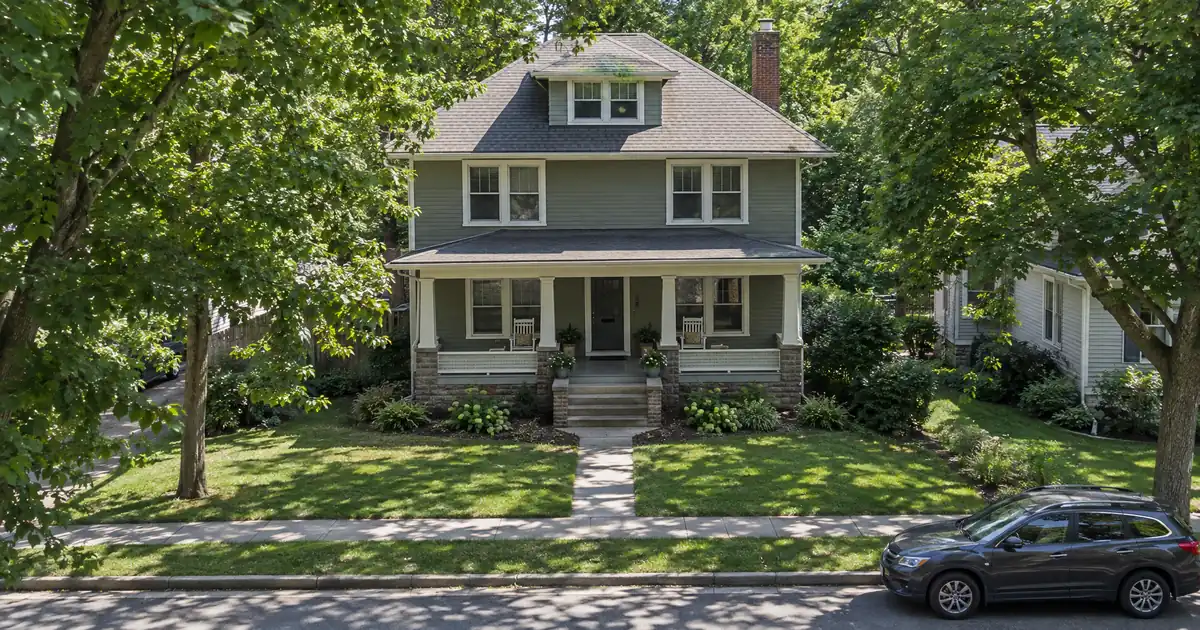
Picture a landlord whose divorce decree awards her the duplex. Her ex signed nothing yet. The county records still show two names. That gap is where most of these files stall, and it is a fixable one.
Why the Decree Doesn’t Finish the Job
A decree is a court order between the two spouses. It is not a deed, and it does not bind your lender. The Consumer Financial Protection Bureau explains that a decree can assign a debt to one spouse without stopping a creditor from collecting from anyone whose name is on the loan. Removing a name from title does not remove it from the mortgage either.
Here is what each document actually does.
| Document | What it does | What it doesn’t do |
|---|---|---|
| Decree | Awards the property, assigns debts | Move title, bind the lender |
| Quitclaim deed, recorded | Moves the ex’s interest to you | Remove the ex from the mortgage |
| Refinance or payoff | Releases the old joint loan | Change who owns the property |
Courts treat the gap the same way. An IRS Chief Counsel document, written in a Tennessee tax-lien setting, cites authority that title does not pass until the conveyance is recorded. That is not a lending rule. It does show why recording matters.
For a lender, the practical result is simple. Until the deed is recorded, your ex is still an owner of record. A new lien on the whole property needs the owners of record to sign.
What Is a DSCR HELOC, Exactly?
A DSCR HELOC is a revolving line secured by a rental you keep. DSCR stands for debt service coverage ratio: gross monthly rent divided by the qualifying monthly payment. Across Lendmire’s wholesale network, the label is loose. Some “DSCR HELOC” products run on rent. Others run on your personal income. The program described here qualifies primarily on property-level rental income covering the payment, subject to lender guidelines.
The structure is narrow on purpose:
- A standalone second lien behind the first mortgage you keep, or a standalone first lien on a rental with no mortgage.
- Never a third lien. Never a line on your own home or a second home.
- Lines start at $50,000. At least 80% of the line is drawn at closing, and later draws are at least $5,000.
- A 5-year interest-only draw period, then a 25-year repayment period, with a 30-year maturity. The rate is variable.
- Vesting in your LLC is allowed on an investment property, subject to program terms. Members sign as guarantors.
DSCR loans are designed for non-owner-occupied investment properties. Because they are business-purpose investor loans, they are reviewed differently from a standard owner-occupied mortgage.
What the Lender Checks, in Order
Underwriting reads the file in a fixed order, and the first failure usually ends the conversation.
1. Title and vesting. Are you the owner of record? Is the vesting form one the program accepts? If your ex is still on title, the lender needs that person to sign. A title holder who is not a borrower signs a non-borrowing owner acknowledgment and the security instrument. Most exes will not do that for a loan they get nothing from, so the cleaner route is to record the quitclaim first.
2. Liens. The lender counts the first mortgage balance plus the new line against value. That is combined loan-to-value, or CLTV. On a second lien, the ceiling is 70% CLTV at a 720 score or better, on lines up to $500,000. Below a 720 score, this program has no second-lien option.
3. Rent. The rent used is the lesser of the appraiser’s Form 1007 market rent or the lease. A lease must be in place. A two-to-four-unit property may have at most one vacant unit. The coverage test needs 1.10x at minimum, measured on a fully amortizing payment across the entire credit limit at a stressed rate. Whether the first mortgage payment joins that calculation on a second lien is the lender’s call, so treat any quick formula you read online with caution.
4. Credit. The minimum is 720 on a second lien and 700 on a first lien. The program wants no 30-day mortgage late in the last 12 months. It also wants 48 months since a bankruptcy, foreclosure, short sale or deed in lieu.
5. Valuation. Lines up to $400,000 use an automated valuation with a property inspection report, or a full interior appraisal. Larger lines take a full interior appraisal. Appraisal waivers are not accepted.
The Timeline: Signed Is Not Recorded
Five dates matter, and each lender test reads a different one.
| Date | Event | What it controls |
|---|---|---|
| 1 | Decree entered | Your right to receive title |
| 2 | Deed signed | Nothing, until recorded |
| 3 | Deed recorded | You are the owner of record |
| 4 | Application | Credit, rent, valuation reviewed |
| 5 | Line closes | Lien attaches |
A signed but unrecorded deed is the core problem. The signer is still the record owner. Most practitioners say record first, then apply. A Justia attorney answer describes the usual order: the ex conveys by quitclaim, the deed is recorded, and recording shows sole ownership so future lenders won’t need the ex’s signature.
There is a second path. DivorceNet notes that in a refinance, the escrow or title company often handles the deed transfer and the new loan paperwork together. Your ex signs the deed and the loan documents at one closing. Whether a given HELOC program allows that sequencing is program-specific. Ask before you plan around it.
Now the second scenario. Say recording lags the decree by several months because the ex is waiting on a refinance. You cannot apply cleanly in that window. Worse, the six-month ownership clock is a separate hurdle. This program requires six months of ownership, and a rental bought or refinanced inside the last six months is not eligible. Whether a recorded divorce deed restarts that clock is a question for the lender, and you should get the answer in writing.
The Existing Mortgage Doesn’t Care About the Quitclaim
Your ex stays liable on the joint first mortgage until it is refinanced, released or paid. That keeps shaping the deal in two ways.
First, your ex has every reason to hesitate before signing a deed. A deed without a refinance leaves them liable on a property they no longer own. Many decrees therefore require a refinance by a deadline, and a HELOC does not replace the first mortgage.
Second, the due-on-sale question. Federal law carves out certain transfers from due-on-sale enforcement, including a transfer from a divorce decree to a spouse. FedLaws notes the exception applies only to residential property with fewer than five dwelling units. Some firm summaries add an occupancy condition. That point matters for a rental awarded in divorce, so have an attorney confirm it. This protection runs in your favor on the old loan. It does not loosen a new lender’s underwriting.
Which Product Fits?
The HELOC is not always the right tool. Run this decision path.
| Your situation | Likely better fit |
|---|---|
| Deed recorded, keeping the first mortgage, want equity access | DSCR HELOC as a second lien |
| Rental is paid off | DSCR HELOC as a first lien |
| Decree orders a refinance, or ex must come off the loan | DSCR cash-out refinance |
| Title must move into a new LLC first | Cash-out refinance, or wait and re-vest |
On a first lien, leverage reaches 75% LTV at 740 or better. It sits at 70% from 700 to 739 on lines up to $500,000, and 65% on larger lines to $1,000,000, at 720 or better. A DSCR cash-out refinance is a different program with its own rules. It replaces the joint loan and releases your ex, which a HELOC will not do. Terms vary by lender guidelines, property type, leverage, credit profile, and full file review.
Don’t use the LLC as a shortcut. Moving an awarded rental into an entity before the paperwork settles invites due-on-sale, seasoning and title-insurance questions. A quitclaim passes only what the grantor holds, with no promise of clean title, so check with your title insurer.
Programs change, and this one is offered in select states under Lendmire’s consumer licensing. Property rules matter too. Rural property, condotels, row homes and leaseholds are outside it. The program also caps exposure at five loans or $2,500,000 per borrower. For the full picture of how these loans work, see the complete DSCR loans guide.
Where These Files Stall
Across the files Lendmire sees in this niche, a short list of problems repeats:
- Deed signed but never recorded, or recorded with a name mismatch.
- An incomplete legal description or a missing notarization on the deed.
- The ex still on title with no willingness to sign.
- A lease that is missing, or a property that is the borrower’s residence rather than a true rental.
- A rental listed for sale in the prior two months.
- A servicer that will not release the ex despite the decree.
Each has a fix, and nearly all start with the title company. For a similar timing problem on a different product, Lendmire’s piece on whether a bank statement HELOC works after a decree covers the alternative qualification route.
Ask Before You Record
Put these questions to the right people before anyone signs.
- The lender: Does a recently recorded divorce deed restart seasoning? May the deed be recorded at the same closing as the line?
- The servicer: Will you release my ex, or only on a full refinance?
- The title company: Is the vesting form acceptable, and does a quitclaim affect my owner’s policy?
- Your divorce attorney: Does the decree set a refinance deadline, and what happens if I miss it?
State rules also differ, including community-property and title-state differences. Check yours before you lock a sequence.
This is not legal or tax advice. Tax treatment varies; consult a qualified professional. Talk to an attorney or CPA about your own situation before you sign or record anything.
If you are considering a home equity line on a rental property and want to see how the numbers work, Lendmire, a mortgage broker arranging financing through select lenders in its wholesale network, can help you compare DSCR HELOC options based on the property, the rent, the equity available, credit profile, combined leverage, and your goals. Reach the team at 828-256-2183.
Key Terms Defined
- Decree: The court order that ends the marriage and awards property and debts.
- Quitclaim deed: A deed that passes whatever interest the signer holds, with no promise the title is clean.
- Recording: Filing the deed with the county so the public record shows the new owner.
- CLTV: Combined loan-to-value, meaning the first mortgage balance plus the new line, divided by value.
- Seasoning: The waiting period a lender wants after you buy or refinance.
- Non-borrowing owner acknowledgment: A form a titled owner signs without becoming a borrower.
Frequently Asked Questions
Can I apply before my ex signs the quitclaim?
Usually not with success. Until the deed is recorded, your ex remains an owner of record, and the lender needs that owner to sign the security instrument. Recording first, or signing the deed at the same closing as the line where the program allows it, is the workable path.
Does the quitclaim take my ex off the mortgage?
No. The deed moves ownership, not liability. Your ex stays on the first mortgage until it is refinanced, released or paid, and the lender can pursue either of you if payments stop.
Will this line satisfy a decree that requires a refinance?
Generally no. A second-lien line leaves the joint first mortgage in place. If the decree orders a refinance, a DSCR cash-out refinance that replaces the joint loan is the more likely fit, subject to program terms.
Can I hold the rental in an LLC?
The program allows LLC vesting on an investment property, subject to program terms. Moving an awarded rental into an LLC before title and seasoning questions are settled can create problems, so settle title first.
Do you need my tax returns or pay stubs?
Not for this program. It qualifies primarily on property-level rental income covering the payment, subject to lender guidelines. Your credit, the lease, a rent schedule and the valuation are all documented.
About Lendmire
Lendmire is a mortgage brokerage (NMLS# 2371349) arranging home equity lines of credit — primary-residence, second-home and investment-property lines — through a wholesale lending network in its 16 full-service states. Eligibility is determined by the lender on each file. Scotsman Guide named Lendmire a Top Mortgage Workplace in both 2025 and 2026.
Get Started
Ready to find the right loan for you?
See your offer in seconds. No credit pull, no obligation.
Informational only. Not a Loan Estimate, approval, or commitment to lend. Program availability and eligibility are subject to lender guidelines, credit approval, property review, and underwriting.
References
1. CFPB Ask CFPB – debt after divorce
4. DivorceNet
This article is part of Lendmire’s DSCR HELOC program — full qualification details, guidelines, and scenarios live on the program page.
Related reading: No-Ratio DSCR Loan vs DSCR HELOC in an LLC · How to Qualify for a DSCR HELOC Without Income Verification · Can You Get a HELOC Behind a DSCR First Mortgage?
Brandon Miller
Founder & CEO, Mortgage Loan Originator, Lendmire LLC
- Mortgage Loan Originator · NMLS# 1129696 · Verify on NMLS Consumer Access
- North Carolina Real Estate Broker · License# 343312 · Verify on NCREC
- North Carolina Insurance Producer · License# 19053198 · Property, Casualty, Life, Health · Verify on NAIC SBS
- Lendmire LLC · Firm NMLS# 2371349 · Verify firm licensure
Required disclosures. Lendmire (NMLS# 2371349) operates as a licensed mortgage broker, not a direct lender or depository. The discussion in this article is general in nature and should not be relied upon as financial, legal, or tax advice — every investment scenario is unique and should be reviewed by a qualified professional. Any loan inquiry is subject to lender underwriting, and this article is not a commitment to lend or a guarantee of approval. Mortgage rates, loan terms, and program guidelines vary by borrower, property, and state, and may change without notice. Equal Housing Opportunity. Verify licensure at NMLS Consumer Access.