
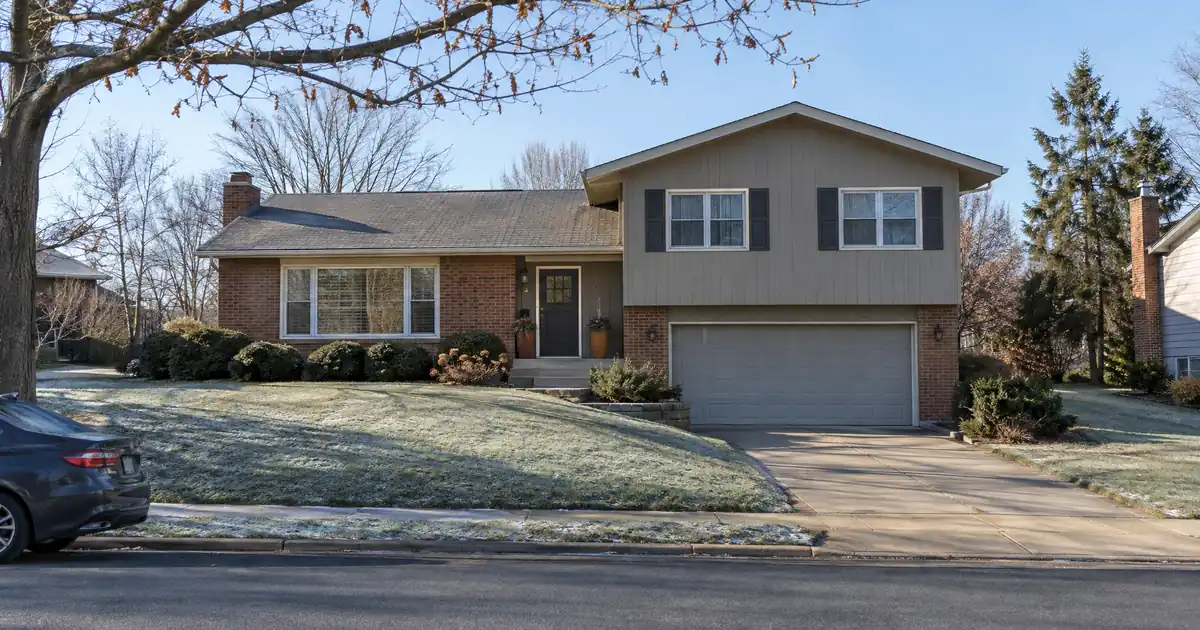
The Quick Read: Probate decides this before the rent does, so the realistic goal is to have the file fully built on the day the deed records in the heir’s name. A standard line on an inherited rental generally waits for clear title, because only someone with signing authority can pledge the property. The coverage test comes second, and it is the part an heir can prepare in advance.
- A named executor cannot borrow until the court issues letters.
- A line in an heir’s name generally waits for the recorded deed.
- Through select programs, the rent qualifies the line, not the heir’s personal income, subject to lender guidelines.
- Prepare the lease, rent evidence, lien payoffs and entity documents while probate is open.
- A DSCR cash-out refinance is the usual alternative when the property sits in an LLC or the heirs want a lump sum.
Heirs usually ask the wrong question first. They ask whether the rent is strong enough. Underwriters ask who owns the house and who can sign. This article walks through the mechanics in that order, then shows what a prepared file looks like.
Key Terms Defined
Probate is the court process that validates a will, appoints someone to run the estate and transfers title to the heirs.
Letters testamentary are the court’s document proving the executor has authority to act for the estate.
Personal representative is the executor or administrator appointed by the court.
DSCR is the debt service coverage ratio: gross monthly rent divided by the qualifying monthly payment.
CLTV is combined loan-to-value: the first mortgage balance plus the new line, divided by the property’s value.
Seasoning is the minimum time a borrower must have owned or refinanced the property before a new line is available.
Vesting is how title is held: individual, trust or LLC.
What Exactly Is a DSCR HELOC?
A DSCR HELOC is a revolving line of credit on a non-owner-occupied one-to-four-unit rental, qualified on the property’s rent. It is a market nickname, not a single standardized product, so the structure matters more than the label.
Across the wholesale network, the program is written as a standalone second lien behind the first mortgage the owner keeps. It can also be a standalone first lien on a rental with no mortgage. It is never closed with a purchase, never a third lien, and never a line on an owner’s own home.
DSCR loans are designed for non-owner-occupied investment properties. Because they are business-purpose investor loans, they are reviewed differently from a standard owner-occupied mortgage.
The line qualifies primarily on property-level rental income covering the payment, subject to lender guidelines. Tax returns, W-2s, pay stubs and a personal debt-to-income ratio are not part of that review. The rent, the lease, the credit report and the valuation are all documented. Title and authority documents matter more here than on any ordinary rental file.
Not every lender offers an investment-property line at all. NerdWallet’s explainer on HELOCs for investment property notes that availability varies and requirements are strict. That matches what files show. Ranges vary widely by program, so the figures below are the ones that apply through select programs in Lendmire’s network.
Why Does Probate Block the Line?
Probate blocks the line because a lien needs someone with legal power to grant it. While the estate is open, the owner of record is still the decedent. The heirs have an interest, but lenders look for a recorded deed or court letters before they will take a security instrument.
Being named in the will is not enough. A will that names you executor does not let you manage or transfer property until the court issues letters, as the law-firm explainer from Mainor Wirth puts it. Letters follow the court’s appointment, and LegalShield advises ordering one certified copy for each institution that needs proof.
Powers vary by state and can be limited by the court or the will. A California probate attorney’s guide on letters testamentary lists borrowing for the estate and mortgaging estate property among the powers letters can confer. Treat that as state-specific, and confirm the local rule with a probate attorney.
Clear title is the other gate. Yahoo Finance reports that an inherited property generally needs clear title, with the estate settled and the transfer completed. It adds that co-heirs must agree to the loan.
Those are two separate problems. Authority answers who can sign today. Title answers whose name sits on the property when the line closes.
Where Does Each Probate Stage Leave You?
Each stage changes who can sign, so the table below is the quickest way to place a file. It describes how files generally behave, not a promise of any outcome.
| Probate stage | Who can sign | DSCR HELOC outlook | Next move |
|---|---|---|---|
| Named executor, no letters | Nobody | Not available | Wait for the court appointment |
| Letters issued, probate open | Personal representative, for the estate | An estate-level loan may exist; an heir’s line does not | Build the rent file; ask about estate options |
| Deed recorded to heir | The heir or heirs | Realistic, subject to seasoning | Submit the prepared file |
| Trust or TOD deed, no probate | Trustee or the new owner | Depends on lender and vesting | Confirm title and vesting early |
| Property held by heirs in an LLC | The LLC’s members | Often better suited to a cash-out refinance | Compare both structures |
Two notes on the table. An estate-level loan signed by the personal representative is a different product from an heir’s line. Trust-held assets typically do not need letters, according to LegalShield, though lender requirements for a trustee-signed file differ.
How Does the Rent Test Work on an Inherited Rental?
The rent test divides gross monthly rent by a qualifying payment, and the program requires a minimum DSCR of 1.10x, subject to underwriting. The qualifying payment is a fully amortizing payment on the entire credit limit at a stress start rate. It is not the interest-only payment on what you draw. Exact terms depend on the lender’s guidelines, property type, leverage, and a full review of the borrower’s file.
That detail trips up heirs. A line sized for a large credit limit is tested as if the whole limit were drawn and repaid. Rent that looks comfortable against today’s balance can fall short against the full line. On a second lien, whether the first-mortgage payment joins the qualifying payment is the lender’s calculation, so do not assume either answer.
Rent is the lesser of the appraiser’s Form 1007 market rent or the lease. A lease above market counts only with three months of receipts. A lease in place is required, and a two-to-four-unit property may have at most one vacant unit.
That requirement is the hard part on inherited property. The decedent may have rented informally, or the unit may sit empty. Heirs who plan ahead can fix this:
- Keep any existing lease and let the tenant stay.
- If the unit is vacant, look at whether the estate’s counsel allows a lease to be signed by the personal representative.
- Collect rent into a separate estate account, not personal funds, so receipts are clean.
- Rental rules during probate vary by state. LawDepot says renting during probate is generally possible, with state differences.
Picture an heir with a two-unit house, one unit leased and one vacant. That file is workable on the vacancy rule. Add a second vacant unit and it falls outside the program. The fix is leasing it, not arguing the formula.
Some select lenders in the network do review coverage below 1.00, but leverage and terms adjust. Treat that as a fallback to discuss, not a plan.
What Leverage and Credit Does the Program Allow?
Leverage depends on the lien position and credit tier, and every figure here is a ceiling, subject to underwriting and not an offer.
| Lien position | Credit | Maximum | Line size |
|---|---|---|---|
| Second lien | 720 or better | 70% CLTV | $50,000 to $500,000 |
| First lien (no mortgage) | 740 or better | 75% LTV | To $500,000 |
| First lien | 700 to 739 | 70% LTV | To $500,000 |
| First lien, larger lines | 720 or better | 65% LTV | Above $500,000, to $1,000,000 |
Below 720 there is no second-lien option. On a first lien the floor is 700. The new line stacks on any existing mortgage, so a remaining loan balance reduces what is available. Inherited homes with a large balance often leave little room on a second lien.
Credit history rules are short. There can be no 30-day mortgage late in the last 12 months, and 48 months must have passed since a bankruptcy, foreclosure, short sale or deed-in-lieu. No reserves and no cash to close are required.
Borrowers must be U.S. citizens, permanent residents, or non-permanent residents with a Social Security number. Foreign nationals and ITIN borrowers are not eligible.
Does the Seasoning Clock Start at Death or at the Deed?
This program runs two separate clocks. Seasoning means a rental bought or refinanced in the last 6 months is not eligible. Ownership is a different test: the borrower must have been on title for 6 months. Whether an inheritance resets either clock is a lender-specific question.
Heirs should ask it early, before the file is built, because the answer can change the plan. How an inheritance transfer counts is not something to assume. A deed recorded at the end of probate may start a clock for some lenders. Get the answer in writing from the loan officer.
Do not read this as a reason to delay everything. The documents that prove ownership date and transfer, such as the death certificate, the probate order and the distribution deed, are the same ones a seasoning review would ask for.
What to Do While Probate Is Still Open
The best use of the probate window is file preparation. Work in this order.
1. Confirm authority. Get certified letters and a certified death certificate. Order extra certified copies, since each institution wants its own.
2. Name the structure. Decide whether title will pass to individuals, a trust or an LLC. Some line programs cannot take certain vesting. This program allows an LLC on investment property, with members signing as guarantors.
3. Pull lien payoffs. Get balances on every mortgage or line on the property. A lien stays attached through probate, and interest keeps accruing. Federal law generally limits a lender from calling an existing mortgage due on certain transfers, including to a relative at death, per Nolo. That protects the old loan. It does not create new equity access.
4. Build the rent file. Gather the lease, rent receipts, and tax and insurance figures. The valuation will include a market-rent schedule.
5. Line up the heirs. Every owner on title must agree to the lien. One objecting heir can stall the file, so settle buyouts or consent first.
6. Check the property against the exclusions. Rural property, row homes, condotels, leaseholds, land trusts and a property listed for sale in the prior 2 months are outside this program. So is a property with a solar lien.
7. Get a title report early. Title problems found after the deed records cost the most time to fix.
Document Checklist
- Certified letters testamentary and death certificate
- The will, plus the final probate order or distribution deed once available
- Recorded deed in the heir’s name, or trust certification
- Title report
- Current lease and rent receipts
- Tax bill and insurance declarations (hazard coverage must cover both liens; flood coverage where required)
- Payoff statements on existing liens
- LLC documents, if the property is held in an entity
- Government ID and Social Security number for each borrower
Valuation and Draw Rules
Valuation depends on line size. Lines to $400,000 use an automated valuation with a property inspection report, or a full interior appraisal. Larger lines take a full interior appraisal. Appraisal waivers are not accepted.
Stale appraisals are a real friction point on inherited homes. A probate-era value, set for the estate, will not substitute for the lender’s own valuation. Expect a fresh one.
The line itself has a fixed shape. It has a 5-year interest-only draw period, then a 25-year repayment period, for a 30-year maturity. The rate is variable. At least 80% of the line is drawn at closing, and never less than $50,000. Later draws are at least $5,000.
That 80% rule changes the math for heirs who want a small reserve. This is not a pure standby line. If the plan is a lump sum, a cash-out refinance may fit better.
Line, Cash-Out Refinance, or Wait?
The choice turns on whether the heir wants to keep the existing first mortgage.
| Factor | DSCR HELOC | DSCR cash-out refinance |
|---|---|---|
| First mortgage | Stays in place on a second lien | Replaced |
| Funds | Revolving after the initial draw | One lump sum |
| Reviewed on | Property rent | Property rent |
| Fit | Heirs keeping an existing loan | Entity-held rentals, large balances |
The line suits an heir who inherited a mortgage worth keeping. A refinance suits one who wants to clear the old loan, or whose title sits in a form the line does not accept. Lendmire’s DSCR cash-out refinance page covers that route in detail. Waiting is also a legitimate choice when rent is thin, a co-heir objects, or the equity is small after liens.
Where the General Rule Breaks
A few cases do not follow the usual path.
Successor in interest. A confirmed successor in interest is someone whose identity and ownership interest the servicer has confirmed, as the CFPB’s definitions state. That status gives servicing rights on the existing loan. It is not new credit and does not let anyone pledge the house.
Reverse mortgage on the property. An FHA reverse mortgage becomes due at the last borrower’s death, which can force a payoff decision before any new line is possible.
Heirs’ property without clear title. Possession without a deed is a collateral problem. Lenders will not lend against it.
Estate rent. Mixing estate rent with personal funds muddies the receipts the file needs.
Trust-held title. A trustee-signed route may exist, depending on the lender.
Common Mistakes
- Treating a named executor as authorized before letters issue.
- Building the file around today’s balance instead of the full credit limit.
- Ignoring entity vesting until the lender flags it.
- Leaving a second unit vacant on a two-to-four-unit property.
- Assuming the lender’s valuation will match the probate appraisal.
- Skipping co-heir consent.
Reach for the broader complete DSCR loans guide if the line does not fit and you need to compare other structures.
Frequently Asked Questions
Can I get a DSCR HELOC before probate closes?
Generally no, not in an heir’s name. Lenders want the deed recorded and probate or estate settlement done. An estate-level loan may be possible through a personal representative who holds letters, but that is a different product.
Can an executor open the line?
Only with letters testamentary in hand, and only if state law and the will allow borrowing against estate property. The program here is written for owners of record, so the file generally waits for the transfer.
Do all heirs have to agree?
Yes. All owners on title must agree to the lien. A non-borrowing owner signs an acknowledgment and the security instrument, so one holdout can stop the file.
What if the DSCR comes up short?
Raise the rent evidence, lower the line size, or move to a different structure. Select lenders in the network review coverage below 1.00, but leverage and terms adjust, and qualification stays subject to lender guidelines.
What if there is already a mortgage?
The line can sit as a second lien behind it, with combined leverage capped at 70% CLTV. The existing balance reduces available room. Payoff statements are part of the file.
Does the program operate everywhere?
No. It is offered in 15 of Lendmire’s 16 licensed states, every licensed state except Tennessee: Alabama, California, Colorado, Florida, Georgia, Indiana, Michigan, Montana, New Mexico, North Carolina, Ohio, Pennsylvania, Texas, Virginia and Washington.
Tax treatment varies with how funds are used and how the property is held; consult a qualified professional.
If you are considering a home equity line on a rental property and want to see how the numbers work, Lendmire can help you compare DSCR HELOC options based on the property, the rent, the equity available, credit profile, combined leverage, and your goals. Reach the team at 828-256-2183.
About Lendmire
Lendmire, NMLS# 2371349, is a mortgage brokerage that arranges home equity lines of credit through wholesale lending partners in its 16 full-service states. Lines on primary residences, second homes and investment properties are each reviewed individually by the lender under the program’s occupancy, credit and combined-loan-to-value guidelines. Scotsman Guide named Lendmire a Top Mortgage Workplace in both 2025 and 2026.
Get Started
Ready to find the right loan for you?
See your offer in seconds. No credit pull, no obligation.
Informational only. Not a Loan Estimate, approval, or commitment to lend. Program availability and eligibility are subject to lender guidelines, credit approval, property review, and underwriting.
References
1. NerdWallet – HELOC on an investment property
2. Mainor Wirth – Letters of testamentary
3. LegalShield – Letters testamentary
4. Living Trust Attorneys – Letters in California
5. Yahoo Finance – Home equity on inherited property
6. LawDepot – Inherited property
7. Nolo – Taking over a mortgage when a loved one dies
8. CFPB – Regulation X §1024.31 Definitions
This article is part of Lendmire’s DSCR HELOC program — full qualification details, guidelines, and scenarios live on the program page.
Related reading: How to Qualify for a DSCR HELOC Without Tax Returns or W-2s · How to Qualify for a DSCR HELOC After Owning the Rental for 6 Months · How to Qualify for a DSCR HELOC on a Home Held in an Irrevocable Trust
Brandon Miller
Founder & CEO, Mortgage Loan Originator, Lendmire LLC
- Mortgage Loan Originator · NMLS# 1129696 · Verify on NMLS Consumer Access
- North Carolina Real Estate Broker · License# 343312 · Verify on NCREC
- North Carolina Insurance Producer · License# 19053198 · Property, Casualty, Life, Health · Verify on NAIC SBS
- Lendmire LLC · Firm NMLS# 2371349 · Verify firm licensure
Important disclosures. Lendmire (NMLS# 2371349) is a licensed mortgage brokerage. Lendmire is not a direct lender, depository institution, or financial advisor. All loan inquiries are subject to lender underwriting; this article does not constitute a commitment to lend. Rates, terms, and program guidelines are subject to change without notice and vary by borrower profile, property type, and state. Information in this article is general in nature and is not financial, legal, or tax advice. Equal Housing Opportunity. NMLS Consumer Access: nmlsconsumeraccess.org.