
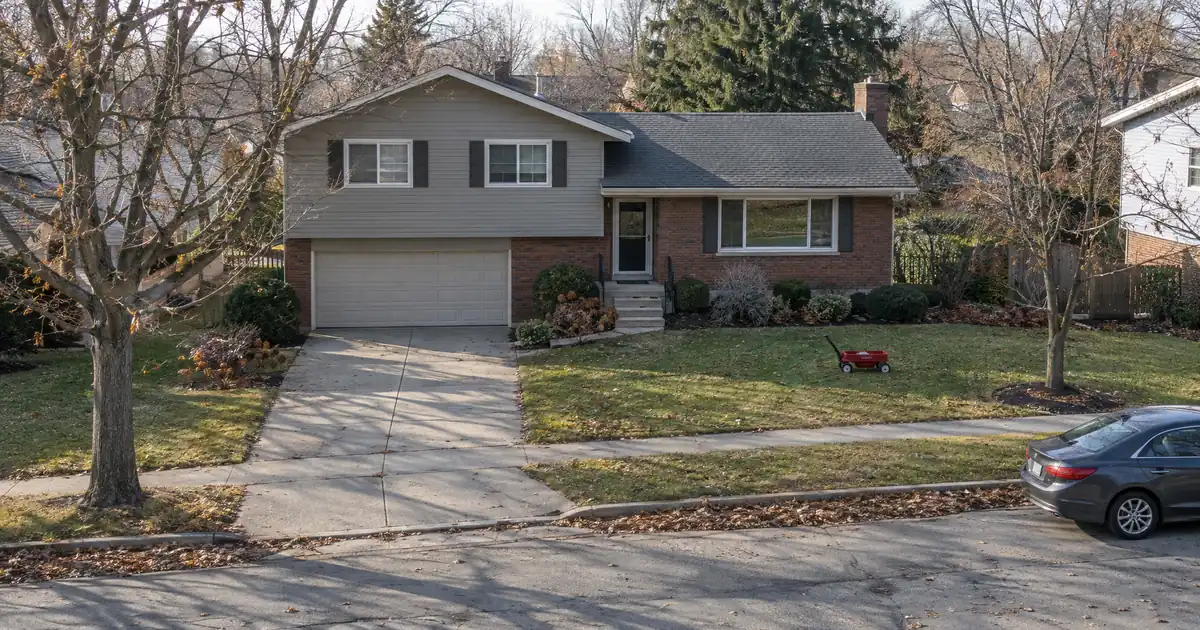
The Quick Read: A DSCR HELOC qualifies primarily on property-level rental income covering the payment, subject to lender guidelines, so your Social Security or pension is not the income that gets underwritten, and the work is proving the rental carries the line. Retirement income still plays supporting roles, and it becomes the main event only on a different product.
- The rent decides the file, using a minimum coverage of 1.10x on a stress payment over the whole credit limit.
- Social Security and pension income do not raise that ratio, and a strong pension cannot rescue weak rent.
- This line goes on a non-owner-occupied one-to-four-unit rental, never on the home you live in.
- Credit score, combined leverage, lease, valuation, and 6 months of ownership all still apply.
- A personal-income route exists, where retirement income does count, but it is a different loan.
What Is a DSCR HELOC, and What Is It Not?
A DSCR HELOC is a revolving line of credit secured by a rental you own. The rent, not your paycheck or pension, is what the lender tests.
DSCR stands for debt service coverage ratio. It is the property’s gross monthly rent divided by the qualifying monthly payment. A HELOC is a home equity line of credit, meaning a line you borrow against as needed.
Across our wholesale network, this line takes one of two shapes. It is a standalone second lien behind the first mortgage you keep, or a standalone first lien on a rental with no mortgage. It is never closed together with a purchase, and it is never a third lien. The LLC can stay on title, subject to program terms, with the members signing as guarantors.
Two things surprise people. First, this is not a line on your own home or a second home. Second, it is not fully flexible: at least 80% of the line, and never less than $50,000, is drawn at closing, and later draws run at least $5,000 each. The program is placed through select lenders in Lendmire’s network, and everything here is subject to underwriting.
Do Social Security and Pension Income Count?
No, not in this lane. The qualifying payment is measured against the property’s rent, and your personal income is never calculated. That means no traditional personal-income documentation, W-2s, pay stubs, or debt-to-income ratio.
Retirement income does count on a personal-income line, which is a different product. Here is how the two lanes compare.
| Factor | DSCR HELOC (rental) | Personal-income HELOC |
|---|---|---|
| What qualifies you | Property rent vs. payment | Your documented income |
| Social Security / pension | Not counted | Counted, with proof |
| Debt-to-income ratio | Not used | Central test |
| Property | Non-owner-occupied rental | Varies by program |
| LLC title | Allowed, per program terms | Usually not |
Personal-income programs often treat non-taxable income, such as part of Social Security, more generously when they calculate qualifying income. That is those programs’ convention. It has no effect on a DSCR ratio, because the ratio never looks at you.
DSCR loans are designed for non-owner-occupied investment properties. Because they are business-purpose investor loans, they are reviewed differently from a standard owner-occupied mortgage. The regulation behind that split, 12 CFR 1026.3 via Cornell LII, exempts credit extended primarily for a business or commercial purpose. America’s Credit Unions adds that the test is the purpose of the loan, so “investment property” is not a magic label by itself.
How Do You Qualify, Step by Step?
You qualify by clearing six checks, and rent is only the first. Each one is subject to underwriting and the lender’s own calculation.
1. Confirm the property fits. It must be a single-family home, PUD, townhome, two-to-four-unit property, or an eligible condominium. Rural-designated property, row homes, condotels, leaseholds, and land trusts are outside this lane. A rental bought or refinanced in the last 6 months is not eligible.
2. Document the rent. A lease must be in place. Rent counts at the lesser of the appraiser’s market rent (Form 1007) or the lease. A lease above market counts only with three months of receipts. In a two-to-four-unit building, at most one unit can sit vacant.
3. Run the ratio. The qualifying payment is a fully amortizing payment on the entire credit limit at the start rate plus 2 percentage points. That is a stress test, so it runs higher than what you would actually owe on a partly drawn line. Rent divided by that payment must reach at least 1.10x.
4. Check credit. A 720 score is the minimum on a second lien and 700 on a first lien. There should be no 30-day mortgage late in the last 12 months, and 48 months must have passed since any bankruptcy, foreclosure, short sale, or deed-in-lieu.
5. Check combined leverage. On a non-owner-occupied rental, a second lien reaches up to 70% combined loan-to-value (CLTV) at 720 or better, on lines from $50,000 to $500,000. A first lien on a paid-off rental reaches up to 75% loan-to-value (LTV) at 740 or better and 70% from 700 to 739, on lines up to $500,000. Lines above $500,000, up to $1,000,000, cap at 65% LTV.
6. Order the valuation. Lines up to $400,000 use an automated valuation with a property inspection report, or a full interior appraisal. Larger lines take a full interior appraisal. Appraisal waivers are not accepted. These specifics are subject to lender guidelines and a full review of property, leverage, and credit.
No reserves and no cash to close are required, through select programs. Exposure is capped at 5 loans or $2,500,000 per borrower with the program. For the broader picture of how these loans fit together, see the complete DSCR loans guide.
What Does the Math Look Like for a Retiree?
Picture a retiree living on Social Security and a pension who owns a duplex free and clear. The rent, measured against the stress payment on the full credit limit, clears about 1.2x. That passes the 1.10x minimum, and the retiree’s monthly income never enters the calculation. This is illustrative, and the lender’s calculation governs.
Now picture a second retiree with the same pension and a rental that covers only about 1.05x. The pension is larger and the credit score is excellent. The file still misses, because the property carries the test. A bigger pension does not change the ratio.
Notice how the stress test works against you. It sizes the payment on the entire credit limit, even if you plan to draw less. A smaller line lowers the qualifying payment and can lift the ratio. Asking for less is sometimes the cleanest fix.
What Is Retirement Income Still Good For?
It still has three supporting jobs, even though it is not the qualifying income.
Credit profile. Your score and mortgage history are checked on every file, and steady retirement income helps you keep both clean over time. The lender’s own credit report sets your tier.
Your own cushion. A DSCR file does not require reserves on this line. Even so, you are the one who pays if the unit sits empty or the variable rate moves. Pension and Social Security income is what keeps the line serviced during a vacancy.
The other lane. If the rental falls short, documented retirement income may support a personal-income line from a program that counts it. For that route, the Social Security Administration’s benefit verification letter is the current proof, and you can pull it from a my Social Security account. An older award letter is a different document.
What If the Rent Does Not Cover the Line?
Start by shrinking the request, because the stress payment is built on the full limit. Other options exist, and each has a tradeoff.
| Option | What it does | Tradeoff |
|---|---|---|
| Smaller credit limit | Lowers the qualifying payment | Less cash available |
| Raise rent to market | Lifts the numerator | Needs a lease that supports it |
| Switch to a personal-income line | Counts your retirement income | Different product and documentation |
| DSCR cash-out refinance | Select lenders review lower coverage | Leverage and terms adjust |
| Wait and improve the property | May lift appraised rent | Takes time, results vary |
Which Route Fits Your Property?
The property and its title decide the product before any income does. Use this as a first sort.
| Your situation | Likely route |
|---|---|
| Equity in your own home | Primary-residence HELOC, which is a different owner-occupied product |
| Rental titled personally | DSCR HELOC, or a personal-income line |
| Rental titled in an LLC | DSCR HELOC, subject to program terms |
| Rental bought in the last 6 months | Wait, because it is not yet eligible |
| Owner-occupied home turning into a rental | Reviewed as an investment property once it is a pure rental |
Borrowers must be US citizens, permanent residents, or non-permanent residents with a Social Security number. Foreign nationals and ITIN borrowers are not eligible on this program.
DSCR vs. conventional financing
There are two common ways to finance an investment property, and they qualify you differently — here’s how investors weigh them.
Why investors choose it
- Qualifies on the property’s rental income — no personal tax returns, W-2s, or pay stubs needed to document income.
- No personal debt-to-income ceiling to clear, so existing mortgages and obligations don’t cap your borrowing the same way.
- Can be closed in an LLC, keeping the property inside a business entity.
- Built for scaling — not held to the limit on number of financed properties that conventional financing applies.
- Underwriting centers on the deal: generally qualifies when the rent covers the payment, a 1.10x minimum coverage ratio being the baseline (confirmed in underwriting).
- Designed specifically for investment property, including long-term and, where the program allows, short-term rentals.
Where it’s strong
- Often the lowest ongoing financing cost for a buyer who fully qualifies on personal income — a fit for a first property or a cost-first purchase.
Trade-offs for investors
- Requires full personal income documentation and must fit within a debt-to-income limit — salary, existing debts, and other mortgages all count.
- Typically held in your personal name rather than a business entity.
- Caps how many financed properties you can carry, which can become a ceiling as a portfolio grows.
- Evaluates you as a borrower as much as the property, which usually means more paperwork.
How investors usually choose: a first or single property often optimizes for the lowest financing cost; portfolio builders often optimize for leverage, vesting in an LLC, and scaling past conventional caps. The right answer depends on your goals, the property, and current guidelines — both paths run through select lenders in Lendmire’s wholesale network, with eligibility and terms confirmed in underwriting.
What Documents Do You Need?
The two lanes ask for different paperwork.
| Document | DSCR HELOC | Personal-income line |
|---|---|---|
| Lease | Required | Sometimes |
| Market-rent appraisal | Part of valuation | Not applicable |
| Credit report | Lender pulls it | Lender pulls it |
| Benefit verification letter | Not required | Required |
| Pension statements | Not required | Required |
| Entity documents for an LLC | Required if vested in one | Rarely |
Documented does not mean thin. The rent, the lease, the credit report, and the valuation are all verified. What you skip is the personal income file.
What Risks Should a Retiree Check?
Run these checks before you sign anything.
- Variable rate. The payment can move after you borrow, and your income may not.
- End of the draw period. The draw period is 5 years interest-only on the drawn balance. Then a 25-year fully amortizing repayment period begins, within a 30-year maturity. The payment steps up at that turn.
- Vacancy. A line serviced by one tenant is serviced by one tenant.
- Heirs. A lien on the rental passes to the estate with the property.
- Other loans. A new second lien sits on top of the first mortgage, so combined leverage rises.
Tax treatment can depend on how the funds are used and how the property is held; borrowers should keep clear records and speak with a qualified tax professional before relying on any deduction.
Common Mistakes
Most failed files trace back to a few predictable errors.
- Assuming a pension or portfolio counts toward the ratio. It does not.
- Applying on your own home and expecting this line. It is never offered on an owner-occupied home.
- Counting a lease that sits well above market rent, with no receipts to support it.
- Buying or refinancing the rental less than 6 months before applying.
- Mixing the lanes, such as handing over award letters on a file that never reads them.
- Skipping the 1.10x check and applying for the maximum line.
Key Terms Defined
DSCR (debt service coverage ratio): the property’s gross monthly rent divided by the qualifying monthly payment.
CLTV (combined loan-to-value): the first mortgage balance plus the new line, divided by the property’s value.
Second lien: a loan secured by the property that sits behind the first mortgage.
Stress payment: the payment the lender uses to test the file, sized on the whole credit limit at the start rate plus 2 percentage points.
DTI (debt-to-income ratio): your monthly debts divided by your monthly income, used on personal-income loans, not on this line.
Seasoning: the required time you must own a property before borrowing against it, here 6 months.
Frequently Asked Questions
Can I qualify on Social Security alone?
On a DSCR HELOC, you qualify on the rent, so Social Security is not the qualifying income. A rental with solid coverage and a 720 score on a second lien (700 on a first lien) can qualify, subject to underwriting. If Social Security is your only income and the rent is weak, a personal-income line is the other route.
Does pension income raise my DSCR?
No. The ratio divides rent by the qualifying payment, and nothing about you appears in it. A bigger pension helps you carry the payment in real life, but it does not move the number the lender tests.
Can an LLC hold title?
Yes, subject to program terms. The members sign as guarantors, and a title holder who is not a borrower signs a non-borrowing owner acknowledgment and the security instrument.
Can I use this on the home I live in?
No. This line is never offered on an owner-occupied home or a second home. A primary-residence HELOC is a different consumer product that reads your income and debts.
Do I need tax returns?
Not on this line, because it qualifies primarily on property-level rental income covering the payment. You still provide the lease, entity documents if applicable, and the credit and valuation steps described above.
Where to Go From Here
If you are considering a home equity line on a rental property and want to see how the numbers work, Lendmire can help you compare DSCR HELOC options based on the property, the rent, the equity available, credit profile, combined leverage, and your goals. This program is offered through select lenders and is not available in Tennessee.
Retirement income earns its keep around the edges of this file, but the rent is what gets the line approved.
About Lendmire
Lendmire — NMLS# 2371349 — is a mortgage broker that arranges home equity lines of credit in its 16 full-service states through wholesale lenders, on primary residences, second homes and investment properties. Every line is subject to the lender’s guidelines and full underwriting. Scotsman Guide named Lendmire a Top Mortgage Workplace in both 2025 and 2026.
Investors who want the broader program framework can review how DSCR loans work.
Get Started
Ready to find the right loan for you?
See your offer in seconds. No credit pull, no obligation.
Informational only. Not a Loan Estimate, approval, or commitment to lend. Program availability and eligibility are subject to lender guidelines, credit approval, property review, and underwriting.
References
1. 12 CFR 1026.3 (Reg Z, CFPB) via Cornell LII
2. America’s Credit Unions — business-purpose loan exemptions
3. SSA — benefit verification letter FAQ
This article is part of Lendmire’s DSCR HELOC program — full qualification details, guidelines, and scenarios live on the program page.
Related reading: DSCR HELOC Program for Investors Who Qualify on Rent, Not Salary · DSCR HELOC for Charleston Landlords Borrowing Against Rent Income · Condo DSCR HELOC Requirements for a Rental Condo
Brandon Miller
Founder & CEO, Mortgage Loan Originator, Lendmire LLC
- Mortgage Loan Originator · NMLS# 1129696 · Verify on NMLS Consumer Access
- North Carolina Real Estate Broker · License# 343312 · Verify on NCREC
- North Carolina Insurance Producer · License# 19053198 · Property, Casualty, Life, Health · Verify on NAIC SBS
- Lendmire LLC · Firm NMLS# 2371349 · Verify firm licensure
Disclosure information. Lendmire is a state-licensed mortgage brokerage under NMLS# 2371349. Lendmire is not a depository institution, direct lender, or financial advisor — all loans referenced are placed through wholesale lender partners and are subject to each lender's underwriting standards. This article is provided for general informational purposes and is not a commitment to lend, nor does it constitute financial, legal, or tax advice. Loan programs, terms, rates, and qualification standards change without notice and depend on borrower profile, property type, and the state in which the subject property is located. Equal Housing Opportunity provider. NMLS Consumer Access: nmlsconsumeraccess.org.