
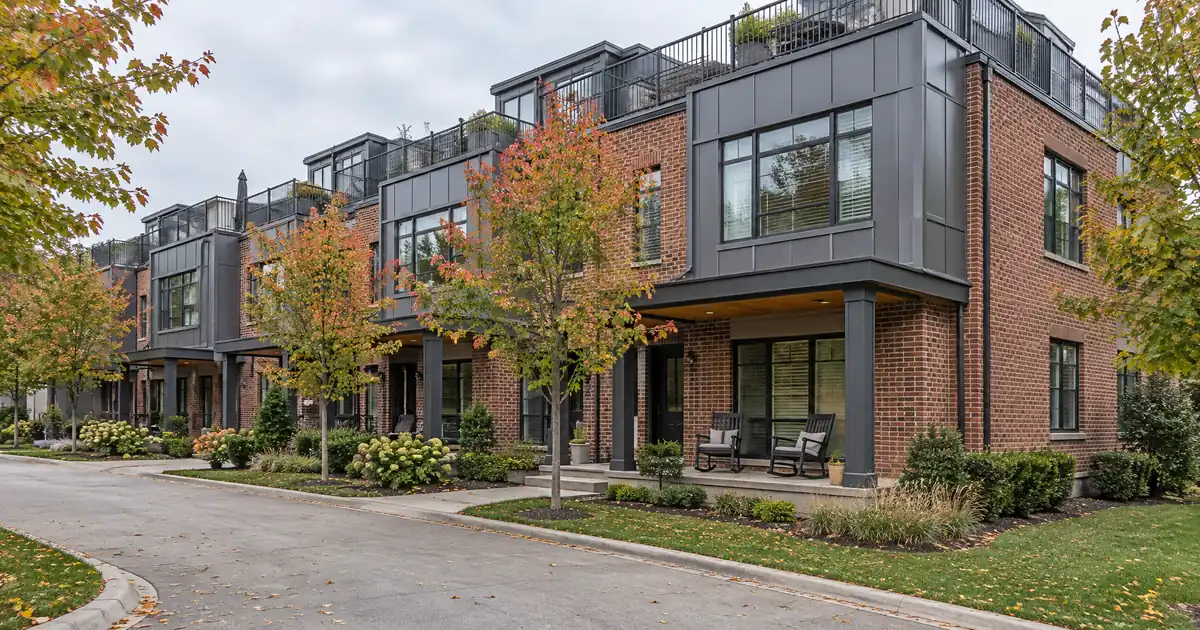
The Quick Read: A condo landlord must pass two reviews: the borrower file (title in your own name or a revocable trust, a 700 credit profile, and enough equity to stay at or under 70% combined loan-to-value) and the building file, where the HOA’s questionnaire, budget, and rental rules must show a project the lender will accept as collateral.
- Vesting is limited to you personally or a revocable living trust, so an LLC-owned unit needs a different route.
- On an investment property, the ceiling is 70% CLTV and the maximum line is $500,000, subject to lender guidelines.
- Non-warrantable condos can be eligible. Condotels, co-ops, and mixed-use buildings are not.
- The HOA can still block you through rental caps, even after a lender approves the file.
Lendmire is a broker. It places these lines with select wholesale partners and does not lend directly. Every figure below is a guideline range, not a commitment to lend.
How large a line the equity supports.
An equity line is sized by combined loan-to-value, occupancy, and credit — not by rental coverage. Switch the occupancy or the credit band and the ceiling moves with it.
Investment-property lines require a 700 minimum credit score; second-home lines start at a 640 minimum and primary-residence lines at 600, and the combined-LTV ceiling steps down as the credit band drops on primary-residence and second-home lines and holds on investment-property lines; the line cap steps down on primary-residence lines and holds at every tier on investment-property and second-home lines.
A debt-to-income ratio above 45% requires 680+ credit. Profiles under 640 are limited to single-family homes. At least 75% of the approved line is drawn at closing. Ceilings, floors, and caps update from Lendmire’s centralized guideline source.
Line estimate
Illustrative estimate only — not a quote, Loan Estimate, approval, or commitment to lend. The rate is an editable assumption; equity-line pricing is variable through both the draw and repayment periods and never converts to fixed. Occupancy and credit drive the ceiling together: an investment property tops out at 70% combined LTV (minimum credit 700, line cap $500,000); a second home tops out at 90% combined LTV (minimum credit 640, line cap $500,000), with the ceiling stepping down as the credit band drops (the cap holds at every tier); a primary residence tops out at 90% combined LTV (minimum credit 600), and its $750,000 maximum line is available only at 75% combined LTV or below with a 700-or-better credit profile (720 on the longer-runway program) and a full appraisal. Lines above $500,000 require a full appraisal. Credit, debt-to-income, property type, and full underwriting review all affect the final line.
Key Terms Defined
HELOC: A revolving line of credit secured by property equity, where interest is charged only on the amount drawn.
Combined loan-to-value (CLTV): Your first mortgage balance plus the new line, divided by the property’s value.
Warrantable condo: A building that meets the standard project rules secondary-market buyers use, such as limits on delinquencies, litigation, and investor concentration.
Non-warrantable condo: A building that misses one of those rules. Warrantability is a lending label, not a legal defect.
Condo questionnaire: A form the lender sends to the HOA or its manager to report on the building’s finances, insurance, litigation, and ownership mix.
Vesting: The name or entity that holds legal title to the property.
Two Reviews: You and the Building
A condo HELOC is underwritten twice. The first review looks at you and the unit. The second looks at the association that owns the walls, roof, and reserves around your unit.
| Item | Borrower and unit review | Building review |
|---|---|---|
| What it covers | Title, credit, DTI, equity | Reserves, insurance, litigation, rentals |
| Source of facts | Your application and a valuation | HOA questionnaire and documents |
| Who controls it | You | The HOA or its manager |
| Typical stopper | LLC title or thin equity | Special assessment or rental ban |
The second column matters most for landlords. You can fix a credit profile or add equity. You cannot fix a building’s reserves. The HOA also fills out the questionnaire, not you, so ordering it early protects your plan.
What Does the Borrower Review Require?
On an investment property, Lendmire’s wholesale network sets a 70% CLTV ceiling, a 700 minimum credit score, and a maximum line of $500,000. Credit above 700 does not raise that ceiling. It only keeps you eligible. These figures are guideline ranges and vary with the file.
The market runs differently. NerdWallet reports that investment lines are harder to get than lines on a primary home. It also reports that many lenders ask for a score of 720 or higher and cap leverage at 80%, with many sitting below 70%. On Lendmire’s network, the investment ceiling is 70% CLTV.
Other borrower tests include:
- Debt-to-income: 50% is the maximum. Lenders review your file on the interest-only payment at the maximum draw, so a bigger line raises the test payment.
- Draw structure: Investment lines run a 5-year interest-only draw period, then a 25-year repayment period. Pricing floats across both periods.
- Draw at closing: At least 75% of the line is drawn at closing, so size the line to the amount you intend to use.
- Valuation: Because investment lines top out at $500,000 and full appraisals are required only above that amount, most investment lines use an automated valuation and no traditional appraisal. You may request a full appraisal.
- Exposure: A borrower is limited to three lines. An owner of more than 15 financed properties is not eligible.
- Listings: In several states, a condo listed for sale within the past 60 days is ineligible.
HELOC availability through Lendmire is narrower than its DSCR footprint of 41 markets, including Washington, D.C. The lines are offered in 16 full-service states only.
Why an LLC-Owned Condo Hits a Wall
Title must be held by the individual borrower or an inter vivos revocable living trust. LLCs, corporations, partnerships, and irrevocable, blind, or land trusts cannot hold title. This is the sharpest difference from a DSCR loan.
If your condo already sits in an LLC, you have two paths. You can change vesting, which may have its own consequences for existing financing and insurance. Or you can pull equity with a DSCR cash-out refinance, which can be placed for entity-owned rentals, subject to program terms. The complete DSCR loans guide explains how that structure works.
What Does the Building Review Look For?
The lender orders the condo questionnaire from the HOA’s managing agent. An attorney explainer on non-warrantable condos describes the form as reporting ownership concentration, arrears, litigation, reserves, insurance, and commercial space. It also explains that non-agency lenders will lend on non-warrantable units, usually on different terms.
Across Lendmire’s network, condos are eligible whether warrantable or not. The building still has to look like a stable asset. Here is what reviewers flag.
| Issue | What it means for a landlord |
|---|---|
| Heavy investor concentration | Fewer owner-occupants; one owner holding many units draws extra scrutiny |
| Pending litigation | Lender may see risk to reserves and value |
| Large commercial space | Mixed-use buildings are not eligible |
| Thin reserves | Higher risk of future assessments |
| Special assessment | Raises your carrying cost; get the amount and timing |
| Developer still in control | The project may not be fully turned over |
| Rental cap or ban | A ban is a hard stop |
Buildings can change status. A non-warrantable building may become acceptable after litigation ends or reserves are rebuilt. If your building fails today, ask the manager what it would take to fix the problem, then recheck.
HOA Rental Rules Can Beat the Lender
A lender’s approval does not override the condo documents. The HOA may cap how many units can be rented, set minimum lease terms, or restrict short-term rentals. Short-term rental rules can vary by city, county, HOA, and property type, so investors should confirm local rules before relying on projected rental income.
Read the declaration and rental rules before you apply. If a cap is full and a waitlist exists, a line against that unit may be a poor plan even if the file clears.
Condotels and resort-style units are a common trap. They may look like ordinary condos, but they operate like hotel rooms. They are not eligible on this product.
A Line-Sizing Example
Say a condo’s valuation comes in at 100 units of value. Your first mortgage balance is 45% of that value. The 70% investment CLTV ceiling leaves room for a line of up to 25% of value, capped at $500,000.
Now add the carrying cost. Your first mortgage, HOA dues, and the new line payment all need to fit inside a 50% maximum DTI. High dues shrink the room, because they add to the monthly housing cost. A pending special assessment shrinks it further.
Two tests work together here. Equity decides how big the line can be. Your debt ratio decides whether you can carry it. A strong file clears both.
Step-by-Step Qualification Path
1. Check title. Confirm the condo is held by you or a revocable trust, not an LLC.
2. Check property type. Rule out condotel, co-op, mixed-use, and manufactured-home situations.
3. Read the HOA rules. Look for rental caps, lease minimums, and short-term bans.
4. Request HOA documents. Ask for the budget, master insurance certificate, rental rules, and any assessment notice.
5. Run your equity. Add your first mortgage balance and the line you want, then divide by value. Stay at or under 70%.
6. Check credit and DTI. A 700 score is the floor for investment lines. Include HOA dues in your monthly obligations.
7. Apply through a broker or lender that writes investor lines. Not every lender offers equity lines on rentals, so confirm this before you apply.
8. Let the lender order the questionnaire. The HOA completes it, so stay in touch with the manager.
A recent purchase or refinance may face seasoning rules. Also, a HELOC borrows against equity you already own. It cannot fund the purchase of the condo itself.
Document Checklist
- Government ID and proof of title or trust documents
- Current first mortgage statement
- Homeowner’s insurance for the unit
- Lease or rental history, if the lender asks
- Credit authorization
- Current operating budget
- Master insurance certificate
- Rental rules and any cap or lease-minimum language
- Notice of any special assessment
- Reserve information, if available
If You Don’t Qualify: Where to Go Next
| Problem | Practical option |
|---|---|
| Condo held in an LLC | Change vesting, or use a DSCR cash-out refinance |
| Building fails review | Wait for the issue to resolve, or consider a different asset |
| Equity too thin | Reduce the line request, or wait for more equity |
| Credit under 700 | Rebuild the profile, or use a different structure |
| Rental ban | Rule out this unit for a line |
A DSCR cash-out refinance replaces your first mortgage, while a HELOC leaves it in place. That tradeoff matters if your existing first mortgage is hard to replace.
What Are the Risks of the Line?
Know what you are signing. The CFPB explains that a HELOC is an open-end line with a draw period, and that a lender may stop further draws if the home’s value falls significantly. The FTC adds that you pay only on what you draw, and that the property secures the line, so foreclosure is a real risk if you stop paying.
Condo risk adds a layer. A building that fails project review can block both this line and a later refinance. A new line can also complicate refinancing your first mortgage later.
Frequently Asked Questions
Do I need HOA approval to get a HELOC on my rental condo?
You do not need the HOA to approve the loan. The HOA does have to complete the lender’s questionnaire. Its rental rules also still apply, so a cap can restrict how you use the unit even after the lender approves.
Can a non-warrantable condo qualify?
It can on this network. Lendmire’s wholesale partners allow both warrantable and non-warrantable condos, subject to lender guidelines. Condotels, co-ops, and mixed-use buildings are not eligible.
Can I use an LLC to hold the condo?
No. Title must be held by you or a revocable living trust. If the condo is already in an LLC, a vesting change or a DSCR cash-out refinance are the usual alternatives.
Do HOA dues count against me?
Yes. Dues add to the monthly housing cost, which raises your debt ratio. A condo with high dues leaves less room under the 50% DTI maximum.
Can I get a line on a condo I just bought?
Possibly, but seasoning rules can apply to a recent purchase or refinance. A HELOC also cannot fund the purchase itself, since it borrows against equity you already hold.
Next Steps
If you are considering a home equity line and want to see how the numbers work, Lendmire can help you compare HELOC options based on the property, the equity available, credit profile, combined leverage, and your goals. Call 828-256-2183 to talk through your condo’s title, building, and equity before you order any HOA documents.
About Lendmire
As a mortgage broker (NMLS# 2371349), Lendmire helps homeowners and real estate investors in its 16 full-service states open home equity lines of credit arranged through wholesale lenders. Lendmire is never the lender; line amounts, ceilings and terms are set by the lender under its guidelines. Scotsman Guide named Lendmire a Top Mortgage Workplace in both 2025 and 2026.
Get Started
Ready to find the right loan for you?
See your offer in seconds. No credit pull, no obligation.
Informational only. Not a Loan Estimate, approval, or commitment to lend. Program availability and eligibility are subject to lender guidelines, credit approval, property review, and underwriting.
References
1. NerdWallet
2. Attorney explainer – non-warrantable condo
3. CFPB
4. FTC – Home equity loans and home equity lines of credit
This article is part of Lendmire’s investment property HELOC program — full qualification details, guidelines, and scenarios live on the program page.
Related reading: Where to Get a DSCR HELOC on a Short-Term Vacation Rental · DSCR Cash-Out Refinance to Pull Cash From a Single Rental Property: The 2026 Guide · How Much Can You Borrow With an Investment Property HELOC on a Duplex or Triplex Rental?
Brandon Miller
Founder & CEO, Mortgage Loan Originator, Lendmire LLC
- Mortgage Loan Originator · NMLS# 1129696 · Verify on NMLS Consumer Access
- North Carolina Real Estate Broker · License# 343312 · Verify on NCREC
- North Carolina Insurance Producer · License# 19053198 · Property, Casualty, Life, Health · Verify on NAIC SBS
- Lendmire LLC · Firm NMLS# 2371349 · Verify firm licensure
Compliance and disclosures. Lendmire (NMLS# 2371349) is a licensed mortgage broker and is not a direct lender, depository institution, financial advisor, or tax professional. Content in this article is general market analysis and educational information — not financial, legal, or tax advice for any specific situation. Lendmire does not guarantee loan approval; every transaction is subject to underwriting by the funding lender. Mortgage pricing and loan program guidelines are subject to change at any time without notice and vary by borrower characteristics, property type, and state regulations. Lendmire complies with Equal Housing Opportunity. Licensure verification: NMLS Consumer Access.