
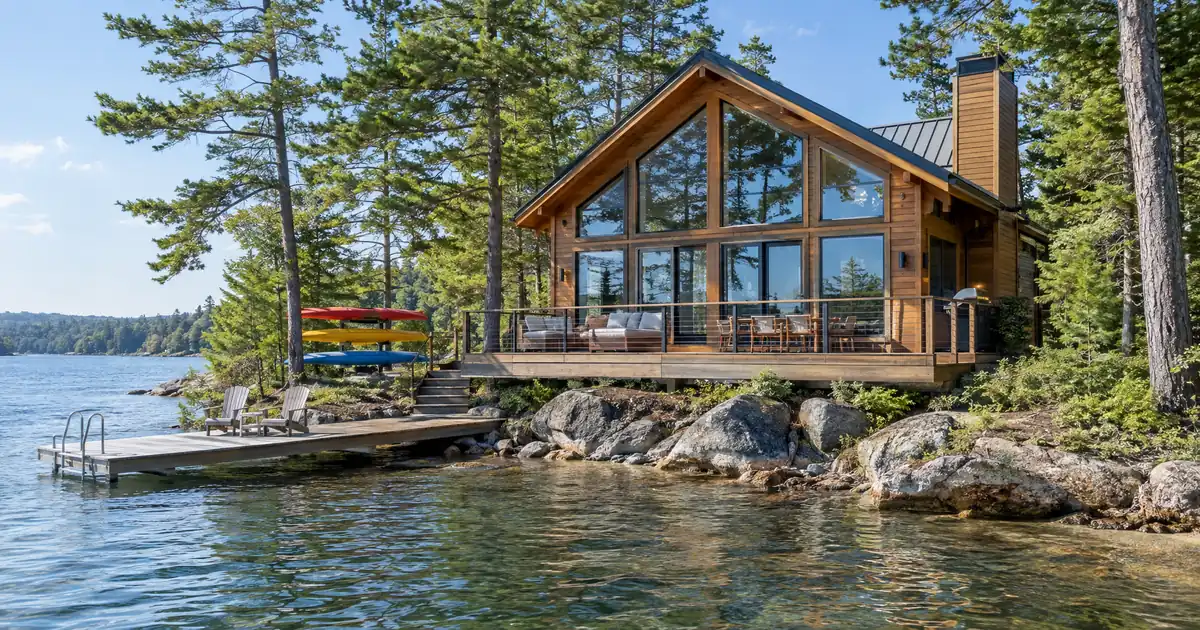
DSCR Loans In Snowshoe New River Gorge West Virginia — The Quick Read: A DSCR loan is reviewed for a Snowshoe condo or a gorge-area cabin primarily on property-level rental income covering the payment, subject to lender guidelines. It does not qualify on your pay stubs. On short-term rentals, the file turns on how the lender counts your income, whether the building or address is eligible, and whether you have host history. Short-term-rental purchases typically reach up to 75% LTV on the strongest files, with a 640 credit score and 1.00 coverage as the program floors.
Key Takeaways
- Lenders divide the income figure they accept by the full monthly obligation: principal, interest, taxes, insurance, and HOA dues. Gross bookings are not the coverage figure.
- Short-term-rental purchases typically reach up to 75% LTV. Cash-out and refinance files typically top out around 70%.
- Resort condos are the biggest trap. The building’s rental structure can decide the loan path before your credit does.
- Log homes are not offered in these programs. That matters for a market full of cabins.
- Clearing 1.00 does not mean the property cash flows. Repairs, vacancy, management, and utilities sit outside the calculation.
How Does a DSCR Loan Work on a Gorge Cabin or Snowshoe Condo?
The lender compares income to the full payment. That comparison is the debt service coverage ratio. A 1.00 means the accepted income exactly covers principal, interest, taxes, insurance, and any HOA dues. Above 1.00 means a cushion. Below 1.00 means a gap.
DSCR Calculator
Run the numbers in West Virginia
Rate source: Freddie Mac 30-yr average via FRED® — Federal Reserve Bank of St. Louis · effective Sep 24, 2026
Prefilled with local estimates — enter your own rent or nightly figures, taxes, insurance, and HOA for a more accurate picture.
Program parameters update from Lendmire’s centralized guideline source. Taxes and insurance are editable estimates.
As of Sep 24, 2026 · General Freddie Mac market benchmark, not a Lendmire loan offer. Rent, nightly rate, occupancy, taxes, and insurance are editable estimates. Short-term rental figures are estimates only and vary significantly by season, property type, management approach, and local short-term-rental rules — confirm local regulations before relying on them. Qualifying income for short-term rentals varies by program — some use appraisal market rent, others use documented STR history or projections — and is confirmed in underwriting. Not a Loan Estimate, approval, or commitment to lend. Program availability and eligibility are subject to lender guidelines, credit approval, property review, and underwriting.
The complete DSCR loans guide walks through the formula in detail. This article is about what changes in two visitor-driven markets.
Here is the market context, kept short. The National Park Service named New River Gorge among the parks with record visitation, and West Virginia Explorer reports 1,958,440 recreation visits in the most recent full-year count. Senator Capito’s office, citing the National Park Service’s visitor spending report, put the out-of-state visitor share at 88.1%.
That is demand. It is not income. A lender never underwrites park visitation. It underwrites your property.
Lendmire is a broker. It arranges these loans through a wholesale network of DSCR lenders, and those lenders review and approve the file. Across that network, the pattern on resort and park-gateway files is consistent: the loan itself is rarely the hard part. The documentation around the income figure is.
How Do Lenders Count Short-Term Rental Income?
Lenders use one of three methods, and which one applies depends on whether the property already operates as a rental.
| Method | Best for | Main friction |
|---|---|---|
| Trailing platform income | Operating STR | Clean booking history needed |
| Third-party market projection | Purchase, no history | Often discounted; needs close comps |
| Appraiser’s long-term rent | Fallback | Ignores nightly-rate income |
Trailing platform income. An operating cabin with a documented booking record gives the lender the strongest evidence. The file carries the booking history, the insurance type, and proof the property operates legally.
Market projection. For a purchase with no history, many lenders accept a third-party STR projection (AirDNA-type reports are common). Lenders often discount that number before using it. Some apply a lower-of rule against other income evidence. Projections also depend on comps that resemble the subject in size and room count. In thin rural submarkets, few comps exist. That is the quiet failure point on gorge files.
Long-term rent. The appraiser’s rent schedule (Form 1007 for single-family, Form 1025 for two to four units) compares monthly leases. It does not measure nightly-rate income. If a lender falls back to it, expect a lower income number than the Airbnb pitch deck showed.
Gross bookings are never the coverage figure. Say it out loud before you pencil a deal.
What Do the Program Numbers Look Like for STR Files?
Across the wholesale network, short-term-rental files run tighter than standard long-term rentals. These are typical ranges from select lenders, subject to lender guidelines, credit approval, and property review. They are not commitments to lend.
- Purchase leverage: up to 75% LTV on the strongest files.
- Refinance and cash-out: around 70% LTV on short-term-rental collateral, versus 75% on cash-out for standard long-term rentals.
- Credit score: 640 minimum for STR.
- Coverage: 1.00 is the floor on both purchases and refinances in the select programs that set one. It is a program floor, not “the standard.” Stronger ratios open better pricing and leverage.
- Experience: about 12 months of landlord or host history is usually expected.
- Loan size: standard programs go up to $3,000,000. Smaller balances route through select lenders in the network. That matters for low-priced Snowshoe condos.
- Reserves: these vary by lender, leverage, loan size, and transaction type. Plan on documenting them.
Coverage below 1.00 is available through select lenders in the network, with leverage and terms adjusted. It is a narrower lane, not the default one.
A bigger down payment lowers the payment and can lift the ratio. It does not erase credit floors, reserve rules, or property eligibility. The strongest files clear both tests: enough equity and enough rental coverage.
Where the General Rule Breaks
Condotel and rental-pool units at Snowshoe
Snowshoe is a resort market: it sits on the Ikon Pass network under Alterra Mountain Company and runs a summer season alongside winter skiing. Many units sit in resort-managed buildings. Standard retail lenders generally exclude hotel-operated projects, which is why DSCR is often the practical lane. For more on that structure, see how resort rental investors use DSCR loans.
Two questions decide the file:
1. Is participation in the resort rental program mandatory or optional? 2. Can the owner list the unit independently?
The answers vary by building and by lender. Pull the condo documents before you write an offer. Current terms of any specific rental program change, so read the actual documents rather than relying on a listing description.
Non-warrantable condos
A condo that fails standard project criteria is non-warrantable. Investor concentration is a common trigger. The HOA or condo questionnaire needs to be complete, because gaps here stall reviews. Leverage on these projects is usually lower and the lender pool is narrower.
Studios and micro-units
Some programs set minimum unit sizes. Many Snowshoe units are studios, so check this on day one. Low balances can also run into lender minimum loan amounts, which is where the select-lender routing above comes in.
Log homes, manufactured homes, barndominiums
Log homes fall outside these DSCR programs. So do manufactured homes (single- and double-wide) and barndominiums. Plenty of gorge and mountain cabins are log construction. Confirm the construction type before you fall in love with a listing. (A stick-built cabin with log-look siding is a different animal, but the appraiser decides how it is classified.)
Thin comps, seasonality, and local rules
Seasonal and vacation markets can draw tighter treatment. Two lenders can land on noticeably different coverage numbers for the same STR because of how each handles discounts and seasonality. This is the reason to shop the file across the network instead of accepting the first number.
Short-term rental rules can vary by city, county, HOA, and property type, so investors should confirm local rules before relying on projected rental income. Lenders increasingly ask for proof of legal operating status. For the West Virginia angle, Lendmire also covers short-term rental DSCR loans in West Virginia.
Run the Numbers: A Modeled Example
Consider a scenario with modeled assumptions, not market data. An investor buys a cabin near Fayetteville at 75% LTV with no host history. The lender uses a third-party projection. The raw projection works out to roughly 1.30x coverage against the full payment, taxes, insurance, and HOA dues included. Final terms depend on lender guidelines, property type, leverage, and the borrower’s complete credit picture.
The lender discounts the projection before using it. Assume that brings coverage down to about 1.05x. It clears a 1.00 floor with little room. Now add a modest insurance increase at quote time. The ratio slips under 1.00.
At that point the file has options a lender would review: a lower-leverage structure, a sub-1.00 path through select lenders with adjusted terms, or a longer-term or interest-only structure available through select lenders. None is automatic. All are subject to lender guidelines and credit approval.
The operational habit that prevents this: get a fresh insurance quote, with STR use disclosed, before the file goes in. Quotes that pencil early and change late are the stealth killer on resort-area files.
Another scenario: the same investor buys a Snowshoe condo. Coverage looks fine, but the HOA dues are part of the payment, and a special assessment notice sits in the condo documents. The dues line moves the ratio more than the purchase price does. Read the budget and the reserve study, not only the listing.
Common Ways These Files Stall
- Insurance quote is incomplete or stale. The policy has to treat STR use correctly.
- Booking records are scattered. Pull platform statements into one clean package before submitting.
- Entity documents lag the contract. If the property closes in an LLC, the operating agreement and formation documents need to be ready, subject to lender program eligibility.
- Condo questionnaire is unanswered. HOA management companies in resort towns are slow. Request it at contract.
- Appraisal comps miss. If the appraisal comes in light or the rent analysis uses the wrong comp set, an appraisal reconsideration request with in-market sales is a routine step, not an emergency.
- Reserves are not sourced. Lenders want to see where they came from.
Key Terms Defined
DSCR (debt service coverage ratio): Income accepted by the lender divided by the full monthly payment, including taxes, insurance, and HOA dues.
PITIA: Principal, interest, taxes, insurance, and association dues, the full monthly obligation used in the ratio.
DSCR vs. conventional financing
Two common ways to finance an investment property in this market. They qualify you differently — here’s how investors weigh them.
Why investors choose it
- Qualifies on the property’s rental income — no personal tax returns, W-2s, or pay stubs needed to document income.
- No personal debt-to-income ceiling to clear, so existing mortgages and obligations don’t cap your borrowing the same way.
- Can be closed in an LLC, keeping the property inside a business entity.
- Built for scaling — not held to the limit on number of financed properties that conventional financing applies.
- Underwriting centers on the deal: generally qualifies when the rent covers the payment, a 1.00x coverage ratio being a common baseline (confirmed in underwriting).
- Designed specifically for investment property, including long-term and, where the program allows, short-term rentals.
Where it’s strong
- Often the lowest ongoing financing cost for a buyer who fully qualifies on personal income — a fit for a first property or a cost-first purchase.
Trade-offs for investors
- Requires full personal income documentation and must fit within a debt-to-income limit — salary, existing debts, and other mortgages all count.
- Typically held in your personal name rather than a business entity.
- Caps how many financed properties you can carry, which can become a ceiling as a portfolio grows.
- Evaluates you as a borrower as much as the property, which usually means more paperwork.
How investors usually choose: a first or single property often optimizes for the lowest financing cost; portfolio builders often optimize for leverage, vesting in an LLC, and scaling past conventional caps. The right answer depends on your goals, the property, and current guidelines — both paths run through select lenders in Lendmire’s wholesale network, with eligibility and terms confirmed in underwriting.
Non-warrantable condo: A condo project that fails standard project criteria, often because of investor concentration or how the building is operated.
Condotel: A condo unit in a hotel-operated building, often with a rental-pool or management program.
Form 1007 / Form 1025: Appraisal rent schedules for single-family rentals and for two-to-four-unit properties.
Appraisal reconsideration: A documented request asking the appraiser to revisit value using stronger comps.
Seasoning: The ownership period a lender expects before allowing certain refinance or cash-out transactions.
What Should an Investor Do Before Making an Offer?
Work through the checks in this order.
1. Confirm construction type. Log homes are not offered. 2. Confirm the building’s rental structure, and whether the rental program is mandatory or optional. 3. Get insurance quoted for STR use. 4. Decide how the income will be documented: booking history, projection, or long-term rent. 5. Confirm local rules for the exact address. 6. Test the payment with HOA dues included and see where coverage lands against 1.00.
One more thing to weigh. A ski condo can look attractive on coverage and still be a poor investment. Investors in resort forums often describe out-of-pocket costs on small condos. The DSCR number measures whether rent covers the payment. It does not measure profit. It excludes repairs, vacancy, management, utilities, and capital expenses, so a 1.10x file can still lose money each month.
The park itself adds a demand-side unknown. Park officials have said they are considering carrying capacities in some areas during the summer peak. Nobody knows yet what that means for lodging demand. Run the deal on conservative occupancy.
Tax treatment can depend on how the funds are used and how the property is held; investors should keep clear records and speak with a qualified tax professional before relying on any deduction.
This article is general information, not legal or tax advice. Consult a qualified professional, such as an attorney or CPA, about your own situation.
Frequently Asked Questions
Can I finance a Snowshoe condo with a DSCR loan if it is in a rental program?
Sometimes, depending on whether program participation is mandatory or optional and on the building’s operating structure. Optional or voluntary programs are generally easier to place than mandatory rental pools. Lenders will want the condo documents before they decide.
How much down payment do STR purchases usually need?
On the strongest files, short-term-rental purchase leverage runs up to 75% LTV, so the down payment is at least 25%. Weaker credit, thin comps, or a difficult building can lower available leverage. Terms are subject to lender guidelines.
Do I need existing STR experience?
Most programs expect about 12 months of landlord or host experience. Investors without that history can still ask about options, but leverage and terms may adjust, and the file gets more scrutiny.
Will a DSCR loan work for a log cabin near the gorge?
No. Log homes, manufactured homes, and barndominiums are not offered in these programs. A conventionally constructed cabin is a different question, and the appraisal classification matters.
What if coverage lands just under 1.00?
Other paths include a larger down payment or a different loan structure. Each is subject to lender guidelines, credit approval, and property review.
Next Step
If you are buying or refinancing a rental property in Snowshoe or the gorge and want to see how the numbers work, Lendmire can help you compare DSCR loan options based on the property income, credit profile, leverage, and investor goals. Lendmire arranges DSCR investor loans across 41 markets, including Washington, D.C. You can reach the team at 828-256-2183.
The gorge draws its visitors in one big summer wave, and Snowshoe fills its beds in winter. That gap between seasons is the number every file in this market has to survive.
About Lendmire
Lendmire (NMLS# 2371349) is a mortgage brokerage built around DSCR investor lending, with programs available in 41 markets, including Washington, D.C. DSCR lenders commonly evaluate rental-income coverage instead of personal income paperwork — a practical fit for LLC-owned and multi-property investors. Terms vary by lender, property, leverage, and program. Scotsman Guide named Lendmire a Top Mortgage Workplace in both 2025 and 2026.
Investors focused on short-term rentals can review DSCR loans for Airbnb and short-term rentals.
Get Started
Ready to find the right loan for you?
In about 30 seconds you can review financing options available for your home or investment property. No commitment required.
Informational only. Not a Loan Estimate, approval, or commitment to lend. Program availability and eligibility are subject to lender guidelines, credit approval, property review, and underwriting.
References
1. National Park Service – 2025 visitation release
2. West Virginia Explorer – New River Gorge visitation
3. Senator Capito – New River Gorge economic impact release
4. West Virginia Explorer – Snowshoe Mountain
5. WV MetroNews – New River Gorge summer visitation
This article is part of Lendmire’s DSCR loan program — full qualification details, guidelines, and scenarios live on the program page.
Related reading: DSCR Loans West Virginia: Investor Financing for Charleston, Morgantown, Snowshoe, New River Gorge, and Real Estate Investors · DSCR Loans in Fayetteville, North Carolina: Investor Financing for Fort Liberty, Hope Mills & Haymount, Military Rental Demand & Real Estate Investors · DSCR Loans in Bentonville / NW Arkansas: Investor Financing for Rogers, Fayetteville, Springdale & Real Estate Investors
Guides: DSCR Loans in West Virginia
Brandon Miller
Founder & CEO, Mortgage Loan Originator, Lendmire LLC
- Mortgage Loan Originator · NMLS# 1129696 · Verify on NMLS Consumer Access
- North Carolina Real Estate Broker · License# 343312 · Verify on NCREC
- North Carolina Insurance Producer · License# 19053198 · Property, Casualty, Life, Health · Verify on NAIC SBS
- Lendmire LLC · Firm NMLS# 2371349 · Verify firm licensure
Legal disclosures. Lendmire (NMLS# 2371349) is a state-licensed mortgage brokerage that arranges financing through wholesale lender relationships. Lendmire is not a direct lender, depository institution, or registered financial advisor. The discussion above is general informational content about real estate financing — it is not financial, legal, or tax advice, and readers should consult licensed professionals for guidance on their individual circumstances. Loan inquiries are subject to lender underwriting; this article does not represent a commitment to lend. Loan terms, rates, and qualification standards vary by borrower, property, and state, and are subject to change at any time. Equal Housing Opportunity. NMLS Consumer Access: nmlsconsumeraccess.org.