
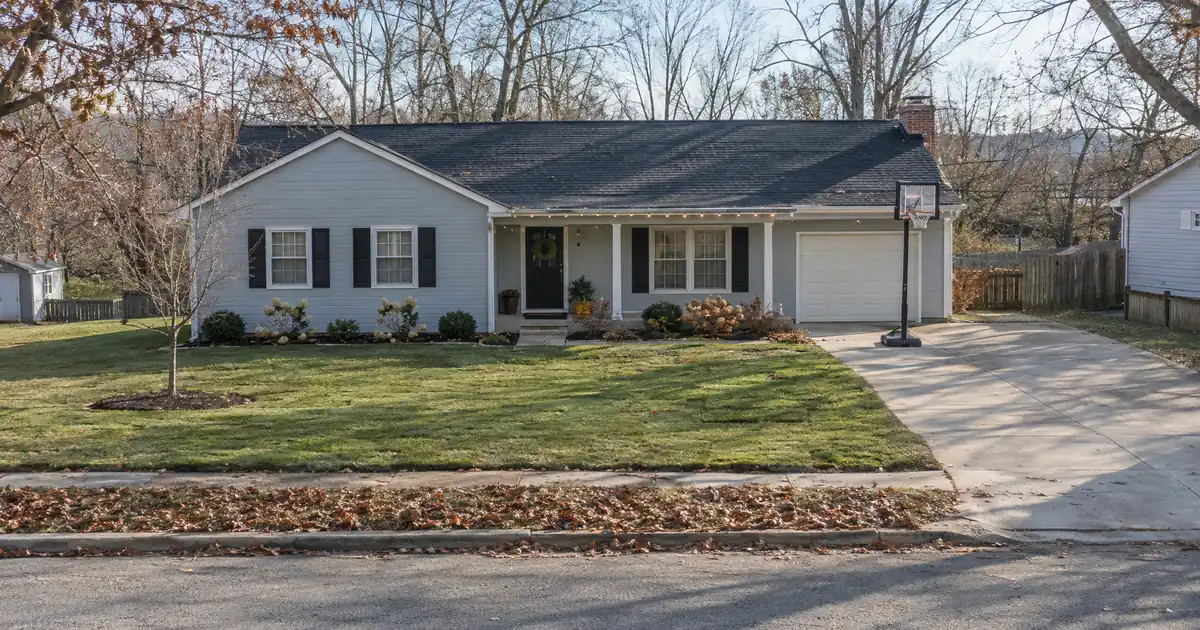
The Quick Read: Yes. Few nearby sales do not disqualify a home from a conventional loan, as long as the appraiser supports the value with the best evidence available and explains the choices. The file turns on how well the appraisal report holds up, not on the size of the town. Expect extra questions, a closer look at adjustments, and a lower-of-price-or-value test that sets the loan size.
What Is a Comp, and Why Do Small Towns Run Short?
A comp is a recent sale of a similar home that an appraiser uses to support a value opinion. The “market area” is the neighborhood or town where those sales happen. In a small town, a handful of homes may sell in a year. Some of those sales are not alike. One is a farmhouse on acreage, another is a 1960s ranch, a third is a new build.
Conventional payment estimate
The starting figures are an example price at the first-time buyer’s minimum down payment. Replace them with yours.
Editable benchmark: 7.32% as of October 22, 2026 · Freddie Mac 30-year average via FRED®. A conventional market reference, not a conventional loan quote.
Estimate seeded at the low end of Fannie Mae’s published range (0.58%–1.86% a year); the insurer prices the actual premium on the score and the leverage. Applies only above 80% loan-to-value.
Illustrative starting assumptions: a $350,000 price, the first-time buyer’s minimum down payment, a thirty-year term at the current Freddie Mac benchmark, mortgage insurance at the low end of Fannie Mae’s published range, and property taxes and insurance estimated at typical national rates. Every field is editable.
Illustrative estimate only — not a Loan Estimate, approval, quote, or commitment to lend. The rate field carries the weekly Freddie Mac thirty-year conventional benchmark, a market reference and not a conventional loan quote; your rate is set by the lender at lock. The mortgage insurance figure is an editable estimate seeded from Fannie Mae’s published typical range, not a premium quote; the insurer prices the actual premium, and the cancellation month assumes scheduled payments with no extra principal and no change in value. Taxes, insurance and dues are editable estimates; closing costs are not included. Conforming loan limits apply by county. Licensed in sixteen states for consumer mortgages.
That is the whole problem. It is a data shortage, not a credit problem. The appraiser has to work with what exists and show the work.
Files on small-town homes do not fail because the town is small. They stall when the report picks distant or dissimilar sales and then does not explain why.
How Does the Appraiser Handle Few Comps?
The appraiser widens the search in a set order and writes down each choice. Comps from the same market area should be used when possible, and sales from competing market areas are allowed when they are the best comparables available. The appraiser must explain why each comp was used and how a competing area compares to the subject’s.
For rural homes specifically, the Fannie Mae comparable sales rule (archived 03/02/2022 version) gives the example of an area with minimal sales activity, where the appraiser may not find three truly comparable sales in the last twelve months. Because that is an archived page, confirm the wording against the current guide before relying on it.
Freddie Mac’s Guide section 5605.6 is more direct. The report must contain a minimum of three comparable sales. It may add pending sales and current listings to support the opinion. In rural areas, the report may use older comps, comps a considerable distance away, or comps that are not ideally similar to the subject.
Here is how the four levers work:
| Lever | What the appraiser may do | What the report must do |
|---|---|---|
| Time | Use older sales | Explain why older sales are the best evidence |
| Distance | Use sales farther away | Show the result is credible |
| Similarity | Use less-alike homes | Adjust for each difference |
| Market area | Use a competing area | Compare it to the subject’s area |
Do Big Adjustments Sink the Appraisal?
No. Large adjustments are expected in thin markets. Freddie Mac says large adjustments typically occur in rural markets because of limited market activity, and it sets no limits on gross or net adjustment percentages. Fannie Mae’s guide on adjustments says the same thing in different words. Adjustments should come from market analysis “without regard to arbitrary limits” on their size.
Where there are no truly comparable sales, Fannie Mae’s rule is that the appraiser picks the best indicators of value and makes market-supported adjustments. The key phrase is market-supported. A big adjustment with no evidence behind it draws questions. A big adjustment tied to paired sales or market data usually does not.
Time adjustments get their own attention. Fannie Mae expects appraisers to analyze market changes from each comp’s contract date to the appraisal effective date. Skipping a clearly indicated time adjustment is treated as unacceptable practice. That matters when the best comp is nine months old.
So a thin-comp report may look unusual: older sales, long distances, large adjustments. None of that is a defect on its face. Unexplained choices are the defect.
Which Homes Land in Thin-Comp Territory?
Three kinds of homes show up most often.
| Property type | Why comps run thin | Typical appraiser move |
|---|---|---|
| Rural home on acreage | Few sales, wide variation | Older and farther comps, large adjustments |
| Unusual home (barndominium, odd layout) | Few similar homes | Traditional homes as comps, adjusted and explained |
| New subdivision | Few closed sales yet | Pending sales plus outside closed comps |
On unusual homes, secondary guidance summarizing Freddie Mac says that if no similar properties sold, the appraiser might use traditional homes as comps but must explain and adjust for the differences. On new subdivisions, a past Fannie Mae update allowed two pending sales in place of one closed sale from the subject subdivision, with at least three closed comps from outside it. That update is dated, so the current guide controls.
When Is It Too Much Like a Farm?
A conventional loan on a primary home requires the property to be residential in nature. That is the test, not acreage alone. Properties primarily used for agricultural or commercial purposes are not residential, such as a principal residence paired with a dairy farm. Mixed-use property must be primarily residential, and the owner must live there. Properties not readily accessible by roads that meet local standards are also ineligible.
Freddie Mac’s rural FAQ, which is not part of the Guide itself, says outbuildings are acceptable but silos, farm-animal facilities and large barns may signal a farm. If the primary use is residential, the property is eligible. If it is used primarily for farming or ranching, it is not. A small roadside produce stand does not make a property ineligible.
A shed, a workshop, or a modest barn is rarely the issue. A working farm operation is.
Can a Rural Home Get an Appraisal Waiver?
Rarely. A full appraisal is the normal path for a thin-comp rural or unusual home. Fannie Mae retired its high-needs rural value acceptance offer in June, and loan files created after that no longer receive it, though some may still be eligible for value acceptance with property data. Industry commentary also says rural and unique homes are poor waiver candidates. And some situations need an appraisal even with a waiver offer, such as resale-restricted properties or when the mortgage insurer requires one.
Plan on an appraisal. Budgeting for one at least keeps its cost and timing from catching a buyer off guard, though the value it reports and what the appraiser finds can still come as a surprise.
How Does the Value Set the Loan Size?
On a purchase, the property value is the lower of the sales price or the current appraised value. That is Fannie Mae’s rule, and it is the part of the file that touches your wallet.
Say a buyer has a contract on a small-town home and plans 5% down. The appraisal comes in below the price. The loan is now sized on the lower number. The gap between price and value does not go away. Someone covers it: the buyer brings more cash, the seller lowers the price, or the deal changes. Terms depend on the lender’s guidelines, the property type, the leverage, and a full review of the credit profile.
Leverage drives the rest. Across the wholesale programs placed through Lendmire’s network, a one-unit principal residence purchase can reach 97% LTV (3% down) when at least one borrower is a first-time buyer, using a fixed rate and subject to the program’s rules. Otherwise the standard figure is 95% LTV (5% down). Mortgage insurance applies above 80% LTV. The borrower may request cancellation at 80% of the original value, and the servicer must end it automatically at 78%, with good payment history and no decline in value as conditions for the request. A higher LTV also changes loan-level pricing and insurance cost, which a lender explains on the Loan Estimate. The exact numbers vary by lender and program and follow a full review of property, leverage, and credit.
Seller concessions interact with this too. Fannie Mae’s rule on interested-party contributions says concessions above the limits are treated as sales concessions and deducted from the sales price, and the maximum LTV is then recalculated. A thin-comp file with a low value and a big concession request gets tight fast.
What Else Does the Lender Look At?
The property is only half the file. The wholesale conventional programs start at a 620 decision score, and the automated finding governs most files, with a total ratio ceiling of 50%. Manually underwritten loans use 36% or 45% ratios with reserve and score factors from the agency matrix. All of this is subject to lender guidelines and full file review, and none of it is a commitment to lend.
A strong borrower file helps a thin-comp property. It does not replace a supported appraisal. The two are reviewed separately.
Occupancy matters as well. Leverage limits depend on whether the home is a principal residence or a second home, and the numbers differ. This article is about the home you live in.
What If the Value Comes In Low?
Work the problem in order.
1. Read the report. Check the comps the appraiser chose and the explanations given. Look for errors in square footage, lot size, or condition.
2. Ask for a reconsideration of value (ROV). Under Fannie Mae’s ROV rules, a borrower may request a maximum of one ROV for each appraisal report, for loans sold to Fannie Mae. The first ROV disclosure comes at application. If the request is missing information, the lender works with the borrower to complete it before it goes to the appraiser. Freddie Mac requires its sellers to have an ROV review and resolution procedure too.
3. Bring better evidence. Closed sales the appraiser missed, with dates and details, are the strongest material. Keep it factual. Complaints about the number do not move it.
4. Renegotiate. If the contract allows, ask the seller to lower the price to the appraised value, or split the gap.
5. Bring cash or restructure. The buyer can cover the difference or change the down payment.
6. Walk away if the contract lets you. Know your appraisal contingency terms before you sign.
One caution: one ROV per report means the first request should be the best one. Do not send a thin packet and burn the only shot.
What Can You Do Before Going Under Contract?
A little prep reduces surprises.
- Ask the listing agent for recent local sales, including older ones and those in neighboring towns.
- Ask the lender whether the home type (barndominium, acreage, outbuildings) raises eligibility questions up front.
- Confirm the property has year-round road access that meets local standards.
- Read your appraisal contingency before you sign.
- Expect thin-comp files to take extra back-and-forth on explanations or an ROV. Build room into the contract.
You are also entitled to see the appraisal. Under the CFPB’s valuation rule, creditors must give you copies of all appraisals on first-lien dwelling loans. The CFPB rule summary says copies come promptly on completion or three business days before consummation, and you may waive that timing. The lender may charge a reasonable fee to cover the appraisal cost, but not extra for the copy.
Common Mistakes
- Assuming a small town means automatic denial. The guides allow older, farther and less-similar sales with an explanation.
- Believing comps must sit within a fixed mile or month limit. Neither agency sets a maximum distance. Twelve months is a typical benchmark, not a hard wall.
- Treating a few outbuildings as proof of a farm. Primary residential use is the test.
- Counting on an appraisal waiver for a rural home.
- Treating a low appraisal as final. An ROV is available.
- Ignoring the lower-of-price-or-value rule until the report arrives.
Key Terms Defined
Comparable sale (comp): A recent sale of a similar property that supports the appraiser’s value opinion.
Market area: The neighborhood or town where competing homes sell.
Adjustment: A dollar change the appraiser makes to a comp to account for differences from the subject home.
Reconsideration of value (ROV): A formal request that the appraiser review the value, usually with added evidence.
LTV: Loan-to-value ratio, the loan amount divided by the lower of price or appraised value.
Appraisal waiver (value acceptance): An offer from the automated system to skip a full appraisal, unlikely on thin-comp homes.
Conventional or Something Else?
For most small-town homes that are residential in nature, a conventional loan works on the property side. Other programs such as FHA and VA have their own appraisal rules, which are outside this article. If your credit, income and down payment fit, comparing the options is the practical next step. Lendmire’s conventional loan programs are one place to start, and a broker can show how each path treats a thin-comp property. For file-level detail, see Lendmire’s piece How to Close a Conventional Loan in a Small Town With Few Comps.
Tax treatment can depend on your situation; borrowers should speak with a qualified tax professional before relying on any deduction or credit.
Frequently Asked Questions
Do I need three comps for a conventional loan?
The report should contain at least three comparable sales under Freddie Mac’s guide. Those three can include older, more distant or less-similar sales in rural areas, and may be supplemented by pending sales and listings, as long as the appraiser explains the choices.
Can the appraiser use sales from another town?
Yes. Both agencies allow comps from a competing market area when they are better than the ones in the subject’s own area. The appraiser must explain why each was chosen and how that area compares to the subject’s.
Will large adjustments cause the loan to be denied?
Not by themselves. Freddie Mac sets no limits on gross or net adjustments and says large ones are typical in rural markets. Adjustments need market support. Unsupported ones draw questions or a request to revise the report.
Can I skip the appraisal with a waiver on a rural home?
Unlikely. Thin-comp, rural and unusual homes are poor waiver candidates, and Fannie Mae has retired its high-needs rural waiver offer. Plan for a full appraisal.
What happens if the appraisal comes in below the contract price?
Financing is sized on the lower of price or value. You can request one ROV per appraisal, renegotiate the price, bring more cash, or walk away if your contract allows. Program terms are subject to lender guidelines and full file review.
If you are buying a home and want to see whether a conventional loan fits your file, Lendmire can help you compare the options and what each one asks of the file.
For your own numbers, request a scenario review with Lendmire.
About Lendmire
Lendmire — NMLS# 2371349 — is a mortgage broker that arranges FHA, VA, conventional and jumbo home purchase and refinance financing in 16 states through wholesale lenders. Every option is subject to the lender’s guidelines and full underwriting. Scotsman Guide named Lendmire a Top Mortgage Workplace in both 2025 and 2026.
Get Started
Ready to find the right loan for you?
In about two minutes you can review financing options available for your home or investment property. No commitment required.
Informational only. Not a Loan Estimate, approval, or commitment to lend. Program availability and eligibility are subject to lender guidelines, credit approval, property review, and underwriting.
References
2. Freddie Mac
3. Fannie Mae Reconsideration of Value
4. CFPB ECOA valuation transaction-coverage factsheet
5. CFPB ECOA Appraisals Rule Summary
This article is part of Lendmire’s conventional loan program — full qualification details, guidelines, and scenarios live on the program page.
Related reading: Can a Buyer Get a Conventional Loan With a Small Down Payment? · Conventional Loan Appraisal Requirements With Few Comparable Sales · Can You Use a Conventional Loan to Buy a Vacation Home?
Brandon Miller
Founder & CEO, Mortgage Loan Originator, Lendmire LLC
- Mortgage Loan Originator · NMLS# 1129696 · Verify on NMLS Consumer Access
- North Carolina Real Estate Broker · License# 343312 · Verify on NCREC
- North Carolina Insurance Producer · License# 19053198 · Property, Casualty, Life, Health · Verify on NAIC SBS
- Lendmire LLC · Firm NMLS# 2371349 · Verify firm licensure
Important disclosures. Lendmire (NMLS# 2371349) is a licensed mortgage brokerage. Lendmire is not a direct lender, depository institution, or financial advisor. All loan inquiries are subject to lender underwriting; this article does not constitute a commitment to lend. Rates, terms, and program guidelines are subject to change without notice and vary by borrower profile, property type, and state. Information in this article is general in nature and is not financial, legal, or tax advice. Equal Housing Opportunity. NMLS Consumer Access: nmlsconsumeraccess.org.