
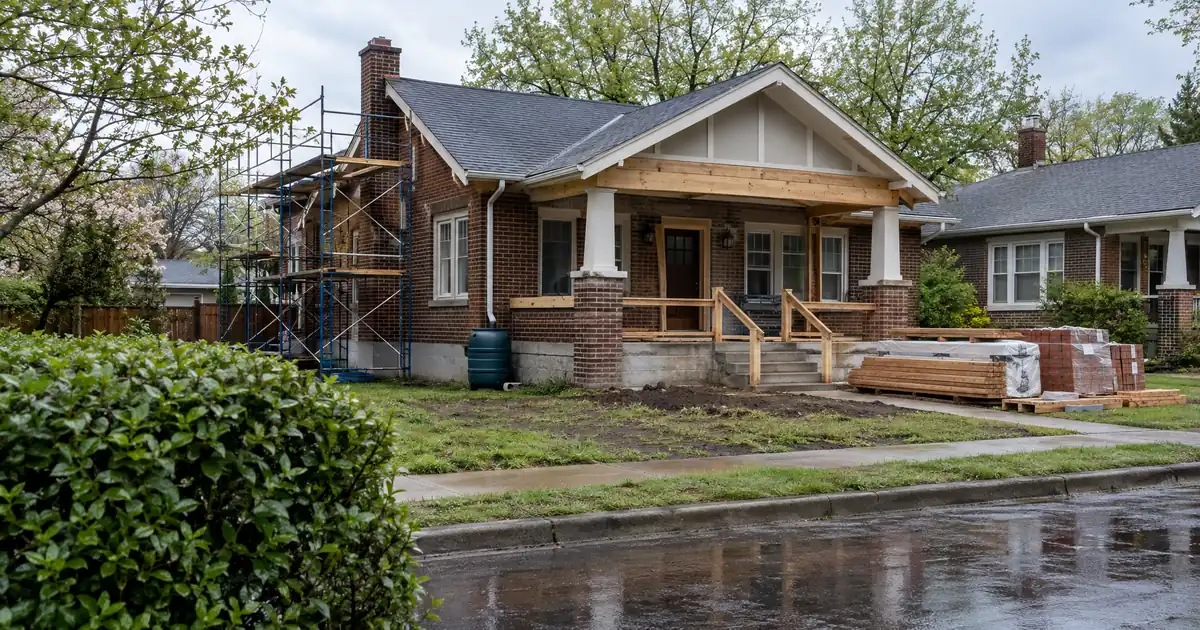
The Quick Read: A bridge lender wants the down payment to be your own money, sitting in an account you control, with a paper trail that explains where it came from. Savings, business account funds, liquidated investments and equity pulled from a property you own all tend to work, while borrowed or gifted cash usually does not. Sourcing starts well before you find a deal, because the down payment is only one piece of the cash the file needs.
- The down payment is the gap between the purchase price (plus any financed rehab) and the loan, and on a first deal it is usually larger than on later deals.
- Cash needed at closing also covers fees, interest carry, reserves and money to front contractor costs.
- Lenders verify funds with bank statements, so every large deposit needs an explanation.
- Borrowed down payments are a common reason a first-time file stalls.
- Hard money terms vary by lender, property and experience, and nothing here is a commitment to lend.
What “Sourcing” a Down Payment Means
Sourcing means proving the cash is yours, where it came from, and that no one expects it back. A hard money bridge loan is a short-term, business-purpose loan secured by an investment property. The lender takes the property, the plan and the exit as collateral, and it wants the borrower to have real money at risk.
What this loan actually costs to carry.
Hard money is sized against the project and priced by time. Enter the deal and see how much the program will lend, the cash required at closing, the carry while you hold it, and what is left at the exit.
Leverage tiers on the current program: 85% with fewer than 2, 90% with 2 or more, 93% with 5 or more completed projects — every tier capped at 75% of after-repair value. Loan amounts up to $5,000,000, larger by exception; terms of 6 to 18 months, interest-only, no prepayment penalty. The rehab portion funds in draws against completed work, not at closing.
Program parameters shown update from Lendmire’s centralized guideline source. Rate, points, and months are editable assumptions, not quoted terms.
Cost cap sets the loan · positive spread
Illustrative estimate only — not a quote, Loan Estimate, approval, or commitment to lend. Rate, points, and months are editable assumptions. Hard money is business-purpose financing for real estate investors, not a consumer mortgage. Leverage on the current program tops out at 93% of project cost for investors with a documented track record, capped at 75% of after-repair value, with rehab funding up to 100% of the documented budget released in draws; actual terms vary by lender, borrower experience, property, and exit. Lendmire is a mortgage broker, not a lender.
Two terms get mixed up here. Hard money describes the funding source, usually private capital. A bridge loan describes the purpose: it covers the gap until longer-term financing replaces it. Most investor deals are both at once.
This article covers the investor context only. A homebuyer using a bridge loan to buy before selling a home is a different product with different rules.
Why a First Deal Needs More Cash
Lenders tier leverage by track record, and a first-time investor sits at the lower leverage tier. Across Lendmire’s wholesale network, fix-and-flip leverage typically runs 93% of project cost at five or more completed projects, 90% at two or more, and 85% with fewer than two. Every tier is capped at 75% of after-repair value. These figures vary by lender, property and experience.
So a first-timer typically brings the largest equity share on the first file. Clean credit does not move that ceiling. Experience unlocks the higher tiers, and the top tier is reserved for experienced investors.
For bridge purchases with no rehab, leverage runs up to 80% of the purchase price. There is no true 100% purchase program. Rehab money is different: up to 100% of the rehab budget can fund in draws against completed work. That is a rehab-budget figure, not a purchase leverage figure. Investors who see “100% financing” in an ad are usually looking at the draw schedule, not the purchase.
The Full Cash Stack on a First Deal
The down payment is not the whole cash need. It is the first line of it. Plan for five buckets:
1. Down payment. The equity share the lender requires against cost and value.
2. Lender fees and closing costs. These are due at closing and are separate from the equity share.
3. Interest carry. Terms run 6 to 18 months, interest-only, so the monthly carry accrues the whole time the project is open.
4. Contractor float. Rehab draws reimburse completed work, which means you pay first and get reimbursed after.
5. Reserves. Lenders often want liquid cash left over after closing, and the project always finds a use for it.
A first-timer who sizes only the down payment is the investor who runs short in the middle of the rehab. Add the buckets before you make an offer.
Which Sources Work and Which Do Not
Underwriters sort funds into your money, a partner’s money, and a creditor’s money. The first two can work with the right documents. The third is where files break.
| Source | Typical acceptance | Paper trail | Main risk |
|---|---|---|---|
| Savings | Accepted | Recent bank statements | Large deposits need a reason |
| Business account | Usually accepted | Business statements, ownership proof | Commingled funds |
| Brokerage or retirement sale | Usually accepted | Sale confirmation, deposit statement | Costs of the sale |
| Equity from another property | Often accepted | Draw or refinance statement, deposit | Debt on a property you own |
| Partner capital | Lender-dependent | Operating agreement, contribution record | Reads as a loan if structured badly |
| Gift, seller credit, borrowed funds | Often rejected | Lender-specific | Lender may decline the file |
Savings and business accounts
Money that has sat in your own account is the cleanest source. The lender asks for bank statements showing the funds. Seasoning expectations vary across lenders, but the longer the money has sat, the fewer questions follow. A deposit that appears just before the application invites questions you will answer in writing.
If the funds sit in a business account, the lender wants proof you own the business and can use the money. Keep investment funds separate from operating cash so the statements read cleanly.
Selling an investment or retirement asset
Liquidating a brokerage position produces a sale confirmation and a deposit. That is a clean paper trail, as long as you keep both documents together.
Equity from another property
Investors who own a property outright, or with low debt, can turn that equity into cash. One route is a draw against a line of credit. Nasdaq notes that a draw can give a homeowner with substantial equity a source of down payment cash, and it also warns that the property backing the line is exposed if you cannot repay. Another route is a cash-out refinance. The White Coat Investor lists a cash-out refinance as an alternative on an investment property and says it typically requires at least 20% equity.
The cash that lands in your account can look like your own money to the lender. But the debt behind it is real, and the new payment has to be carried while the bridge loan is open. Some lenders look closely at how the cash was raised, so ask before you draw.
A separate option is offering a free-and-clear property as additional collateral on the bridge loan itself. Acceptance varies by lender, and the lender takes a lien on a second asset.
Partner capital
A partner who contributes cash can fund part of the equity. The structure matters. The lender wants a partner who is an owner of the borrowing entity, with the contribution documented as equity. A contribution papered as a loan to you reads as borrowed money. Have an attorney draft the operating agreement.
Partnering also brings experience. A newcomer who teams up with an operator may qualify for better leverage than the newcomer would alone.
What Underwriters Reject and Why
Rejection reasons come from the lender’s exposure. Cash you own means the borrower can lose it. Cash you owe means someone else has a claim on it.
- A borrowed down payment. A first-position lender is unlikely to let you borrow the equity, and a second-position lender willing to fund it is rare. The lender’s cushion disappears if the cushion is itself debt.
- Gap funding and seller seconds. Some lenders accept disclosed seller financing or cross-collateral as part of the equity. Many do not. Ask before you sign the purchase contract.
- Gifts. A gift can look like a loan in disguise, and lenders differ on whether they accept one. Plan on a signed statement that the money is not repayable.
- Mystery deposits. Large deposits without an explanation are a common cause of conditions.
- Vague proof of funds. A screenshot is not a statement. Provide full statements for every account that holds the money.
- Late changes. Moving cash between accounts after submission restarts questions the lender has already asked.
Underwriting stays asset-based, meaning it looks at the property, the plan and the exit. Credit still matters. Across Lendmire’s network, 620 is the minimum score, with additional conditions below 660, and terms vary by lender, property and experience.
Documents to Gather Before You Make an Offer
Bridge lenders usually ask for a short list. The sequence below keeps the file clean.
1. Decide the target deal size. Set a price range and a rehab budget so you know the equity share before you shop.
2. Gather the cash. Move funds into one account you own before you start. Avoid moving money during the review.
3. Pull statements. Collect full statements for every account that holds funds, and a schedule of real estate owned if you own any.
4. Write the large-deposit explanations. Any deposit that looks unusual gets a short written note and a supporting document, such as a sale confirmation.
5. Line up identification and a credit check. Expect a loan application, ID and a credit review.
6. Confirm the structure with the lender. Ask directly whether the lender accepts partner capital, seller financing or cross-collateral before you commit.
7. Hold reserves apart. Keep money for fees, carry and contractor float outside the down payment pile.
A Decision Guide by Borrower Situation
| Your situation | Likely path | Watch for |
|---|---|---|
| Cash saver | Use savings directly | Deposit history |
| Owns equity elsewhere | Draw or refinance, then deposit | Added debt and carry |
| Needs more cash | Add a partner as an owner | Equity vs. loan structure |
| Holds liquid assets | Sell, deposit, document | Sale-related costs |
| Short on cash | Shrink the deal or wait | Leverage tier |
When You Fall Short
You have three honest options. You can shrink the deal so the equity share fits the cash you hold. You can add a partner, structured as ownership. Or you can wait and build experience, since a completed project can move you to a higher leverage tier on the next file.
Shrinking the deal is the most reliable first move. A smaller first project carries less risk, builds a track record, and brings the next lender conversation closer to the tiers that need less equity.
Borrowing the equity is the move to avoid. It gets you in sooner, but it increases risk and often triggers a lender rejection that costs you the deal.
Also keep loan size in mind. Loan amounts run up to $5,000,000 in the network, with larger sizes by exception and smaller balances varying by lender. A first deal rarely needs the top of that range.
How the Down Payment Connects to the Exit
The down payment decides how much cash is left in the deal when the bridge loan ends. If a refinance appraises short, you leave more cash in. Many investors refinance out of hard money into long-term DSCR financing once the property is stabilized and rented, and Lendmire brokers that path. Read the complete DSCR loans guide to see how that long-term loan is reviewed, since it qualifies primarily on property-level rental income covering the payment, subject to lender guidelines.
A hard money refinance has its own limits. In the network, a hard money refinance runs up to 65% of value, and long-term loans carry their own leverage, credit and reserve rules. Plan the exit before you fund the entry.
If the cash will come from a company rather than from you personally, Lendmire’s piece How to Structure a Hard Money Bridge Loan Down Payment for an LLC explains what changes when an entity holds the funds.
Common Mistakes on First Files
- Sizing only the down payment. The fees, carry and contractor float arrive later and are just as real.
- Assuming rehab financing covers the purchase. The draw schedule funds the rehab budget, not the acquisition.
- Depositing cash at the last minute. Late deposits need written explanations.
- Treating a partner’s money as a loan. A contribution papered as debt reads as borrowed funds.
- Skipping the lender conversation. Each lender decides what it accepts, so ask before the contract.
Key Terms Defined
Bridge loan: A short-term loan that covers the gap until longer-term financing replaces it.
Hard money: Financing from private capital that is based mainly on the property, the plan and the exit.
Loan-to-cost: The loan amount as a share of the total project cost, including purchase and rehab.
After-repair value (ARV): The estimated value of the property once the work is finished.
Draw: A release of rehab funds against completed work, usually after an inspection.
Source of funds: The documented origin of the cash used for the down payment.
Cross-collateral: Pledging a second property as additional security on one loan.
Reserves: Liquid cash that remains after closing, which lenders may require to cover carry and surprises.
Next Step
If you are buying, rehabbing or refinancing an investment property on a short timeline and want to see how the numbers work, Lendmire can help you compare hard money options based on the project, the exit plan, leverage and your goals. Lendmire is a broker that arranges financing through select lenders in its wholesale network, across 41 markets, including Washington, D.C. Terms vary by lender, property and experience, and the illustrative calculator on this page offers an estimate only.
Frequently Asked Questions
Can I use a loan for the down payment on a first hard money bridge loan?
Usually not. A first-position lender typically wants the equity to be your own money, and second-position lenders willing to fund a down payment are rare. Some lenders accept disclosed seller financing or cross-collateral, so ask each lender what it allows before you sign a contract.
Is the down payment the only cash I need?
No. You also need cash for lender fees, closing costs, interest carry, contractor float and reserves. Rehab draws reimburse completed work, so you front those costs first. Add every bucket before you make an offer.
How much down payment does a first-time investor need?
It varies by lender, property and experience, and first-timers sit at the lower leverage tier. In Lendmire’s network, fix-and-flip leverage is 85% of project cost with fewer than two completed projects, always capped at 75% of after-repair value. Bridge purchases without rehab run up to 80% of the purchase price.
Does the lender check where my down payment came from?
Yes. Lenders ask for bank statements showing the funds, and they question large or unexplained deposits. Keep full statements, and attach a written explanation and a supporting document to any deposit that looks unusual.
Can a partner provide part of the down payment?
Often yes, if the partner is an owner of the borrowing entity and the contribution is documented as equity. A contribution that looks like a loan to you may be treated as borrowed funds. Have an attorney draft the operating agreement, and confirm the lender accepts the structure.
About Lendmire
Lendmire (NMLS# 2371349) is a DSCR and non-QM mortgage brokerage with investor loan programs in 41 markets, including Washington, D.C. DSCR eligibility is commonly reviewed by the lender around property-level rent rather than personal income documentation, subject to lender guidelines, and the brokerage helps arrange financing for LLC-owned portfolios beyond conventional financed-property limits. Recognized by Scotsman Guide as a Top Mortgage Workplace in 2025 and 2026.
Get Started
Ready to find the right loan for you?
In about 30 seconds you can review financing options available for your investment property. No commitment required.
Informational only. Not a Loan Estimate, approval, or commitment to lend. Program availability and eligibility are subject to lender guidelines, credit approval, property review, and underwriting.
References
1. Nasdaq, How to Use a HELOC for a Down Payment
2. The White Coat Investor, HELOC on Investment Property
This article is part of Lendmire’s hard money loan program — full qualification details, guidelines, and scenarios live on the program page.
Related reading: How to Budget Down Payment and Rehab Cash on a Hard Money Flip · Bridge Loan vs Hard Money for a First-Time Investor: The Exit Plan · Hard Money Flip Loan vs Private Money for a First-Time Investor
Brandon Miller
Founder & CEO, Mortgage Loan Originator, Lendmire LLC
- Mortgage Loan Originator · NMLS# 1129696 · Verify on NMLS Consumer Access
- North Carolina Real Estate Broker · License# 343312 · Verify on NCREC
- North Carolina Insurance Producer · License# 19053198 · Property, Casualty, Life, Health · Verify on NAIC SBS
- Lendmire LLC · Firm NMLS# 2371349 · Verify firm licensure
Legal disclosures. Lendmire (NMLS# 2371349) is a state-licensed mortgage brokerage that arranges financing through wholesale lender relationships. Lendmire is not a direct lender, depository institution, or registered financial advisor. The discussion above is general informational content about real estate financing — it is not financial, legal, or tax advice, and readers should consult licensed professionals for guidance on their individual circumstances. Loan inquiries are subject to lender underwriting; this article does not represent a commitment to lend. Loan terms, rates, and qualification standards vary by borrower, property, and state, and are subject to change at any time. Equal Housing Opportunity. NMLS Consumer Access: nmlsconsumeraccess.org.