
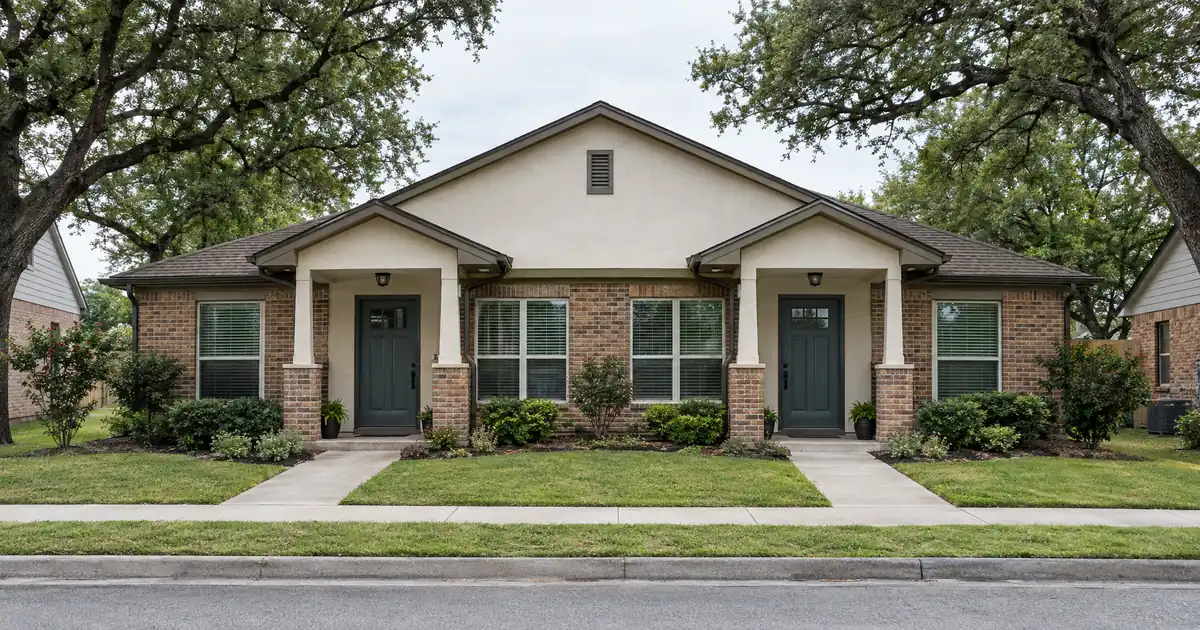
The Quick Read: Usually no. On an asset-based mortgage, the file is built on your statements, not on traditional personal-income documentation, W-2s or pay stubs, and the program figures are the same for a Texas borrower as for anyone else, subject to underwriting. The exceptions come from the path you choose and from any other income you ask the lender to count.
- The asset qualifier path covers the whole loan with eligible assets and documents no employment or income.
- The asset depletion path divides usable assets by 60 months to create qualifying income, which then runs through the debt-to-income test.
- Your assets are documented on both paths. Skipping income documents does not mean skipping documentation.
- Traditional personal-income documentation can come back if you add salary, business or rental income to the file.
- Consumer mortgage lending through Lendmire is licensed in 16 states, Texas included.
What Is an Asset-Based Mortgage?
An asset-based mortgage is reviewed around what you hold instead of what you earn. Across the wholesale network, the product goes by several names: asset qualifier, asset depletion, asset utilization and asset-based. They are not all the same loan, and the difference decides whether traditional income documentation matters.
The borrower profile is consistent. Think of retirees, people who sold a business, heirs, early-retired professionals and households living off a portfolio. Their balances are large and their documented income is small.
Lendmire is a mortgage broker. It places these files through select lenders in its network, and the lender underwrites each one. The figures below are ceilings and floors, never offers.
A borrower is qualified on one path at a time. Never blend the two sets of numbers.
Do You Need Tax Returns? The Direct Answer and the Exceptions
On both paths, the program does not ask for traditional income documentation to prove income, because it is not using your income to qualify you. The qualifier path documents no employment or income at all. The depletion path builds income from your assets, so there is no earnings history to prove.
Here is where the answer can change:
| Borrower | Returns needed? | Why |
|---|---|---|
| Retiree living on a portfolio | Usually no | Assets carry the file |
| Recent business seller | Usually no | Sale proceeds are seasoned assets |
| Self-employed, heavy write-offs | Usually no | Assets replace taxable income |
| Salaried, large savings | Usually no | Pick the asset path, skip income |
| Mixed income, adding wages | Possibly | Added income must be documented |
The real trigger is mixing. Depletion income can supplement documented income up to a 45% debt-to-income ratio. If you ask the lender to count a salary or business profit as well, that income needs its own documents, and returns usually follow. Pick one lane unless you need the second.
Lenders can also ask for more on an unusual file. That is a case-by-case call, and it is subject to underwriting.
What the Lender Verifies Instead
Skipping returns means more scrutiny of the assets, not less. The file is documented.
| Item | What the lender looks at |
|---|---|
| Statements | Two months per qualifying account (qualifier path) |
| Seasoning | 60 days on the qualifier path |
| Older statements | 120 days old, plus one within 45 days (depletion path) |
| Credit | 600 minimum on the qualifier path |
| Source of large deposits | Reviewed on both paths |
| Appraisal and title | Standard property review |
On the depletion path, credit follows the lender’s matrix. A first-time investor on that path needs a 700 score. Housing history is 0x30x12, and one 30-day late in the last twelve months is considered case by case. Multiple bankruptcies are not eligible, and a housing event needs four years of seasoning on the depletion path.
Sale-of-business, inheritance and legal-settlement funds are excused from the depletion seasoning rule. Their source is still documented.
How Assets Become Qualifying Power
The two paths treat balances differently. Here is the share of each balance that counts.
| Asset | Qualifier path | Depletion path |
|---|---|---|
| Brokerage / securities | 100% | 80% |
| Certificates of deposit | 100% | 100% |
| Savings, money market, cash | 100% | 100% |
| 401(k) and IRA | 90% under 59½, 100% at 59½+ | 70% at any age |
| Privately held stock | Not eligible | Not eligible |
| Real-estate equity | Not listed | 60% |
Here is how the qualifier path works, as an illustration only. Take an $800,000 loan. A borrower holds $330,000 in brokerage accounts (100% counts), $300,000 in a 401(k) under age 59½ (90% counts, or $270,000) and $200,000 in savings (100% counts). Usable assets total $800,000, which equals the loan, so the borrower is reviewed on assets alone.
Now the depletion path. Say a borrower has $1,500,000 in securities (80% counts, or $1,200,000) and $300,000 in cash (100% counts). That is $1,500,000 usable. Divide by 60 months and you get $25,000 of monthly qualifying income. That income must carry the housing payment and other debts through the debt-to-income test.
The depletion path has minimums. Qualified assets must be at least the lesser of $1,000,000 or 1.25 times the loan balance. They must never fall below $250,000 liquid when depletion is the only income source. When asset income supplements documented income, the minimum-assets rule is waived.
These are illustrations. The lender’s own calculation governs.
Some asset types are not published as eligible on either path. Privately held company stock, cryptocurrency, precious metals, collectibles, pledged or borrowed funds, and business accounts beyond your ownership share are examples. On the depletion path, custodial accounts, deferred compensation, escrow accounts, foreign funds, cash on hand, stock options and non-vested restricted stock units are also out. The documented route is to convert such holdings into a seasoned cash balance in a regulated account. The lender reviews the source.
Leverage and Loan Size
Leverage depends on the path, the transaction and the occupancy:
- Qualifier path: up to 80% loan-to-value on a purchase and 75% on a refinance of a principal residence or second home. Loans run up to $4,000,000.
- Depletion path, principal residence or second home: up to 80% on a purchase or rate-and-term refinance, and 60% on a cash-out refinance.
- Depletion path, investment property: up to 65% on a purchase or rate-and-term refinance, and 60% on a cash-out. Loans run from $125,000 to $3,500,000.
Cash-out proceeds never count as qualifying assets. The qualifier path has no published reserve requirement at or below 75% loan-to-value. Above that, the lender sets reserves. These figures are subject to underwriting and change by program. Terms depend on the lender’s guidelines, the property type, the leverage, and a full review of the credit profile.
Texas Considerations
The program figures do not change at the Texas border. Credit percentages, seasoning, leverage and loan limits are the same. State facts such as taxes, insurance and local prices affect your budget, but they are context, not program parameters.
This is a consumer mortgage. Standard consumer disclosures apply, and a Texas file moves through ordinary title and closing steps. If you plan a cash-out on a Texas home, ask early how state home-equity rules interact with your plan. Do not assume the answer from a general article.
When It Is Really a Business-Purpose Loan
Everything above is for a home you live in, a second home or an investment property under the consumer program. Buying a rental to hold for rent is a different product. DSCR loans are designed for non-owner-occupied investment properties. Because they are business-purpose investor loans, they are reviewed differently from a standard owner-occupied mortgage.
That is why conventional personal-income paperwork is rarely requested there either. Federal rules exempt credit extended primarily for business purposes, as the CFPB’s exempt-transactions rule lays out. The Federal Register rulemaking record shows the Bureau relied on the business-purpose exemption instead of carving out investment property separately.
The exemption is permission, not a mandate. It means a lender is not legally required to collect returns. Whether it asks is a program choice. A DSCR loan is reviewed primarily on property-level rental income covering the payment, subject to lender guidelines. Select lenders in the network offer programs below 1.00 coverage, with loan-to-value and terms adjusting.
Asset-Based vs. Other Paths
| Program | What it verifies | Best fit |
|---|---|---|
| Asset qualifier | Assets cover the whole loan | Cash-heavy, income-light |
| Asset depletion | Assets converted to income | Portfolio households |
| Bank statement | Income shown by deposits | Self-employed with cash flow |
| DSCR | Property rent vs. its payment | Rental purchases |
Agency, FHA, VA, conventional and full-doc jumbo programs have their own rules, and those rules belong to those programs, not to this one.
Who It Fits, and Who It Doesn’t
It fits retirees, business sellers, heirs and settlement recipients whose balances dwarf their documented income. It also fits borrowers whose returns show low income because of legitimate deductions.
It fits poorly if your money sits in assets the program does not list. It also fits poorly if you want to borrow against pledged funds, or if your balances are thin. The depletion path needs real depth, with at least $250,000 liquid when it is your only income source.
Common Misconceptions
Skipping standard personal-income documents does not mean skipping documentation. Two months of statements per account, seasoning and source review make this a heavily documented file.
All asset balances count at face value. False. Haircuts apply, and retirement accounts count at a reduced share on the depletion path.
Texas has its own program. False. The figures do not change by state. State rules affect closing and taxes, not the credit percentages.
Credit does not matter. False. Credit is reviewed on every file. A 600 floor applies on the qualifier path, and the depletion path follows the lender’s matrix.
Returns never come up. Not quite. They can return if you add income to the file or if an unusual file prompts the request.
Key Terms Defined
Asset qualifier: a path where eligible assets, after credit percentages, equal or exceed the entire loan.
Asset depletion: a path that divides usable assets by 60 months to produce monthly qualifying income.
Seasoning: the period funds have sat in your account, shown on statements.
Debt-to-income test: a comparison of monthly debts, including the new housing payment, against qualifying income.
Haircut: the share of an asset’s balance the lender does not count.
Frequently Asked Questions
Will I ever need W-2s or pay stubs?
Not to qualify on assets alone. W-2s and pay stubs come into play only if you ask the lender to count wage income on the depletion path. The qualifier path documents no employment or income.
Do I have to sell my investments?
No. Eligible balances count toward qualifying, and the lender reviews statements instead of requiring liquidation. You still need enough cash for closing costs and any down payment, subject to underwriting.
Do retirement accounts count?
Yes, at a reduced share. On the qualifier path, a 401(k) or IRA counts at 90% under age 59½ and 100% at 59½ or older. On the depletion path, retirement accounts count at 70% at any age.
Does a self-employed borrower with low taxable income qualify?
Often that borrower is a good fit, because the file rests on assets and not on taxable income after write-offs. The borrower still needs eligible assets and credit that meets the program, and the lender decides. Tax treatment varies; consult a qualified professional.
Is a Texas rental purchase an asset-based loan?
Usually not. A rental held for investment generally falls under DSCR, which qualifies primarily on property-level rental income covering the payment, subject to lender guidelines. The consumer asset-based program applies only if the collateral is your residence or second home, or on the depletion path if you are buying an investment property personally.
Next Steps
Gather two months of statements for every account you plan to use. Document where any large deposits came from. Decide whether assets cover the loan outright or become income, and avoid adding wages unless you need them.
If you are qualifying on assets rather than income and want to see how the numbers work, Lendmire can help you compare asset-based mortgage options based on your statements, the property, credit profile, leverage, and your goals. Consumer lending is licensed in 16 states, Texas among them.
Lendmire’s asset-based mortgage in Texas page presents the program for Texas borrowers.
About Lendmire
Lendmire, NMLS# 2371349, is a mortgage brokerage with consumer lending licenses in 16 states. Bank statement, P&L-only, 1099-only and asset-based mortgages are arranged through wholesale lending partners for borrowers whose conventional personal-income paperwork understates their income, and each application is reviewed individually by the lender. Scotsman Guide named Lendmire a Top Mortgage Workplace in both 2025 and 2026.
Get Started
Ready to find the right loan for you?
In about 30 seconds you can review financing options available for your home or investment property. No commitment required.
Informational only. Not a Loan Estimate, approval, or commitment to lend. Program availability and eligibility are subject to lender guidelines, credit approval, property review, and underwriting.
References
1. CFPB Regulation Z § 1026.3, Exempt Transactions
2. Federal Register, Ability-to-Repay and Qualified Mortgage Standards
This article is part of Lendmire’s asset-based mortgage program — full qualification details, guidelines, and scenarios live on the program page.
Related reading: How Texas Business Owners Buy a Home on Savings Instead of Tax Returns · How FIRE Households in Texas Get a Mortgage Without Working · Does a Pennsylvania Asset-Based Mortgage Require Tax Returns?
Guides: Asset-Based Mortgage in Texas
Brandon Miller
Founder & CEO, Mortgage Loan Originator, Lendmire LLC
- Mortgage Loan Originator · NMLS# 1129696 · Verify on NMLS Consumer Access
- North Carolina Real Estate Broker · License# 343312 · Verify on NCREC
- North Carolina Insurance Producer · License# 19053198 · Property, Casualty, Life, Health · Verify on NAIC SBS
- Lendmire LLC · Firm NMLS# 2371349 · Verify firm licensure
Compliance and disclosures. Lendmire (NMLS# 2371349) is a licensed mortgage broker and is not a direct lender, depository institution, financial advisor, or tax professional. Content in this article is general market analysis and educational information — not financial, legal, or tax advice for any specific situation. Lendmire does not guarantee loan approval; every transaction is subject to underwriting by the funding lender. Mortgage pricing and loan program guidelines are subject to change at any time without notice and vary by borrower characteristics, property type, and state regulations. Lendmire complies with Equal Housing Opportunity. Licensure verification: NMLS Consumer Access.