
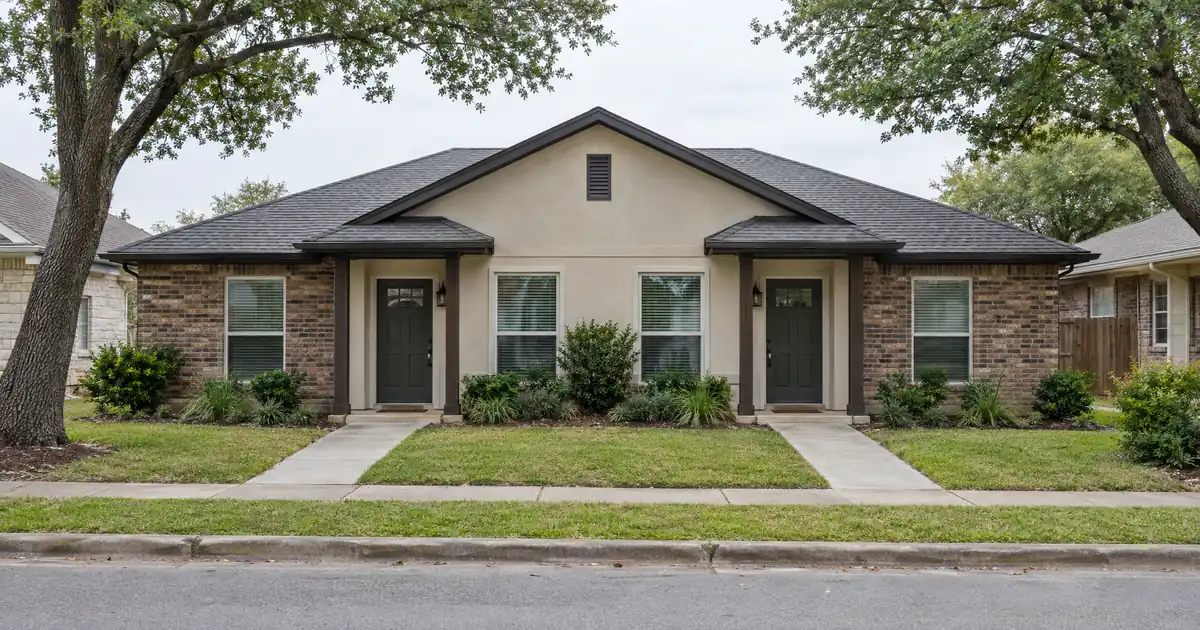
The Quick Read: Texas business owners can qualify for a home loan on the balances in their savings, brokerage and retirement accounts instead of on traditional personal-income documentation, either by having assets cover the whole loan or by converting those assets into monthly qualifying income, with the statements, credit and property still fully underwritten by the lender. That means no traditional personal-income documentation, pay stubs or employment verification. It does not mean no documentation. This guide is about qualifying on savings, not about saving up a down payment.
At a Glance:
- Two paths exist. On the asset qualifier path, eligible assets must cover the entire loan. On the asset depletion path, usable assets are divided by 60 months into monthly qualifying income.
- You are on one path at a time. The paths count assets differently. Retirement accounts count at 90% under age 59½ on the qualifier path but at 70% at any age on the depletion path.
- Some money does not count. Business account funds beyond your ownership share, cryptocurrency, precious metals and collectibles are not published as eligible, so convert them to a seasoned cash balance in a regulated account first.
- The assets are documented. Statements, seasoning, credit and the property are all reviewed, subject to underwriting.
- Your savings are not sold. They are counted, not spent. Texas homestead rules matter for cash-out loans on a home you already own, not for a purchase.
Why Do Tax Returns Understate a Business Owner?
Traditional income documentation shows taxable profit, not cash. A Texas contractor, restaurant owner or consultant can bring in strong revenue and still report modest net income after write-offs and depreciation. Those deductions are legitimate. They are also exactly what a conventional lender subtracts from your qualifying income.
The result is a mismatch. Your bank balances look strong, your return looks thin, and a standard income-based underwriter sees only the return. Tax treatment varies; consult a qualified professional before relying on any deduction.
Asset-based mortgage programs ask a different question. A conventional lender asks what income your tax return shows. These programs ask what you actually hold in your accounts. For a business owner with large balances and lean taxable income, that is often the more accurate picture. Retirees, people who just sold a business and households living off a portfolio fit the same profile.
How Does Qualifying on Savings Actually Work?
Across the wholesale network Lendmire works with, qualifying on savings comes in two forms. They share a name and little else. Lendmire is the broker. It arranges these loans through select lenders, and the lender underwrites and decides.
Lendmire’s consumer mortgage lending is licensed in 16 states, Texas among them. The figures below describe select programs and are subject to underwriting. They are ceilings and floors, not offers.
Path one: the asset qualifier
On this path, your eligible assets, after the credit percentages below, must equal or exceed the entire loan amount. No employment or income is documented. The lender’s review rests on the assets.
Here is the illustrative math. Say you want an $800,000 loan. You hold $330,000 in brokerage accounts (counted at 100%, so $330,000), $300,000 in a 401(k) while under age 59½ (counted at 90%, so $270,000) and $200,000 in savings (100%, so $200,000). That adds up to $800,000 of usable assets, which covers the loan on assets alone. The lender’s own calculation governs.
Leverage on this path runs up to 80% loan-to-value on a purchase and 75% on a refinance, for a principal residence or second home. Loans go up to $4,000,000. The minimum credit score is 600. No reserves are required at or below 75% loan-to-value. Above that, the lender sets them.
Path two: asset depletion
On this path, assets are converted into monthly qualifying income. The lender totals your usable assets after haircuts, then divides by 60 months. That income has to carry the full housing payment and your other debts through the debt-to-income test.
Take $1,500,000 in securities (counted at 80%, so $1,200,000) plus $300,000 in cash (100%, so $300,000). That is $1,500,000 of usable assets. Divided by 60 months, it produces $25,000 of monthly qualifying income. That income then has to cover the housing payment and other debts.
A larger housing payment needs proportionally more usable assets behind it. Loans on this path run from $125,000 to $3,500,000.
Leverage on a principal residence or second home goes up to 80% on a purchase or rate-and-term refinance and 60% on a cash-out refinance. On an investment property it is 65% on a purchase or rate-and-term refinance and 60% on a cash-out. Cash-out proceeds never count as qualifying assets.
The depletion path also has minimum asset rules. Qualified assets must be at least the lesser of $1,000,000 or 1.25 times the loan balance. When depletion is your only income source, you also need at least $250,000 in liquid assets.
Asset income can instead supplement documented income, up to a 45% debt-to-income ratio. In that case, the minimum-assets rule is waived.
Many borrowers assume the depletion divisor is universal. It is not. Divisors differ by program across the industry, which is why the same savings can produce very different income figures from one lender to the next. The 60-month figure above belongs to the depletion path in this program, subject to underwriting.
Which Money Counts?
Only some of your money counts, and the way it counts depends on which path you use. Never blend the tables for different paths.
Asset qualifier path: share of the balance that counts.
| Account type | Counts at |
|---|---|
| Brokerage accounts | 100% |
| Certificates of deposit | 100% |
| Money market | 100% |
| Savings | 100% |
| 401(k) and IRA, under 59½ | 90% |
| 401(k) and IRA, 59½ or older | 100% |
Accounts combine. Brokerage, savings and retirement balances can be added together to reach the loan amount.
Asset depletion path: share of the balance that counts.
| Account type | Counts at |
|---|---|
| Cash accounts | 100% |
| Certificates of deposit | 100% |
| Securities | 80% |
| Private stock | 75% |
| Retirement accounts, any age | 70% |
| Real-estate equity | 60% |
Several items are not eligible on the depletion path:
- custodial accounts
- deferred compensation
- escrow accounts
- foreign funds
- cash on hand
- stock options
- non-vested restricted stock units
- funds from non-regulated financial companies
What about business money, crypto and everything else?
This is where business owners trip up. Business account balances beyond your ownership share are not published as eligible on either path. Cryptocurrency, precious metals, collectibles and borrowed or pledged funds are not published as eligible either.
The documented route is to convert them into a seasoned cash balance in a regulated account. The lender then reviews where the money came from. Do not assume these assets count at any percentage.
Savings vs. Deposits vs. Rent: Which Route Fits?
The savings route is one of several paths for owners whose returns run thin. Each tests something different, so the right choice depends on what you can show.
| Route | What it tests | Best fit |
|---|---|---|
| Asset qualifier | Assets cover the whole loan | Large balances, little documented income |
| Asset depletion | Assets converted to income | Large balances, income to build from them |
| Bank statement | Business or personal deposits | Strong cash flow, thin savings |
| DSCR | Rent versus the property’s payment | Rental property, not your own home |
The bank statement route is a separate program for borrowers who document income with deposits. Trade press describes it as averaging deposits over 12 to 24 months and applying an expense factor, with 50% used as an illustrative example. The factor is the lender’s decision, not yours.
DSCR loans are designed for non-owner-occupied investment properties. Because they are business-purpose investor loans, they are reviewed differently from a standard owner-occupied mortgage. DSCR qualifies primarily on property-level rental income covering the payment, subject to lender guidelines. It is not built for the home you live in.
Which Route Fits You?
Run through these questions in order.
1. Do your deposits tell a better story than your savings? If business cash flow is strong and personal liquidity is thin, the bank statement route usually fits better.
2. Do your eligible balances cover the entire loan? If so, the asset qualifier path is the cleaner fit. No income is documented.
3. Are your balances large but short of the full loan? Then asset depletion converts them into income. Check the minimum-assets rule first.
4. Do you have other documented income? Depletion income can supplement it, up to a 45% debt-to-income ratio, and the minimum-assets rule is waived.
5. Is the property a rental? Then you are in business-purpose territory, and DSCR is usually the better tool.
In practice, a business owner who just sold a company often lands on the qualifier path. Proceeds sit in a regulated account, and on the depletion path sale-of-business funds are excused from the statement-age requirement. An owner still running a company with solid deposits and modest savings often belongs in a different program entirely.
What Does the Lender Still Check?
Even without conventional personal-income paperwork, a Texas borrower still faces full underwriting. The credit file, housing history, assets, property and loan amount are all reviewed.
Credit is the first filter. The qualifier path publishes a 600 minimum score. The depletion path follows the lender’s score and loan-amount matrix. A first-time investor on the depletion path needs 700.
Housing history of 0x30x12 is the standard. One 30-day late in the last twelve months is considered case by case. Multiple bankruptcies are not eligible. On the depletion path, a housing event needs 4 years of seasoning.
Seasoning and statements come next:
- Qualifier path: 60 days of seasoning, with two months of statements for each qualifying account.
- Depletion path: statements at least 120 days old at application, plus the most recent statement within 45 days. Sale-of-business, inheritance and legal-settlement funds are excused from that seasoning.
The federal ability-to-repay rule backs this up. It requires a lender to consider and verify the income or assets it relies on, using reasonably reliable third-party records. A tax-return transcript is one permitted method, not the only one.
The CFPB’s compliance guide is blunt about the flip side. Stated income is gone, and income or assets must be verified. Qualifying on savings is legal and common in non-QM lending. It is also fully underwritten.
Texas Specifics: Where Homestead Rules Matter
Texas homestead rules affect cash-out loans on a home you already own. They do not block a purchase.
The Texas Constitution protects a homestead from forced sale except for listed liens. A purchase-money lien is one of those exceptions. A cash-out loan on an owner-occupied Texas home falls under a separate, stricter provision. Your lender and title company handle those requirements, and you should confirm them against the constitutional text before relying on any summary.
Two figures are worth knowing from the program side. On the depletion path, cash-out on a principal residence or second home tops out at 60%. Cash-out proceeds also never count as qualifying assets.
For the qualifier path, no cash-out figure is published. The lender sets it, so do not plan around one.
Texas property taxes and homeowners insurance vary widely by county. On the depletion path they sit inside the housing payment your derived income must carry. Budget for them before you decide how much house your assets can support.
The program figures do not change by state.
Where the General Rule Breaks
Most of what you have read assumes a simple case. These edge cases are where files go sideways.
You have no deposit history. A recent business sale, or a business started after one, leaves you without 12 to 24 months of deposits. Asset-based qualification fits better here. A seasoned cash balance does the work that deposits cannot.
Your savings sit in the business. A balance in the company account is not the same as your own money. Beyond your ownership share, it is not published as eligible. Moving it to a personal regulated account helps only if the source is documented and the funds season.
You hold a lot of crypto. It does not count at a percentage. It has to become a seasoned cash balance first.
You are buying an investment property on your own assets. The depletion path allows it, but leverage is lower (65% on a purchase, 60% on a cash-out) and a first-time investor needs a 700 score. The loan is business-purpose, so this is a different file from a home purchase.
Your retirement accounts are a big share of your wealth. On the qualifier path they count at 90% under 59½ and 100% at 59½ or older. On the depletion path they count at 70% at any age.
Know how the depletion minimum is calculated. It is the lesser of $1,000,000 or 1.25 times the loan balance. A $3,000,000 loan does not need $3,750,000 in assets, only $1,000,000. Borrowers often misread this rule, so check it against your own loan amount.
Getting Your File Ready: Documents and Mistakes
A clean file is mostly a matter of sequence. Here is what a strong package contains:
- Statements for every qualifying account, covering the seasoning period for your path.
- Proof the accounts are in your name, or that you own your share of any joint or business account.
- A written explanation and source documents for any large recent deposit.
- A list of every account you plan to count, grouped by type.
Common mistakes follow a pattern:
- Moving money between accounts right before applying. Each transfer creates a trail the lender has to explain, and it can restart seasoning.
- Withdrawing from a retirement account to fund the down payment. That lowers the balance you are qualifying on.
- Counting the down payment and the qualifying balance twice. On the qualifier path, assets must cover the entire loan. Money used elsewhere does not count twice.
- Assuming an asset class counts because it is valuable. If it is not published as eligible, convert it first.
- Choosing the wrong path. Someone with strong balances but a thin ability to cover the housing payment may need the depletion path, not the qualifier.
How the Process Runs, Step by Step
1. Inventory your accounts. List balances by type and note where each came from.
2. Pick the path. Compare your eligible assets to the loan amount, and check the depletion minimums if income is the issue.
3. Talk to a broker. Lendmire compares the options across select lenders in its network.
4. Submit statements and a credit review. The lender checks seasoning, source of funds and housing history.
5. Underwriting and appraisal. The lender reviews the property and applies its own calculation, which governs.
6. Consumer mortgage disclosures and closing. The loan is a consumer mortgage, so the usual consumer disclosures apply.
No timeline is promised here. Programs change and every file is underwritten individually.
When Is Savings the Wrong Route?
Sometimes another doc type or loan type is simply better.
- Your standard personal-income documentation is strong. If net income already supports the payment, a standard income-based loan may be simpler.
- Your savings are thin and your deposits are strong. The bank statement route likely fits better.
- You are buying a rental, not a home. DSCR is built for that, and qualification rests on the property’s income.
- Your balances are mostly in ineligible assets. If much of your wealth is in assets the program does not count, the math may not work.
- Your credit is below the lender’s floor. Assets do not override a score or housing-history problem.
Asset-based qualification also affects your liquidity. Counting assets does not spend them, but a large down payment from the same pool reduces what is left for the next purchase. Plan the sequence before you commit.
Key Terms Defined
Asset qualifier path: A way to qualify where your eligible assets must cover the entire loan amount, with no income documented.
Asset depletion path: A way to qualify where usable assets are divided by 60 months to produce monthly income for the debt-to-income test.
Seasoning: The length of time money must sit in an account before the lender counts it.
Debt-to-income ratio: Your monthly debts divided by your monthly qualifying income.
Haircut: The share of an asset’s balance the lender does not count, usually for volatile or retirement accounts.
Non-QM: A loan that falls outside the standard rules government-backed buyers use, often serving borrowers whose income does not show up cleanly on returns.
Frequently Asked Questions
Can I really buy a home in Texas without conventional personal-income paperwork?
Yes, through select asset-based programs, subject to underwriting. You document assets with statements instead of income with returns. Credit, housing history, the property and your assets are all still reviewed. That is why this means no traditional personal-income documentation, pay stubs or employment verification rather than no documentation.
What is the difference between the asset qualifier and asset depletion paths?
The qualifier path asks whether eligible assets cover the whole loan, and it documents no income. The depletion path divides usable assets by 60 months into monthly income and runs it through debt-to-income. You are on one path at a time, and the leverage limits and percentages differ.
Do I have to sell my investments to qualify?
No. The lender counts your balances toward qualification, applying the percentages above. Your assets stay where they are. The down payment, of course, comes out of your funds, so plan how much remains afterward.
Can business account funds count as assets?
Not beyond your ownership share, and they are not published as eligible on either path. The documented route is moving funds into a seasoned cash balance in a regulated account. The lender reviews the source. If your deposits are strong and personal savings are thin, a bank statement program may fit better.
Does Texas homestead law block this kind of loan?
No. Homestead rules mainly govern cash-out loans on an owner-occupied home. A purchase-money lien is a separate permitted category. Texas does not change the program figures, which apply the same way in every state where the program is available.
Next Step
If you are qualifying on assets rather than income and want to see how the numbers work, Lendmire can help you compare asset-based mortgage programs based on your statements, the property, credit profile, leverage, and your goals. Reach the team at 828-256-2183. Texas business owners with strong balances and lean returns often find the right path is the one that counts what they have actually built.
Lendmire’s asset-based mortgage in Texas page presents the program for Texas borrowers.
About Lendmire
Lendmire (NMLS# 2371349) is a mortgage broker licensed for consumer lending in 16 states. Bank statement, P&L-only, 1099-only and asset-based mortgages for self-employed and high-net-worth borrowers are arranged through wholesale lenders on primary residences, second homes and investment properties; every file is underwritten by the lender under its program guidelines. Scotsman Guide named Lendmire a Top Mortgage Workplace in both 2025 and 2026.
Get Started
Ready to find the right loan for you?
In about 30 seconds you can review financing options available for your home or investment property. No commitment required.
Informational only. Not a Loan Estimate, approval, or commitment to lend. Program availability and eligibility are subject to lender guidelines, credit approval, property review, and underwriting.
References
1. Scotsman Guide, “These Loans Should Take Center Stage”
3. CFPB Ability-to-Repay and Qualified Mortgage Compliance Guide
4. Texas Legal Guide, Texas Constitution Article XVI, Section 50
This article is part of Lendmire’s asset-based mortgage program — full qualification details, guidelines, and scenarios live on the program page.
Related reading: How Alabama Business Owners Buy a Home on Savings Instead of Tax Returns · Can You Buy a Second Home in Indiana on Assets Instead of Income? · Can a Washington Snowbird Buy a Winter Home on Savings Alone?
Guides: Asset-Based Mortgage in Texas
Brandon Miller
Founder & CEO, Mortgage Loan Originator, Lendmire LLC
- Mortgage Loan Originator · NMLS# 1129696 · Verify on NMLS Consumer Access
- North Carolina Real Estate Broker · License# 343312 · Verify on NCREC
- North Carolina Insurance Producer · License# 19053198 · Property, Casualty, Life, Health · Verify on NAIC SBS
- Lendmire LLC · Firm NMLS# 2371349 · Verify firm licensure
Important disclosures. Lendmire (NMLS# 2371349) is a licensed mortgage brokerage. Lendmire is not a direct lender, depository institution, or financial advisor. All loan inquiries are subject to lender underwriting; this article does not constitute a commitment to lend. Rates, terms, and program guidelines are subject to change without notice and vary by borrower profile, property type, and state. Information in this article is general in nature and is not financial, legal, or tax advice. Equal Housing Opportunity. NMLS Consumer Access: nmlsconsumeraccess.org.