
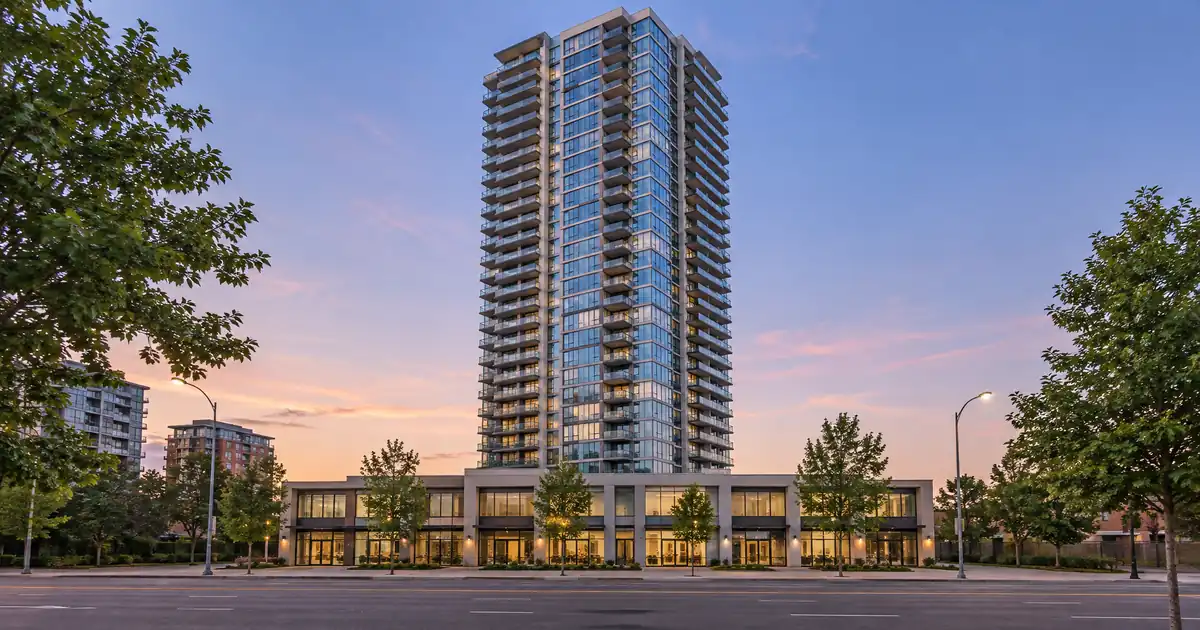
The Quick Read: No one list of lenders fits every borrower here, because the lenders that write a home equity line on a residential condo above a retail or office floor depend on your credit profile, how you use the unit, and how the lender reads the building’s commercial share. A broker shops that match across several wholesale lenders.
- A residential unit above a commercial floor is usually still residential collateral. Owning the commercial or mixed-use unit itself is a different product.
- Lenders review the building as well as you, so a strong credit file does not rescue a building they reject.
- On an investment property, the network ceiling is 70% CLTV with a 700 minimum credit score and a $500,000 maximum line.
- Title must sit with you personally or in a revocable living trust. An LLC cannot hold it.
- If the line route closes, a DSCR cash-out refinance is the usual fallback, with its own property review.
Why Does a Commercial Floor Complicate a HELOC?
A commercial floor adds a second question to the file. The first question is whether you are a good borrower. The second is whether the building still looks like a residential condo project.
How large a line the equity supports.
An equity line is sized by combined loan-to-value, occupancy, and credit — not by rental coverage. Switch the occupancy or the credit band and the ceiling moves with it.
Investment-property lines require a 700 minimum credit score; second-home lines start at a 640 minimum and primary-residence lines at 600, and the combined-LTV ceiling steps down as the credit band drops on primary-residence and second-home lines and holds on investment-property lines; the line cap steps down on primary-residence lines and holds at every tier on investment-property and second-home lines.
A debt-to-income ratio above 45% requires 680+ credit. Profiles under 640 are limited to single-family homes. At least 75% of the approved line is drawn at closing. Ceilings, floors, and caps update from Lendmire’s centralized guideline source.
Line estimate
Illustrative estimate only — not a quote, Loan Estimate, approval, or commitment to lend. The rate is an editable assumption; equity-line pricing is variable through both the draw and repayment periods and never converts to fixed. Occupancy and credit drive the ceiling together: an investment property tops out at 70% combined LTV (minimum credit 700, line cap $500,000); a second home tops out at 90% combined LTV (minimum credit 640, line cap $500,000), with the ceiling stepping down as the credit band drops (the cap holds at every tier); a primary residence tops out at 90% combined LTV (minimum credit 600), and its $750,000 maximum line is available only at 75% combined LTV or below with a 700-or-better credit profile (720 on the longer-runway program) and a full appraisal. Lines above $500,000 require a full appraisal. Credit, debt-to-income, property type, and full underwriting review all affect the final line.
The two questions are separate, and a file can pass one and fail the other. Your unit may be an ordinary residential apartment on the 30th floor. The lender still reads the association’s documents, and a large retail or office share can push the whole project into a harder category.
Lendmire is a mortgage broker. It places home equity lines with select wholesale lenders in its network and is never the lender. Every figure below depends on lender guidelines and a full file review, and none of it is a commitment to lend.
Key Terms Defined
Home equity line of credit (HELOC): A revolving credit line secured by property you own, usually sitting in second position behind a first mortgage.
CLTV (combined loan-to-value): All the debt secured by the property, first mortgage plus the new line, divided by the property’s value.
Non-warrantable condo: A condo project that falls outside the standard guidelines of the big mortgage agencies. Common triggers include a high commercial share, heavy investor ownership, or litigation. Enact, a mortgage insurer, defines it as a condo that misses those agency eligibility requirements and lists excessive commercial space among the causes.
Project review: The lender’s check of the building itself: budget, reserves, delinquencies, insurance, litigation, investor concentration, and commercial share.
Mixed-use: A property or unit that combines residential and commercial use or zoning.
Is the Unit Residential, or Is It Mixed-Use Collateral?
A residential unit in a mixed-use tower is normally residential collateral. A unit zoned or designated commercial, mixed-use, or live-work is not.
The line is sharp in the network’s programs. Commercial, mixed-use, and agricultural-zoned property is not offered. Co-ops and condotels are not offered either. Condotels are hotel-run condo projects, and the agencies treat those as commercial, which is why most programs steer clear of them.
Non-warrantable condos are eligible. That is what makes this topic workable. A tower that fails the agency tests can still be reviewed on its own merits.
If your deed lists a commercial or live-work unit, a HELOC is the wrong product. Ask your title company how the unit is designated before you apply.
How Do Lenders Measure the Commercial Floor?
They compare commercial square footage with total square footage, above and below grade. The denominator, meaning whether you measure the project or the whole building, can change the answer.
The agencies give a useful yardstick, though it is only a contrast point and not a rule for these lines. Fannie Mae’s Selling Guide caps commercial or mixed-use space at a set share of the project or building. The non-warrantable trigger is usually put at a commercial share above 35%. Wholesale HELOC lenders set their own limits, and those limits are not published as one national number.
Three details move the result:
- Parking. Some measurements treat commercial parking differently from retail or office space.
- Below-grade space. Some methods count basement retail in the commercial total, so ask the lender how it handles that space.
- Association business income. Some reviews also look at how much of the association’s budget comes from commercial tenants.
A small retail podium under a large residential tower is a different file than a building anchored by a big office or retail tenant. The percentage tells the story, and the HOA’s condo questionnaire usually supplies the data.
What Does the Review Look Like, Step by Step?
A file has to clear seven gates, and it must clear all of them.
1. Product gate. Does the lender offer a line on non-owner-occupied property at all? Many large banks screen this out up front. Lenders have entered and exited this market over time, as a BiggerPockets master list of investor HELOCs shows.
2. Unit screen. Is the unit residential, with no commercial designation?
3. Project review. The lender checks the association’s budget, reserves, delinquencies, insurance, litigation, and investor concentration.
4. Commercial measurement. The lender totals the commercial square footage against the building or project.
5. Borrower review. This turns on credit, equity, and debt-to-income. The maximum DTI on the network’s lines is 50%, except that profiles from 600 to 679 are held to 45%. Any ratio above 45% needs a 680 minimum.
6. Title check. Ownership must be personal or a revocable living trust.
7. Valuation. Lines at or below $500,000 ordinarily run an automated valuation, with no traditional appraisal. A higher CLTV may require a second valuation, and you can always request a full appraisal.
Here is how the two checks split:
| Check | What the lender reviews |
|---|---|
| Borrower | Credit score, DTI, equity, title vesting |
| Building | Commercial share, reserves, delinquencies, litigation, insurance |
What Do the Network’s Lines Allow?
The limits depend on how you use the property, so find your occupancy first. The programs below come from select wholesale lenders in Lendmire’s network. Subject to lender guidelines, here is the usual range:
| Occupancy | Max CLTV | Minimum credit | Max line |
|---|---|---|---|
| Investment property | 70% | 700 | $500,000 |
| Second home | 90% (720+) | 640 | $500,000 |
| Primary residence | 90% (720+) | 600 | $500,000 at 90% CLTV; $750,000 at 75% CLTV, 700+ (720 on the longer-runway program) |
On a primary residence, the 90% tier requires a 720-or-better credit profile, and lower scores step down. On an investment property, 70% is the ceiling for both the 700 and 720 tiers. A higher score does not unlock more leverage.
Lines above $500,000 are primary-residence only. They need a 700 or better credit profile (720 on the longer-runway structure, described below), cap at 75% CLTV, and require a full appraisal.
Market surveys report that some lenders allow investment-property lines up to 80% LTV, according to NerdWallet. That is a market-wide figure. The network ceiling on an investment line is 70% CLTV. Terms depend on the lender’s guidelines, the property type, the leverage, and a full review of the credit profile.
Two draw structures exist across the network’s wholesale programs. The first has a 3-year interest-only draw and a 17-year repayment period. The second, called the longer-runway structure here, has a 5-year draw and a 25-year repayment period. Investment lines use the 5-year structure only. On either one, at least 75% of the line is drawn at closing.
The programs also set an exposure limit. A borrower can hold up to three lines, and anyone with more than 15 financed properties is not eligible. Availability is limited to Lendmire’s 16 full-service states.
Who Is a Fit, and Who Isn’t?
Fit depends on your situation. Here are the patterns that matter.
A good fit: You hold the unit personally or in a revocable trust, your credit is 700 or better, and the unit is a plain residential condo. The building’s commercial share is modest, and you want modest leverage on a 5-year draw.
A harder fit: Your unit sits in a tower anchored by a large retail or office tenant. The building may have stacked issues, such as heavy investor ownership, litigation, or thin reserves. A commercial floor combined with those problems compounds the project risk.
Not a fit: An LLC holds title to the property. In that case you either change vesting or use a different product. A BiggerPockets poster describes the tradeoff: moving property out of an LLC gives up asset-protection benefits. Condotel and commercial-unit owners also fall outside these lines.
Investment lines carry more scrutiny than owner-occupied ones. NerdWallet notes that lenders see higher default risk on investment property, which is why fewer lenders offer them and the terms are tighter.
Picture an investor with a rented one-bedroom on an upper floor above a retail podium. The unit is residential, and the investor holds title in a revocable trust. Credit is above 700. The investment line caps at 70% CLTV and $500,000, so the investor’s equity is the first gate. The building review is the second, and the commercial share is the number that decides it. If either gate fails, a different structure has to be found.
How Does a Broker Find the Right Provider?
A broker matches your scenario to a lender’s appetite. Lendmire works with a network of wholesale HELOC lenders, and each has its own view of commercial space in a condo project. One may accept a modest podium. Another may decline the same building.
That is why the best program for your situation is not something a ranked list can tell you. The lenders that write this kind of file depend on your occupancy, credit profile, and leverage need. They also depend on the building’s documents.
Before you apply, gather these:
- The HOA’s condo questionnaire or certification, including owner-occupancy and litigation data
- The current budget and reserve study
- The square footage of residential and commercial space
- Master insurance details
- Any rental caps in the HOA documents. An HOA can restrict leasing even when a lender approves.
Ask the lender up front how it measures commercial share and whether it counts parking. That one question can save an application.
What If the Building Is Ineligible?
If the HELOC route closes, the common alternative for an investor is a DSCR cash-out refinance. DSCR stands for debt service coverage ratio. It compares rent to the full monthly payment on the property. That loan is reviewed primarily on property-level rental income covering the payment, subject to lender guidelines. The complete DSCR loans guide walks through the basics.
Several features differ from a HELOC:
- Leverage. Cash-out refinances top out around 75% LTV across most of the network, with about 6 months of seasoning as the common expectation.
- Title. An LLC can generally hold title, subject to program terms.
- Property type. Non-warrantable condos are eligible, but commercial and mixed-use collateral is not offered here either. A commercial floor still puts the project under review.
Clearing 1.00 coverage is not the same as positive cash flow. DSCR compares rent to the full housing payment only, and repairs, vacancy, management, and capital costs sit outside it.
For the product-specific details, Lendmire has covered how to qualify for a DSCR HELOC on a high-rise condo with a commercial floor and how to qualify for a bank statement HELOC on a high-rise condo with a commercial floor.
Exit risk matters too. Enact notes that non-warrantable status can narrow the buyer pool at resale. Scotsman Guide adds that financing on these projects is harder and often costs more.
Where to Go From Here
If you are considering a home equity line and want to see how the numbers work, Lendmire can help you compare HELOC options based on the property, the equity available, credit profile, combined leverage, and your goals. An editable, illustrative calculator on the site can give you a rough sense of the leverage math before you start.
Frequently Asked Questions
Does a commercial floor automatically disqualify my condo?
No. Percentage tests decide it, and a small commercial share is a different file than a building anchored by a large retail or office tenant. Agency tests use set percentages, and wholesale lenders in the network apply their own review. Your unit must itself be residential.
Can I get a HELOC on a condo I rent out?
Yes, through select lenders. On an investment property, the network ceiling is 70% CLTV, with a 700 minimum credit score and a $500,000 maximum line. Many large banks decline non-owner-occupied lines, so availability is narrower than on a primary residence.
Can my LLC take out a HELOC?
Not on these programs. Title must sit with you personally or in a revocable living trust. An LLC, corporation, partnership, or irrevocable or land trust cannot hold title. If an LLC owns the property, you would need a vesting change or a DSCR cash-out instead.
Will I need a full appraisal?
Not usually, at or below $500,000. Those lines ordinarily run an automated valuation, though a higher CLTV may require a second one. A full appraisal is required above $500,000, and you can request one on any line.
What if my building is a non-warrantable condo?
That alone does not rule it out. The network’s programs accept non-warrantable condos, though the lender still reviews the building. Commercial or mixed-use units, co-ops, and condotels are not offered.
About Lendmire
As a mortgage broker (NMLS# 2371349), Lendmire helps homeowners and real estate investors in its 16 full-service states open home equity lines of credit arranged through wholesale lenders. Lendmire is never the lender; line amounts, ceilings and terms are set by the lender under its guidelines. Scotsman Guide named Lendmire a Top Mortgage Workplace in both 2025 and 2026.
Get Started
Ready to find the right loan for you?
See your offer in seconds. No credit pull, no obligation.
Informational only. Not a Loan Estimate, approval, or commitment to lend. Program availability and eligibility are subject to lender guidelines, credit approval, property review, and underwriting.
References
1. Enact: What Makes a Condominium Non-Warrantable
2. Fannie Mae Selling Guide B4-2.1-03
3. biggerpockets.com: Master List Non Owner Occupied Investor Helocs
4. NerdWallet: HELOC on an Investment Property
5. BiggerPockets: HELOC on Investment Property, Can It Be Done
6. Scotsman Guide: Condominium Expertise Can Pay Dividends
This article is part of Lendmire’s HELOC & home equity loan program — full qualification details, guidelines, and scenarios live on the program page.
Related reading: Top DSCR HELOC Providers for a DSCR Loan Down Payment · Top DSCR HELOC Providers for Equity-Rich Rental Holders · Top DSCR HELOC Providers With No Reserves and No Cash to Close
Brandon Miller
Founder & CEO, Mortgage Loan Originator, Lendmire LLC
- Mortgage Loan Originator · NMLS# 1129696 · Verify on NMLS Consumer Access
- North Carolina Real Estate Broker · License# 343312 · Verify on NCREC
- North Carolina Insurance Producer · License# 19053198 · Property, Casualty, Life, Health · Verify on NAIC SBS
- Lendmire LLC · Firm NMLS# 2371349 · Verify firm licensure
Important disclosures. Lendmire (NMLS# 2371349) is a licensed mortgage brokerage. Lendmire is not a direct lender, depository institution, or financial advisor. All loan inquiries are subject to lender underwriting; this article does not constitute a commitment to lend. Rates, terms, and program guidelines are subject to change without notice and vary by borrower profile, property type, and state. Information in this article is general in nature and is not financial, legal, or tax advice. Equal Housing Opportunity. NMLS Consumer Access: nmlsconsumeraccess.org.