
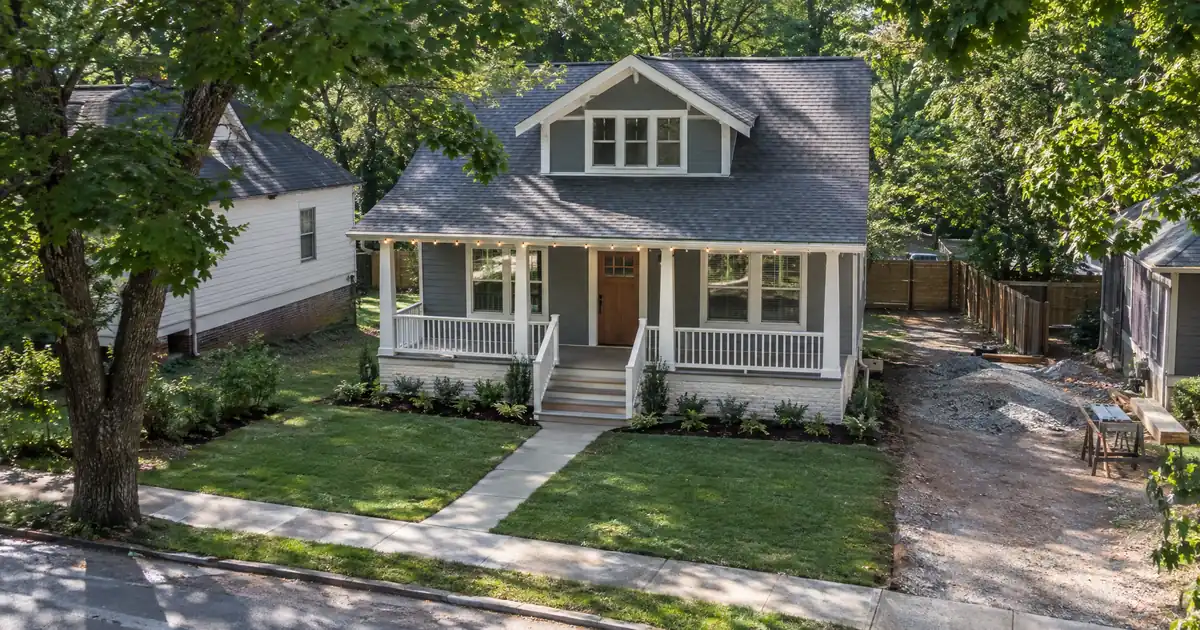
The Quick Read: A transitional rental is a property that is not ready for long-term rental financing yet, and a hard money bridge carries it until it is. You finish the work, place a paying tenant, and build a rent record, and then a DSCR loan pays the bridge off. The plan works only when you underwrite that payoff before you buy.
- Hard money is short-term, interest-only money. Terms typically run 6 to 18 months, so the exit has to be planned on day one.
- The takeout lender uses its own appraisal and the rent you can document, not your projected after-repair value.
- A DSCR loan (one that qualifies primarily on property-level rental income covering the payment, subject to lender guidelines) is the usual long-term exit.
- Cash-out on a DSCR loan usually needs about 6 months of ownership, measured from title recording. A payoff-only refinance generally does not carry that wait.
- If the bridge matures before the property is ready, you can bring cash, take a smaller payoff, extend, sell, or re-bridge.
What Makes a Rental “Transitional”?
A rental is transitional when something about the property keeps a long-term lender from underwriting it today. The problem is usually condition, occupancy, or rent evidence. Hard money exists to cover that gap because it lends against the property, the plan, and the exit rather than against a finished rental file.
| Situation | What blocks long-term financing |
|---|---|
| Vacant, needs work | No lease, condition issues |
| Mid-rehab | Work unfinished, no tenant |
| Finished, unleased | No rent record or lease |
| Newly leased | Lease too new to show a track record |
| Leased below market | Rent may not cover the new payment |
| Short-term rental conversion | No hosting history yet |
Notice that the first four are timing problems and the fifth is a math problem. Timing problems fix themselves if the bridge term is long enough. Math problems do not, so spot them before you close the bridge.
Hard Money, Bridge, and Long-Term Loans: What the Terms Mean
People use hard money and bridge loan almost interchangeably, but they describe different things. A bridge loan is defined by its purpose: it is short-term financing that carries a borrower until long-term financing takes over, and it is secured by collateral and costs more than permanent debt (Corporate Finance Institute). Hard money describes the source of the money, and a hard money loan is one common way to get a bridge. The long-term financing that replaces the bridge is said to take it out.
| Factor | Hard money bridge | DSCR loan |
|---|---|---|
| Purpose | Acquire, rehab, carry | Long-term hold |
| Reviewed on | Property, plan, exit | Rent vs. payment |
| Term | 6-18 months, interest-only | 30-year fixed is the spine |
| Prepayment | No penalty | Varies by program |
| Best fit | Not yet rentable | Leased and documented |
Many lenders now say private lending, bridge lending, or transitional lending for the same thing. When you compare offers, ignore the label and compare the term, the leverage tier, and what the lender expects at maturity.
Underwrite the Exit Before You Close the Bridge
The exit is the loan that repays the bridge, and its limits decide how much you can safely spend. Work backward from it. Ask what the property will appraise for, what rent it will hold, and what the long-term loan will allow against both.
A DSCR loan tests rent against the full monthly housing obligation, known as PITIA (principal, interest, taxes, insurance, and any association dues). You divide monthly rent by that obligation, and the result is the coverage ratio. Commercial finance often runs the same idea on net operating income over total debt service. General finance references describe 1.25x as a typical minimum there (Corporate Finance Institute). Across the wholesale network Lendmire works with, 1.00 is where many select DSCR programs start, and stronger ratios open better pricing and leverage. A separate select-lender path takes coverage below 1.00, with leverage and terms adjusted. For the full mechanics, see the complete DSCR loans guide.
Here is what the takeout actually checks, in order:
1. Value. The lender’s appraisal sets it. Your after-repair projection does not.
2. Rent coverage. Documented rent or an appraiser-supported market rent must cover PITIA at the ratio the program wants.
3. Leverage. On a cash-out DSCR loan on an investment property, the ceiling is typically 75% LTV. On a rate-and-term DSCR refinance of an investment property, the ceiling is up to 85% LTV with no cash back.
4. Seasoning. A cash-out DSCR loan usually expects about 6 months of ownership, counted from title recording rather than from the day the rehab ends.
5. Credit and reserves. A DSCR loan has a 620 floor in parts of the network, most programs want around 660, and 700 or higher unlocks the strongest tiers. Reserves commonly run about 6 months of PITIA, stepping up to about 9 months above $1,500,000.
The lower of the value limit and the rent limit sets the loan size. Clearing one gate does not excuse the other. Also remember that DSCR only compares rent to PITIA. A property can clear 1.00 and still lose money after repairs, vacancy, management, and utilities.
DSCR loans are designed for non-owner-occupied investment properties. Because they are business-purpose investor loans, they are reviewed differently from a standard owner-occupied mortgage.
The Bridge Phase: What Hard Money Typically Allows
Hard money funds against cost and against the finished value, and the leverage depends on your track record. On the hard money programs Lendmire places, fix-and-flip loans run up to 93% of project cost at five or more completed projects, 90% of project cost at two or more, and 85% of project cost with fewer than two. Every tier is capped at 75% of after-repair value. A bridge purchase with no rehab can reach up to 80% of the purchase price. Up to 100% of the rehab budget funds in draws against completed work. That figure is a rehab-budget number, never a purchase LTV, and no true 100% purchase program exists.
Other parameters worth knowing, all of which vary by lender, property, and experience:
- Loan amounts go up to $5,000,000, with larger loans by exception.
- Terms run 6 to 18 months, interest-only, with no prepayment penalty.
- The minimum credit score is 620, with extra conditions below 660.
- Collateral is non-owner-occupied residential property of 1 to 4 units.
Look at how those leverage tiers compare with the exit. A hard money loan at the top cost tiers can sit above what a DSCR loan will lend against the appraised value. If the appraisal lands only slightly above your total cost, the payoff may leave a gap you fund with cash. That is the most common place a stabilization plan quietly breaks. A hard money refinance of an already-finished property runs up to 65% of value, which is a bridge-side figure and different from the DSCR exit.
The Stabilization Timeline
Stabilization runs in phases, and each phase hands something to the next. Start the exit work well before the bridge matures, because the takeout is a separate underwriting event with its own file.
| Phase | Main task | Hands off |
|---|---|---|
| Pre-close | Run exit math, pick the program | Target rent, target value |
| Rehab | Finish work, draw funds | Completed-work records |
| Marketing | Price rent, screen tenants | Signed lease |
| Lease-up | Collect deposit, first rent | Bank deposit proof |
| Seasoning | Hold title, build rent history | Clean rent record |
| Application | Order appraisal, submit file | Complete takeout file |
| Payoff | Close, repay bridge through title | Recyclable proceeds, if any |
Two points deserve attention. First, schedule the appraisal and the application with enough runway that a delay does not push you past maturity. Second, treat the seasoning period as a hard line on the calendar. If you want cash back, the 6 months starts at title recording, so a long rehab eats into your bridge term without helping the clock.
The File the Takeout Lender Wants
A stabilized property still fails if the paperwork is thin. Build the file from the first day of the lease.
- A signed lease with the tenant’s name, term, and rent amount.
- Proof of the security deposit and first month’s rent.
- Bank deposit records showing rent landing in the entity’s account.
- Completed-work records and draw documentation from the rehab.
- Insurance, the entity documents, and proof of reserves.
- A payoff request from the bridge lender when the time comes.
Subject to lender program eligibility, many DSCR programs allow the borrower to be an LLC, and some structures require a special-purpose entity. Keeping the lease, deposits, and bank account in the same name as the title avoids a stack of questions later.
Lendmire’s brokers see the same pattern across many files. The investor has finished the work and signed a tenant, but the first rent went to a personal account, or the lease runs month-to-month with no deposit record. None of that sinks a deal by itself, but each item adds a round of conditions when the bridge clock is already running. Setting up clean rent records on day one costs nothing and removes the most avoidable friction.
Carrying the Property Through Lease-Up
Every month on the bridge costs interest, and the interest-only structure means none of it reduces principal. Budget the carry for the full planned timeline plus a cushion, not just the rehab. Count the months of vacancy between finished work and first rent, the months of rent history you need before the application, and the months the process itself takes. Then add cushion for an extension or a slow appraisal.
Pricing the rent matters here. Setting rent at a level that fills the unit and still covers PITIA with room to spare serves you better than chasing a headline number that sits vacant. A lease signed at a rent the appraiser can support protects the coverage ratio. A concession-heavy lease can make the real rent lower than the number on the page.
Worked Example: On Schedule vs. Slipped
These are modeled assumptions, not market data. Picture a single-family rental bought with a rehab budget on a hard money bridge. The investor underwrote the exit at purchase, assuming rent would cover the future DSCR payment at roughly 1.2x.
On schedule. The rehab finishes inside the bridge term. A tenant signs at the rent the investor assumed, the deposits are documented, and the investor holds title past the 6-month mark. The appraisal supports the projected value, and the DSCR loan pays off the bridge. Because the investor modeled the exit at the cash-out ceiling of up to 75% LTV on an investment property, any cash returned is a bonus rather than a requirement. Credit and reserves were in place the whole time. Terms vary by lender guidelines, property type, leverage, credit profile, and full file review.
Slipped. The rehab runs long, which delays the lease and pushes the application toward maturity. The tenant signs at a rent that lands coverage closer to 0.95x, and the appraisal comes in near total cost. At the 1.00 floor that many select DSCR programs use, that file does not clear as written. Several paths exist. A sub-1.00 path is available through select lenders in the network, with leverage and terms adjusted, and the lender reviews credit, reserves, and the property. The investor could also bring cash to pay the bridge down, switch to a smaller payoff-only refinance, or extend the bridge. Each extra month of interest-only carry is a real cost, so the slipped path is slower and more expensive even when it ends well.
The lesson is simple. The two paths differ by a few modeling errors that were visible before closing: the rent assumption, the appraisal assumption, and the time.
If You Reach Maturity Before You’re Stabilized
Maturity pressure forces a decision, and the right one depends on how short you are. The best defense is to start the takeout application early enough that a stall leaves room to choose.
| Option | When it fits | Main cost |
|---|---|---|
| Bring cash to close | Gap is small | Capital tied up |
| Smaller payoff-only loan | Seasoning not met | No cash back |
| Extend the bridge | Lease or file is nearly done | Extension cost, more carry |
| Sell | Numbers no longer work | Gives up the hold |
| Re-bridge | Property needs more time | New costs, same risk |
A payoff-only refinance is often the most flexible fallback because it generally avoids the seasoning wait, though policy varies by lender. If you can pay off the bridge and keep the property, you can pull equity later with a cash-out DSCR loan once the seasoning requirement is met. Many investors refinance out of hard money into long-term DSCR financing once the property is stabilized, and Lendmire brokers that path through its hard money exit refinance program.
Where the Rule Breaks
The general plan has several edge cases that change the answer.
A brand-new lease. A lease signed last month often is not enough for a takeout lender to treat the property as stabilized. Some programs accept a lease plus deposit evidence, but strict ones want a rent history, so ask early.
Short-term rental conversion. Short-term-rental collateral on a DSCR loan generally needs about 12 months of hosting history, so a property converted right after rehab is usually not ready for that takeout. The cash-out ceiling is 70% on short-term-rental collateral and 75% on standard rentals. Short-term rental rules can vary by city, county, HOA, and property type, so investors should confirm local rules before relying on projected rental income.
Cash-out versus payoff-only. The cash-out path carries the seasoning wait and the leverage cap. The payoff-only path trades cash back for flexibility. Pick based on whether you need the proceeds or just need the bridge gone.
The delayed-financing idea. Some conventional programs let an investor who paid cash recover the documented purchase price right after buying. A hard money purchase is financed, so that idea generally does not fit this strategy.
Property types. Hard money in this program covers 1 to 4 units. Manufactured homes (single- and double-wide), log homes, and barndominiums are not offered on the DSCR programs, so they cannot be the exit for a bridge.
Rent below projection. Coverage that looks fine on paper but not on the signed lease is a math problem, not a timing problem. Extending the bridge will not fix it.
Common Mistakes
- Using a bridge on a rental that is already stabilized and could qualify for a DSCR loan directly.
- Believing the after-repair value is the number the lender will use.
- Assuming hard money means no seasoning on the takeout. The seasoning rule belongs to the exit lender.
- Starting the clock at the end of the rehab instead of at title recording.
- Treating a purchase screen, such as a 70% rule of thumb, as a guarantee that the exit will work.
- Skipping the paper trail on rent, deposits, and draws.
- Budgeting the rehab but not the carry.
- Equating a DSCR above 1.00 with positive cash flow.
Key Terms Defined
Transitional rental: a rental property that cannot yet qualify for long-term financing because of condition, occupancy, or rent evidence.
Bridge loan: short-term financing that carries a property until longer-term financing replaces it.
Hard money: asset-based private lending that reviews the property’s rental income, the plan, and the exit rather than a full income file.
Takeout: the long-term loan that pays off the bridge.
Seasoning: the ownership period a lender wants before it will lend against current value, measured here from title recording.
PITIA: principal, interest, taxes, insurance, and any association dues, the monthly obligation a DSCR loan tests rent against.
Loan-to-cost: the loan as a percentage of the total project cost rather than of value.
Frequently Asked Questions
Does the property have to be rented during the bridge?
No, hard money lends against vacant or mid-rehab property. The takeout is where occupancy matters, because a DSCR loan needs a lease or an appraiser-supported market rent. Most investors plan the lease-up inside the bridge term so the file is ready when the application starts.
Can I refinance before the bridge matures?
Yes, because hard money on this program carries no prepayment penalty. The limit comes from the takeout lender instead. A payoff-only refinance generally avoids the seasoning wait, while a cash-out DSCR loan usually expects about 6 months of ownership from title recording. Policy varies by lender.
What does stabilized mean?
It means the work is done, a paying tenant is in place, and you have a rent record the takeout lender can document. The exact test depends on the program, but the file generally needs a lease, deposit evidence, and a coverage ratio that clears that program’s floor.
Is hard money the same as a bridge loan?
Not exactly. A bridge describes the purpose, which is carrying a property to long-term financing, and hard money describes the source. Many hard money loans work as bridges, so the terms overlap in daily use.
What if my rent covers less than the full payment?
That is a coverage problem, and an extension will not solve it. A sub-1.00 path is available through select lenders in the network, with leverage and terms adjusted. Raising rent, adding cash, or taking a smaller loan can also help, subject to lender guidelines and credit approval.
Next Step
If you are buying, rehabbing or refinancing an investment property on a short timeline and want to see how the numbers work, Lendmire can help you compare hard money options based on the project, the exit plan, leverage, and your goals. Lendmire is a mortgage broker that arranges financing through select lenders in its wholesale network across 41 markets, including Washington, D.C., and nothing here is a commitment to lend. Reach the team at 828-256-2183.
The best stabilization plans are boring on purpose: the investor knows the exit loan’s limits before the first draw and treats every month of carry as a line item.
About Lendmire
Lendmire is a non-QM mortgage brokerage (NMLS# 2371349) arranging DSCR investor loans in 41 markets, including Washington, D.C. DSCR eligibility is generally reviewed around property-level rental income rather than personal income, subject to lender and program guidelines, a fit for self-employed investors and LLC-owned portfolios. Lendmire was recognized as a Scotsman Guide Top Mortgage Workplace in 2025 and 2026.
Get Started
Ready to find the right loan for you?
In about 30 seconds you can review financing options available for your investment property. No commitment required.
Informational only. Not a Loan Estimate, approval, or commitment to lend. Program availability and eligibility are subject to lender guidelines, credit approval, property review, and underwriting.
References
1. Corporate Finance Institute: What Is a Bridge Loan
2. Corporate Finance Institute: Debt Service Coverage Ratio
This article is part of Lendmire’s hard money loan program — full qualification details, guidelines, and scenarios live on the program page.
Related reading: How Many Weeks a DSCR Loan Takes to Consolidate Rental Loans · Can Condos in One Building Join Houses in a DSCR Loan? · Can You Sell One Rental Before Your DSCR Blanket Loan Matures?
Brandon Miller
Founder & CEO, Mortgage Loan Originator, Lendmire LLC
- Mortgage Loan Originator · NMLS# 1129696 · Verify on NMLS Consumer Access
- North Carolina Real Estate Broker · License# 343312 · Verify on NCREC
- North Carolina Insurance Producer · License# 19053198 · Property, Casualty, Life, Health · Verify on NAIC SBS
- Lendmire LLC · Firm NMLS# 2371349 · Verify firm licensure
Important disclosures. Lendmire (NMLS# 2371349) is a licensed mortgage brokerage. Lendmire is not a direct lender, depository institution, or financial advisor. All loan inquiries are subject to lender underwriting; this article does not constitute a commitment to lend. Rates, terms, and program guidelines are subject to change without notice and vary by borrower profile, property type, and state. Information in this article is general in nature and is not financial, legal, or tax advice. Equal Housing Opportunity. NMLS Consumer Access: nmlsconsumeraccess.org.