
The Quick Read: Yes, you can usually finance a duplex, triplex, or fourplex with a bank statement loan, as long as the building is purely residential and the lender’s program allows your plan, whether you live in one unit or rent them all. The lender reviews your file on documented income under the applicable program, subject to lender guidelines.
- A bank statement loan is a way to document income. It is not tied to a property type, so 2-4 units are generally eligible.
- Occupancy is the fork in the road. Living in one unit is the natural fit. Renting every unit often fits a DSCR loan better.
- Qualifying income comes from 12 months of business or personal statements, adjusted by the lender’s expense factor.
- On a primary residence, leverage reaches up to 90% LTV on a purchase through select lenders. Investment-occupancy leverage is lower and varies by lender.
- Five or more units, or a building with a storefront, usually falls outside this product.
Which Path Are You On?
Your occupancy plan decides almost everything else. If you will live in one unit, the file is a primary-residence purchase. If you will rent every unit, it is an investment purchase. Same building, different loan.
What your deposits qualify you for.
Alt-doc programs read 12 months of business or personal bank deposits instead of tax returns. Enter your average monthly deposits and see the income a lender would credit you.
The expense factor is set by the lender from your business type and profit-and-loss statement; it is not a number you choose. This widget quotes no rate and no payment.
Program parameters shown update from Lendmire’s centralized guideline source.
Estimate
Illustrative estimate only — not a quote, Loan Estimate, approval, or commitment to lend. Deposit average, expense factor, and housing ratio are editable assumptions; the expense factor a lender applies is set from your business type and documentation. No interest rate or monthly payment is quoted here. Purchase capacity is a simplified illustration and does not account for taxes, insurance, HOA dues, or other debts. Alt-doc income documentation is available on consumer mortgages in the states where Lendmire is licensed for consumer lending; actual terms vary by lender, borrower, and property.
| Factor | Live in one unit | Rent all units |
|---|---|---|
| Occupancy type | Primary residence | Investment |
| Bank statement fit | Natural fit | Possible, tighter terms |
| Leverage | Highest tier | Lower, varies by lender |
| Better alternative | Rarely needed | DSCR loan often cleaner |
The house hacker is the classic bank statement buyer. You are self-employed, your traditional personal-income documentation shows low net income because of write-offs, and you want a fourplex where three tenants help carry the building. Bank statements show the cash that actually moves through your accounts. Tax deductions hide it.
The pure investor has a choice. A bank statement loan underwrites you: your deposits, your debts, your credit. A DSCR loan is reviewed primarily on property-level rental income covering the payment, subject to lender guidelines. Our complete DSCR loans guide walks through that second path in detail.
Pick the method that makes the file cleaner. Not the one that sounds more impressive.
Why Do 2-4 Units Count as Residential?
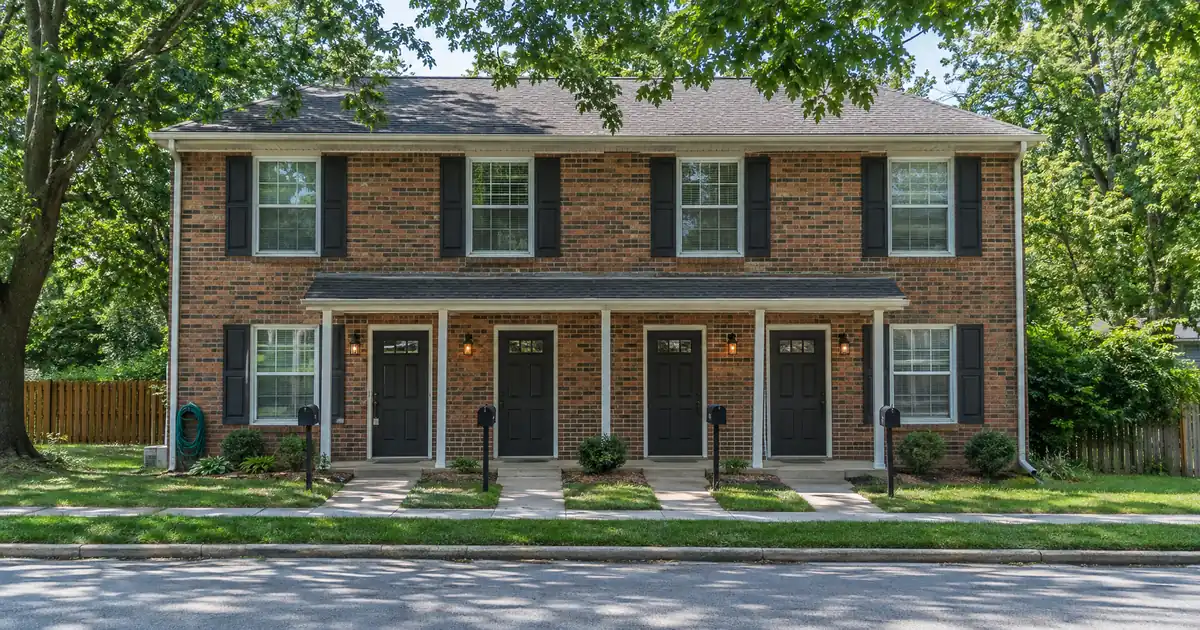
Two-to-four unit buildings are a residential property type, not a commercial one. Lenders treat them like houses with extra kitchens. Commercial treatment generally starts at five units, which is why the boundary for this product sits at four.
The appraisal shows the difference. For two- to four-unit properties, the standard appraisal report is Form 1025, the Small Residential Income Property Appraisal Report. Fannie Mae’s Selling Guide lists it for traditional appraisals of these buildings. The form includes a unit-by-unit rent schedule. Non-QM lenders set their own appraisal rules, so treat this as the form name, not a requirement.
Two exclusions trip people up:
- Mixed-use buildings. A building with a storefront is generally not a 2-4 unit residential property. Many programs exclude it.
- Five or more units. That moves into commercial or small-balance multifamily lending. Different product, different underwriting.
How Do Deposits Become Qualifying Income?
The lender adds up 12 months of deposits, applies an expense factor, and divides by 12. That gives a monthly qualifying income. Some programs allow 24 months of statements, and the choice can help or hurt depending on how your income has trended.
Across Lendmire’s wholesale network, the expense factor is the biggest lever on the file. It varies by lender and by the type of business. No universal formula exists, and a lender’s number can look harsh or generous depending on your margins.
Here is what the lender looks at:
- Business or personal statements. You generally cannot blend the two on one loan. Business statements typically require a minimum ownership share and an EIN.
- Deposit quality. Deposits should make sense for your type of business. Large round-number deposits draw questions.
- Transfers. Moving money between your own accounts is not income. Lenders strip those out.
- Time in business. Programs usually want a minimum history of self-employment.
Non-QM does not mean skipping documentation. Programs still review credit, assets, debts, and the property.
Where does the other units’ rent fit in?
Rent from the other units is the tricky part on a multi-unit. How it counts depends on the program. Some may allow a share of projected rent, supported by the appraisal’s rent schedule, to offset the housing payment. Others ignore it and qualify you on deposits alone.
The risk is double counting. If tenants pay into the account whose statements you submit, that rent shows up in deposits. A lender will not count it twice. Expect questions, and expect the lender to want a clear line between your business income and your rental receipts. Many investors open a separate account for rent before they apply.
What Leverage Can You Expect?
Leverage depends on occupancy and transaction type. These are typical ranges from select lenders in Lendmire’s network, subject to lender guidelines, credit, and loan size:
| Scenario | Typical top LTV |
|---|---|
| Primary residence, purchase or rate-term | Up to 90% |
| Primary residence, asset-depletion alternative | Up to 80% |
| Owner-occupied cash-out (primary or second home) | Up to 80% |
| Investment property cash-out | Around 75% |
| Investment property purchase | Varies by lender |
The 90% ceiling belongs to primary residences on a purchase or rate-term refinance. It does not describe an investment property, and it does not apply to cash-out. Stronger files earn the top of any range. Some lenders also trim leverage as the unit count rises, so a fourplex may price differently than a duplex.
On an owner-occupied cash-out, the 80% ceiling uses a fixed expense ratio. It drops to 75% when an accountant prepares the ratio. Loan sizes in this lane generally run from $125,000 to $3,500,000. Reserves commonly run around six months of the housing payment.
The asset-depletion alternative is reviewed against liquid assets instead of deposits. It suits borrowers whose cash flow is lumpy but whose balance sheet is strong.
Pricing on non-QM loans is generally higher than on conventional financing. The calculator on this page gives an illustrative estimate once you enter your own numbers. It is not a quote.
Bank Statement, DSCR, or Conventional?
Match the product to the borrower. Here is the side-by-side for a 2-4 unit buyer:
| Factor | Bank statement | DSCR | Conventional |
|---|---|---|---|
| What gets underwritten | Your deposits | Property rent | Traditional personal-income documentation, W-2s |
| Best occupancy | Live in a unit | Rent all units | Either |
| Self-employed fit | Strong | Strong (rentals) | Often weak |
| Your personal DTI | Part of test | Not the focus | Core test |
Conventional financing on a 2-4 unit investment property carries stricter equity requirements and caps the number of financed properties. Details live on the Fannie Mae Selling Guide site. The point for self-employed buyers is simple. Traditional personal-income documentation that shows low income can sink a conventional file even when your cash flow is healthy.
Here is the quick decision tree:
1. You will live in a unit and you are self-employed. Start with bank statement.
2. You will rent every unit and your deposits are messy. Start with DSCR.
3. You will rent every unit and your deposits are clean but your rent is thin. Compare both.
4. You are a W-2 earner. Bank statement is generally a poor fit. DSCR or conventional is likely better.
Investors with strong personal income and strong rents face a genuine toss-up. The deposit file is more work, and the DSCR file needs the rent to carry the building. Run both and see which is cleaner.
What Occupancy Means for Disclosures
Occupancy also decides which rulebook applies to your loan. Bank statement loans on non-owner-occupied rentals, including short-term rentals, are business-purpose investor loans. They are reviewed differently from a standard owner-occupied mortgage and are exempt from TRID, the consumer mortgage disclosure rule. Owner-occupied files are consumer mortgages, and TRID applies.
The federal line is drawn in the CFPB’s Regulation Z text on business-purpose credit. Credit to acquire non-owner-occupied rental property is deemed business-purpose, whatever the unit count. But if you expect to occupy the property more than 14 days in the coming year, it does not count as non-owner-occupied. Owner-occupied rentals follow a different rule that turns on unit count, as Doss Law’s business-purpose summary lays out. Lenders often apply their own occupancy policies on top, so treatment varies by program. Do not assume a fourplex purchase is business-purpose just because you live in it.
Use of proceeds matters too. On a cash-out, money spent on personal goals can undercut business-purpose treatment.
Does Unit Count Matter?
A duplex and a fourplex are the same property type but not the same file. Duplexes are the easiest. Lender appetite is widest, appraisals are simplest, and leverage tends to be at the high end of the range.
Triplexes and fourplexes bring more moving parts. The appraiser has more rent comps to support. The lender may trim leverage. Some programs want stronger credit or larger reserves as units go up. None of this is a wall. It is pricing and leverage that shift.
Across the network, the strictest overlays tend to hit investment-occupancy fourplexes. A house-hack fourplex gets friendlier treatment than the same building bought purely to rent.
Can an LLC or Trust Hold Title?
Often, but the answer depends on occupancy. Owner-occupied primary-residence loans generally close in an individual’s name or a trust that meets program rules. Investment files have more room. LLC-titled investment loans are available subject to lender program eligibility, and the LLC question often pushes pure rentals toward DSCR. Raise your title plan before you apply, because changing it later can reset the file.
Edge Cases Worth Knowing
- Occupancy over 14 days. Plan to stay in a unit for more than 14 days and the building is owner-occupied, not an investment. Say so up front.
- Short-term rentals. Treatment may differ. Short-term rental rules can vary by city, county, HOA, and property type, so confirm local rules before relying on projected rental income.
- Cash-out on an investment property. Leverage tops out around 75% LTV. Proceeds used for personal purposes can change how the loan is classified.
- Personal versus business statements. Pick one set per loan.
- Term length. Alt-doc terms follow each lender’s program sheet. Do not assume extended terms or interest-only options.
- Self-employment history. Most programs want a minimum time in business. A newly self-employed borrower may need a different path.
Statement Prep Checklist
Clean statements make a faster, simpler review. Before you apply:
- Gather 12 months of statements from one account set, personal or business.
- Label unusual deposits in a short note, such as a one-time sale or a refund.
- Move rent receipts to a dedicated account if you can.
- Pay down card balances that inflate your debts.
- Confirm your ownership share if you are using a business account.
- Line up reserves, since six months of the housing payment is a common ask.
Skip the temptation to park cash in your account just before applying. Lenders look for deposits that fit the business, and sudden round-number deposits stand out.
Who This Fits
The gig-worker house hacker. A self-employed contractor wants a duplex, living in one side. Tax write-offs crush her return, but her deposits are steady. Bank statement is the natural path, at primary-residence leverage up to 90% LTV on the purchase, subject to credit and lender guidelines. Final terms depend on the lender’s guidelines, the property type, and the borrower’s complete credit picture.
The heavy-write-off investor. He owns a business that shows little taxable income. He wants a fourplex as a pure rental. Compare bank statement against DSCR. If the rents cover the payment with room to spare, DSCR keeps his personal income out of the file. If the rents are thin, his deposits might carry it.
The W-2 buyer. She earns a salary and wants a triplex. Bank statement is usually the wrong tool. A conventional or DSCR loan will probably serve her better.
Key Terms Defined
Bank statement loan: a mortgage that is reviewed around average deposits from 12 months of statements instead of traditional income documentation.
Expense factor: the percentage a lender subtracts from deposits to estimate what the business spends before arriving at your income.
DSCR loan: a loan for rental property that qualifies primarily on whether the property’s rent covers its monthly payment.
Owner-occupied: a property where you live, which changes the loan type, leverage, and disclosure rules.
Business-purpose loan: a loan made to buy or hold a property as a business, such as a rental, rather than as a home.
Reserves: liquid cash you hold after closing, usually counted in months of the housing payment.
LTV: loan-to-value, the loan amount divided by the property’s value.
Frequently Asked Questions
Can I use a bank statement loan to buy a fourplex I will live in?
Usually yes, if the program allows 2-4 unit primary residences. On a primary residence purchase, leverage reaches up to 90% LTV through select lenders, with stronger files earning the top of that range. Expect questions about rent from the other units and expect the appraisal to include a rent schedule.
Does rent from the other units count as income?
It depends on the program. Some allow a portion of projected rent to offset the housing payment. Others qualify you on deposits only. If tenants pay into the account you submit, the lender will avoid counting that rent twice.
Can I buy a duplex purely as a rental on bank statements?
Yes, though terms are tighter than for a primary residence. Investment purchase leverage varies by lender. A DSCR loan, which qualifies primarily on property-level rental income covering the payment, is often the cleaner fit for pure rentals.
What if my building has a storefront?
Many programs exclude mixed-use buildings, because a storefront means the property is not a purely residential 2-4 unit. Ask before you make an offer. Five or more units moves the deal into commercial or small-balance lending.
Can I pull cash out of a two-to-four unit property?
Yes, within limits. Owner-occupied cash-out on a primary residence or second home reaches up to 80% LTV, or 75% with an accountant-prepared ratio. Investment-property cash-out tops out around 75% LTV. Each figure is subject to lender guidelines and a complete review of property type, leverage, and credit.
Next Step
Lendmire is a broker that arranges financing through select lenders in its wholesale network. Its consumer mortgage licensing covers 16 states, and every file is underwritten individually, so this is not a commitment to lend.
Tax treatment can depend on how the funds are used and how the property is held; investors should keep clear records and speak with a qualified tax professional before relying on any deduction.
A fourplex is still just a house with extra doors, and the lender cares most about one question: who lives there.
For current guidelines and terms, see Lendmire’s bank statement loan programs page.
About Lendmire
As a non-QM mortgage broker (NMLS# 2371349), Lendmire facilitates DSCR investor loans across 41 markets, including Washington, D.C. DSCR eligibility is generally reviewed around property-level rental income instead of personal income documentation, subject to lender guidelines, serving LLC-structured portfolios and self-employed borrowers who don’t fit conventional boxes. A two-time Scotsman Guide Top Mortgage Workplace (2025, 2026).
Investors who want the broader program framework can review how DSCR loans work.
Get Started
Ready to find the right loan for you?
In about 30 seconds you can review financing options available for your home or investment property. No commitment required.
Informational only. Not a Loan Estimate, approval, or commitment to lend. Program availability and eligibility are subject to lender guidelines, credit approval, property review, and underwriting.
References
2. CFPB, Regulation Z §1026.3 (business-purpose exemption)
3. Doss Law, Business Purpose Exemption Simplified
This article is part of Lendmire’s bank statement loan program — full qualification details, guidelines, and scenarios live on the program page.
Related reading: How 12 vs. 24 Bank Statement Months Affects Your Home Loan · In an LLC Bank Statement Loan vs Delayed Financing · How to Qualify for a Multifamily 5+ Bank Statement Loan
Brandon Miller
Founder & CEO, Mortgage Loan Originator, Lendmire LLC
- Mortgage Loan Originator · NMLS# 1129696 · Verify on NMLS Consumer Access
- North Carolina Real Estate Broker · License# 343312 · Verify on NCREC
- North Carolina Insurance Producer · License# 19053198 · Property, Casualty, Life, Health · Verify on NAIC SBS
- Lendmire LLC · Firm NMLS# 2371349 · Verify firm licensure
Legal disclosures. Lendmire (NMLS# 2371349) is a state-licensed mortgage brokerage that arranges financing through wholesale lender relationships. Lendmire is not a direct lender, depository institution, or registered financial advisor. The discussion above is general informational content about real estate financing — it is not financial, legal, or tax advice, and readers should consult licensed professionals for guidance on their individual circumstances. Loan inquiries are subject to lender underwriting; this article does not represent a commitment to lend. Loan terms, rates, and qualification standards vary by borrower, property, and state, and are subject to change at any time. Equal Housing Opportunity. NMLS Consumer Access: nmlsconsumeraccess.org.