
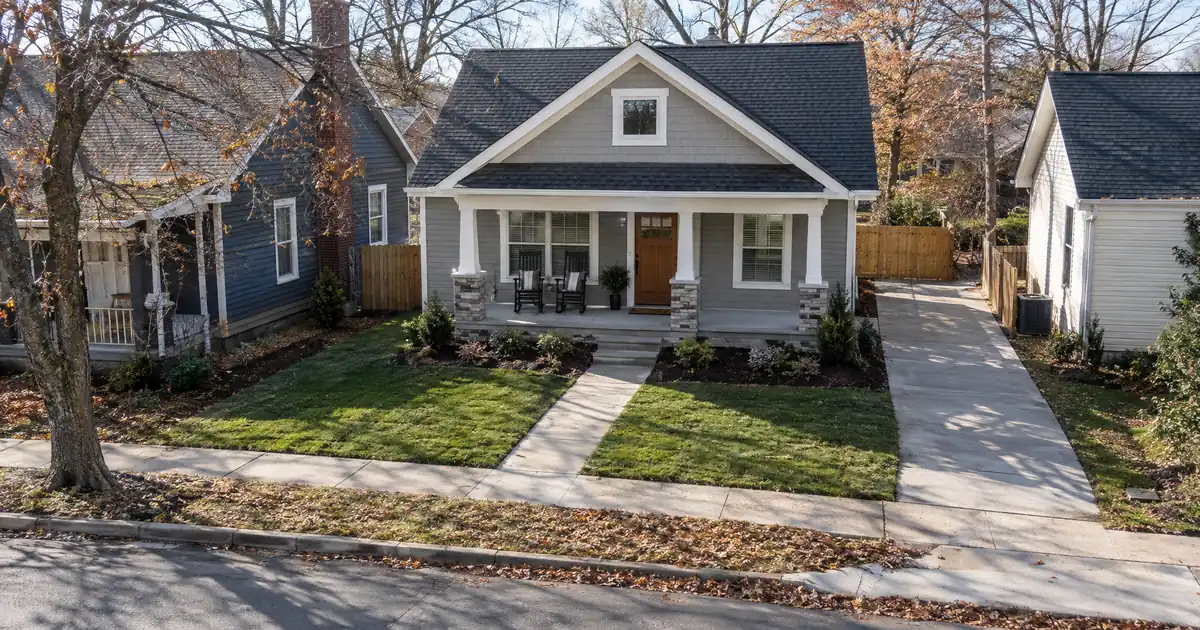
The Quick Read: It depends on the condition of the house and your exit: use hard money when the home needs work before a tenant can move in, or when a deadline rules out a standard loan, and plan to refinance into long-term rental financing once the property is leased. Hard money is a bridge, not a place to live for years. If the house is already rented or rent-ready and you plan to hold it, a long-term DSCR loan usually fits better.
- Hard money lends against the property’s value, your rehab plan, and your exit. Personal income matters less.
- Terms on the program Lendmire brokers run 6-18 months, interest-only, so the full balance comes due at maturity.
- A rent-ready single family home usually does not need it, and paying for two loans is the common mistake.
- A DSCR loan checks whether the rent covers the housing payment. It is the usual exit for a buy-and-hold house.
- Every parameter below varies by lender, property, and experience, and none of it is a commitment to lend.
What Is a Hard Money Loan on a Single Family Home?
A hard money loan is a short-term loan secured by the property itself. Private lenders and financing companies make them, not traditional banks. The lender cares most about what the house is worth, what you plan to do to it, and how you will pay the loan off.
What this loan actually costs to carry.
Hard money is sized against the project and priced by time. Enter the deal and see how much the program will lend, the cash required at closing, the carry while you hold it, and what is left at the exit.
Leverage tiers on the current program: 85% with fewer than 2, 90% with 2 or more, 93% with 5 or more completed projects — every tier capped at 75% of after-repair value. Loan amounts up to $5,000,000, larger by exception; terms of 6 to 18 months, interest-only, no prepayment penalty. The rehab portion funds in draws against completed work, not at closing.
Program parameters shown update from Lendmire’s centralized guideline source. Rate, points, and months are editable assumptions, not quoted terms.
Cost cap sets the loan · positive spread
Illustrative estimate only — not a quote, Loan Estimate, approval, or commitment to lend. Rate, points, and months are editable assumptions. Hard money is business-purpose financing for real estate investors, not a consumer mortgage. Leverage on the current program tops out at 93% of project cost for investors with a documented track record, capped at 75% of after-repair value, with rehab funding up to 100% of the documented budget released in draws; actual terms vary by lender, borrower experience, property, and exit. Lendmire is a mortgage broker, not a lender.
Think of it as funding for the period before the house can carry its own financing. You buy it, fix it, and then either sell it or refinance it. The loan is built for that window and nothing longer.
The loan is also business-purpose only. It is for non-owner-occupied investment property, one to four units on the program Lendmire brokers. It is not for the house you live in.
Key Terms Defined
After-repair value (ARV): what the home should be worth once the planned work is finished. Hard money lenders cap how much they lend against it.
Loan-to-cost: the loan amount as a share of your total project cost, meaning the purchase price plus the rehab budget.
LTV (loan-to-value): the loan amount as a share of the property’s value. DSCR lenders use it on purchases and refinances.
Interest-only: you pay interest during the term and owe the full principal at the end.
Draw: a release of rehab money after a stage of work is finished and checked.
DSCR (debt service coverage ratio): monthly rent divided by the full monthly housing payment, meaning principal, interest, taxes, insurance, and any HOA dues. That payment is called PITIA.
Maturity: the date the whole balance is due. On hard money, it arrives soon.
When Does Hard Money Make Sense for One House?
Hard money makes sense when the house cannot yet qualify for long-term financing, and you have a clear way out. Condition and exit plan decide it. A flipper, a buy-rehab-rent-refinance investor, and a buyer of a dated house with a deadline all have real reasons to use it.
Here is a quick scorecard for a single family purchase:
| Your situation | Hard money fit | Why |
|---|---|---|
| Heavy rehab before renting | Strong | Long-term loans want a rentable home |
| Buy, fix, rent, refinance | Strong | Bridge to a DSCR exit |
| Flip and sell | Strong | Short hold, sale pays it off |
| Deadline-driven deal, such as an auction | Often | Underwriting fit matters more than price shopping |
| Rent-ready house, long hold | Weak | A DSCR loan skips the bridge |
| No exit plan beyond hoping | Poor | Maturity arrives either way |
Hard money lenders and DSCR lenders tend to agree on the split. One funds the work. The other funds the hold.
Why Is Single Family Different From a Small Multifamily?
One house means one tenant and one source of income. If the home sits empty, rent drops to zero. A fourplex with one vacant unit still collects from three.
That concentration shapes every part of the plan. Comparable sales drive the ARV, so a thin set of comps makes the lender’s number harder to trust. Rent comps drive your exit, because the refinance lender will test the rent against the payment.
Rehab scope matters more here too. A single house has one roof, one foundation, and one set of systems, and a surprise in any of them lands on your budget. Build in room for overruns before you sign.
What Does Hard Money Actually Cost?
You pay for flexibility with interest, upfront fees, and time. Time is the biggest driver. The longer the loan runs, the more interest accrues.
Pricing varies by lender, property, and borrower experience, so it is not quoted here. What you can compare is the full list of cost categories:
- Interest, charged on the balance outstanding.
- Lender origination fees at closing.
- Appraisal or broker price opinion.
- Title fees.
- Application, inspection, and document processing fees.
- Draw inspection fees, where the lender checks the work.
- Extension fees if you need more time.
Prepayment terms vary. The program Lendmire brokers carries no prepayment penalty. Some lenders in the wider market require a minimum number of months of interest, so ask that question directly. Then compare total cost over the months you expect to hold the loan.
How Much Will Hard Money Lend on a Single Family Home?
Leverage is measured against cost and against after-repair value, and the lower number wins. On the program Lendmire brokers, fix-and-flip loans typically run 85% of project cost with fewer than two completed projects, 90% of project cost at two or more, and 93% of project cost at five or more. Every tier is capped at 75% of ARV. Experience unlocks the top tier. These figures vary by lender, property, and experience.
Run the percentages. Say your total project cost equals 80% of the ARV. At 90% of cost, the loan lands at 72% of ARV, under the cap. Now say project cost equals 85% of ARV. Ninety percent of cost would be 76.5% of ARV, so the 75% cap binds and you bring more cash.
Other structures follow the same pattern:
- Bridge purchases with no rehab: typically up to 80% of purchase price.
- Cash-out and rate-and-term refinances: typically up to 65% of value.
- Rehab money: up to 100% of the rehab budget, released in draws against completed work. That is a budget figure, not a purchase LTV.
No true 100% purchase program exists. Loan sizes run up to $5,000,000, with larger loans by exception. For credit, a 620 score is the typical minimum, with extra conditions below 660. First-time investors qualify at the lower leverage tiers, subject to lender guidelines and property review. Underwriting stays asset-based: the property, your plan, and your exit.
How Does the Process Work, Step by Step?
Think of the loan as five stages, from application to payoff. The first three happen before closing.
1. Pitch the deal. Share the purchase contract, the scope of work, a rehab budget, and your exit plan.
2. Valuation. An appraisal sets the as-is and after-repair values. These feed the loan amount.
3. Review of you. The lender checks your experience and your cash to close. It may confirm reserves, even though credit and income carry less weight.
4. Close and draw. Rehab funds are typically held back and released as work is finished and inspected.
5. Exit. You sell, or refinance into long-term financing once the house is leased. The loan is interest-only, so the exit pays the principal.
Before you sign, test the exit on paper. Ask what the refinance lender will want to see: a lease, an appraisal, and the property in rentable condition.
What Happens If the Plan Goes Wrong?
Most problems come from four places. Know your fallback for each one before closing.
| If this happens | Then do this |
|---|---|
| Rehab runs over budget | Use reserves; confirm how draws handle overruns |
| ARV appraises low | Expect a smaller loan; bring more cash |
| Rent comes in below plan | Test coverage again before the refinance |
| Term ends before the exit | Ask about extensions; compare cost versus sale |
Maturity risk is the real danger. If the house is not rented, appraised, and refinanced before the term ends, you may face extension fees or default. The program has no multi-year option, so you cannot count on a longer runway.
Refinancing out of a bridge takes planning. Line up a tenant and a signed lease as soon as the work wraps, because the next lender will want proof of rent. Check that your credit and reserves still meet the long-term loan’s requirements. Then leave a cushion between the expected finish date and the maturity date, so one late contractor does not push you into extension fees.
Does a Business-Purpose Loan Come With Fewer Rules?
Hard money loans are designed for non-owner-occupied investment properties. Because they are business-purpose investor loans, they are reviewed differently from a standard owner-occupied mortgage. The Federal Reserve’s compliance handbook treats credit to acquire or improve non-owner-occupied rental property as business-purpose credit. The CFPB’s Truth in Lending manual lists the business-purpose and non-natural-person exemptions.
The practical effect: you get fewer consumer protections. Read the term sheet yourself. Check the maturity date, the draw process, how interest is calculated, and what default costs.
Hard Money or DSCR Loan: Which Fits Your House?
Hard money funds the transition. A DSCR loan funds the hold. Once a house is leased, a DSCR loan is reviewed primarily on property-level rental income covering the payment, subject to lender guidelines. It is a natural fit for a house that already rents.
| Factor | Hard money | DSCR loan |
|---|---|---|
| Best use | Buy, rehab, flip | Rented or rent-ready hold |
| Term | 6-18 months | Long-term, 30-year fixed spine |
| Payments | Interest-only | Principal and interest |
| Property condition | Can be unfinished | Rent-ready |
| Main test | Value, plan, exit | Rent versus payment |
Across the wholesale network Lendmire works with, DSCR purchases most often land at 75%-80% LTV (20%-25% down). Select high-leverage programs reach 85% LTV with roughly a 700+ score. Cash-out refinances top out near 75% LTV, with about six months of seasoning, meaning ownership time, as the common expectation. Most programs want around a 660 score, and a 620 floor exists in parts of the network. Reserves vary by lender, leverage, and loan size, and often sit around six months of PITIA.
Coverage is where many investors get tripped up. 1.00 is where many select programs start, and a separate select-lender path takes coverage below 1.00 with leverage and terms adjusted. Stronger ratios open better pricing and leverage. The complete DSCR loans guide covers the full structure.
One caution matters most. Clearing 1.00 does not mean positive cash flow. DSCR compares rent to PITIA only. Repairs, vacancy, management, utilities, and capex sit outside the calculation.
The Mistake That Costs Investors Most
The expensive mistake is using hard money on a house that did not need it. If the home is rented or rent-ready, you may pay for two loans when one would do. Experienced investors treat hard money as a deliberate choice, not a default.
The reverse mistake also happens. An investor buys a house that needs real work, lines up only a long-term loan, and discovers that a DSCR lender wants a rentable property. Match the loan to the property’s condition.
Many investors use hard money to buy and renovate, then refinance into long-term DSCR financing once the property is stabilized. Lendmire brokers that path through select lenders in its wholesale network.
How to Vet a Hard Money Lender
Compare term sheets line by line. A lender with a lower upfront number can still cost more over the full term.
- What is the maturity, and what does an extension cost?
- Is interest charged on the full loan or only on funds drawn?
- How are rehab draws requested, inspected, and paid?
- Is there a minimum-interest or prepayment clause?
- What happens at default, and what fees apply?
- What will you need for the refinance, and when?
Walk away from any lender who cannot explain the exit in plain words.
Frequently Asked Questions
Can a first-time investor get a hard money loan?
Often yes, at the lower leverage tiers. On the program Lendmire brokers, borrowers with fewer than two completed projects typically see 85% of project cost, capped at 75% of ARV. Experience unlocks higher tiers. Qualification stays subject to lender guidelines, property review, and a 620 minimum score with added conditions below 660.
Can I use hard money on my primary residence?
No. These are business-purpose loans for non-owner-occupied residential property, one to four units. A home you plan to live in does not fit.
Do I need an LLC?
Not always. Many investors borrow through an LLC for liability and recordkeeping reasons. Whether a lender accepts an entity borrower depends on program guidelines, so confirm that before you form one.
What if I cannot refinance before the term ends?
Talk to the lender early about an extension, and price it against the cost of selling. Check the rent, the appraisal, and your credit well before maturity. If the refinance stalls, a sale may be the cleaner exit.
Is there a prepayment penalty?
Not on the program Lendmire brokers, which carries none. Some lenders elsewhere require a minimum number of months of interest, so ask directly. Compare the full cost over the months you expect to hold the loan.
Your Next Step
If the house needs work, run the project cost against the ARV and test the exit. If it is already rented, price a DSCR loan first. If you are buying, rehabbing, or refinancing an investment property and want to see how the numbers work, Lendmire can help you compare hard money options based on the project, the exit plan, leverage, and your goals. DSCR and hard money programs are available in 41 markets, including Washington, D.C. Reach the team at 828-256-2183 or request a quote.
The best hard money deal is the one you already know how to leave.
About Lendmire
Lendmire — NMLS# 2371349 — is a mortgage brokerage specializing in DSCR investor loans, helping arrange financing across 41 markets, including Washington, D.C., through wholesale and investor-lending channels. The model centers on property-level rental income reviewed by the lender rather than W-2 documentation, subject to lender guidelines, suiting entity-owned and multi-property investors. Lendmire holds Scotsman Guide Top Mortgage Workplace recognition for 2025 and 2026.
Get Started
Ready to find the right loan for you?
In about 30 seconds you can review financing options available for your investment property. No commitment required.
Informational only. Not a Loan Estimate, approval, or commitment to lend. Program availability and eligibility are subject to lender guidelines, credit approval, property review, and underwriting.
References
1. Federal Reserve – Truth in Lending Consumer Compliance Handbook
2. CFPB – Truth in Lending Act / Regulation Z manual
This article is part of Lendmire’s hard money loan program — full qualification details, guidelines, and scenarios live on the program page.
Related reading: Can You Use Hard Money on a Two to Four Unit Multifamily Property? · Does a Hard Money Lender Require an Appraisal on an Investment Property? · Should a Flipper Use a Private or Direct Hard Money Lender?
Brandon Miller
Founder & CEO, Mortgage Loan Originator, Lendmire LLC
- Mortgage Loan Originator · NMLS# 1129696 · Verify on NMLS Consumer Access
- North Carolina Real Estate Broker · License# 343312 · Verify on NCREC
- North Carolina Insurance Producer · License# 19053198 · Property, Casualty, Life, Health · Verify on NAIC SBS
- Lendmire LLC · Firm NMLS# 2371349 · Verify firm licensure
Required disclosures. Lendmire (NMLS# 2371349) operates as a licensed mortgage broker, not a direct lender or depository. The discussion in this article is general in nature and should not be relied upon as financial, legal, or tax advice — every investment scenario is unique and should be reviewed by a qualified professional. Any loan inquiry is subject to lender underwriting, and this article is not a commitment to lend or a guarantee of approval. Mortgage rates, loan terms, and program guidelines vary by borrower, property, and state, and may change without notice. Equal Housing Opportunity. Verify licensure at NMLS Consumer Access.