
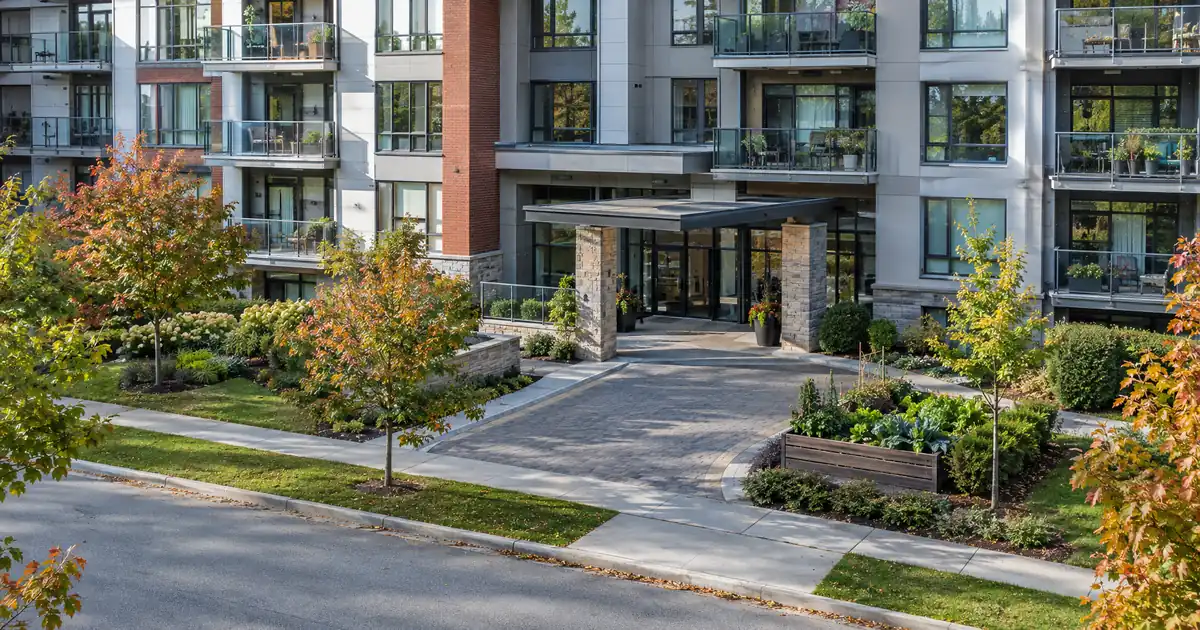
The Quick Read: VA approves the building, not your unit, and the lender’s job is to confirm that approval exists before the loan moves forward. The lender first looks up the project’s status on VA’s condo list. If the building isn’t listed, the lender or the project’s sponsor, not the buyer, sends VA a request with the condo’s legal documents. A fully qualified veteran can still lose a deal because of the building, so the check belongs before the offer, not after.
What “Approved Condo Project” Actually Means
VA guarantees a loan on a condo unit only after VA has approved the project’s legal documentation. That is the rule in 38 CFR 36.4360, which limits the covered loan to a one-family residential unit in a condominium project. The approval attaches to the whole building or association.
VA payment estimate
Starting assumptions reflect an example price with no down payment and a first-use funding fee. Replace them with your own figures.
Editable benchmark: 7.32% as of October 22, 2026 · Freddie Mac 30-year average via FRED®. A conventional market reference, not a VA loan quote.
Illustrative starting assumptions: a $350,000 price, no down payment with full entitlement, a first-use funding fee financed into the loan, a thirty-year term at the current Freddie Mac benchmark, and property taxes and insurance estimated at typical national rates. Every field is editable.
Illustrative estimate only — not a Loan Estimate, approval, quote, or commitment to lend. The rate field carries the weekly Freddie Mac thirty-year conventional benchmark, a market reference and not a VA loan quote; your rate is set by the lender at lock. The funding fee follows VA’s published table for the use and down payment entered; the residual-income figure is VA’s guideline for the region and family size, and the rough residual shown subtracts only the housing payment and the debts entered, while VA also deducts taxes, maintenance and utilities. Taxes, insurance and dues are editable estimates; closing costs are not included. Licensed in sixteen states for consumer mortgages. Lendmire is not affiliated with or acting on behalf of the Department of Veterans Affairs.
That is why a buyer’s credit and income don’t settle the question. Two veterans with identical files can get opposite answers on two different buildings.
The tradeoff is simple. The VA loan programs offer 100% financing with no mortgage insurance, and the building has to qualify for that. Veterans who want to buy in a specific project should treat project status as the first filter. Lendmire’s page on VA loan programs covers the loan side. This article covers the building side.
Key Terms Defined
Project approval: VA’s acceptance that a condo’s legal documents meet its regulations, so units in that project can carry a VA-guaranteed loan.
Declarant: The developer or sponsor who created the condo and may still control the association or be selling units.
Notice of Value (NOV): VA’s statement of a property’s value, issued after the unit’s appraisal.
PUD: A planned unit development, a community with shared amenities that is not a condominium and does not need project approval.
Organizational documents: The declaration, bylaws, budget and related papers that create and run the association.
Step 1: The Status Check
The first thing a lender does is check whether the project is already accepted. VA keeps a condo list for this purpose. The lender searches the project by name and address.
Search carefully. Buildings are sometimes listed under a different name than the one on the sales brochure, or under a phase or a legal name. A miss on the first search doesn’t always mean the project is unapproved. A good loan officer tries variations before drawing a conclusion.
If the project is listed, the deal works like any other VA purchase. If it isn’t, the lender asks what route is available. Before an offer is written, many lenders will run this check as a screen.
Step 2: If the Project Isn’t Approved
If the building isn’t on the list, someone has to ask VA to approve it. Per VA’s Lenders Handbook, Chapter 16, the lender or the project’s sponsor submits a written request along with a copy of the condo’s organizational documents. The package goes to the VA office of jurisdiction.
The buyer doesn’t file it. That is one of the most common misunderstandings in the process.
| Step | Who owns it | What happens |
|---|---|---|
| Status check | Lender | Searches VA’s condo list |
| Document request | Lender, HOA or manager | Collects the legal and financial papers |
| Submission | Lender or sponsor | Sends request and documents to VA |
| Project review | VA | Checks documents against regulation |
| Unit appraisal | Appraiser | Values the individual unit |
| Underwriting | Lender | Reviews the borrower’s file |
What the Lender Collects and Why
The handbook includes a table of required documents that VA’s reviewing office must examine. It is a long list. Typical items include the declaration, bylaws, the association’s budget and a statement about any litigation.
Each document feeds a specific question:
- Declaration and bylaws: Do the governing rules conflict with VA’s regulations, especially the title and lien rules?
- Budget and financials: Is the association funding the building properly and collecting its assessments?
- Litigation statement: Is there a legal dispute that could affect the project or its owners?
- Ownership information: Who controls the association, and is the declarant still in charge?
Some lenders apply their own stricter standards on top of VA’s. Many web pages quote specific occupancy and delinquency percentages as if VA published them. The VA text this article relies on doesn’t state those figures. Ask your lender what it requires rather than relying on a number you saw online.
The Attorney’s Opinion (Helpful, Not Required)
Lenders and sponsors are encouraged, not required, to include an attorney’s opinion that the project meets VA requirements. The handbook says it can expedite approval by reducing how much VA has to review. If an HOA’s counsel is willing to provide one, that helps the file. If not, the project can still be submitted without one.
When the HOA Won’t Cooperate
This is where many unapproved-project deals stall. The documents belong to the association, and its management company often controls how fast they arrive. Some management companies charge for completing questionnaires. No official source sets a figure, so the cost varies.
If the HOA is slow or unwilling, the review can’t finish. There is no official length for the review. It depends heavily on how soon the documents arrive, and secondary sources describe a wide range. A buyer shouldn’t assume any particular timeline.
Where Project Review Ends and Underwriting Begins
Project approval answers one question: can VA guarantee loans in this building? It does not answer whether this borrower qualifies.
After the project clears, the loan still goes through the normal VA steps:
1. Borrower underwriting. Residual income is the controlling test. The 41% debt-to-income figure is a guideline, not a cap. A ratio above it needs residual income well above the table.
2. Housing payment. Underwriting counts the monthly HOA assessment alongside the rest of the housing payment.
3. Appraisal and Notice of Value. The unit appraisal is a separate test from project approval.
4. Title. The lender confirms title meets VA requirements and that HOA assessment liens don’t sit ahead of the VA mortgage.
The credit side works the same as on any other VA purchase. VA sets no minimum credit score. Across the wholesale programs Lendmire places VA loans with, the floor starts at a 580 decision score, subject to lender guidelines and full file review. Your certificate of eligibility from VA decides eligibility.
Where the General Rule Breaks
A few situations don’t follow the standard path.
PUDs. VA does not require project approval for PUDs. Those units still have to meet title and lien requirements.
Projects already approved by FHA or USDA. The handbook provides an expedited route for these. It isn’t automatic, though, and in rare cases VA can find a project noncompliant and tell the lender it won’t guarantee loans there. FHA approval does not equal VA approval.
New or converted projects. The regulation treats proposed, new and existing condominiums separately, and it distinguishes established resale projects from those where the declarant is still in control or marketing units. 38 CFR 36.4356 sets out those definitions, and it also covers expandable and series condominiums. The linked version is an older edition, so your lender will check the current text. Presale percentages circulate online and conflict with each other. Don’t rely on them.
“Single-unit approval.” Some websites say VA offers a unit-only path. The regulation and handbook text reviewed here describe project approval only. Section 36.4360(c) is written at the project level. If anyone tells you a unit-only route exists, get that confirmed in writing by the lender before you count on it.
What the Decision Looks Like for a Buyer
Think of it as three lanes.
Proceed. The project is on VA’s list. The deal works like any other VA purchase.
Proceed carefully. The project is on the list with conditions, or you are relying on an older FHA or USDA approval. Ask the lender exactly what each condition means and whether it affects your unit.
Pause. The project isn’t listed. Before you write an offer, ask the lender whether it will submit the project, whether the HOA is willing to deliver documents, and whether the seller will agree to the wait.
If you go ahead with an unapproved building, add contract time and an exit clause. The seller’s cooperation and the HOA’s cooperation both matter. One practical pattern: ask the lender to screen the project before the offer goes in, not after the contract is signed.
Consider a veteran with strong income and credit who falls in love with a unit in a building that isn’t on the list. Her file is fine. The project is the open question. If the HOA delivers documents and VA accepts the project, the loan proceeds. If the HOA stalls, she may have to walk away or extend the contract. Same borrower, same unit, different outcome depending on the building.
Common Misconceptions
- “VA approves my unit.” It approves the project.
- “FHA-approved means VA-approved.” An expedited route exists, but it isn’t automatic.
- “I file the application.” The lender or sponsor does.
- “An attorney’s opinion is required.” It’s encouraged, not mandatory.
- “PUDs need the same approval.” They don’t, though title and lien rules still apply.
If you’re also weighing cash-out options, Lendmire’s piece Can a Condo Without VA Project Approval Get a VA Cash-Out? covers that side. For buyers in an already-approved building, see Lendmire’s piece VA Loan Condo Requirements for Buying in an Approved Project.
Frequently Asked Questions
How do I know if a condo is VA approved?
Ask your lender to check VA’s condo list before you make an offer. Search by project name and address, and try name variations if the first search comes up empty. A lender can usually run this screen early, and it tells you whether the building is a candidate at all.
Does FHA approval make a condo VA approved?
No. VA’s handbook offers an expedited route for projects already approved by HUD or USDA, but it isn’t automatic. In rare cases VA may find such a project noncompliant. Your lender confirms how VA treats the specific building.
Who submits the request if the project isn’t approved?
The lender or the project’s sponsor submits it, not the buyer. The package is a written request plus the condo’s organizational documents, sent to the VA office of jurisdiction. The buyer’s role is mostly to help the seller and HOA cooperate.
Does project approval guarantee my loan?
No. Approval only means VA can guarantee loans in that building. You still go through underwriting, where residual income is the controlling test, plus the unit appraisal, title review and certificate of eligibility. Everything stays subject to lender guidelines and full file review.
Is there a unit-only approval route?
Some websites say so, but the regulation and handbook text reviewed for this article describe project-level approval. Get any claim of a unit-only route confirmed in writing by the lender before relying on it.
If you are buying a home and want to see whether a VA loan fits your file, Lendmire can help you compare the options and what each one asks of the file.
For your own numbers, request a scenario review with Lendmire.
About Lendmire
Lendmire (NMLS# 2371349) is a mortgage broker licensed for consumer lending in 16 states. Lendmire arranges FHA, VA, conventional and jumbo purchase and refinance loans through wholesale lenders; every file is underwritten by the lender under the applicable program guidelines. Scotsman Guide named Lendmire a Top Mortgage Workplace in both 2025 and 2026.
Get Started
Ready to find the right loan for you?
In about two minutes you can review financing options available for your home or investment property. No commitment required.
Informational only. Not a Loan Estimate, approval, or commitment to lend. Program availability and eligibility are subject to lender guidelines, credit approval, property review, and underwriting.
References
2. VA Pamphlet 26-7, Chapter 16
4. eCFR, 38 CFR Part 36, Subpart B
This article is part of Lendmire’s VA loan program — full qualification details, guidelines, and scenarios live on the program page.
Related reading: Can You Get a VA Jumbo Loan Above the County Limit? · Can You Use a VA Loan to Buy a Condo Without VA Approval? · How a VA Lender Counts Cash Out Requested on a VA Streamline Refinance
Brandon Miller
Founder & CEO, Mortgage Loan Originator, Lendmire LLC
- Mortgage Loan Originator · NMLS# 1129696 · Verify on NMLS Consumer Access
- North Carolina Real Estate Broker · License# 343312 · Verify on NCREC
- North Carolina Insurance Producer · License# 19053198 · Property, Casualty, Life, Health · Verify on NAIC SBS
- Lendmire LLC · Firm NMLS# 2371349 · Verify firm licensure
Required disclosures. Lendmire (NMLS# 2371349) operates as a licensed mortgage broker, not a direct lender or depository. The discussion in this article is general in nature and should not be relied upon as financial, legal, or tax advice — every investment scenario is unique and should be reviewed by a qualified professional. Any loan inquiry is subject to lender underwriting, and this article is not a commitment to lend or a guarantee of approval. Mortgage rates, loan terms, and program guidelines vary by borrower, property, and state, and may change without notice. Equal Housing Opportunity. Verify licensure at NMLS Consumer Access.