
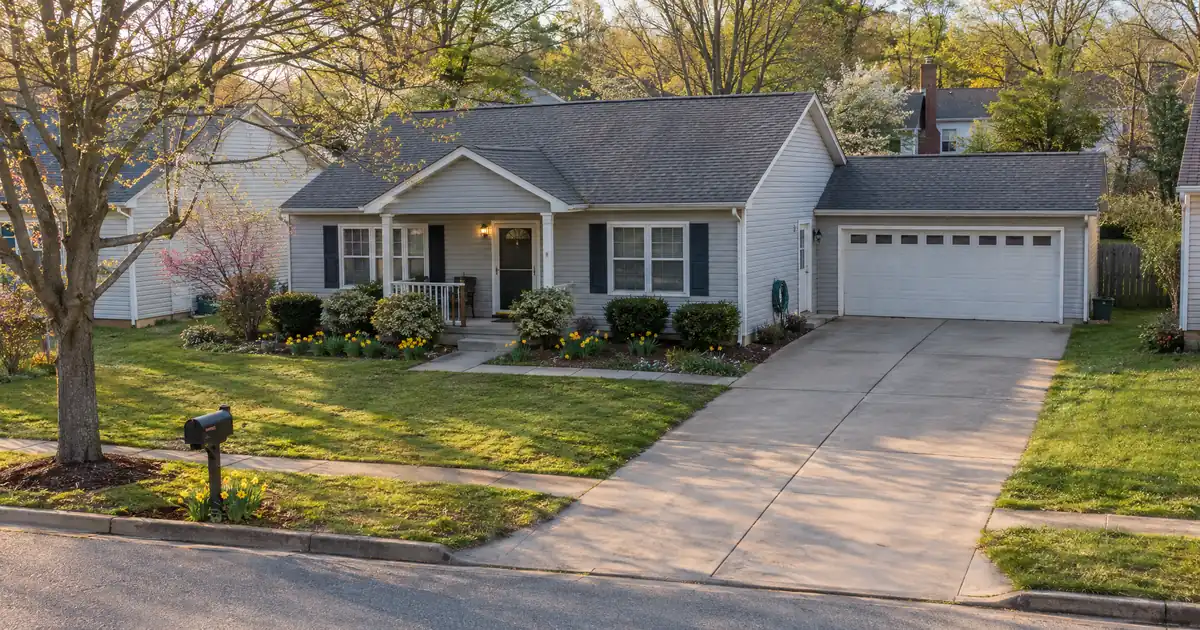
The Quick Read: No. A VA loan cannot finance a pure vacation home, a second home you won’t live in, or an investment property. It finances a home you will occupy as your primary residence. That includes a new primary residence bought while you keep an earlier VA-financed home, and a 2-4 unit property where you live in one unit. Whether the file works comes down to true intent to occupy, remaining entitlement, and your ability to carry the payments.
Why the Answer Is “No” and “Yes” at the Same Time
Search results split between “no, technically” and “yes, with conditions.” They describe the same rule. The VA loan is built for a home you live in. It is not built for a second home in the vacation-home sense. But you can use the benefit more than once, so a second VA loan is allowed when it buys a new primary residence.
VA payment estimate
Starting assumptions reflect an example price with no down payment and a first-use funding fee. Replace them with your own figures.
Editable benchmark: 7.32% as of October 22, 2026 · Freddie Mac 30-year average via FRED®. A conventional market reference, not a VA loan quote.
Illustrative starting assumptions: a $350,000 price, no down payment with full entitlement, a first-use funding fee financed into the loan, a thirty-year term at the current Freddie Mac benchmark, and property taxes and insurance estimated at typical national rates. Every field is editable.
Illustrative estimate only — not a Loan Estimate, approval, quote, or commitment to lend. The rate field carries the weekly Freddie Mac thirty-year conventional benchmark, a market reference and not a VA loan quote; your rate is set by the lender at lock. The funding fee follows VA’s published table for the use and down payment entered; the residual-income figure is VA’s guideline for the region and family size, and the rough residual shown subtracts only the housing payment and the debts entered, while VA also deducts taxes, maintenance and utilities. Taxes, insurance and dues are editable estimates; closing costs are not included. Licensed in sixteen states for consumer mortgages. Lendmire is not affiliated with or acting on behalf of the Department of Veterans Affairs.
The law behind this is the occupancy certification. The VA Lenders Handbook, Chapter 3 says a veteran must certify intent to personally occupy the property as a home. On the certification date, the veteran either already lives there or intends to move in within a reasonable time after closing.
VA’s own news service confirms a veteran can get a second VA-guaranteed loan. It requires enough remaining entitlement (or a down payment, if the lender requires one) and meeting credit, income and occupancy requirements.
So the question to ask is not “can I use VA twice?” It is “will this be the home I live in?”
Quick Answers by Property Type
| Property | VA loan allowed? | Why |
|---|---|---|
| Vacation home | No | You will not occupy it as a home |
| Pure rental or investment | No | No occupancy intent |
| New primary home, old home kept | Yes | Occupancy is real; entitlement must cover it |
| 2-4 unit, you live in one unit | Yes | You occupy one unit as your home |
| Streamline (IRRRL) on a former home now rented | Yes | Prior occupancy certification only |
| Cash-out refinance on a rental | Generally no | Requires an occupancy certification |
What Does “Intent to Occupy” Actually Mean?
Intent to occupy means you plan to live in the home as your residence, and you sign a statement saying so. You certify at application and again at closing. The Handbook treats a move-in within 60 days of closing as reasonable. A longer gap can still count only if two things are true: you certify a specific future move-in date, and a particular future event makes that date possible. A date more than 12 months after closing generally cannot be considered reasonable.
Retirement within the year is a common illustration of that second test. A plan to “move in someday” is not.
Active-duty service members have an additional path. If the service member cannot occupy the home within a reasonable time, a spouse’s or dependent child’s occupancy can satisfy the requirement. For a dependent child, the attorney-in-fact or legal guardian makes the certification. Underwriting must also weigh the cost of the separate living arrangements.
A false certification can have serious consequences. This is not a technicality lenders ignore. Across the wholesale programs this brokerage places files with, the occupancy statement is a core part of the file, and the loan officer’s job is to make sure the story in the file matches the borrower’s real plans.
Can I Keep My Old Home and Buy Another With VA?
Yes, if the new home is your primary residence and your entitlement supports it. This is the legitimate version of “a second VA loan.” It is common after a relocation, a growing family, or a new job.
Two things decide it: entitlement and carrying cost.
Entitlement. If an earlier VA loan is still open, you have remaining entitlement, not full entitlement. The VA Home Loan Buyer’s Guide describes the method. Most lenders want your remaining entitlement plus any down payment to equal at least 25% of the lesser of the value or price. Remaining entitlement times four roughly sets the loan VA can guarantee with no down payment. If your remaining entitlement falls short, a down payment may be needed. How much depends on your file, so speak with a loan officer rather than guessing from a county figure.
With full entitlement, the picture is simpler. The wholesale programs Lendmire places VA loans with offer 100% financing, no mortgage insurance, and no VA loan limit on full entitlement, serving amounts up to $4,000,000. Those programs start at a 580 decision score, subject to lender guidelines and full file review.
Carrying cost. The old home’s full payment counts as a debt unless rent can offset it. More on that next.
How Does Rent From the Old Home Count?
Rent can offset the old home’s payment. It does not count as income. Per Handbook Chapter 4, prospective rent on the departing home is used only to offset that home’s mortgage payment, and only if there is no sign it will be hard to rent. Rent above the payment cannot be used. Lenders need working knowledge of the local rental market. With no lease in hand, a strong rental market may still support the offset, and the lender documents the reasoning on the loan analysis form.
In practice, this is where many files get thin. Borrowers expect the rent to help them qualify. It only helps them avoid being penalized.
Two more points from the Handbook:
- Cash from a VA cash-out refinance cannot count toward required reserves on a rental.
- Some lenders add their own limits. Some decline to count multi-unit rental income at all.
Residual income is the controlling test on VA files, and the 41% debt-to-income figure is a guideline, not a cap. A ratio above it needs residual income well above the table. Carrying two homes puts pressure on both measures.
The 2-4 Unit House Hack
Yes, a VA loan can buy a duplex, triplex or fourplex if you live in one unit as your primary residence. Multi-family property up to four units is eligible on that condition. You can rent the other units.
The mechanics differ from a single-family purchase:
- Rental credit. For an existing property, rent used for lender review is generally 75% of the lease or rental agreement unless a higher percentage is documented, per Handbook Chapter 4.
- Reserves. Chapter 4 lists reserve requirements for rental units. The text is long and has details by structure, so confirm the exact wording with your loan officer.
- Property standards. Each unit generally has to meet VA’s Minimum Property Requirements, including vacant units.
For a related walk-through, see Lendmire’s piece Can a VA Loan Finance a Second Home or a 2-4 Unit House Hack?.
The Streamline Exception (IRRRL)
An IRRRL can work on a home that is now a rental. This is the main program exception. Under 38 CFR 36.4307, a veteran can refinance if they currently occupy the home, or previously occupied it and certify so. For active-duty borrowers, a spouse’s current or prior occupancy can satisfy it.
Know the limits. The loan being refinanced must already be VA-guaranteed. An IRRRL lets you refinance an existing VA loan to a lower rate or from adjustable to fixed, with no VA appraisal. Wholesale programs generally require a net tangible benefit and seasoning of the later of 210 days from the first payment or the 6th payment. The funding fee is 0.5% unless you are exempt. It does not let you buy a rental or cash out on one.
Converting Your VA Home to a Rental Later
Moving out and renting your VA home is not prohibited. Life changes, and a transfer or a new job is the usual reason. Lenders may have their own expectations, and the facts at closing matter. If you certified intent to occupy and meant it, a later change of plans is a different situation from buying with a plan to rent on day one.
If you do convert, you may be able to keep the entitlement tied to that loan or restore it. Entitlement can be restored if the property is sold and the loan paid in full, or if a qualified veteran buyer assumes the loan and substitutes their own entitlement. Restoration is requested on VA Form 26-1880, per the Army benefits library and the Air Force benefits library.
What Does a Second VA Purchase Cost in Funding Fee?
The fee is waived for veterans receiving compensation for a service-connected disability and for the other exempt groups. Across the wholesale programs this brokerage places files with:
| Purchase | Down payment | Funding fee |
|---|---|---|
| First use | Less than 5% | 2.15% |
| First or subsequent use | 5% to under 10% | 1.5% |
| First or subsequent use | 10% or more | 1.25% |
| Subsequent use | Less than 5% | 3.3% |
The VA Lenders Handbook, Chapter 8 carries the same tiers. Putting more down lowers the fee, and it may also close an entitlement gap. Figures are subject to lender guidelines and full file review.
If You Want a True Vacation Home or Rental
VA is the wrong tool. Don’t try to bend it. Buying with a plan to rent right away and signing an occupancy certification you don’t mean can carry serious consequences for the loan and your benefit.
The legitimate options sit outside VA. Conventional second-home financing exists for a home you will use part of the year. Financing a rental is a separate category with its own rules, and it falls outside this lane. A cash-out refinance or home equity line on a home you already own is another way some borrowers raise funds. Each has its own down payment, credit and reserve expectations, and none of them draws on your VA entitlement.
Which Path Fits You?
Match your goal to the compliant route:
1. You want a beach or cabin home you’ll use occasionally. VA does not fit. Look at conventional second-home financing.
2. You’re relocating and want to keep your old home. VA can work if the new home is your real primary residence and entitlement covers it.
3. You want to live in one unit and rent the rest. The 2-4 unit route fits.
4. Your old VA home is now a rental and you want to refinance it. An IRRRL may fit if prior occupancy is true.
5. You want a pure rental. VA does not fit.
Key Terms Defined
Entitlement: the amount VA guarantees on your behalf, which sets how much you can borrow with no down payment.
Certificate of Eligibility (COE): the VA document that confirms you qualify. VA decides eligibility, and service requirements are VA’s rules.
Occupancy certification: your signed statement that you will live in the home as your residence.
IRRRL: the VA streamline refinance of an existing VA loan.
Residual income: what’s left of your monthly income after debts and living costs. It is the controlling test on VA files.
Common Mistakes
- Assuming “I’ve used VA once” means “I can’t use it again.” You can, with remaining or restored entitlement.
- Counting rent above the old payment as income. It isn’t allowed.
- Assuming a 12-month stay rule comes from VA. VA does not publish a minimum stay of that length. The Handbook’s only 12-month figure is the outer limit on delayed move-in.
- Thinking full entitlement relaxes occupancy rules. It does not.
- Treating the IRRRL as a way to buy.
Frequently Asked Questions
Can I use a VA loan to buy a vacation home?
No. The loan requires you to certify that you will occupy the property as your home. A vacation home you visit does not meet that test. Conventional second-home financing is the usual route.
Can I have two VA loans at the same time?
Yes, if you have enough remaining entitlement and the new property will be your primary residence. If entitlement falls short, a down payment may be required. A loan officer can work through your specific situation.
Can I buy a duplex or fourplex with a VA loan?
Yes, up to four units, as long as you live in one unit as your primary residence. Lenders typically credit a portion of expected rent, generally 75% of the lease or rental agreement, and may hold reserves for the rental units.
Does rental income from my old house help me qualify?
It can offset that home’s payment, but it cannot be counted as extra income. Rent above the payment doesn’t help. Lenders also have to be comfortable that the home will be easy to rent.
Can I refinance a VA home I now rent out?
Possibly, through an IRRRL, which only requires a certification of prior occupancy. It must refinance an existing VA loan. A cash-out refinance generally requires an occupancy certification, so rentals and vacant homes usually don’t fit.
Next Step
If you are buying a home and want to see whether a VA loan fits your file, Lendmire can help you compare the options and what each one asks of the file. Start with Lendmire’s VA loan programs page.
For your own numbers, request a scenario review with Lendmire.
About Lendmire
Lendmire, NMLS# 2371349, is a mortgage brokerage with consumer lending licenses in 16 states. FHA, VA, conventional and jumbo purchase and refinance loans are arranged through wholesale lending partners, and each application is reviewed individually by the lender. Scotsman Guide named Lendmire a Top Mortgage Workplace in both 2025 and 2026.
Get Started
Ready to find the right loan for you?
In about 30 seconds you can review financing options available for your home or investment property. No commitment required.
Informational only. Not a Loan Estimate, approval, or commitment to lend. Program availability and eligibility are subject to lender guidelines, credit approval, property review, and underwriting.
References
1. VA Lenders Handbook, Chapter 3
2. VA News: Veterans can use their VA-guaranteed home loan benefit more than once
4. VA Lenders Handbook, Chapter 4
8. VA Lenders Handbook, Chapter 8
This article is part of Lendmire’s VA loan program — full qualification details, guidelines, and scenarios live on the program page.
Related reading: How Much a VA Jumbo Loan Lends on a High-Cost Home · How to Buy a Second Home on a VA Loan With Partial Entitlement · How to Work Out the Down Payment on a Second VA Loan
Brandon Miller
Founder & CEO, Mortgage Loan Originator, Lendmire LLC
- Mortgage Loan Originator · NMLS# 1129696 · Verify on NMLS Consumer Access
- North Carolina Real Estate Broker · License# 343312 · Verify on NCREC
- North Carolina Insurance Producer · License# 19053198 · Property, Casualty, Life, Health · Verify on NAIC SBS
- Lendmire LLC · Firm NMLS# 2371349 · Verify firm licensure
Disclosure information. Lendmire is a state-licensed mortgage brokerage under NMLS# 2371349. Lendmire is not a depository institution, direct lender, or financial advisor — all loans referenced are placed through wholesale lender partners and are subject to each lender's underwriting standards. This article is provided for general informational purposes and is not a commitment to lend, nor does it constitute financial, legal, or tax advice. Loan programs, terms, rates, and qualification standards change without notice and depend on borrower profile, property type, and the state in which the subject property is located. Equal Housing Opportunity provider. NMLS Consumer Access: nmlsconsumeraccess.org.