
The Quick Read: A DSCR HELOC (a revolving line of credit on a rental, qualified on the property’s rent instead of your personal income) counts rent only on a leased property. Rent is the lesser of the appraisal’s market rent and the lease, unless three months of receipts support a lease above market. A fully vacant rental with no lease does not fit this line until it is leased. A two-to-four-unit building may carry at most one vacant unit.
- How the lender counts the vacant unit’s rent in the ratio is the lender’s calculation to confirm on the file; a second vacant unit takes the property out of the program.
- A market-rent study cannot stand in for a lease on this line, even though it often can on a purchase loan.
- The coverage test runs on the entire credit limit, not just the amount you draw.
Vacancy is routine on a DSCR purchase loan. On a DSCR HELOC it is a gate, because you already own the property and the lender expects it to be producing rent. The sections below cover how that plays out, where the exceptions sit, and what to do before you apply.
How Does a DSCR HELOC Lender Count Rent?
The lender divides gross monthly rent by a qualifying payment and wants at least 1.10x on this program, subject to lender guidelines. That ratio is the debt service coverage ratio, or DSCR: rent in the numerator, debt payment in the denominator.
The denominator surprises people. It is a fully amortizing principal-and-interest payment on the entire credit limit, run at a stress rate that sits 2 percentage points above the start rate. Taxes and insurance are not part of that qualifying payment. The lender is not looking at what you have drawn. A $300,000 line is tested as if you borrowed all of it.
The numerator comes from two documents. One is the lease. The other is the appraiser’s market-rent opinion, which comes from Form 1007 on a one-unit rental or Form 1025 on a two-to-four-unit property, per the Fannie Mae Selling Guide. Those forms are simply the standard way an appraiser reports rent.
So a below-market lease pulls the ratio down. An above-market lease only helps if you can show the money actually arrived.
What Happens When a Unit Sits Empty?
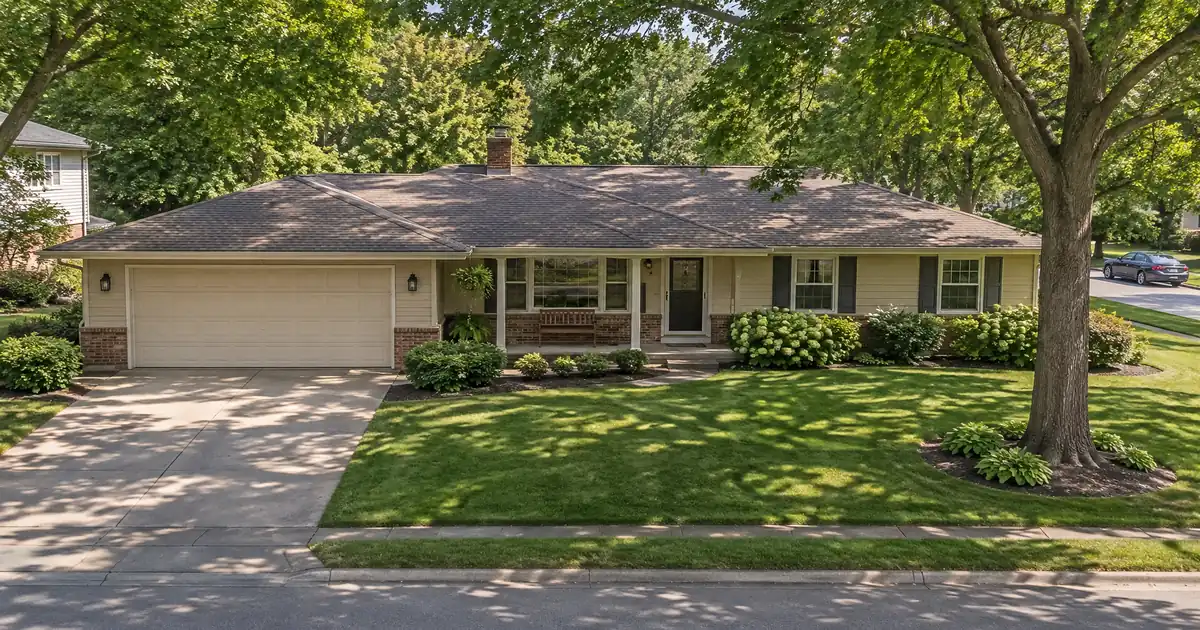
On a one-unit rental, a vacancy means no lease and no rent, so the file does not fit. A rent-ready single-family house with no tenant is not eligible for this line until it is leased. A market-rent study from the appraiser cannot substitute for the lease.
On a two-to-four-unit building, the rule is different. The program allows at most one vacant unit, and the building still needs a lease in place. Each unit is counted on its own. Leased units count at the lesser-of rule above. The treatment of the empty unit’s rent, whether it counts at market rent or at zero, is the lender’s call. Confirm on the file how the lender’s coverage calculation handles it before you assume either answer.
Run the numbers on a four-unit building with identical units. If the empty unit’s rent counts as zero, one empty unit removes a quarter of the rent, so coverage drops to three-quarters of what it was. Start near 1.47x and you land at about 1.10x. Start near 1.30x and you land at roughly 0.98x, below the program’s minimum. These are illustrations, not promises. A signed lease on that fourth unit puts its rent back into the test.
Two empty units in a two-to-four-unit building is a hard stop on this program.
Vacancy Scenarios at a Glance
| Situation | Rent counted | Fit for this line |
|---|---|---|
| Fully vacant, no lease | None until leased | Not eligible yet |
| Newly signed lease, at market | Lesser of lease and market rent | Fits, subject to underwriting |
| Lease below market | The lease amount | Fits, but lowers coverage |
| Lease above market | Market rent, unless 3 months of receipts | Fits; receipts raise the count |
| 2–4 units, one vacant | Leased units count; vacant unit per lender calculation | Fits, subject to underwriting |
| 2–4 units, two or more vacant | Not applicable | Not eligible |
Why Is This Stricter Than a Vacant Purchase Loan?
A DSCR purchase loan finances a property you do not own yet, so lenders expect it to be empty or in transition. Purchase programs often treat a vacant, move-in-ready property differently, and a market-rent opinion can carry more weight there.
A DSCR HELOC works differently. You are borrowing against a rental you already hold, and the line stays open for years. The program expects an operating rental. That is why a lease in place is required and why the vacant-unit limit is so tight.
If your property is empty, you have a couple of paths. Lease it first, then apply. Or look at a DSCR first-lien cash-out refinance, which is a different product with its own rules.
What About Short-Term Rentals?
Form 1007 asks for monthly market rent drawn from comparable properties leased on a monthly basis. Fannie Mae’s appraiser guidance says an appraiser should not use short-term rental comparables and then multiply a nightly fee by 30. So a vacant Airbnb-style property does not get its rent from a nightly-rate projection on this line. Short-term rental rules can vary by city, county, HOA, and property type, so investors should confirm local rules before relying on projected rental income.
Does the Second-Lien Structure Change the Math?
It can. A DSCR HELOC is usually written as a standalone second lien behind the first mortgage you keep. It can also be a standalone first lien on a rental with no mortgage. Whether the first-mortgage payment joins the qualifying payment on a second lien is not something you can assume. Confirm on the file how the lender treats it, and ask for the coverage calculation in writing.
That matters most when a vacancy has already thinned your margin. A small gap in coverage can come from the first mortgage, the vacant unit, or the size of the line. A smaller line improves coverage because the test runs on the full limit. That lever is worth testing before anything else on a thin file.
What Else Does the Lender Review?
Rent is the headline, but not the only gate. Through select programs, typical parameters look like this, always subject to underwriting:
- Leverage on a second lien: up to 70% combined loan-to-value (CLTV, meaning the first mortgage balance plus the new line, divided by value) at a 720 credit score or better, on lines from $50,000 up to $500,000.
- Leverage on a first lien: up to 75% loan-to-value (LTV) at 740 or better and 70% from 700 to 739 on lines up to $500,000. Lines above $500,000, up to $1,000,000, carry a 65% LTV ceiling at 720 or better.
- Valuation: lines up to $400,000 use an automated valuation with a property inspection report, or a full interior appraisal. Larger lines take a full interior appraisal. Appraisal waivers are not accepted.
- Seasoning: a rental bought or refinanced inside the last 6 months is not eligible (that clock runs from the last note date to the new note date), and the owner must have held title for 6 months (settlement date to note date).
- Draws: at least 80% of the line is drawn at closing, and later draws are at least $5,000. The draw period is 5 years of interest-only payments on the drawn balance, followed by a 25-year repayment period and a 30-year maturity. The rate is variable.
- Exposure and reserves: no reserves are required, and a borrower can have at most 5 loans or $2,500,000 with the program. Leverage, reserves, and pricing vary by lender and program; the final terms follow the full file review.
You can hold the property in an LLC, subject to program terms, with the members signing as guarantors. The rent qualifies the line: no traditional personal-income documentation, W-2s or personal income calculation, subject to lender guidelines. The lender still reviews credit, mortgage history and the valuation.
The program is offered in 15 of Lendmire’s 16 licensed states, every licensed state except Tennessee. Rural-designated property, condotels, row homes and leaseholds are outside it.
Key Terms Defined
DSCR: the property’s gross monthly rent divided by the loan’s qualifying payment. Higher means more cushion.
Qualifying payment: the payment the lender uses in the test. Here it is principal and interest on the whole credit limit at a stress rate.
Market rent: the rent an appraiser estimates the unit would earn, reported on Form 1007 or Form 1025.
Rent-ready: a unit in condition to be leased now, without repairs.
CLTV: combined loan-to-value, the first mortgage plus the new line against the property’s value.
Stress rate: the start rate plus 2 percentage points, used only to test coverage.
What to Do Before You Apply
Start by leasing the empty unit. Sign it at market rent, because a below-market lease drags the ratio down under the lesser-of rule. If you have an above-market lease, gather three months of receipts.
Then get your paper in order:
- A current rent roll showing every unit.
- Signed leases and proof of rent received.
- Listing history on any unit still being marketed.
- Photos or inspection notes showing the vacant unit is rent-ready.
If coverage is tight, the usual levers are a smaller limit, documented market rent, a filled unit, or a comparison with a cash-out refinance. For the wider picture, the complete DSCR loans guide explains how the ratio works across products.
Myth vs. Fact
Myth: a market-rent study replaces a lease. On many purchase loans it does. On this line it does not.
Myth: any vacancy counts as zero, or any vacancy is fine. Neither holds. The rule is a lease in place, at most one vacant unit on a two-to-four-unit property, and rent tested unit by unit.
Myth: a high lease boosts my ratio. Only with three months of receipts behind it.
Myth: the test uses what I drew. It uses the full line.
Myth: Form 1007 works for nightly Airbnb rates. The appraisal form is built on monthly market rent from comparables.
Frequently Asked Questions
Can I get a DSCR HELOC on a house with no tenant?
Not until it is leased. A fully vacant rental with no lease does not fit this line, and a market-rent study cannot take the lease’s place. Sign a lease first, or look at a DSCR first-lien cash-out refinance, which has its own rules. Every file is underwritten individually.
How many units can be empty in a duplex, triplex or fourplex?
One. A two-to-four-unit property may have at most one vacant unit, and the file still needs a lease in place. Two or more vacant units is not eligible on this program. How the empty unit’s rent is treated is part of the lender’s own coverage calculation.
What if my lease is above market rent?
With three months of rent receipts behind it, the lease amount can count. Without them, expect the market figure.
Does a lapsed or month-to-month lease count?
A lease in place is required, so confirm with the lender how a lapsing or month-to-month tenancy is treated before you apply. Renewing at market rent before the file goes in removes the question.
How long must I own the rental before applying?
Two six-month clocks apply: the line is not available on a rental bought or refinanced in the last 6 months (last note date to new note date), and title must have been held for 6 months (settlement date to note date). Subject to underwriting.
If you are considering a home equity line on a rental property and want to see how the numbers work, Lendmire can help you compare DSCR HELOC options based on the property, the rent, the equity available, credit profile, combined leverage, and your goals. Reach the team at 828-256-2183. Lendmire is a mortgage broker, not a lender. This is not a commitment to lend.
About Lendmire
Lendmire, NMLS# 2371349, is a mortgage brokerage with consumer lending licenses in 16 states. It arranges DSCR home equity lines of credit on rental property through wholesale lending partners in 15 of its 16 licensed states (every licensed state except Tennessee); each line is written on a non-owner-occupied one-to-four-unit rental and reviewed individually by the lender under the program’s credit and leverage guidelines. Scotsman Guide named Lendmire a Top Mortgage Workplace in both 2025 and 2026.
Get Started
Ready to find the right loan for you?
See your offer in seconds. No credit pull, no obligation.
Informational only. Not a Loan Estimate, approval, or commitment to lend. Program availability and eligibility are subject to lender guidelines, credit approval, property review, and underwriting.
References
2. Fannie Mae Appraiser Update June 2024
This article is part of Lendmire’s DSCR HELOC program — full qualification details, guidelines, and scenarios live on the program page.
Related reading: DSCR HELOC Requirements on a Delisted Rental · DSCR HELOC Rules in a Divorce as a Retiree · DSCR HELOC Requirements on a Duplex You Live In
Brandon Miller
Founder & CEO, Mortgage Loan Originator, Lendmire LLC
- Mortgage Loan Originator · NMLS# 1129696 · Verify on NMLS Consumer Access
- North Carolina Real Estate Broker · License# 343312 · Verify on NCREC
- North Carolina Insurance Producer · License# 19053198 · Property, Casualty, Life, Health · Verify on NAIC SBS
- Lendmire LLC · Firm NMLS# 2371349 · Verify firm licensure
Legal disclosures. Lendmire (NMLS# 2371349) is a state-licensed mortgage brokerage that arranges financing through wholesale lender relationships. Lendmire is not a direct lender, depository institution, or registered financial advisor. The discussion above is general informational content about real estate financing — it is not financial, legal, or tax advice, and readers should consult licensed professionals for guidance on their individual circumstances. Loan inquiries are subject to lender underwriting; this article does not represent a commitment to lend. Loan terms, rates, and qualification standards vary by borrower, property, and state, and are subject to change at any time. Equal Housing Opportunity. NMLS Consumer Access: nmlsconsumeraccess.org.