
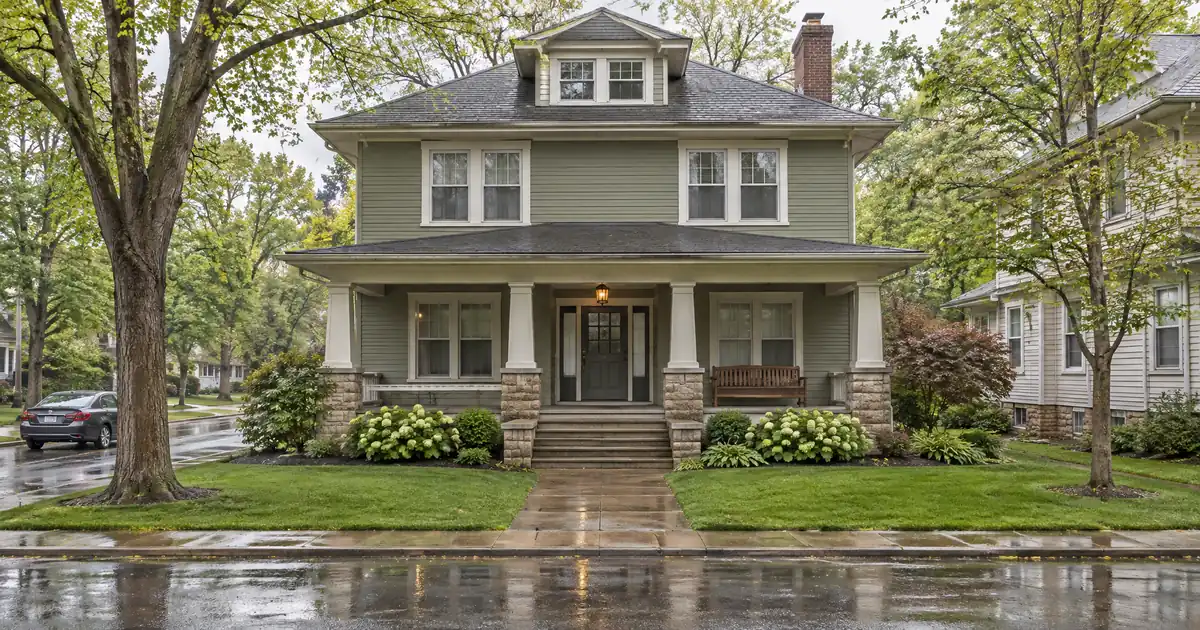
The Quick Read: A lender needs the keeping sibling on recorded title, in their own name or in an LLC the other heirs have deeded to, and a rental whose lease and rent carry the whole line at a stress payment of at least 1.10x. A will or an inheritance claim is not enough for the lender to record a lien. The line is reviewed on the rental’s income, not the keeper’s paycheck, subject to underwriting.
- Title must be recorded to the keeper (or their LLC), with the other siblings released.
- Probate has to be finished, or a distribution order or trust transfer has to be in place.
- Rent qualifies the line: at least 1.10x on a stress payment over the whole credit limit.
- A second lien tops out at 70% combined loan-to-value, and it requires a 720 score or better.
- A lease in place is required, and the property must stay non-owner-occupied.
Why Does Title Have to Come First?
A home equity line is a lien, and a lien can only be recorded against the person who owns the property. If the estate still holds title, or the siblings hold it jointly, the keeper has nothing to pledge on their own.
That creates a loop. The keeper needs cash to buy out the siblings, but the line that could supply it needs the deed first. Three exits show up in practice.
- Equalize with other estate assets. The executor gives the other heirs different assets of matching value, so no cash changes hands.
- Use short-term estate financing. Specialty lenders advance funds against a pending estate, and the exit is a refinance once title is in the heir’s name.
- Sequence it at one title company. The siblings deed their shares to the keeper, the keeper closes the line, and the draw pays the siblings under a written agreement. This works only if every sibling agrees to sign the deed first, which is an escrow and legal question for your attorney.
A neutral estate-planning explainer describes the basic mechanic: when siblings are paid out in cash, they sign their share of the deed over to the keeper. In formal probate, the executor generally needs court authorization before the transfer can happen.
Lendmire’s complete DSCR loans guide covers how this type of loan works before you layer an inheritance on top.
What Does the Lender Need on the File?
Across our wholesale network, the checklist for this line is short, but each item matters. Everything below is subject to underwriting and lender guidelines.
- Vesting. The keeper, or the keeper’s LLC, is the owner of record. If an LLC holds title, the members sign as guarantors, subject to program eligibility.
- Release of the other heirs. Any title holder who is not a borrower signs a non-borrowing owner acknowledgment and the security instrument. After a clean buyout deed, that list is just the keeper.
- A lease in place. A two-to-four-unit property may have at most 1 vacant unit. A vacant inherited rental has a hard time with this test.
- A valuation. Lines up to $400,000 use an automated valuation with a property inspection report, or a full interior appraisal. Larger lines need the full appraisal. Appraisal waivers are not accepted.
- Credit and history. The minimum score is 720 on a second lien and 700 on a first lien. The file also needs no 30-day mortgage late in the last 12 months and 48 months since a bankruptcy, foreclosure, short sale or deed-in-lieu.
- Eligible borrower and property. Borrowers are U.S. citizens, permanent residents, or non-permanent residents with a Social Security number. The property must be non-owner-occupied one-to-four-unit. Rural-designated property, row homes, condotels and leaseholds are outside the program.
No traditional personal-income documentation, W-2s or pay stubs are involved, and no personal income is calculated. The title papers, lease, credit report and valuation are all still documented.
One more point: this program has no reserve requirement and no cash-to-close requirement. Terms vary by lender guidelines, property type, leverage, credit profile, and full file review.
How Does the Rent Test Work When Heirs Share the Property?
The rent test looks at the property, not the number of heirs. Gross monthly rent is divided by a qualifying payment, and the result must be at least 1.10x. Rent is the lesser of the appraisal’s market rent and the lease, unless three months of receipts support a lease above market.
The qualifying payment is a fully amortizing payment on the entire credit limit, calculated at a stress level above the line’s start rate. It covers principal and interest only, not taxes or insurance. Even if you plan to draw only part of the line, the test runs on the full limit.
On a second lien, confirm on the file how the lender treats the first-mortgage payment. The lender’s own coverage calculation governs, and the figures here are illustrative.
Consider a modeled duplex whose rent, measured as described above, covers the stressed payment on the whole line at roughly 1.2x. That clears the 1.10x minimum with some cushion. If the same duplex sat at 1.05x, the keeper would shrink the line size, since a smaller limit lowers the qualifying payment.
How Much Can the Keeper Pull Out?
The leverage depends on whether the inherited rental still carries a mortgage.
| Situation | Lien | Typical leverage ceiling |
|---|---|---|
| Rental keeps its mortgage | Second lien | 70% CLTV at 720+ |
| Rental has no mortgage | First lien | 75% LTV at 740+ |
| No mortgage, 700 to 739 | First lien | 70% LTV |
| No mortgage, line above $500,000 | First lien | 65% LTV at 720+ |
Second-lien lines run from $50,000 to $500,000. CLTV means the first mortgage balance plus the new line, divided by value. First-lien lines run to $1,000,000, and a borrower who keeps a first mortgage can only take a second lien. These are ceilings through select programs, not offers. A declining-market flag can lower the ceiling by 5 points.
The draw rules matter for a buyout. At least 80% of the line is drawn at closing, and the closing draw is never less than $50,000. That makes the line behave like a lump sum at the start, which suits a one-time payment to siblings. Later draws are at least $5,000 each. The draw period is 5 years of interest-only payments on the drawn balance, followed by a 25-year repayment period and a 30-year maturity. The rate is variable.
Two six-month clocks govern timing: a rental bought or refinanced inside the last 6 months is not eligible (that clock runs from the last note date to the new note date), and the owner must have held title for 6 months (settlement date to note date). How an inherited transfer counts toward those clocks is a file-level question to confirm with the lender before you plan the buyout date.
What Happens in Each Sibling Scenario?
| Scenario | Effect on the file |
|---|---|
| Probate still open | No lien can be recorded yet |
| Court order or trust distribution done | Keeper can be vested; file can move forward |
| Siblings deed shares at closing | Needs agreement and one title company |
| Keeper moves in | Property is no longer non-owner-occupied |
| No tenant and no lease | Fails the lease-in-place requirement |
| Title in keeper’s LLC | Allowed; members sign as guarantors |
If the keeper plans to live in the property, this program is the wrong tool. A line on the owner’s own home is a different product, and this line is never offered on an owner-occupied property.
What About the Mortgage the Decedent Left Behind?
If the inherited rental already has a loan, ask whether the transfer lets the lender demand full repayment. The federal due-on-sale regulation, 12 CFR 191.5, lists a transfer to a relative resulting from the borrower’s death as one that cannot trigger the clause. Its wording, though, is built around a home the borrower occupies, and the protection it describes is framed around residential property with fewer than five units.
Courts and commentators disagree about how far that reaches for a non-owner-occupied rental. Do not assume your inherited rental is protected. Send that question to an estate attorney before you count on keeping the existing loan.
Protection from a call only keeps the old loan alive. It does not buy out siblings or pull cash.
HELOC, Cash-Out, or Something Else?
The line’s main advantage is that it leaves the first mortgage untouched. That matters if the inherited loan carries terms worth keeping. A DSCR cash-out refinance replaces the first lien and may suit a rental with no meaningful mortgage left, or one where the old loan is a poor fit.
Most of the line is drawn at closing, so the money for a one-time buyout of siblings is available up front. The later draws and the revolving structure add value when the keeper will also use the line for repairs or the next purchase. If the goal is just paying siblings and nothing else, price a closed-end option too.
For related ground, Lendmire’s piece What an Investment Property HELOC Needs When One of Three Heirs Keeps the Rental? covers the income-qualified route.
On taxes, an inherited rental generally gets a stepped-up basis, but bought-out shares can be treated differently; tax treatment varies, so consult a qualified professional.
Key Terms Defined
- DSCR: the debt-service coverage ratio, meaning the rental’s gross monthly rent divided by the qualifying payment.
- Lien: the lender’s recorded legal claim on the property that secures the loan.
- Second lien: a lien that sits behind the first mortgage the owner keeps.
- Vesting: the name in which title is legally held, such as a person, trust or LLC.
- Seasoning: the waiting period a lender requires after a purchase or refinance before it will lend again.
- CLTV: combined loan-to-value, meaning all liens on the property divided by its value.
Frequently Asked Questions
Can the keeping sibling open the line before probate closes?
No. Until the keeper is the vested owner, no lien can be recorded in their name. A court order, trust distribution, or a transfer-on-death deed or small-estate affidavit where state law allows, must put title in the keeper’s hands first.
Do the other siblings have to sign anything?
Any heir still on title who is not a borrower signs a non-borrowing owner acknowledgment and the security instrument. If the siblings have already deeded their shares to the keeper at a title company before the line records, they sign only the deed. Your title company and attorney set the exact order.
Is the line available right after I inherit?
Two six-month clocks apply: the line is not available on a rental bought or refinanced in the last 6 months (last note date to new note date), and title must have been held for 6 months (settlement date to note date). Confirm with the lender how an inherited transfer counts toward those clocks.
Can the keeper hold the rental in an LLC?
Yes, subject to lender program eligibility, and only for investment property. The members sign as guarantors. If an existing loan is involved, moving the property into an LLC can complicate the due-on-sale question above, so check with an attorney first.
Where is this program offered?
It is offered in 15 of Lendmire’s 16 licensed states, every licensed state except Tennessee. Lendmire is a broker that places the line with a wholesale lender, and qualification is subject to underwriting.
If you are considering a home equity line on a rental property and want to see how the numbers work, Lendmire can help you compare DSCR HELOC options based on the property, the rent, the equity available, credit profile, combined leverage, and your goals. Reach the team at 828-256-2183.
An inherited rental is easiest to finance once the deed work is finished, so the title and sibling agreement deserve more attention than the loan itself.
About Lendmire
As a mortgage broker (NMLS# 2371349), Lendmire helps landlords and real estate investors open DSCR home equity lines of credit on their rentals — lines qualified on the property’s rent, never on the owner’s own home — through wholesale lenders in 15 of Lendmire’s 16 licensed states (every licensed state except Tennessee). Lendmire is never the lender; line amounts, ceilings and terms are set by the lender under its guidelines. Scotsman Guide named Lendmire a Top Mortgage Workplace in both 2025 and 2026.
Get Started
Ready to find the right loan for you?
See your offer in seconds. No credit pull, no obligation.
Informational only. Not a Loan Estimate, approval, or commitment to lend. Program availability and eligibility are subject to lender guidelines, credit approval, property review, and underwriting.
References
1. Trust & Will, inheritance buyout
2. OCC regulation, 12 CFR 191.5 (eCFR)
3. Fidelity Learning Center, step-up in basis
This article is part of Lendmire’s DSCR HELOC program — full qualification details, guidelines, and scenarios live on the program page.
Related reading: DSCR HELOC Requirements for Owners of a Single Rental · DSCR HELOC Requirements to Fund a Rental Purchase · DSCR HELOC Rules for Borrowing on Your Rental
Brandon Miller
Founder & CEO, Mortgage Loan Originator, Lendmire LLC
- Mortgage Loan Originator · NMLS# 1129696 · Verify on NMLS Consumer Access
- North Carolina Real Estate Broker · License# 343312 · Verify on NCREC
- North Carolina Insurance Producer · License# 19053198 · Property, Casualty, Life, Health · Verify on NAIC SBS
- Lendmire LLC · Firm NMLS# 2371349 · Verify firm licensure
Legal disclosures. Lendmire (NMLS# 2371349) is a state-licensed mortgage brokerage that arranges financing through wholesale lender relationships. Lendmire is not a direct lender, depository institution, or registered financial advisor. The discussion above is general informational content about real estate financing — it is not financial, legal, or tax advice, and readers should consult licensed professionals for guidance on their individual circumstances. Loan inquiries are subject to lender underwriting; this article does not represent a commitment to lend. Loan terms, rates, and qualification standards vary by borrower, property, and state, and are subject to change at any time. Equal Housing Opportunity. NMLS Consumer Access: nmlsconsumeraccess.org.