
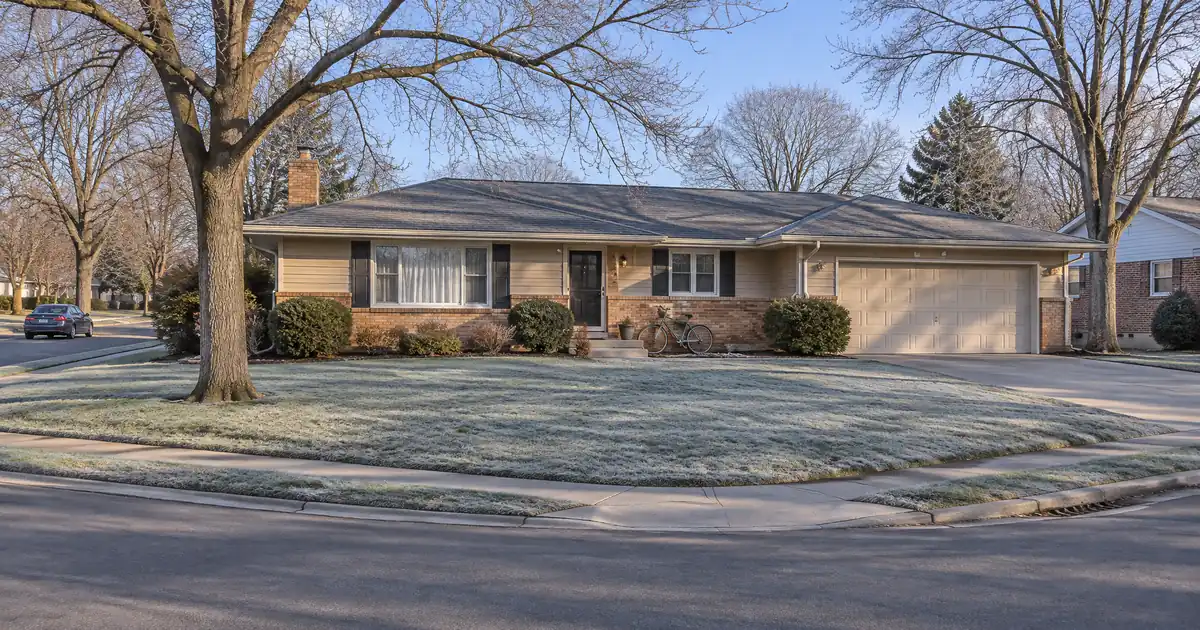
The Quick Read: Usually it stops the approval until the lien is paid off: a PACE lien is a tax assessment that typically ranks ahead of an equity line, stays with the property, and shows up on title, and the network’s rental equity line treats it as outside the program.
- A PACE assessment is repaid through the property tax bill, not through a mortgage-style payment.
- It typically takes priority over other mortgages, so a home equity line lender cannot assume its lien sits in the position it is underwriting.
- Across the wholesale network Lendmire works with, an investment-property line tops out at 70% CLTV, and a rental with a solar lien sits outside the program until the lien is cleared.
- Closing out the balance is only half the job, since the paperwork on record has to be cleared as well.
- A UCC-1 filing on solar equipment is a different animal from PACE, and some lenders will tolerate it.
Key Terms Defined
PACE (Property Assessed Clean Energy): a financing program that pays for improvements like solar panels and is repaid through added property tax payments over time.
Lien: a recorded legal claim against a property that must be settled before or when the property is sold or refinanced.
Lien priority: the order in which claims get paid if a property is sold in foreclosure. Senior liens are paid first.
HELOC (home equity line of credit): a revolving line secured by the property, usually sitting in first or second position behind or ahead of other debt.
CLTV (combined loan-to-value): all loans secured by the property, added together and divided by its value.
UCC-1: a state-level filing that gives a solar financer a claim on the equipment rather than on the land.
Fixture filing: a county-level filing that treats the panels as attached to the real estate.
Subordination: a written agreement in which one lienholder agrees to move behind another.
Release: the recorded document that removes a filing from the public record after the debt is settled.
How large a line the equity supports.
An equity line is sized by combined loan-to-value, occupancy, and credit — not by rental coverage. Switch the occupancy or the credit band and the ceiling moves with it.
Investment-property lines require a 700 minimum credit score; second-home lines start at a 640 minimum and primary-residence lines at 600, and the combined-LTV ceiling steps down as the credit band drops on primary-residence and second-home lines and holds on investment-property lines; the line cap steps down on primary-residence lines and holds at every tier on investment-property and second-home lines.
A debt-to-income ratio above 45% requires 680+ credit. Profiles under 640 are limited to single-family homes. At least 75% of the approved line is drawn at closing. Ceilings, floors, and caps update from Lendmire’s centralized guideline source.
Line estimate
Illustrative estimate only — not a quote, Loan Estimate, approval, or commitment to lend. The rate is an editable assumption; equity-line pricing is variable through both the draw and repayment periods and never converts to fixed. Occupancy and credit drive the ceiling together: an investment property tops out at 70% combined LTV (minimum credit 700, line cap $500,000); a second home tops out at 90% combined LTV (minimum credit 640, line cap $500,000), with the ceiling stepping down as the credit band drops (the cap holds at every tier); a primary residence tops out at 90% combined LTV (minimum credit 600), and its $750,000 maximum line is available only at 75% combined LTV or below with a 700-or-better credit profile (720 on the longer-runway program) and a full appraisal. Lines above $500,000 require a full appraisal. Credit, debt-to-income, property type, and full underwriting review all affect the final line.
Why Does a PACE Lien Outrank Your Line?
A PACE lien outranks most other debt because it is collected like a tax. The assessment rides on the property tax bill, it is tied to the property rather than to you, and it typically takes priority over mortgages on that property. A home equity lender who wants a known lien position can’t count on that.
Per the Consumer Finance and Fintech Blog, the obligation stays with the property if it is transferred. The same source puts repayment at typically 10 to 20 years. That is a long runway of extra annual carrying cost on a rental.
Priority is not identical everywhere. State law drives it, and in some states mortgage lenders keep priority in foreclosure. Most coverage says “typically” for a reason, so avoid assuming every PACE lien is senior in every state.
Here is the plain-English version. A solar loan from a private company is a debt you owe. A PACE assessment is a charge on the land itself. One follows you. The other follows the property.
What Does a HELOC Underwriter Check on a PACE Home?
The reviewer works through four things in order: whether the lien exists, how the payment is treated, where the lien sits, and then the combined leverage. A PACE assessment can trip the file early in that sequence, well ahead of the leverage tiers.
1. Detection. A PACE assessment does not always look like a mortgage. It surfaces through the title report and the county tax roll. Your tax bill will often carry a separate line item for it.
2. Payment treatment. Law firm Husch Blackwell notes that the federal rule treats existing PACE payments as property taxes for mortgage underwriting. On a rental, that means the assessment lands in the property’s carrying costs rather than in a separate debt column.
3. Lien position. The line lender wants to know where it stands. Because PACE records through the tax roll, it typically sits ahead of the line, and it can’t be treated as a small side item.
4. Combined leverage. Only after the first three do the leverage tiers matter. On this network, the ceiling depends on how the property is used. An investment property line tops out at 70% CLTV with a 700 minimum credit score. Primary residences and second homes reach as high as 90% CLTV, and that top figure exists only at a 720-or-better credit profile. The tiers beneath it step down from there.
Those leverage tiers are the part most borrowers expect to be the whole story. With a PACE lien on title, they are the last gate, not the first.
So Is the Lien a Dealbreaker, or Just a Hurdle?
On the network’s rental equity line, it is a dealbreaker until cleared. A rental with a solar lien sits outside the program, and PACE is usually paid off before you apply. Lenders in the wider market may answer differently, and every file is reviewed individually, subject to lender guidelines.
The line itself is a standalone first or second lien product. It is offered in the 16 states where Lendmire runs full-service retail operations, a narrower footprint than its DSCR investor program. Title must be held by you personally or by a revocable living trust. A property held in an LLC can’t be financed this way, which is the sharpest structural difference from a DSCR loan.
So if your solar home is a rental sitting in an LLC and carries a PACE assessment, you have two problems stacked together. One is the lien. The other is the vesting.
Is Every Solar Loan a Lien on Your Home?
No. Solar financing ranges from nothing recorded to a tax assessment on the land, and lenders treat each differently. The dividing line is whether the claim reaches the real estate or only the equipment.
| Arrangement | What is recorded | Typical effect on a line |
|---|---|---|
| Owned outright | Nothing | No issue |
| Standard UCC-1 | State filing on equipment | Often tolerated by some lenders |
| Fixture filing | County filing on panels | Usually paid, released, or subordinated |
| Solar deed of trust | Recorded mortgage on the home | Usually paid, released, or subordinated |
| PACE assessment | Tax-roll lien on the property | Outside the rental line; usually paid off |
The UCC-1 is where lenders decide. The other three generally have to be settled in some way.
Solar leases and power purchase agreements are a separate case. The provider owns the panels, so any filing sits on their equipment rather than on your home. Treatment still varies by lender, so ask before assuming it won’t matter.
Title insurance endorsements can cover some solar filings that claim to rank ahead of your lender. They are not a fix for PACE, because PACE is a tax lien rather than a private filing.
What Does the Leverage Math Look Like?
The math gets tight because PACE sits in the stack even when it is small. A lender who accepts a PACE home at all has to fit the assessment into the combined picture. These percentages are illustrative assumptions, not market data.
Say a rental’s first mortgage is at 50% of its value. A PACE balance adds 8% of value. That puts the stack at 58% before any new line. On an investment property, the 70% CLTV ceiling would leave roughly 12% of value for the new line, and only if every other test passes.
Now compare the same rental after the PACE balance is paid and the release is recorded. The stack drops to 50%, which leaves roughly 20% of value available under the same 70% ceiling. Clearing the lien does two jobs at once. It removes the eligibility problem and it restores the room.
Here is the catch. If you plan to use the new line to pay off the PACE balance, the network’s rule works against you. The lien generally has to be gone before you apply, so the line can’t fund its own prerequisite. Cash from another source, or a different product, has to bridge that.
How Do You Clear a PACE Lien Before Applying?
Clear it in a set order: pull title, get the payoff figure, pay it, and confirm the removal. Each step has a document attached, and skipping the last one is a common trap.
1. Pull a title report or commitment. This shows what is actually recorded, including anything the tax bill hides.
2. Pull the tax bill and the PACE contract. The bill shows the assessment line, and the contract shows the terms and the administrator.
3. Request a written payoff statement. Get the exact balance and the instructions for paying it.
4. Pay it off. Once the balance is settled, the assessment stops appearing on the tax bill going forward.
5. Confirm removal on record. Ask for the recorded release and check that it appears in the county records. A payment receipt is not that document.
Subordination, where the PACE administrator agrees to move behind your lender, is sometimes discussed. For this assessment type, payoff is the realistic route. Treat a subordination as a long shot, not a plan.
If you are mid-sale or mid-application, start with step one today. Title surprises are cheaper to find before a lender finds them.
What Does a PACE Lien Cost an Investor Beyond the Approval?
It raises carrying costs, follows the property to the next owner, and carries more risk than most people assume. Trade press HousingWire reports that PACE loans tend to cost about 5% more on average than first mortgages. It also reports that PACE borrowers are more likely to fall behind on their first mortgages.
On a rental, those pressures show up in two places. The assessment adds to annual carrying costs, which matters for rental coverage. And a buyer or later lender inherits the obligation, which narrows your exit options.
The federal rule on residential PACE is published in the Federal Register. It applies ability-to-repay standards to new PACE originations, and it does not demote liens already recorded. The CFPB described the repayment-through-property-taxes structure when it proposed the rule. The rule has taken effect per the trade press, but your existing lien keeps its position.
That matters because a common belief is that the new rules erased the super priority. They did not.
Four Things People Get Wrong
“It’s just another solar loan.” It is a tax assessment that typically outranks mortgages.
“The new federal rule removed the priority.” The rule changes how new PACE loans are underwritten. It does not change how existing assessments rank.
“Paying it off clears everything.” Without the recorded release, the filing can still sit on title.
“A UCC-1 and PACE are the same thing.” A UCC-1 covers equipment. PACE reaches the real estate.
When Does a DSCR Cash-Out Make More Sense?
A DSCR cash-out refinance is worth a look when the property sits in an LLC or the equity line’s limits don’t fit your plan. DSCR loans are designed for non-owner-occupied investment properties, and they are reviewed differently from a standard owner-occupied mortgage. The property qualifies primarily on its rental income covering the payment, subject to lender guidelines.
Across the network, a cash-out refinance on a standard rental tops out around 75% LTV, and about 6 months of seasoning is the common expectation. Coverage of 1.00 is where select programs start, and a separate select-lender path takes coverage below 1.00 with leverage and terms adjusted. Credit floors, reserves, and property eligibility still apply. Clearing 1.00 is not the same as positive cash flow, since repairs, vacancy, and management sit outside the calculation. Each figure is subject to lender guidelines and a complete review of property type, leverage, and credit.
A refinance is a different product from a line, and whether a PACE balance can be paid at the table depends on the lender and the title company. Ask up front rather than assuming. Lendmire’s complete DSCR loans guide explains how these programs are structured.
Frequently Asked Questions
Can I get a home equity line with a PACE lien still on the home?
On the network Lendmire works with, a rental with a solar lien sits outside the equity line program, and PACE is usually paid off first. Lenders in the market may treat it differently, and each reviews the file individually. Ask any lender how it handles PACE before you pay for an appraisal or a title report.
How do I know if my solar created a PACE lien?
Check your property tax bill for a separate assessment line, then confirm with a title report. A PACE assessment records through the tax roll, so it may not appear the way a mortgage does. A solar loan from a private company usually shows up as a UCC-1 or fixture filing instead.
Does paying off the balance remove the lien?
Not by itself. A payoff stops the debt, but the filing stays on the public record until a release is recorded. Ask for the release document, confirm it is recorded, and have title updated before you apply.
Will the line count the PACE balance against my leverage?
Expect it to be part of the combined picture, because it sits ahead of the new lien. On an investment property, the network ceiling is 70% CLTV. On a primary residence or second home, the ceiling reaches 90% CLTV only at 720 or better. Lender guidelines and a full file review govern the final figure.
Does a solar lease or power purchase agreement create the same problem?
Usually not in the same way. The provider owns the panels, so any filing is on their equipment rather than on your home. Lenders still differ on how they treat these arrangements, so confirm before relying on it.
If you are considering a home equity line and want to see how the numbers work, Lendmire can help you compare HELOC options based on the property, the equity available, credit profile, combined leverage, and your goals. Reach the team at 828-256-2183 or request a quote.
For current guidelines and terms, see Lendmire’s home equity page.
About Lendmire
Lendmire is a mortgage brokerage (NMLS# 2371349) arranging home equity lines of credit — primary-residence, second-home and investment-property lines — through a wholesale lending network in its 16 full-service states. Eligibility is determined by the lender on each file. Scotsman Guide named Lendmire a Top Mortgage Workplace in both 2025 and 2026.
Get Started
Ready to find the right loan for you?
See your offer in seconds. No credit pull, no obligation.
Informational only. Not a Loan Estimate, approval, or commitment to lend. Program availability and eligibility are subject to lender guidelines, credit approval, property review, and underwriting.
References
1. Consumer Finance and Fintech Blog
3. HousingWire
5. CFPB
This article is part of Lendmire’s HELOC & home equity loan program — full qualification details, guidelines, and scenarios live on the program page.
Related reading: Where to Get a DSCR HELOC on a Short-Term Vacation Rental · Short-Term Rental Cash-Out Refinance Checklist on a Home You Rent Out Rather Than Live In · 5 DSCR Cash-Out Refinance Options to Compare Lenders on Terms and Fees Before Choosing
Brandon Miller
Founder & CEO, Mortgage Loan Originator, Lendmire LLC
- Mortgage Loan Originator · NMLS# 1129696 · Verify on NMLS Consumer Access
- North Carolina Real Estate Broker · License# 343312 · Verify on NCREC
- North Carolina Insurance Producer · License# 19053198 · Property, Casualty, Life, Health · Verify on NAIC SBS
- Lendmire LLC · Firm NMLS# 2371349 · Verify firm licensure
Disclosure information. Lendmire is a state-licensed mortgage brokerage under NMLS# 2371349. Lendmire is not a depository institution, direct lender, or financial advisor — all loans referenced are placed through wholesale lender partners and are subject to each lender's underwriting standards. This article is provided for general informational purposes and is not a commitment to lend, nor does it constitute financial, legal, or tax advice. Loan programs, terms, rates, and qualification standards change without notice and depend on borrower profile, property type, and the state in which the subject property is located. Equal Housing Opportunity provider. NMLS Consumer Access: nmlsconsumeraccess.org.