
The Quick Read: It usually shrinks the deal, but it does not automatically kill it. The appraiser decides how an unpermitted unit is treated, and the lender follows that appraisal, so the extra unit typically earns no rent credit and little or no value credit.
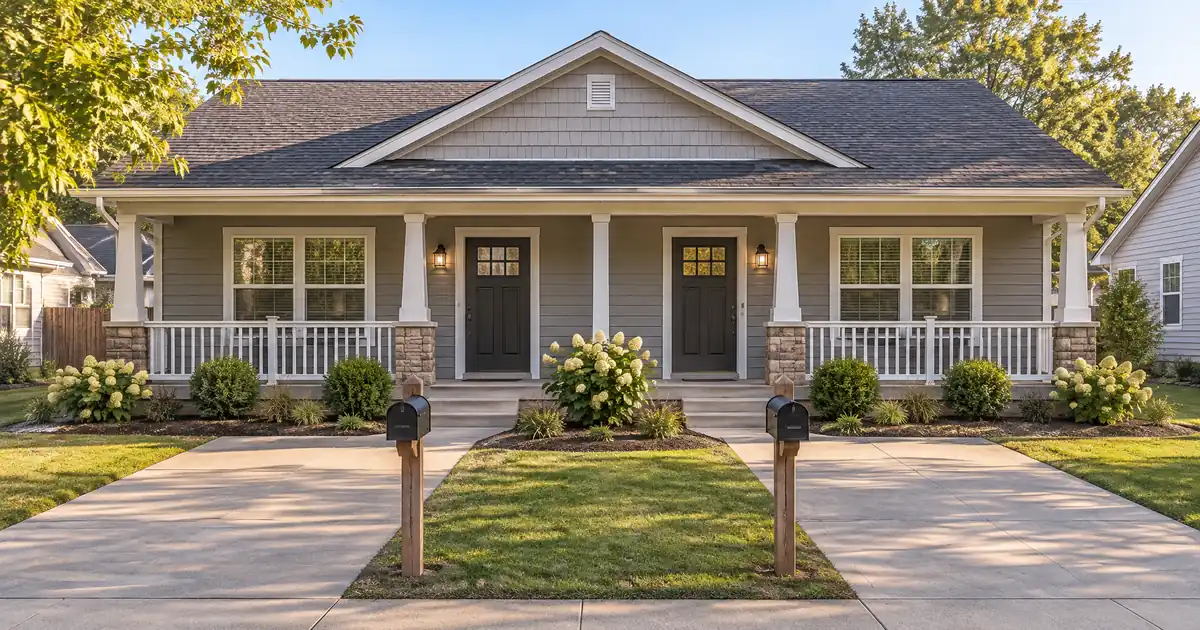
- A duplex means two legal units. A third, unpermitted unit does not turn it into a triplex.
- The rent from an illegal unit generally stays out of the coverage test, even if you collect it every month.
- Missing value also tightens combined leverage, because the line stays the same size while the property appraises lower.
- The fix is to check legal status before you order the appraisal, then legalize it, drop it from the rent roll, or choose another path.
A DSCR HELOC is a standalone second lien behind the first mortgage you keep, or a standalone first lien on a paid-off rental. The rent qualifies it, subject to lender guidelines, and your personal income is never calculated. That is exactly why the rent has to be legal rent. When the property’s income carries the whole file, the lender only counts income the appraisal supports.
Lendmire is a mortgage broker. It arranges these lines through a wholesale lender in its network and does not lend or approve them. The mechanics below come from how these files are structured across that network, and every file is underwritten individually. For the full picture of how this loan family works, see Lendmire’s complete DSCR loans guide.
What Counts as an Illegal Unit?
An illegal unit is a dwelling space used as a home without the permits, zoning approval or local legal recognition it needs. Other names for the same problem include unpermitted, unwarranted, and, in some cases, non-conforming. They are not all the same thing, and the difference matters to a lender.
Common examples:
- A finished basement apartment with its own kitchen and entrance.
- A garage or attic converted into living space.
- An in-law suite that was added without a permit.
- A third kitchen on a legal duplex.
- Commercial space that was turned into an apartment.
Some signs a unit may be illegal: a second mailbox or utility meter that the city never approved, low ceilings, no proper exit window, or a certificate of occupancy that lists fewer units than you can see on site. A second postal address does not make a property a duplex. Neither does the assessor’s use code, which can differ from legal use and zoning.
Key Terms Defined
Legal unit count: the number of dwelling units the zoning, permits and certificate of occupancy allow on the property. A duplex has two.
Unpermitted unit: a unit built or converted without the required building permits.
Legal non-conforming (grandfathered): a use that was legal when it began but no longer matches current zoning. It is not the same as illegal.
Certificate of occupancy: the local document that says a building may be lived in and for how many units.
Rent schedule: the appraiser’s report of market rent for each legal unit, usually on Form 1007 or Form 1025.
Combined loan-to-value (CLTV): the first mortgage balance plus the new line, divided by the property’s appraised value.
How Does the Appraisal Decide the Outcome?
The appraisal governs. No single federal rule tells DSCR lenders how to treat an illegal unit, because these are business-purpose investor loans rather than agency products. Each program writes its own guidelines, and in practice the appraiser’s finding drives the result.
On a two-to-four-unit property, the appraiser reports market rent on a form such as Fannie Mae Form 1025. That form makes the appraiser mark the zoning status: legal, legal nonconforming, no zoning, or illegal. This is where an unpermitted unit becomes a documented finding. Trade press in the non-QM space notes that Scotsman Guide describes lenders drawing market rent from Form 1007 or Form 1025 on investor files.
Agency programs treat this as a hard problem too. Fannie Mae’s Selling Guide points properties with an illegal second unit or ADU to 1-unit appraisal forms. That is their rule, not this program’s. The point is that nobody in lending treats an illegal unit as a minor detail.
Here is the part investors miss: collected rent does not override the appraisal. Bank deposits and a signed lease do not make a unit legal. If the appraiser flags the unit, the lender follows.
How Does It Change the Coverage Number?
The DSCR is gross monthly rent divided by the qualifying payment. On this program the minimum is 1.10x, and the qualifying payment is a fully amortizing payment on the entire credit limit at a stressed start rate. Rent is the lesser of the appraisal’s market rent and the lease, unless three months of receipts support a lease above market.
An illegal unit usually has no supported market rent. So its lease rent normally never enters the numerator. The lender’s own calculation governs, but the direction is clear.
Run the numbers on a duplex this way. With the third unit’s rent counted, the property might show coverage near 1.25x. Take that rent out, and the same property could drop toward 0.95x. That is an illustration, not a program figure. The line itself has not changed, but the rent behind it got smaller. A ratio below 1.10x on this program is below the program minimum, which means the line size or structure has to change.
If you hold a first mortgage, confirm on the file how the lender treats that first-mortgage payment in its coverage calculation. That treatment is the lender’s call.
What Does It Do to the Line Size?
The likelier cause of a smaller line is value, not rent. The appraiser gives little or no value to an unpermitted unit when it can tell the unit is unpermitted. Your first mortgage stays the same size, and the appraised value comes in lower. The combined ratio rises.
On a second lien, combined loan-to-value runs up to 70% at a 720 credit score or better, on lines from $50,000 to $500,000, subject to underwriting. On a first lien on a rental with no mortgage, loan-to-value reaches 75% at 740 or better and 70% from 700 to 739 on lines up to $500,000. Lines above $500,000 (to $1,000,000) sit at 65% LTV at 720 or better. Those are ceilings, not offers. These specifics are subject to lender guidelines and a full review of property, leverage, and credit.
So if you were counting on equity that depended on the illegal unit’s value, that equity may not be there on paper. Valuation also follows loan size. Lines to $400,000 use an automated valuation with a property inspection report, or a full interior appraisal, and larger lines take a full interior appraisal. Whichever route applies, the valuation reflects what can be documented as a legal unit, and appraisal waivers are not accepted.
The Same Duplex, Four Ways
| Scenario | Units counted | Rent in the ratio | Likely effect on the line |
|---|---|---|---|
| Both units legal | 2 | Both leases, within market rent | Full rent and value support the line |
| Two legal units plus an unpermitted third | 2 | Legal units only | Lower coverage, lower value, smaller line |
| Duplex with an unpermitted ADU | 2 | Legal units only | ADU adds little or no rent or value |
| Legal status unknown | Unconfirmed | Unconfirmed | Resolve before the appraisal is ordered |
A unit that is not a legal rental unit cannot be counted in the rent on this program’s two-to-four-unit lane, so no lease on it can stand in for rent in the ratio. Mixed-use property is not eligible. The legal units still need a lease in place, and a two-to-four-unit property may have at most 1 vacant unit.
Does Legal Non-Conforming Count as Illegal?
No. A grandfathered unit was legal when it was built and is recorded differently from an illegal one. Form 1025 treats them as separate boxes. Investors still need to confirm which kind they have, because rebuild limits can apply to grandfathered units after major damage, and those limits vary by locality. A unit that is legal non-conforming may be treated differently than one that was never permitted, but the appraiser and lender still make the final call.
Non-QM does not mean anything goes. These programs relax how income is documented. They do not relax whether the property is a legal duplex.
How Do You Check Legal Status Before You Apply?
Do this before the appraisal is ordered, not after. It costs far less to learn the answer early.
1. Pull the certificate of occupancy and any permits from the local building department.
2. Check the zoning designation and the allowed unit count with the planning office.
3. Compare the assessor’s record to the legal record, and remember the two can disagree.
4. Walk the property: kitchens, meters, entrances, egress windows and ceiling heights.
5. Ask the lender how it will treat the unit before the appraisal is ordered.
6. Gather leases for every occupied unit, the entity documents, and any permit or certificate paperwork for an additional unit. Sometimes a letter of explanation helps.
Rules differ by city and county, and enforcement differs even more. Local records beat guesses.
Legalize, Exclude, or Choose Another Path?
You have three real options, and none of them involves hoping the appraiser misses it. Some owners have never been flagged, but a missed finding does not make the unit legal. An unpermitted unit also carries real exposure: insurance may not cover it, the cost to legalize or remove it can be considerable once a city notices, and tenants in an illegal unit can gain leverage.
Legalize it. Permit the unit through the local building department. A legal unit can then be appraised and counted. This takes real money and time, and it is the cleanest long-term fix.
Exclude it. Qualify on the rent from the legal units only. If the property still clears 1.10x and the combined leverage works, the illegal unit becomes a side issue rather than a deal-breaker. Make sure your purchase price or equity picture does not depend on the extra unit.
Choose another path. If the line does not work without the unit, the property may need a different structure. A line also cannot fund an unbuilt unit, because the line is qualified on existing rent. Lendmire’s piece How to Qualify for an Investment Property HELOC on a Duplex When You Rent the Other Unit covers how the rent side is tested on a duplex.
Lenders vary here. Some will proceed if the appraisal supports marketability and legal use, while others treat an unpermitted unit as a deal-breaker even when its income is not needed. Across a wholesale network, that spread is real, which is why a broker comparing programs can matter on a borderline file.
What Else Must the Duplex Meet?
A few program basics still apply, all subject to underwriting:
- The property must be a non-owner-occupied rental. This line is never offered on your own home or a second home.
- Seasoning: a rental bought or refinanced inside the last 6 months is not eligible (that clock runs from the last note date to the new note date), and the owner must have held title for 6 months (settlement date to note date).
- At least 80% of the line is drawn at closing, with later draws of at least $5,000. The draw period is 5 years interest-only, followed by a 25-year repayment period on a 30-year maturity, at a variable rate.
- No reserves are required, and the exposure cap is 5 loans or $2,500,000 per borrower with the program.
- The LLC can stay on title, subject to program terms, with members signing as guarantors.
- This program is offered in 15 of Lendmire’s 16 licensed states, every licensed state except Tennessee.
Frequently Asked Questions
Can I get a DSCR HELOC on a duplex that has an illegal third unit?
Sometimes, if the two legal units carry the file on their own. The appraiser reports the legal configuration, and the illegal unit typically adds no rent or value. Whether a particular lender proceeds depends on the appraisal, your credit tier, and the lender’s own guidelines.
Will the lender count the rent I actually collect from the unpermitted unit?
Generally no. Collected rent does not override the appraisal. A rental-survey appraiser would not typically count rent from an illegal unit without proof that it is legal.
Does a second address or meter make my property a duplex?
No. A second postal address, a separate meter or an assessor use code does not set legal unit count. The zoning, certificate of occupancy and permits do, and they should line up with the appraisal.
What if my unit is legal non-conforming instead of illegal?
It is treated as a separate category on the appraisal form, and it is not automatically a problem. Confirm which kind you have, and check what rebuild limits apply if the building is damaged.
How long until I can use the line after buying the duplex?
Two six-month clocks apply: the line is not available on a rental bought or refinanced in the last 6 months (last note date to new note date), and title must have been held for 6 months (settlement date to note date). Programs change, and lender review controls the outcome.
If you are considering a home equity line on a rental property and want to see how the numbers work, Lendmire can help you compare DSCR HELOC options based on the property, the rent, the equity available, credit profile, combined leverage, and your goals. Call 828-256-2183 or request a quote. Qualification is subject to lender guidelines and credit approval. This is not a commitment to lend.
About Lendmire
Lendmire, NMLS# 2371349, is a mortgage brokerage with consumer lending licenses in 16 states. It arranges DSCR home equity lines of credit on rental property through wholesale lending partners in 15 of its 16 licensed states (every licensed state except Tennessee); each line is written on a non-owner-occupied one-to-four-unit rental and reviewed individually by the lender under the program’s credit and leverage guidelines. Scotsman Guide named Lendmire a Top Mortgage Workplace in both 2025 and 2026.
Get Started
Ready to find the right loan for you?
See your offer in seconds. No credit pull, no obligation.
Informational only. Not a Loan Estimate, approval, or commitment to lend. Program availability and eligibility are subject to lender guidelines, credit approval, property review, and underwriting.
References
1. Scotsman Guide, Invest in Your Future
2. Fannie Mae Selling Guide B4-1.2-01
This article is part of Lendmire’s DSCR HELOC program — full qualification details, guidelines, and scenarios live on the program page.
Related reading: When a DSCR HELOC Makes Sense Without a Cosigner · Where to Get a DSCR HELOC When the Rental Property Value Is Small · DSCR HELOC Checklist to Buy More Rental Properties
Brandon Miller
Founder & CEO, Mortgage Loan Originator, Lendmire LLC
- Mortgage Loan Originator · NMLS# 1129696 · Verify on NMLS Consumer Access
- North Carolina Real Estate Broker · License# 343312 · Verify on NCREC
- North Carolina Insurance Producer · License# 19053198 · Property, Casualty, Life, Health · Verify on NAIC SBS
- Lendmire LLC · Firm NMLS# 2371349 · Verify firm licensure
Disclosure information. Lendmire is a state-licensed mortgage brokerage under NMLS# 2371349. Lendmire is not a depository institution, direct lender, or financial advisor — all loans referenced are placed through wholesale lender partners and are subject to each lender's underwriting standards. This article is provided for general informational purposes and is not a commitment to lend, nor does it constitute financial, legal, or tax advice. Loan programs, terms, rates, and qualification standards change without notice and depend on borrower profile, property type, and the state in which the subject property is located. Equal Housing Opportunity provider. NMLS Consumer Access: nmlsconsumeraccess.org.