
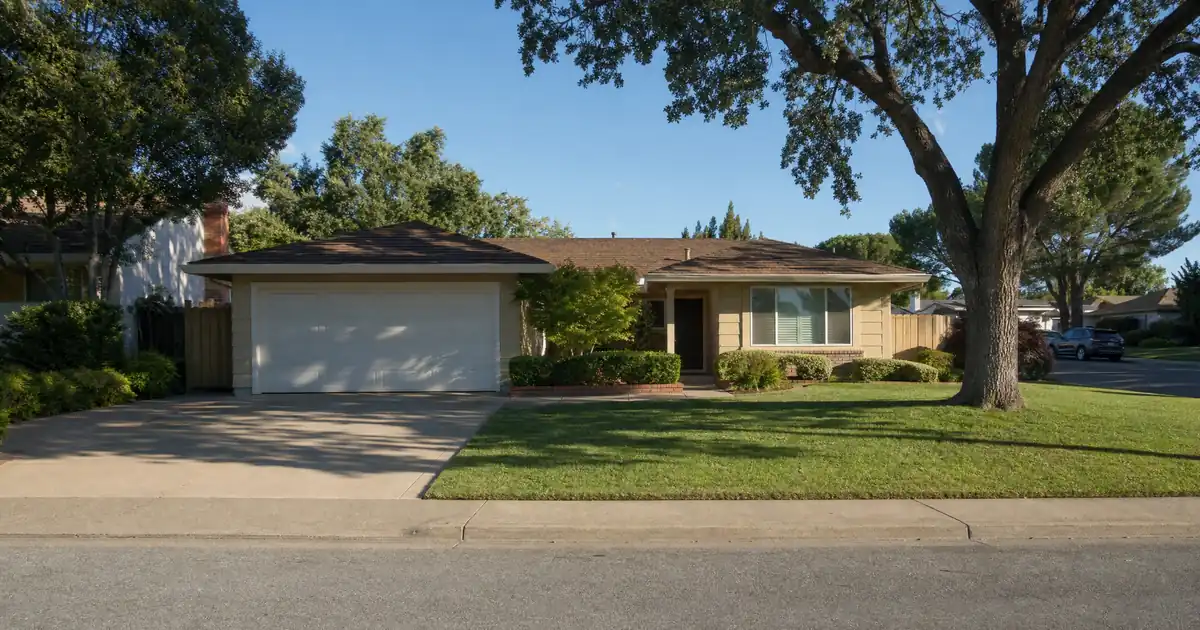
The Quick Read: Most big banks stepped back from investment-property HELOCs years ago. So the realistic list today runs to portfolio lenders, select regional banks with investor desks, credit unions, and wholesale-network programs built specifically for non-owner-occupied collateral. Where these programs exist, expect lower leverage than a primary-residence HELOC — commonly a 70% CLTV ceiling. Expect a 700 credit floor too. And expect underwriting that treats the rental like the business asset it is. A borrower whose property is titled to an LLC generally can’t use this product at all. That’s the single biggest disqualifier nobody mentions upfront.
Investors search for “what banks offer HELOC on investment property” because the honest answer isn’t a name. It’s a category problem. Big depository banks quietly narrowed or eliminated non-owner-occupied HELOC lending. The ones that stayed in the space did so with tighter leverage caps and stricter documentation than they’d apply to a primary home. That leaves three real lanes. First: a smaller pool of large and regional banks still willing to write it. Second: portfolio and credit-union lenders that keep the loan on their own books and set their own rules. Third: wholesale-network programs — the kind Lendmire arranges through select lenders — built as standalone investment-property lines from the ground up.
How large a line the equity supports in your market.
An equity line is sized by combined loan-to-value, occupancy, and credit — not by rental coverage. Switch the occupancy or the credit band and the ceiling moves with it.
Investment-property lines require a 700 minimum credit score. Second-home tiers reach 640; primary-residence tiers reach 600.
A debt-to-income ratio above 45% requires 680+ credit. Profiles under 640 are limited to single-family homes. At least 75% of the approved line is drawn at closing. Ceilings, floors, and caps update from Lendmire’s centralized guideline source.
Line estimate
Illustrative estimate only — not a quote, Loan Estimate, approval, or commitment to lend. The rate is an editable assumption; equity-line pricing is variable through both the draw and repayment periods and never converts to fixed. Occupancy and credit drive the ceiling together: investment property runs to 70% combined LTV with a 700 credit floor and a $500,000 cap; a second home runs to 70% at a 640 floor with a $500,000 cap; a primary residence reaches up to 80% at a 600 floor, and its $750,000 maximum line applies only at 75% combined LTV or below with 720+ credit and a full appraisal. Lines above $500,000 require a full appraisal. Credit, debt-to-income, property type, and full underwriting review all affect the final line.
Key Terms Defined
HELOC (home equity line of credit): an open-end, revolving credit line secured by real estate equity. You borrow, repay, and redraw during a set period, rather than receiving one lump sum.
CLTV (combined loan-to-value): the total of all liens against a property — the first mortgage plus the new line — divided by the property’s value. This is the number every investment-property HELOC program caps.
Portfolio lender: a bank or credit union that keeps loans on its own balance sheet instead of selling them. This lets it set custom underwriting rules for non-owner-occupied property.
Draw period: the phase of a HELOC when you can pull funds. You typically pay interest-only during this phase. A repayment period follows, where the balance amortizes.
Second lien position: where a HELOC usually sits, behind an existing first mortgage. This is a structural reason lenders price and underwrite it more conservatively on a rental.
Why Fewer Banks Say Yes on a Rental
The core issue is risk stacking, not product availability. A non-owner-occupied property already carries more default risk in a lender’s model than a primary home. A HELOC usually sits in second lien position behind an existing mortgage. So the lender takes subordinate risk on collateral that’s already riskier. That combination pushed a lot of large depository banks out of the investment-property HELOC business entirely. The banks that stayed tightened leverage. They also added a rental cash-flow review that most primary-home HELOC applicants never see.
Where a straight rental-secured HELOC isn’t on the table, two workarounds show up constantly in practice. The first: a HELOC secured by your own primary residence, then used on the rental. This gets underwritten as an owner-occupied product, with none of the rental-income hurdles. The second: turning to lenders built specifically around this niche. For a fuller breakdown of which lender types actually say yes and why, who offers HELOC on investment property walks through the category logic in more depth.
Where the Real Options Sit
| Lender Type | Likelihood of Offering | Typical Trade-Off |
|---|---|---|
| Large national/big banks | Low — many have exited this niche | Tightest overlays where offered |
| Regional banks w/ investor desks | Moderate | Relationship-dependent, case by case |
| Credit unions | Moderate | Membership required, portfolio-held |
| Portfolio lenders | Higher | Custom rules, may want existing deposit relationship |
| Wholesale-network programs | Higher, purpose-built | Standard leverage caps, no personal-income underwrite |
The pattern holds across markets. Local relationship lenders and credit unions tend to be more willing than a national brand. That’s because they hold the loan instead of selling it. For a market-level look at how this plays out with local institutions, local banks willing to refinance investment property covers the same relationship-lender dynamic from the refinance side.
How Underwriting Actually Treats the File
Across the wholesale network Lendmire arranges through, an investment-property HELOC is underwritten as a standalone product from day one. It’s not a repurposed primary-home line. A few mechanical realities show up on nearly every file.
Credit sits at a 700 minimum on most investment-property line programs in the network. There’s a two-tier CLTV table where 720 and 700 both commonly reach the same 70% CLTV ceiling. That means a higher score buys eligibility and stronger positioning, not extra leverage. That 70% ceiling on a rental is meaningfully tighter than what a primary-residence HELOC borrower typically sees. This leverage gap is what most investors underestimate going in.
Line sizes on investment property programs commonly run up to $500,000 total. There’s no larger investment tier above that in this structure. Because the line caps there, valuations on investment files are usually handled through an automated model rather than a traditional appraisal. A full appraisal typically only enters the picture on larger, mixed-use structures where the line size crosses that $500,000 threshold. Debt-to-income commonly runs up to a 50% ceiling. It tightens to around 45% for credit profiles in the 600s. The line is generally qualified on the interest-only payment calculated against the maximum available draw, not the balance drawn at closing.
Two draw structures exist across the wholesale network: a 3-year interest-only draw with a 17-year repayment on the higher-leverage path, and a 5-year interest-only draw with a 25-year repayment on the longer-runway path — a quoted CLTV always carries its own structure. Pricing floats through both phases. There’s no fixed-rate conversion built into the product. At least 75% of the approved line typically gets drawn at closing. This matters for cash planning. This isn’t a “draw a little now, more later” product the way a primary-residence HELOC often is.
Title matters more than most investors expect. These lines are generally written to an individual borrower or a revocable living trust. LLCs, corporations, and irrevocable trusts typically can’t hold title on this product. That’s the sharpest structural difference from a DSCR loan. It’s worth reading twice: a property already deeded into an LLC generally needs a vesting change back to the individual, or a different financing path entirely, before this line becomes an option.
Where This Product Runs Into Its Own Limits
Investment-property HELOCs aren’t a universal fit. Knowing where the product stops matters as much as knowing where it starts.
Property type eligibility is broad but not unlimited. Single-family homes, 2-4 unit properties, PUDs, townhomes, and even non-warrantable condos are commonly eligible. Manufactured homes, co-ops, condotels, timeshares, barndominiums, and log homes generally are not. These fall outside the network’s programs entirely — not just “harder to place.”
Exposure limits cap how far an investor can stretch this tool. Most programs in the network limit a single borrower to three of these lines with combined limits. An investor who already owns a large number of financed properties may fall outside eligibility altogether. That’s a real ceiling for investors scaling past a handful of doors. At some point, this specific product structure stops scaling with the portfolio, even if the equity is there.
Credit profiles under 640 face a tighter box too. Sub-640 files on this structure are generally restricted to single-family primary residences with a clean recent housing-payment history. Second-home and investment-property tiers floor at 640 and 700 respectively. So that restriction realistically only reaches owner-occupied borrowers, not rental owners.
State-level overlays show up as well. A property listed for sale, or one that was listed within the recent past, is commonly ineligible in several network states. New Mexico and Ohio apply CLTV caps that shift with the credit profile rather than a flat number. None of these are deal-killers by themselves. But they’re the kind of detail that turns a clean-looking file into a stalled one if nobody flags it early.
HELOC vs. HELOAN vs. DSCR Cash-Out — The Decision Investors Actually Face
A HELOC is a revolving line you draw against as needed. A home equity loan (HELOAN) is a single lump sum with a fixed repayment schedule from day one. A DSCR cash-out refinance replaces the existing first mortgage entirely and pulls equity out as a lump sum. It qualifies the new loan against the property’s rental income rather than your personal income.
| Feature | Investment HELOC | HELOAN | DSCR Cash-Out Refi |
|---|---|---|---|
| Structure | Revolving line, draw as needed | Lump sum, fixed schedule | Replaces first mortgage entirely |
| Reviewed on | Credit + rental cash-flow review | Credit + rental cash-flow review | Property’s rental income (DSCR) |
| Title/entity | Individual or revocable trust only | Individual or revocable trust only | LLC/entity titling commonly allowed, program-dependent |
| Typical ceiling | ~70% CLTV, up to $500,000 line | Program-dependent | Around 75% LTV on most files |
If your property is titled to an LLC, or your equity need exceeds what a $500,000 line supports, a DSCR cash-out refinance is usually the more workable path. It qualifies primarily on the property’s rental income covering the payment, subject to lender guidelines, rather than requiring the individual-name titling a HELOC demands. The full mechanics of that comparison are laid out in DSCR loan vs. HELOC for investment property. Lendmire’s complete DSCR loans guide covers how the qualification math works end to end.
Consider a rental holding equity but titled to an LLC. The HELOC route is closed by title alone, no matter how strong the coverage ratio looks. A DSCR cash-out refinance, structured typically around 75% LTV on most files with 1.00 coverage as a common program floor for select lenders, becomes the mechanically available path — assuming the file otherwise supports it, subject to lender approval.
One pattern worth noting from files across the wholesale network: investors chasing an investment-property HELOC often assume the product scales the same way a primary-home HELOC does. They expect to draw a little, use it, repay, and redraw indefinitely. In practice, the 75%-drawn-at-closing convention and the three-line exposure cap mean this product behaves more like a structured term loan with a revolving feature bolted on. It’s not an open-ended cash reserve. Investors who plan around that reality upfront avoid the surprise later.
What Investors Actually Need for Reserves and Cash Flow
DSCR loans are designed for non-owner-occupied investment properties. Because they are business-purpose investor loans, they get reviewed differently from a standard owner-occupied mortgage. That distinction matters when you compare a HELOC quote to a DSCR quote side by side. On the DSCR side, coverage compares rent against the full monthly obligation only. Clearing a 1.00 ratio doesn’t mean the property is cash-flow positive once repairs, vacancy, management, and capital expenses get counted separately. That distinction trips up more investors than any single underwriting rule.
Lendmire, NMLS# 2371349, arranges financing through select lenders across its wholesale network and does not fund or underwrite loans directly. Every scenario described here is subject to lender approval, borrower qualification, and property-level review. Nothing here is a commitment to lend, and program terms are confirmed only at the file level.
Tax treatment can depend on how you use the funds and how you hold the property. Investors should keep clear records and speak with a qualified tax professional before relying on any deduction.
Loan approval is never guaranteed, and nothing here is a commitment to lend. All scenarios described are general and subject to lender approval and borrower, property, and program guidelines. This article is for general information only and is not financial, legal, or tax advice.
For deeper background on the mechanics discussed here, see Treas and Consumerfinance.
Frequently Asked Questions
Can an LLC get a HELOC on an investment property?
Generally no. This product typically requires title in an individual borrower’s name or a revocable living trust. LLCs, corporations, and irrevocable trusts commonly can’t hold title on it. An investor whose property is already deeded to an LLC usually needs either a vesting change or a different financing structure, such as a DSCR cash-out refinance, which more commonly accommodates entity titling depending on program guidelines.
Do I need an appraisal for an investment-property HELOC?
Usually not, below a certain line size. Lines commonly up to $500,000 are typically valued through an automated model rather than a full appraisal, though you can generally request one. Full appraisals tend to enter the picture only on larger line sizes above that threshold.
Why do investment-property HELOCs cap lower than primary-home HELOCs?
Because the collateral is non-owner-occupied and the line usually sits in second lien position, lenders treat it as higher risk. They cap combined loan-to-value tighter — commonly around 70% CLTV on investment files, versus higher ceilings typical on primary-residence lines.
What credit score do I need for an investment-property HELOC?
Most programs in the network look for a 700 minimum on investment-property lines. Scores above that affect positioning more than leverage. Borrowers below that threshold generally aren’t eligible for this specific product on a rental property, though other financing structures may still apply.
Is a HELOC or a DSCR cash-out refinance better for pulling equity from a rental?
It depends on the property’s titling and the size of the equity need. A HELOC works for individually titled properties needing a smaller, flexible line up to roughly $500,000. A DSCR cash-out refinance tends to fit better for LLC-titled properties, larger equity needs, or investors who want a fixed lump sum, subject to lender guidelines in either case.
About Lendmire
Lendmire is a non-QM mortgage brokerage (NMLS# 2371349) arranging DSCR investor loans in 40 markets, including Washington, D.C. DSCR eligibility is generally reviewed around property-level rental income rather than personal income, subject to lender and program guidelines. This is a fit for self-employed investors and LLC-owned portfolios. Lendmire was recognized as a Scotsman Guide Top Mortgage Workplace in 2025 and 2026.
Lendmire’s Top Mortgage Workplace recognition is documented by Scotsman Guide 2025 Top Mortgage Workplace and Scotsman Guide 2026 Top Mortgage Workplace.
Get Started
Ready to find the right loan for you?
In about 30 seconds you can review financing options available for your home or investment property. No commitment required.
Informational only. Not a Loan Estimate, approval, or commitment to lend. Program availability and eligibility are subject to lender guidelines, credit approval, property review, and underwriting.
References
1. Treas
Brandon Miller
Founder & CEO, Mortgage Loan Originator, Lendmire LLC
- Mortgage Loan Originator · NMLS# 1129696 · Verify on NMLS Consumer Access
- North Carolina Real Estate Broker · License# 343312 · Verify on NCREC
- North Carolina Insurance Producer · License# 19053198 · Property, Casualty, Life, Health · Verify on NAIC SBS
- Lendmire LLC · Firm NMLS# 2371349 · Verify firm licensure
Legal disclosures. Lendmire (NMLS# 2371349) is a state-licensed mortgage brokerage that arranges financing through wholesale lender relationships. Lendmire is not a direct lender, depository institution, or registered financial advisor. The discussion above is general informational content about real estate financing — it is not financial, legal, or tax advice, and readers should consult licensed professionals for guidance on their individual circumstances. Loan inquiries are subject to lender underwriting; this article does not represent a commitment to lend. Loan terms, rates, and qualification standards vary by borrower, property, and state, and are subject to change at any time. Equal Housing Opportunity. NMLS Consumer Access: nmlsconsumeraccess.org.


