
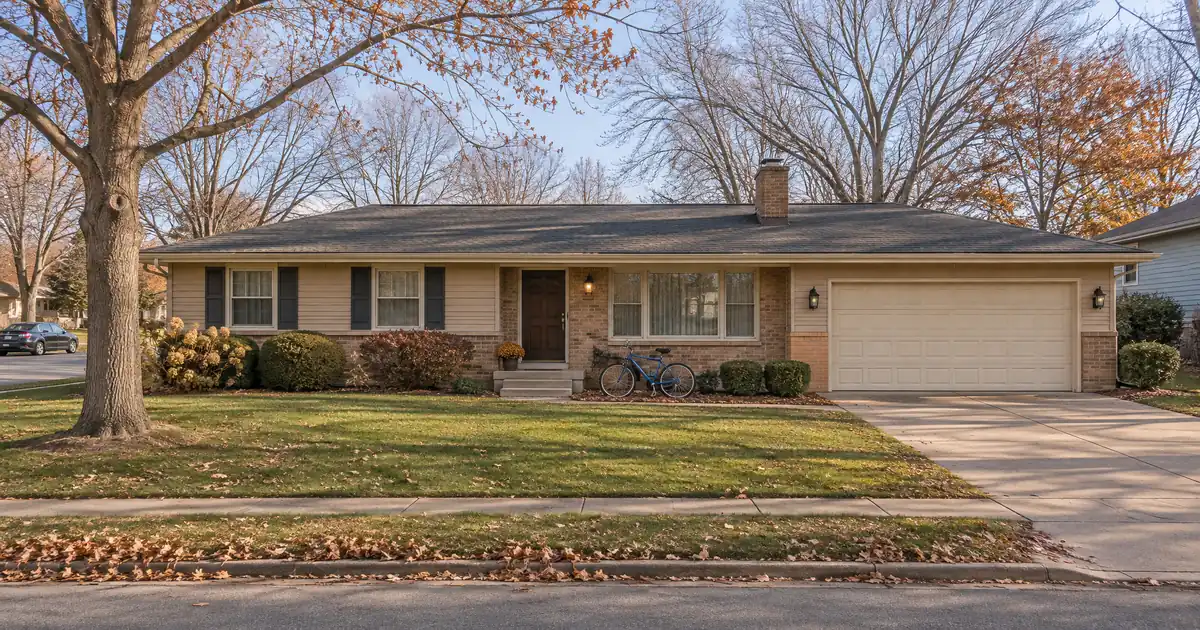
The Quick Read: Usually not, because a relative living in the home rent-free generally breaks the non-owner-occupied rental premise that an investment property line is certified on, and with no lease rent there is nothing for a lender to count as tenant income, so the file typically needs a different occupancy classification or a different product. The label on the property is decided by who lives there, not by who owns it. The rest of this piece covers how lenders classify the situation, the edge cases, and what to do instead.
- On Lendmire’s wholesale network, an investment property line tops out at 70% CLTV, with a 700 credit minimum and a $500,000 maximum line.
- A lease at fair rent can help the file, though acceptance for a family occupant depends on the program.
- A property that holds a real tenant, or a different asset, is the cleaner base for the line.
- Calling the property something it is not is a misrepresentation risk, not a paperwork detail.
How Do Lenders Classify a Rent-Free Relative?
Lenders classify the property at application as a primary home, a second home, or an investment property. A rent-free relative does not fit the investment label. Across the network, investment programs expect the borrower and immediate family to stay out of the subject property. A lease to a family member does not always change that.
How large a line the equity supports.
An equity line is sized by combined loan-to-value, occupancy, and credit — not by rental coverage. Switch the occupancy or the credit band and the ceiling moves with it.
Investment-property lines require a 700 minimum credit score; second-home lines start at a 640 minimum and primary-residence lines at 600, and the combined-LTV ceiling steps down as the credit band drops on primary-residence and second-home lines and holds on investment-property lines; the line cap steps down on primary-residence lines and holds at every tier on investment-property and second-home lines.
A debt-to-income ratio above 45% requires 680+ credit. Profiles under 640 are limited to single-family homes. At least 75% of the approved line is drawn at closing. Ceilings, floors, and caps update from Lendmire’s centralized guideline source.
Line estimate
Illustrative estimate only — not a quote, Loan Estimate, approval, or commitment to lend. The rate is an editable assumption; equity-line pricing is variable through both the draw and repayment periods and never converts to fixed. Occupancy and credit drive the ceiling together: an investment property tops out at 70% combined LTV (minimum credit 700, line cap $500,000); a second home tops out at 90% combined LTV (minimum credit 640, line cap $500,000), with the ceiling stepping down as the credit band drops (the cap holds at every tier); a primary residence tops out at 90% combined LTV (minimum credit 600), and its $750,000 maximum line is available only at 75% combined LTV or below with a 700-or-better credit profile (720 on the longer-runway program) and a full appraisal. Lines above $500,000 require a full appraisal. Credit, debt-to-income, property type, and full underwriting review all affect the final line.
Here is how the common situations usually sort out.
| Situation | Likely classification | What counts toward qualifying | What to disclose |
|---|---|---|---|
| Relative rent-free | Not a clean investment | No rent counted | Who lives there |
| Relative at fair rent, lease | Program-dependent | Rent only if program allows family | Lease, payment proof |
| Relative at below-market rent | Questionable | Little or none | Actual rent paid |
| Vacant, listed to rent | Investment | Borrower credit and equity | Vacancy status |
| You live there | Primary or second home | Borrower profile | Your residence |
The investment line itself is mostly a credit and equity product. The line is judged on the borrower’s credit, debt-to-income, and combined leverage rather than on rent. So a reader might assume occupancy does not matter. It does. The line is sold and signed as non-owner-occupied, and the borrower certifies that at application.
Key Terms Defined
Investment property: A home the borrower does not live in, held to earn rental income from an unrelated tenant.
Occupancy certification: The signed statement of how the property will be used, which the lender relies on when it classifies the loan.
CLTV: Combined loan-to-value, meaning all liens on the property added together and divided by its value.
Arm’s-length tenant: A renter with no family or financial tie to the owner, paying market rent under a written lease.
Non-owner-occupied: A property where neither the borrower nor the borrower’s household lives.
Why Rent-Free Is Not the Same as Vacant
Vacant and rent-free are different facts. A vacant unit is waiting for a tenant. A rent-free relative is an occupant who will not be leaving on a lease schedule and is not paying.
A lender sees a family member in the home as personal use. Tax law reads it the same way. Rent charged below a fair rental price is treated as personal use of the dwelling, and the family-member exception only applies when the relative uses the home as a main home and pays a fair price. Rent-free use fails that test. Tax treatment varies; consult a qualified professional, and see IRS Publication 527 for how personal use is defined.
An LLC does not change this. Members and their families are still occupants. Beyond that, an equity line on this network cannot be vested in an LLC at all, since title has to sit with the individual borrower or a revocable living trust. A property already deeded to an entity needs a vesting change, or a different product.
What Does the Lender Check?
The lender cross-checks the story against the file. The typical items are the mailing address on the application, the insurance policy and its named insured, any lease or rent roll, and the appraisal or valuation notes on occupancy. The borrower’s own housing history sits next to those items.
An investment line of up to $500,000 usually runs on an automated valuation rather than a traditional appraisal. That means an occupancy note from an inspector is less likely to surface. It does not mean the other documents line up on their own. The insurance quote and the mailing address still tell a lender who lives where.
Consistency matters more than any single item. If the application says tenant-occupied while the insurance says owner or family, the file has a conflict on its face.
What Is the Misrepresentation Risk?
Misstating how a property will be used is a recognized category of mortgage fraud. FinCEN’s mortgage fraud advisory describes occupancy fraud as a borrower claiming one use for a property to obtain more favorable terms. The classic version is a borrower claiming to live in a home that someone else occupies. Calling a family-occupied home a rental is the reverse of that, but the principle is the same: the loan is priced on a label that is not true.
A false label is not a harmless paperwork error, and hiding a family member is never the answer. The better course is to disclose the situation at the start and let the lender classify it.
What About the Edge Cases?
A relative pays fair rent on a written lease. This is the closest to a genuine rental. Even so, program rules differ. Some programs treat family tenants as acceptable with market rent and proof of payment. Many bar immediate family regardless of rent. The answer turns on how the specific program defines family.
A relative lives in one unit of a 2-4 unit building. If the borrower or family occupies a unit, the building is generally not a pure investment property. A rent-free relative in one unit is typically ineligible for an investment classification. The fix is to move the relative out, put them on a program-compliant lease, or use a different track. Lendmire’s piece How to Qualify for an Investment Property HELOC on a Duplex When You Rent the Other Unit covers the owner-occupied side of that question.
You live rent-free at a parent’s home while owning a rental elsewhere. That is fine for the rental. The rule applies to the property being borrowed against, not to where the borrower sleeps. The rental still needs to be non-owner-occupied.
A relative moves in after the line is open. The line was classified as non-owner-occupied at application. A later change in occupancy can conflict with the occupancy covenants in the note and mortgage. Read those terms and talk to the lender before the move, not after.
The relative holds title or co-signs. That is a separate question from occupancy, and it changes who the borrower is. Title must be held by the individual borrower or a revocable living trust, and every titleholder is part of the review.
Worked Example: The Same Property, Two Outcomes
Run this as a thought exercise with no dollar figures. An owner holds a house with strong equity and no mortgage. A sibling lives there at no charge.
In the first version the owner applies for an investment line. The application says tenant-occupied. The insurance shows a family-member occupant. The file has a mismatch, and the occupancy certification would be inaccurate.
In the second version the sibling moves out, a market-rent tenant signs a written lease, and rent is paid by traceable transfer. The owner then applies. The classification is clean. Because an investment line is judged mainly on credit and equity, the rent adds support rather than carrying the file.
The equity is identical in both. The lender’s willingness to classify the loan is not.
What Does the Network Actually Allow on an Investment Line?
If the property is a true non-owner-occupied rental, these are the parameters on Lendmire’s wholesale network, subject to lender guidelines and full file review:
- Maximum leverage: 70% CLTV on an investment property. Market surveys report 80% for investment lines in general, per NerdWallet’s overview of investment property HELOCs, but the network figure for an investment property is 70%.
- Credit: a 700 minimum. A 720 score does not raise investment leverage above 70%.
- Line size: $25,000 up to $500,000 on an investment property. Larger lines exist only for primary residences.
- Structure: a standalone first- or second-lien line with a 5-year interest-only draw and a 25-year repayment period. At least 75% of the line is drawn at closing.
- Debt-to-income: 50% maximum, subject to the credit tier.
- Valuation: usually automated at this size.
- Eligible property: single-family, 2-4 units, PUD, townhome, and condominium. Manufactured homes, co-ops, condotels, and log homes are not offered.
- Availability: HELOC placements are limited to 16 full-service states, which is narrower than the 41-market DSCR footprint, Washington, D.C. included.
If the relative is on a primary-residence or second-home line, the structure and ceilings differ. On those occupancies, leverage can reach 90% CLTV, but only at a 720-or-better profile. That is a different file with a different classification, so it needs an honest occupancy declaration of its own.
When a Different Product Fits Better
When a relative is in the home, four options are worth weighing.
1. Put the relative on a genuine lease. This only works if the program allows family tenants. Get the lender’s rule in writing first.
2. Reclassify the loan. If the relative lives there and the owner treats the home as their own, a second-home or primary-residence line may be the accurate category.
3. Borrow against a different asset. The owner’s own home or a tenant-occupied rental may carry the line instead.
4. Wait for a true tenant. Once an unrelated tenant is in place under a lease, the investment classification is clean.
A rental that already has a real tenant may suit a rental-income loan better than an equity line. On the DSCR side, programs across the network typically run to 75%-80% LTV on a purchase and around 75% on a cash-out refinance, with about 6 months of seasoning as the common expectation. A 1.00 coverage ratio is where select programs start, and a separate select-lender path goes below 1.00 with leverage and terms adjusted. Credit floors start near 620 in parts of the network, most programs want about 660, and 700 and above opens the strongest leverage tiers. A DSCR loan is reviewed primarily on property-level rental income covering the payment, subject to lender guidelines. That means a rent-free relative leaves nothing to test. Lease rent that covers the full payment is the starting point. Entity-held rentals can go this route, subject to lender program eligibility.
One caution. Clearing 1.00 coverage is not the same as positive cash flow. The ratio compares rent to principal, interest, taxes, insurance, and dues. Repairs, vacancy, management, and capital costs sit outside it. The complete DSCR loans guide from Lendmire covers the full rental-income side.
What Should You Tell the Lender, and When?
Tell the lender at the start. Before applying, collect:
- the names of everyone who lives in the property;
- a copy of any lease and proof of rent payments;
- the insurance declarations page;
- title or trust documents showing how the property is held;
- proof of your own primary residence elsewhere.
A file with clean occupancy documents gives the reviewer fewer preventable gaps. It does not guarantee an outcome, but it keeps the conversation about leverage and credit rather than about a mismatch.
Frequently Asked Questions
Can I get an investment property HELOC if my adult child lives in the home and pays nothing?
Typically not as an investment line. Family occupancy generally conflicts with the non-owner-occupied certification. The owner can instead look at a different asset, a different occupancy classification, or a lease that the specific program accepts for family.
Does charging a relative rent solve the problem?
Sometimes, but not reliably. Fair rent under a written lease with documented payments makes the situation look like a rental. Many programs still bar immediate family from the property regardless of rent. Ask the lender how it defines family before you rely on a lease.
Does putting the house in an LLC avoid the occupancy question?
No. Occupancy turns on who lives there, not on the owner’s legal form. On an equity line the entity is also a problem on its own, since an LLC cannot hold title under the network’s HELOC programs. Entity-held rentals can use DSCR, subject to program terms.
What if my relative moves in after the line is open?
Review the occupancy covenants in your note and mortgage first. The line was classified at application, and a later change can conflict with that classification. Speak with the lender before the move so the loan can be addressed accurately.
Does rent matter on an investment HELOC at all?
Less than people expect. The line is judged mainly on credit, debt-to-income, and combined leverage, so rent mostly supports the file. That is why a vacant rental and a tenant-occupied rental can both work, while a family-occupied home raises an occupancy flag.
If you are considering a home equity line and want to see how the numbers work, Lendmire can help you compare HELOC options based on the property, the equity available, credit profile, combined leverage, and your goals.
About Lendmire
Lendmire, NMLS# 2371349, is a mortgage brokerage that arranges home equity lines of credit through wholesale lending partners in its 16 full-service states. Lines on primary residences, second homes and investment properties are each reviewed individually by the lender under the program’s occupancy, credit and combined-loan-to-value guidelines. Scotsman Guide named Lendmire a Top Mortgage Workplace in both 2025 and 2026.
Get Started
Ready to find the right loan for you?
See your offer in seconds. No credit pull, no obligation.
Informational only. Not a Loan Estimate, approval, or commitment to lend. Program availability and eligibility are subject to lender guidelines, credit approval, property review, and underwriting.
References
2. FinCEN Mortgage Fraud Advisory FIN-2012-A009
3. NerdWallet’s overview of investment property HELOCs
This article is part of Lendmire’s investment property HELOC program — full qualification details, guidelines, and scenarios live on the program page.
Related reading: How Much Can You Borrow on a DSCR HELOC on Investment Property ROI? · How an Investment Property HELOC Works to Fund Business Equipment
Brandon Miller
Founder & CEO, Mortgage Loan Originator, Lendmire LLC
- Mortgage Loan Originator · NMLS# 1129696 · Verify on NMLS Consumer Access
- North Carolina Real Estate Broker · License# 343312 · Verify on NCREC
- North Carolina Insurance Producer · License# 19053198 · Property, Casualty, Life, Health · Verify on NAIC SBS
- Lendmire LLC · Firm NMLS# 2371349 · Verify firm licensure
Important disclosures. Lendmire (NMLS# 2371349) is a licensed mortgage brokerage. Lendmire is not a direct lender, depository institution, or financial advisor. All loan inquiries are subject to lender underwriting; this article does not constitute a commitment to lend. Rates, terms, and program guidelines are subject to change without notice and vary by borrower profile, property type, and state. Information in this article is general in nature and is not financial, legal, or tax advice. Equal Housing Opportunity. NMLS Consumer Access: nmlsconsumeraccess.org.