
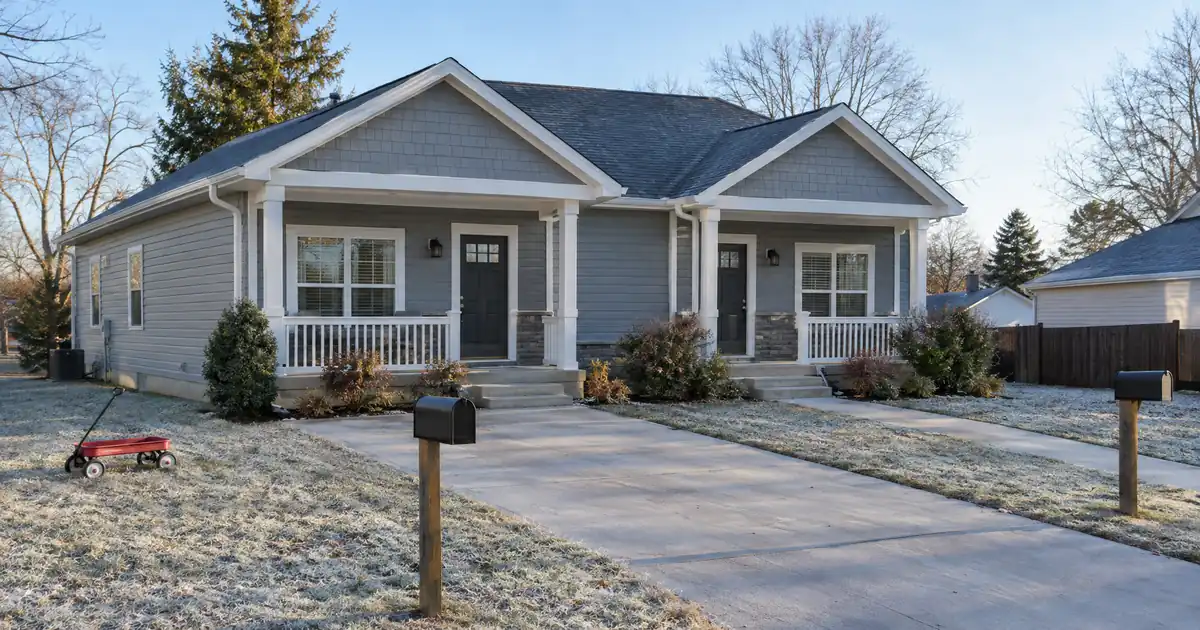
The Quick Read: A multi-project flipper should usually keep the core of the pipeline in 2-4 unit deals and step into 5-to-10-unit buildings selectively, because the 2-4 file is underwritten mainly on the deal (price, rehab scope, after-repair value) while the larger building adds an income-property review on top of it.
- 2-4 units: standardized residential-style appraisal, a simpler package, and the strongest-fit lane for repeat flips.
- 5-to-10 units: a commercial-style appraisal, a rent roll, and operating statements are common.
- Leverage on the current program is tiered by documented completed projects and capped against after-repair value.
- Hard money on this program covers non-owner-occupied residential up to four units; units five through ten fit only as ground-up construction.
- Both are short-term, interest-only tools, so the exit plan decides which one fits.
The honest answer on who each option is for: the 2-4 unit loan is for the flipper who wants repeatable, predictable projects and can run several at once without each file becoming a custom job. The 5-to-10-unit structure is for the investor who has a specific building thesis, such as a value-add rehab or a ground-up build, and who is comfortable being judged on the building’s numbers as well as their own track record. One caveat up front: on Lendmire’s current hard money program sheet, collateral is non-owner-occupied residential property of one to four units, and ground-up construction can go to ten units. A purchase-and-rehab flip of an existing 5-to-10-unit building is therefore a different conversation, and eligibility varies by lender, property, and experience.
What this loan actually costs to carry.
Hard money is sized against the project and priced by time. Enter the deal and see how much the program will lend, the cash required at closing, the carry while you hold it, and what is left at the exit.
Leverage tiers on the current program: 85% with fewer than 2, 90% with 2 or more, 93% with 5 or more completed projects — every tier capped at 75% of after-repair value. Loan amounts up to $5,000,000, larger by exception; terms of 6 to 18 months, interest-only, no prepayment penalty. The rehab portion funds in draws against completed work, not at closing.
Program parameters shown update from Lendmire’s centralized guideline source. Rate, points, and months are editable assumptions, not quoted terms.
Cost cap sets the loan · positive spread
Illustrative estimate only — not a quote, Loan Estimate, approval, or commitment to lend. Rate, points, and months are editable assumptions. Hard money is business-purpose financing for real estate investors, not a consumer mortgage. Leverage on the current program tops out at 93% of project cost for investors with a documented track record, capped at 75% of after-repair value, with rehab funding up to 100% of the documented budget released in draws; actual terms vary by lender, borrower experience, property, and exit. Lendmire is a mortgage broker, not a lender.
Side-by-Side
The table below compares the two lanes using published industry norms for the 5-to-10 column and the network’s program sheet where noted. It leaves out pricing on purpose. That lives in the calculator only.
| Factor | 2-4 Unit | 5-to-10 Unit |
|---|---|---|
| Review basis | ARV, rehab scope, experience | Same, plus building income |
| Appraisal type | Small residential income report | Commercial, income-approach report |
| Income analysis | Rent comps; sales comps drive exit | Rent roll, operating statements, NOI |
| Entity vesting | Usually an LLC or corporation | Entity borrower, often with guaranties |
| Program fit (network) | Non-owner-occupied, 1-4 units | Ground-up construction to 10 units |
| Timeline | Shorter file build | Longer file build |
| Reserves | Liquidity for draws and carry | Liquidity for draws, carry, vacancy |
| Exit | Sale or DSCR refinance | Commercial refinance or sale |
The unit-count line is a market convention, not a statute. The Fannie Mae Selling Guide lists the Small Residential Income Property Appraisal Report (Form 1025) for two- to four-unit properties, and that is the practical reason the split exists. Hard money and DSCR loans are not agency products, so treat that as a form-name reference only. Buildings above four units generally move to a commercial-style appraisal.
How Underwriting Differs, Step by Step
On a 2-4 unit flip, the reviewer asks three questions. What is the purchase price? What does the rehab cost? What will the property be worth after repairs, based on comparable sales? Rent comps appear in the appraisal, but a flip exit leans on sales comps. Then the file looks at the borrower: entity documents, credit, liquidity, and the number of completed projects.
On a 5-to-10 unit building, those questions stay, and a second layer arrives. Reviewers commonly want a current rent roll showing each unit’s rent, lease terms, and occupancy, along with trailing operating statements. Income is measured as net operating income, meaning expenses and vacancy come out before debt service is considered. At 2-4 units, a DSCR-style review compares gross monthly rent to the full housing payment (principal, interest, taxes, insurance, and any HOA dues). The two measures are not interchangeable, which is why a flipper moving up in size should not assume the same math carries over.
A value-add renovation on a larger building may be underwritten to a projected stabilized rent roll instead of the pre-renovation one. That can help the story, though it also puts more weight on the sponsor’s plan and experience.
Rehab and Draws on Each Size
Rehab money on both structures typically sits in a holdback and is released in draws against completed work. Up to 100% of the rehab budget can fund in draws, which is a rehab-budget figure and never a purchase loan-to-value number. Each draw generally needs proof of progress, such as photos or an inspection.
For a 2-4 unit rehab, the draw schedule is fairly predictable. A larger building adds moving parts: occupied units, tenant turnover, and the question of whether the rent roll will be rebuilt mid-project. A delayed unit turn on a duplex is an annoyance. On an eight-unit building, a stalled renovation can leave several units idle at once and quietly undercut the stabilized income the exit depends on.
What Leverage Looks Like on the Network
Across the wholesale network, fix-and-flip leverage is tiered by documented completed projects and measured against project cost. Typical structures run:
- 93% of project cost at five or more completed projects.
- 90% of project cost at two or more completed projects.
- 85% of project cost with fewer than two completed projects.
- Every tier capped at 75% of after-repair value.
Bridge purchases without rehab run up to 80% of purchase price, and cash-out and rate-and-term refinances run up to 65% of value. Ground-up construction can reach 90% of cost and 75% of completed value at three or more completed projects. Loan amounts run up to $5,000,000, with larger by exception. Terms are six to eighteen months, interest-only, with no prepayment penalty, and the minimum credit score is 620 with additional conditions below 660. All of this varies by lender, property, and experience, and nothing here is a commitment to lend.
Here is the part that matters for a flipper: the top leverage tier rewards volume. A borrower who has finished five projects sits in a stronger position than one with a single flip, regardless of unit count. If your completed projects are mostly duplexes and fourplexes, stepping into a larger building means that experience may or may not be treated as similar, which is a conversation to have before you sign a contract.
Running Several Projects at Once
Concurrent projects mean concurrent holdbacks, draw cycles, and appraisals. The constraint for most flippers is not the loan ceiling. It is liquidity between draws, because each draw reimburses completed work after you have already paid for it.
This is where the 2-4 unit lane earns its place in a pipeline. Files are more standardized, draws are simpler to forecast, and a delay on one project is less likely to cascade. A 5-to-10 unit project tends to demand more of your attention and more of your documents, so it competes with the rest of your pipeline for time as well as cash. Think of the larger building as a project that needs its own plan for operating statements, vacancy, and tenant management, not just another line in the schedule.
Entity structure matters as well. Lenders generally want the borrower to be an LLC or corporation, with an operating agreement, articles of organization, and an EIN on file, subject to lender program eligibility. How you split projects across entities is a legal and tax question for your attorney and CPA, not a lending rule.
Experience from working files like these shows a recurring pattern: flippers who run into trouble moving up in size rarely fail on the purchase loan. They stumble on the gap between the rehab timeline and the exit. A larger building’s exit depends on stabilized income, so if lease-up runs behind schedule, the short-term loan’s term becomes the pressure point.
When a 2-4 Unit Loan Is the Better Fit
Pick the 2-4 unit lane when most of these are true:
- You run, or plan to run, several flips at the same time and need predictable draws.
- Your exit is a sale on comparable sales, or a refinance into long-term rental financing.
- Your completed-project count is climbing and you want it to move you into a higher leverage tier.
- You prefer a simpler document package and a standardized appraisal.
Many investors refinance out of hard money into long-term DSCR financing once the property is stabilized, and Lendmire brokers that path. On 2-4 units, that refinance compares rent to the monthly housing payment. For standard rentals, DSCR purchase leverage typically lands at 75% to 80% LTV and cash-out tops out around 75% LTV, with coverage of 1.00 where many select programs start, while a separate select-lender path takes coverage below 1.00 with leverage and terms adjusted. Clearing 1.00 is not the same as positive cash flow, since repairs, vacancy, management, and capex sit outside the calculation. Lendmire’s piece 2-4 Unit vs 5-to-10-Unit Hard Money Loan Leverage, Draws and Exit goes deeper on that sequencing.
When a 5-to-10 Unit Loan Is the Better Fit
The larger structure suits a narrower investor. Consider it when:
- You have a defined building thesis, such as a ground-up build or a value-add plan, that the building’s income supports.
- You can produce a clean rent roll and operating statements, or a credible projected rent roll.
- Your exit is a commercial-style refinance on stabilized income rather than a quick resale.
- You have enough liquidity to carry vacancy and draw timing without starving your other projects.
Be candid about the tradeoff. Experience on duplex flips does not automatically count the same as experience on an eight-unit rehab. If the building’s numbers are thin or its history is messy, the bigger lane gets harder, not easier. For the longer-term side of the same decision, Lendmire’s piece DSCR Residential 2-4 Unit vs Multifamily 5-10 Unit Loan covers what happens after the flip.
Mixed-use and commercial-zoned buildings add another wrinkle. Residential-style flip programs commonly treat those as ineligible, so check the property against program eligibility before you spend money on diligence.
Business-Purpose Basics
Both loans are normally business-purpose, non-owner-occupied investor loans, reviewed differently from a standard owner-occupied mortgage. Federal consumer-credit rules turn on the purpose of the loan, not the number of units, and Regulation Z exempts credit extended primarily for a business or commercial purpose. That means a flipper buying a fourplex and one buying a seven-unit building generally sit on the same side of that line. Occupancy still matters. If you plan to live in a unit, the file is a different kind of loan.
Key Terms Defined
- After-repair value (ARV): The estimated value of the property once the planned renovation is finished, based on comparable sales.
- Loan-to-cost: The loan amount measured against the total project cost (purchase plus rehab), rather than against value alone.
- Rent roll: A unit-by-unit list of current rents, lease terms, and occupancy for an income property.
- Net operating income (NOI): Rental income minus operating expenses and vacancy, before debt service.
- Draw: A release of rehab funds from the holdback after completed work is documented.
The Verdict
Treat this as a pipeline decision, not a loan-product decision. For a flipper with several projects in motion, 2-4 unit deals deliver the repeatable file, the clearer draw schedule, and the experience count that unlocks higher leverage tiers. The 5-to-10-unit lane is a deliberate step for investors with a building-specific plan, documented operating numbers, and enough liquidity to absorb a slower lease-up. Where the two conflict, protect the pipeline first.
If you are buying, rehabbing or refinancing an investment property on a short timeline and want to see how the numbers work, Lendmire can help you compare hard money options based on the project, the exit plan, leverage, and your goals. Lendmire is a broker arranging financing through select lenders in its wholesale network across 41 markets, including Washington, D.C. For the full picture of long-term exits, see the complete DSCR loans guide.
Frequently Asked Questions
Can hard money fund a duplex, triplex, or fourplex flip?
Yes, 2-4 unit non-owner-occupied residential property is the core of the program. Leverage is tiered by completed projects and measured against project cost, with every tier capped at 75% of after-repair value. Terms and eligibility vary by lender, property, and experience.
Does a 5-to-10 unit building use the same loan?
Not in the same way. The network’s program sheet covers one to four units, with ground-up construction available to ten units. Lenders publish different bands for larger buildings, so a purchase-and-rehab of an existing building in that range needs a property-specific review.
Can I borrow through an LLC?
Usually. Lenders generally expect an entity borrower with an operating agreement, articles of organization, and an EIN, subject to program terms. A personal guaranty is common, and a guarantor does not change the purpose of the loan.
How do I plan reserves across multiple projects?
Budget for the gap between paying contractors and receiving draws on every active project at once. Larger buildings add vacancy and carry. Keep liquidity for the busiest week of your pipeline, not the average one.
What replaces the hard money loan on a stabilized property?
A 2-4 unit often exits by sale or a DSCR refinance, which compares rent to the housing payment. A larger building more often exits through a commercial-style refinance based on NOI. If the exit slips past the loan term, that is the main risk to plan around.
For current hard money guidelines and terms, see Lendmire’s hard money loan program page.
About Lendmire
Lendmire (NMLS# 2371349) is a mortgage brokerage focused on DSCR investor financing, helping arrange programs through wholesale and investor-lending channels in 41 markets, including Washington, D.C. DSCR loans are evaluated by the lender on property cash flow rather than personal income, subject to lender guidelines, supporting LLC closings and accommodating investors with four or more financed properties. Scotsman Guide Top Mortgage Workplace in both 2025 and 2026.
Get Started
Ready to find the right loan for you?
In about 30 seconds you can review financing options available for your investment property. No commitment required.
Informational only. Not a Loan Estimate, approval, or commitment to lend. Program availability and eligibility are subject to lender guidelines, credit approval, property review, and underwriting.
References
2. CFPB, Regulation Z §1026.3 Exemptions
This article is part of Lendmire’s hard money loan program — full qualification details, guidelines, and scenarios live on the program page.
Related reading: Hard Money vs Bank Loan Requirements for a Rental Purchase · Can a Two-Project Rehabber Use Gap Funding With Hard Money? · Hard Money Multifamily Loan Documentation for Two to Four Units
Brandon Miller
Founder & CEO, Mortgage Loan Originator, Lendmire LLC
- Mortgage Loan Originator · NMLS# 1129696 · Verify on NMLS Consumer Access
- North Carolina Real Estate Broker · License# 343312 · Verify on NCREC
- North Carolina Insurance Producer · License# 19053198 · Property, Casualty, Life, Health · Verify on NAIC SBS
- Lendmire LLC · Firm NMLS# 2371349 · Verify firm licensure
Legal disclosures. Lendmire (NMLS# 2371349) is a state-licensed mortgage brokerage that arranges financing through wholesale lender relationships. Lendmire is not a direct lender, depository institution, or registered financial advisor. The discussion above is general informational content about real estate financing — it is not financial, legal, or tax advice, and readers should consult licensed professionals for guidance on their individual circumstances. Loan inquiries are subject to lender underwriting; this article does not represent a commitment to lend. Loan terms, rates, and qualification standards vary by borrower, property, and state, and are subject to change at any time. Equal Housing Opportunity. NMLS Consumer Access: nmlsconsumeraccess.org.