
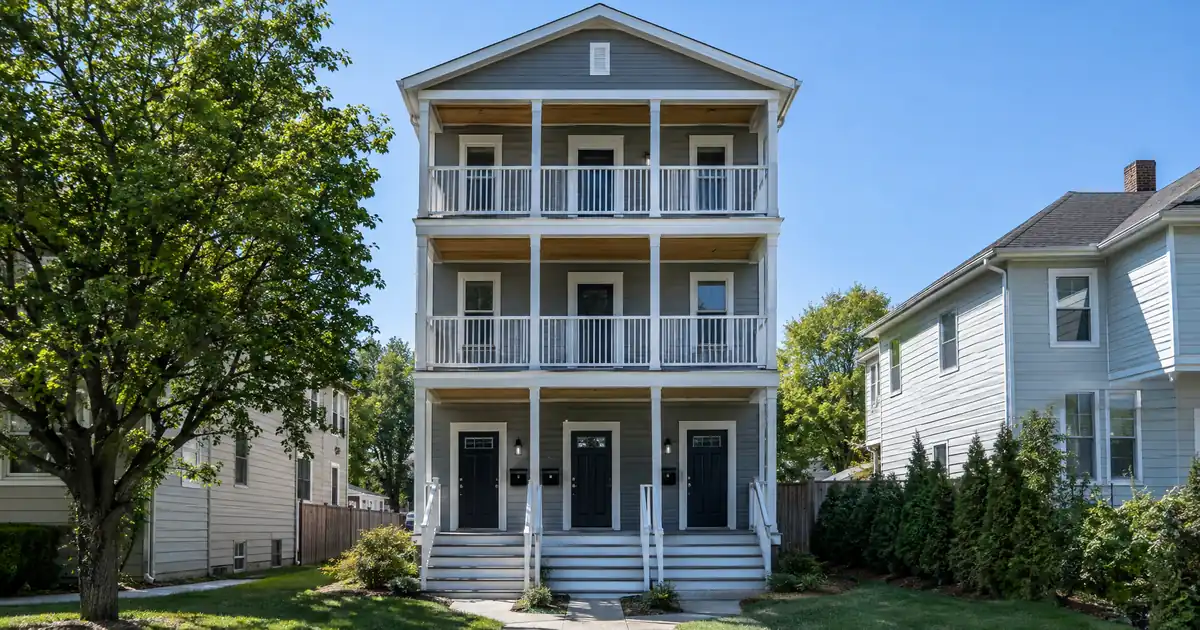
The Quick Read: On a 2–4 unit BRRRR exit, the lender’s appraiser sets the value that caps the loan, and your after-repair estimate does not. The appraisal builds value mainly from closed comparable sales, with a rent schedule that feeds the coverage test separately. Value and rent are two independent tests, and the finished property has to clear both.
- Cash-out on an investment property tops out around 75% LTV across most of the network, with about 6 months of seasoning from title recording.
- Every dollar the appraisal misses your plan by shrinks the loan by 75 cents of that dollar, and you cover the gap in cash.
- Rehab spend is not value. Appraisers credit what buyers pay for finished product, not what contractors billed you.
- Coverage starts at 1.00 on select programs. It compares rent to PITIA only, and it is not the same as positive cash flow.
- A reconsideration of value has to go through the lender, with closed sales as evidence. Each figure is subject to lender guidelines and a complete review of property type, leverage, and credit.
The article below walks the appraisal from order to loan size, then covers where the usual rule breaks. Program details are subject to lender guidelines and are not a commitment to lend.
DSCR Cash-Out Calculator
Run the cash-out numbers in your market
Rate source: Freddie Mac 30-yr average via FRED® — Federal Reserve Bank of St. Louis · effective Oct 8, 2026
Prefilled with starting assumptions — enter your property’s value, balance, taxes, and insurance for a more accurate picture.
Program parameters update from Lendmire’s centralized guideline source. Taxes and insurance are editable estimates.
As of Oct 8, 2026 · General Freddie Mac market benchmark, not a Lendmire loan offer. Property value, balance, taxes, and insurance are editable estimates. Maximum loan-to-value varies by lender, program, property type, and seasoning. Not a Loan Estimate, approval, or commitment to lend. Program availability and eligibility are subject to lender guidelines, credit approval, property review, and underwriting.
Where the Appraisal Sits in the BRRRR Cycle
The appraisal is the checkpoint between the rehab and the cash-out. BRRRR only works if the exit lender will lend on appraised value instead of on what you put into the deal. BiggerPockets’ BRRRR guide frames seasoning exactly that way, and it also lists the risk of a low appraisal as a core downside of the strategy.
On a DSCR exit, the lender orders its own as-is appraisal on the finished, leased property. That report replaces the investor’s spreadsheet. An after-repair value report written for the bridge lender is a different product. It values the planned scope, and the DSCR lender does not rely on it to size the loan.
Key Terms Defined
After-repair value (ARV): Your estimate of what the property is worth once the rehab is done.
Appraised value: The lender’s appraiser’s opinion of value, which is the number the LTV percentage applies to.
Seasoning: How long you must have owned the property before the lender will lend on appraised value. On cash-out files across most of the network, that is about 6 months, measured from title recording.
Break-even appraisal: The lowest appraised value at which the new loan still pays off the bridge balance and exit costs.
Reconsideration of value (ROV): A formal request, routed through the lender, asking the appraiser to review the value.
Gross rent multiplier (GRM): A price-to-rent ratio some appraisers use as a cross-check on small income properties.
Why a 2–4 Unit Appraises Differently From a Single-Family Home
The form changes first. The Fannie Mae Selling Guide lists the Small Residential Income Property Appraisal Report, Form 1025, as the report for two- to four-unit properties and Form 1004 for one-unit homes. DSCR loans are not agency products. The form names matter here only because appraisers commonly use them for these properties.
The blank Form 1025 shows what makes the report different. It breaks the property down unit by unit, asks whether the property is subject to rent control, and describes condition and needed repairs. A 2–4 unit report carries rent by unit and an operating income statement, which a single-family report does not.
Practitioners commonly describe these properties as comp-driven. One BiggerPockets thread on valuing small multifamily says 2–4 units are valued on comparable sales much like single-family homes. Another BiggerPockets reply says 1–4 units are residential and comparable by bed, bath, and living area, while 5+ units are commercial and income-valued. Treat these as practitioner opinion, not rules.
That matters for your plan. A fourplex with strong rents does not automatically appraise above a fourplex with weaker rents. A BiggerPockets thread on small multifamily appraisals calls rent-driven value gains on these buildings possible but unlikely. It also says the income approach shows up mainly when comps are absent.
How the Appraiser Builds Value, Step by Step
1. Seasoning check. The lender confirms ownership length from the recorded deed. Before the seasoning point, many programs size on the lower of appraisal or cost basis, meaning purchase price plus documented rehab.
2. Order. The lender orders the appraisal. The borrower does not.
3. Comp selection. The appraiser pulls closed sales of similar finished multi-unit properties. Unit count, unit mix, living area, and condition decide which sales are usable.
4. Adjustments. The appraiser adjusts comps for differences in condition, size, and unit mix.
5. Income cross-check. The report collects market rent per unit and may reference a GRM. One BiggerPockets thread on gross rent multipliers says a GRM is unreliable on buildings this small, because one unit’s condition or vacancy swings the result.
6. Reconciliation. The appraiser lands on one opinion of value.
The next table separates what the appraiser looks at from what you can actually influence.
| Appraiser looks at | Can the investor influence it? |
|---|---|
| Closed comparable sales | No |
| Unit mix and legal unit count | Only by documenting it |
| Condition and finish quality | Yes, through the rehab itself |
| Market rent per unit | Partly, through leases and documentation |
| Scope and invoices | Yes, by supplying them |
Rent and Value Are Two Separate Tests
Value sets the maximum loan through the LTV cap. Rent sets coverage. On a 2–4 unit, the rent analysis in the appraisal is the market-rent source for the coverage test. Coverage is rent divided by PITIA, and 1.00 is where select programs start. A stronger ratio can open better pricing and leverage.
A file can fail either test. Strong rents on a low appraisal produce a smaller loan. A strong appraisal on weak rents produces a file that misses coverage. The loan sizes to the lesser outcome. A separate select-lender path takes coverage below 1.00, with leverage and terms adjusted.
Clearing 1.00 is also not positive cash flow. Repairs, vacancy, management, utilities, and capex sit outside the calculation.
The Sizing Math, in Index Units
Set the appraised value at 100 and work in percentages. On most of the network, the cash-out loan caps at 75 on a standard rental.
The break-even check is simple: the appraisal you need equals payoff plus exit costs, divided by the 75% cap. Payoff includes the bridge balance, accrued interest, extension fees, and closing costs.
| Scenario | Appraisal vs plan | Loan at 75% LTV | Result |
|---|---|---|---|
| At plan | 100 | 75 | Full planned loan |
| Haircut | 90 | 67.5 | Loan falls 7.5 points; you cover the gap |
| Below break-even | Under the formula | Under payoff | Refinance does not retire the bridge |
Every point the appraisal misses reduces the loan by a fraction of that point at the 75% LTV. That shortfall comes out of your pocket, which is why the low-end comp is the right place to anchor the plan.
The BiggerPockets BRRRR guide points to a 75% target for total investment against ARV, and also warns that aiming at exactly 75% leaves no contingency, since projects go over budget more often than under. A BiggerPockets thread on the 75% framing treats buying near 70% of ARV minus repairs as the workable zone. Those are market rules of thumb, and they are separate from the network’s program figures.
Where the Rule Breaks: Edge Cases
Vacant units. With no leases, the appraiser’s market-rent opinion may be the only rent number the lender sees. One BiggerPockets thread on multifamily ARV describes a lender that would not speculate on rent for vacant duplexes and fell back on sales of pre-renovation properties. Lease the units before the appraisal when you can.
Comps that do not exist. If nearby sales are unrenovated, your finished product has no direct evidence. The income approach may carry more weight when comps are thin, and the number can come in conservative.
Below-market leases. A tenant locked into a long below-market lease complicates the appraiser’s view of rent and can pull the coverage ratio down.
Rehab dollars are not value dollars. Appraisers credit what buyers pay for finishes. An improvement may support a higher appraised value, depending on comps and underwriter review. No reliable national figure says what a rehab dollar returns, so do not plan on one.
Cash-out versus rate-and-term. A payoff-only refinance with no cash back sits on a different leverage line, up to 85% LTV on the network’s rate-and-term programs, but any refinance that returns cash falls under the 75% cash-out cap. Leverage, reserves, and pricing vary by lender and program; the final terms follow the full file review.
Five or more units. These are commercial properties and do not use Form 1025, per an appraiser’s explainer on the form. They sit outside this 2–4 unit discussion.
Ineligible property types. Manufactured homes, log homes, and barndominiums are not offered in the network’s DSCR programs, regardless of how the appraisal comes in.
Prepping the File for the Appraiser
Documents that help are a practitioner habit, not a rule. Hand the lender what the appraiser can use:
- Scope of work for the rehab
- Before-and-after photos
- Invoices
- Signed leases for each unit
- Renovated comparable sales
- Recorded deed, for the seasoning clock
On the lender side, the other pieces that matter are credit, reserves, and entity paperwork. Most programs want credit around 660, a 620 floor exists in parts of the network, and 700+ opens the strongest leverage tiers. Reserves commonly run around 6 months of PITIA, stepping up to about 9 months above $1,500,000. Loans run up to $3,000,000 on standard programs. All of it is subject to lender guidelines.
What If the Appraisal Comes In Low?
You cannot call the appraiser.
A practitioner guide on reconsideration packets lists the usual contents: the appraisal’s effective date, a description of the error or omission, and no more than five additional comps with sources. That describes the conventional-lending process, so the exact format varies by lender. Closed sales work better than listings, and corrected property facts or documented upgrades carry weight. Simple disagreement with the number is not grounds for a revision.
| Option | When it fits |
|---|---|
| Reconsideration request | Factual error or missed closed comps |
| Bring cash to the table | Gap is small and the deal still works |
| Restructure the loan | Coverage clears at a lower balance |
| Extend the bridge | Bridge terms allow it and value should recover |
| Walk away | Gap exceeds what the deal can absorb |
Back-Solve Before You Buy
Start from a conservative appraisal, not the ARV. Take the low end of recent closed sales of finished comparable properties. Apply the 75% cap, subtract payoff and exit costs, and see what is left. If the deal only works at the top of the comp range, it does not work.
Refinance costs such as appraisal, title, and processing also erode the margin, so include them in the payoff side of the formula. A larger down payment on a purchase never erases leverage caps or reserve rules, and the same logic applies here. The strongest files clear both tests: enough equity and enough rental coverage.
Common mistakes cluster around two errors: planning on ARV instead of the appraisal, and applying a rent multiplier to value. Tax treatment can depend on how the funds are used and how the property is held; investors should keep clear records and speak with a qualified tax professional before relying on any deduction.
For the full picture of how these programs work, see the complete DSCR loans guide.
If you are buying or refinancing a rental property and want to see how the numbers work, Lendmire can help you compare DSCR loan options based on the property income, credit profile, leverage, and investor goals.
Frequently Asked Questions
Does a higher rent raise the appraised value of a duplex, triplex, or fourplex?
Usually not by much. Practitioners describe these properties as valued mainly on comparable sales, so rent affects the coverage test more than the value. Rent-driving features can influence which comps the appraiser picks, but the effect is indirect.
Can I ask the appraiser to revisit the number myself?
No. Only the lender can request a reconsideration of value, and the borrower works through the lender. Bring closed sales, corrected facts, and documented upgrades, since disagreement alone does not move a number.
What happens when there are no renovated comps nearby?
The appraiser may lean on older or less similar sales and may weigh the income approach more heavily, which can leave the value conservative. Plan the deal on the low end of whatever finished sales exist.
Does the form change for a vacant 2–4 unit?
The form stays the same, a Form 1025 style report, but the rent opinion becomes the appraiser’s market-rent estimate because there are no leases to rely on. Leasing up before the appraisal gives the lender stronger rent evidence.
Is the cash-out loan sized on value or on what I spent?
Once seasoning is met, on appraised value, up to about 75% LTV on most of the network. Before that point, many programs size on the lower of appraisal or cost basis. Subject to lender guidelines.
A deeper walk-through of investment-property equity extraction lives in Lendmire’s guide to cash-out refinance on an investment property.
About Lendmire
Lendmire (NMLS# 2371349) is a mortgage brokerage focused on DSCR investor financing, helping arrange programs through wholesale and investor-lending channels in 41 markets, including Washington, D.C. DSCR loans are evaluated by the lender on property cash flow rather than personal income, subject to lender guidelines, supporting LLC closings and accommodating investors with four or more financed properties. Scotsman Guide Top Mortgage Workplace in both 2025 and 2026.
Get Started
Ready to find the right loan for you?
In about 30 seconds you can review financing options available for your investment property. No commitment required.
Informational only. Not a Loan Estimate, approval, or commitment to lend. Program availability and eligibility are subject to lender guidelines, credit approval, property review, and underwriting.
References
2. Fannie Mae Selling Guide B4-1.2-01
4. BiggerPockets thread on valuing small multifamily
5. BiggerPockets thread on small multifamily appraisals
6. BiggerPockets thread on gross rent multipliers
7. BiggerPockets thread on the 75% framing
8. BiggerPockets thread on multifamily ARV
9. Appraisal Colorado Form 1025
10. How to Read an Appraisal ROV
This article is part of Lendmire’s investment property cash-out refinance program — full qualification details, guidelines, and scenarios live on the program page.
Related reading: How to Cash Out an LLC-Held Rental Without Transferring Title · Can You Cash-Out Refinance an LLC Rental Without Moving Title? · STR DSCR Cash-Out Income Rules: Vacancy Haircuts and Seasoning
Brandon Miller
Founder & CEO, Mortgage Loan Originator, Lendmire LLC
- Mortgage Loan Originator · NMLS# 1129696 · Verify on NMLS Consumer Access
- North Carolina Real Estate Broker · License# 343312 · Verify on NCREC
- North Carolina Insurance Producer · License# 19053198 · Property, Casualty, Life, Health · Verify on NAIC SBS
- Lendmire LLC · Firm NMLS# 2371349 · Verify firm licensure
Legal disclosures. Lendmire (NMLS# 2371349) is a state-licensed mortgage brokerage that arranges financing through wholesale lender relationships. Lendmire is not a direct lender, depository institution, or registered financial advisor. The discussion above is general informational content about real estate financing — it is not financial, legal, or tax advice, and readers should consult licensed professionals for guidance on their individual circumstances. Loan inquiries are subject to lender underwriting; this article does not represent a commitment to lend. Loan terms, rates, and qualification standards vary by borrower, property, and state, and are subject to change at any time. Equal Housing Opportunity. NMLS Consumer Access: nmlsconsumeraccess.org.