
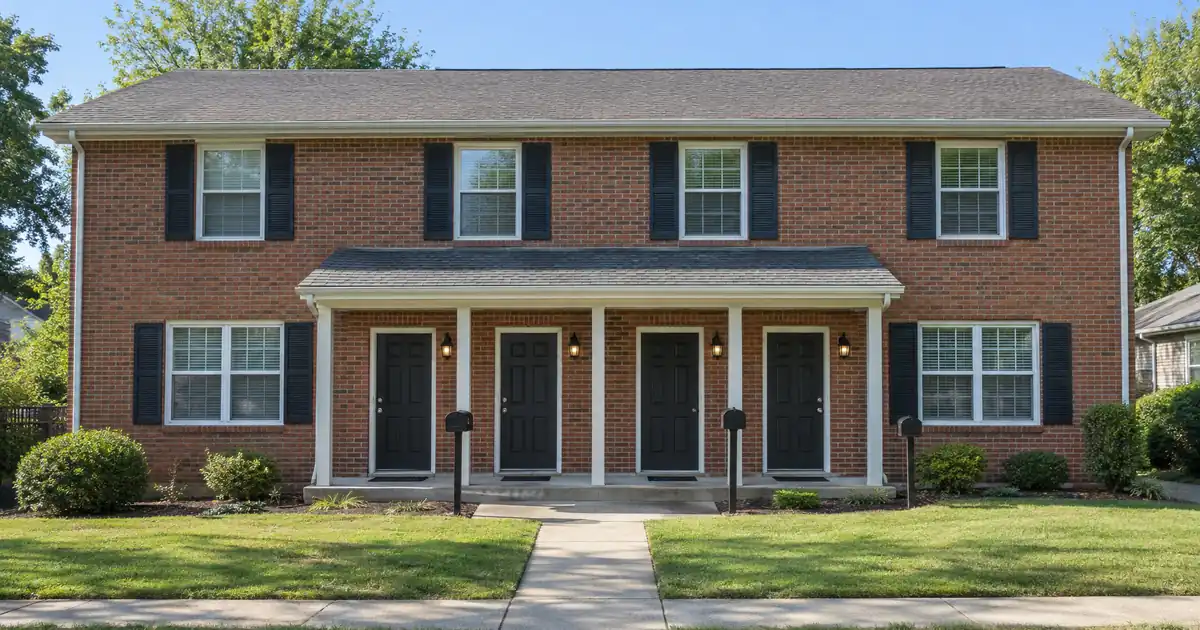
The Quick Read: When the refinance appraisal comes in below your plan on a duplex, triplex or fourplex, the new loan shrinks by a fixed share of the miss while the bridge payoff stays put. The fallback you choose depends on whether value, rent, or both fell short, and on how much cash and carry you can absorb.
- The new lender sizes the loan on its own appraisal, not on your after-repair value (ARV) estimate.
- Cash back disappears first. After that, the loan falls short of the payoff and you cover the gap.
- Diagnose the miss before you act. A low value and a low market rent call for different evidence.
- The main fallbacks are a documented value challenge, cash to close, a payoff-only loan, a cost-basis loan, an extension, or a sale.
- On cash-out refinances of standard investment rentals, most programs in our wholesale network top out around 75% LTV, subject to lender guidelines.
Why Does a Short ARV Hurt So Much on a 2–4 Unit?
Because the refinance is a percentage of appraised value, and the bridge payoff does not care what the appraiser thinks. Every dollar of value the appraiser removes takes roughly three-quarters of a dollar out of your new loan on a cash-out. The payoff stays fixed.
DSCR Cash-Out Calculator
Run the cash-out numbers in your market
Rate source: Freddie Mac 30-yr average via FRED® — Federal Reserve Bank of St. Louis · effective Oct 15, 2026
Prefilled with starting assumptions — enter your property’s value, balance, taxes, and insurance for a more accurate picture.
Program parameters update from Lendmire’s centralized guideline source. Taxes and insurance are editable estimates.
As of Oct 15, 2026 · General Freddie Mac market benchmark, not a Lendmire loan offer. Property value, balance, taxes, and insurance are editable estimates. Maximum loan-to-value varies by lender, program, property type, and seasoning. Not a Loan Estimate, approval, or commitment to lend. Program availability and eligibility are subject to lender guidelines, credit approval, property review, and underwriting.
BRRRR stands for Buy, Rehab, Rent, Refinance, Repeat. BiggerPockets coined the label. It names a sequence of steps. It is not a loan product, and no rulebook governs it.
The refinance step is an ordinary refinance. The new lender orders its own appraisal and relies on its own rent figure. US Realty Training calls a low appraisal the biggest risk in the strategy, because an optimistic ARV traps capital.
Small multifamily adds a wrinkle. Comparable sales for three- and four-unit buildings are scarcer than for houses, so value opinions can land further from your plan. The appraiser also reports on a form built for income property.
For 2–4 units, that form is the small residential income property report, Fannie Mae Form 1025 and Freddie Mac Form 72. DSCR lenders borrow it even though these are not agency loans. It includes a rent-comparable section, so the same report produces both numbers that matter.
Key Terms Defined
ARV (after-repair value): your estimate of what the property is worth once the rehab is done.
Appraised value: the number the new lender’s appraiser supports. This is the number that sizes the loan.
DSCR (debt service coverage ratio): the property’s qualifying monthly rent divided by its full monthly housing payment (principal, interest, taxes, insurance, and any HOA dues).
Seasoning: the waiting period a lender wants after you buy before it will size a loan on appraised value instead of cost.
Payoff: what you owe on the short-term bridge loan at refinance, including interest and fees.
Break-even appraisal: the lowest appraised value at which the new loan still retires the bridge and the exit costs.
ROV (reconsideration of value): a formal request to review an appraisal for errors or missed information.
How Does the Lender Actually Test the Refinance?
The lender checks the file on several fronts, and the lower resulting loan governs. Value drives loan-to-value (LTV), and rent drives coverage. Here is how the checks play out on a 2–4 unit file.
1. Value basis. Inside the ownership window, most programs size the loan to the lower of appraised value or your cost basis. After the window, they size it on the appraisal. For cash-out refinances, about 6 months of seasoning is the common expectation across our network. The clock usually runs from the recorded deed, not from rehab completion or lease signing. Seasoning is lender policy, not law.
2. Rent per unit. Many programs take the lower of the signed lease or the appraiser’s market rent, unit by unit, and add the units together. Vacant units are usually counted at market rent, though treatment varies by program.
3. Coverage. The combined rent is divided by one full monthly payment. A coverage of 1.00 is where many select programs start. A separate select-lender path takes coverage below 1.00, with leverage and terms adjusted. Stronger coverage opens better pricing and leverage.
4. Classification. A refinance is payoff-only if proceeds just cover the bridge and closing costs. It becomes cash-out the moment proceeds exceed that. The label sets the leverage cap and the seasoning rule.
Passing the coverage test is not the same as positive cash flow. DSCR compares rent to the payment only. Repairs, vacancy, management, utilities and capital reserves sit outside the calculation.
The Break-Even Math in Plain Algebra
The break-even appraisal equals the bridge payoff plus exit costs, divided by the cash-out LTV cap. Anything above that value produces cash back. Anything below it leaves a hole.
A miss of any size shrinks the new loan by the cap times the miss. Cash back vanishes first. Past that point, the loan no longer covers the payoff. Meanwhile, interest, extension fees and exit fees keep adding to the payoff each month you wait.
Diagnose the Miss Before You Pick a Fallback
Find out which number missed. The evidence you build for a value problem is useless against a rent problem.
| What missed | What it changes | Typical symptom |
|---|---|---|
| Value only | LTV cap, so loan size | Rent clears, loan comes up short |
| Rent only | Coverage ratio | Value fine, coverage below program floor |
| Both | Loan size and eligibility | Smaller loan that also fails coverage |
Then ask whether the appraiser made a fixable error or simply formed a lower opinion.
| Symptom | Can a review act on it? |
|---|---|
| Wrong square footage or unit count | Yes, if documented |
| Rehab scope left out of the report | Often, with invoices and photos |
| Comps from a weaker area | Sometimes, with a clear explanation |
| Appraiser simply sees lower value | Rarely |
| Legacy lease below market | Sometimes, if a market-rent renewal or rent comps support a higher figure; an above-market lease never raises it |
The Fallback Menu
Every fallback trades cash, time, or carry. None of them is free.
| Fallback | Cash needed | Time impact | Main risk |
|---|---|---|---|
| Contest the value | Low | Adds a review step | Rarely moves without evidence |
| Bring cash to close | The gap, plus costs | None | Drains reserves |
| Payoff-only loan | None to modest | None | Equity stays trapped |
| Cost-basis loan | Varies | None | Equity trapped until seasoned |
| Extend or wait | Extension fees | Adds months of carry | Payoff keeps growing |
| Sell or bring a partner | None | Sale process | Gives up the hold |
Contest the value
Submit the request through the lender or your broker, never straight to the appraiser. The Federal Reserve describes a reconsideration of value as a request from the financial institution to the appraiser to reassess the report. That guidance targets regulated institutions, so treat it as a description of how the process runs, not a right you hold on a business-purpose loan.
The packet matters more than the argument. Include closed comps, an itemized rehab scope with invoices, and rent comps if rent is the problem. More comps alone rarely move an appraiser, who adjusts for size, features and renovation anyway. Documented errors win. Telling the lender your ARV was higher almost never does.
On a 2–4 unit, thin comps make the rent schedule and income evidence matter more in a challenge.
Bring cash to closing
If the miss is modest, covering the gap may be the cleanest answer. The loan is smaller than payoff plus costs, and you write the difference. This works when you have reserves beyond what the lender requires. Reserves commonly run around 6 months of the full payment, and about 9 months on loans above $1,500,000. Do not spend them on the gap and then fail the reserve test.
Take a payoff-only loan
A smaller loan that only retires the bridge returns no cash. Your equity stays in the property. Many investors then run a second cash-out after the seasoning window passes. Check prepayment terms on the new loan first, since an early second refinance can trigger them.
Take a cost-basis loan
If you are still inside the ownership window, the loan sizes to documented cost, not appraised value. It is a legitimate fallback after a miss. The trade-off is that equity stays locked up until the window closes.
Extend the bridge or wait and reappraise
Extending buys time. It also adds fees and interest to a payoff that is already growing. This fits best when the property is not finished or not yet leased, because an unfinished building does not support a long-term loan at all. If the property is done and simply appraised low, waiting rarely fixes the number by itself.
Sell, or bring in a partner
Selling retail or to another investor ends the carry. Selling an equity stake to a partner can retire the payoff while you keep part of the asset. Both give up some upside. They also stop a bad month-by-month bleed. Pick based on carry cost versus the cash you can spare, not on optimism.
A Worked Miss on a Fourplex
These are modeled assumptions, not market data. Say the bridge payoff plus exit costs equal 100 index units. Use a 75% cash-out cap on a standard investment rental. Leverage, reserves, and pricing vary by lender and program; the final terms follow the full file review.
- Break-even appraisal: 100 ÷ 0.75 = about 133.3.
- On plan: the appraisal lands at 160. The loan is 120. Cash back is 20.
- Modest miss: the appraisal lands at 145. The loan is 108.75. Cash back falls to 8.75.
- Real miss: the appraisal lands at 125. The loan is 93.75. The payoff is uncovered by 6.25 units, plus carry.
Notice how the first 15-unit miss cost 11.25 units of loan, and cash back dropped by more than half. The third case cannot close on a cash-out basis without cash from you, a payoff-only structure that fits the lower value, or a different exit. Run the same arithmetic on the rent side. If the appraiser’s combined market rent sets coverage below your program’s floor, the loan shrinks again or the deal works to a select-lender path that accepts lower coverage with adjusted leverage and terms.
To test your own numbers, use the site’s illustrative DSCR cash-out calculator. Run it once with your planned appraisal, then again with the short appraisal, and compare the two loan sizes against your payoff. It is an illustrative estimate for comparing cases, not a quote.
Where the Rule Breaks: Edge Cases
Thin comps. Three- and four-unit sales are scarce, so the appraiser may stretch for comparables. Misses are more likely and the income evidence carries more weight.
Rent miss versus value miss. A below-market legacy lease sets the lower figure. Renewing it at market before the appraisal can raise the rent used, where local rules allow.
Vacant units. Many programs count them at market rent. Treatment varies, so confirm before you assume it.
Delayed financing. This is an agency exception, not a DSCR feature. Fannie Mae’s Selling Guide lets certain borrowers do a cash-out refinance within six months of purchase when the original purchase was arm’s-length and other conditions are met. DSCR lenders set their own seasoning and exceptions. On a purchase funded with hard money, a delayed-financing-style path generally does not fit and returns documented cost, not ARV.
Payoff-only versus cash-out. A payoff-only refinance often carries lighter seasoning, because no new cash leaves the deal. If you pull any cash above the payoff, the cash-out label applies, and so does its seasoning clock.
Program variation. Seasoning, LTV and coverage differ by program. Some lenders in the network will review files that others decline. Ineligible collateral is another break point: manufactured homes, log homes and barndominiums are not offered in these DSCR programs.
Build the Exit Before You Buy
A fallback plan is only worth having if you never need it, so build the exit before you commit. Back-solve before you sign the bridge.
1. Start with a conservative ARV from the low end of the comps.
2. Multiply by the cash-out LTV cap, 75% on most standard rentals.
3. Subtract the bridge payoff, including extension and exit costs.
4. Add a cushion for a low appraisal.
If the answer still leaves cash back, the deal has room. If it only works at your top-end ARV, you are relying on the appraiser to agree with you. The 70% rule, never paying more than 70% of ARV minus repairs, is investor guidance rather than a lending rule. It builds that cushion in.
Build the file during the rehab, not after the miss. You want the settlement statement, bridge note and draw history, bank statements, rehab invoices, signed leases, and a payoff statement with lien release. A scope-of-work file with photos is what makes a later challenge credible.
Timing matters as much as value. The bridge maturity, the seasoning clock and the appraisal all have to line up. A note ending near the seasoning date leaves little margin. A note ending before it narrows you to a payoff-only loan, a cost-basis loan, an extension or a sale. Landlord Studio lists an overestimated ARV, an underestimated rehab and a low refinance appraisal as the main beginner risks. The three often arrive together.
Lendmire’s team has seen this pattern across many bridge-to-DSCR files: investors who talk to a broker before closing the bridge keep more options than those who call after the miss. For a companion walkthrough, see Lendmire’s piece BRRRR Cash-Out Fallbacks When the ARV Falls Short of Payoff.
What the Decision Looks Like in Practice
Work through five questions in order.
1. How big is the miss against the break-even appraisal?
2. Did value miss, rent miss, or both?
3. How far has the bridge run toward its maturity?
4. How much cash can you spare without breaching reserves?
5. How much carry are you willing to absorb?
A small miss with documented errors points to a challenge. A modest miss with spare cash points to cash at closing. A larger miss with a long runway points to a payoff-only or cost-basis loan. A large miss, a short runway and thin cash points to a sale or partner. Pause the next acquisition until you know how much capital stayed in this one. Stacking a second deal on trapped equity is how a single miss becomes two.
Tax treatment can depend on how the funds are used and how the property is held; investors should keep clear records and speak with a qualified tax professional before relying on any deduction.
For the full picture of how these loans are structured, the complete DSCR loans guide covers leverage tiers, credit ranges and property eligibility. Most programs we place files with want credit around 660, a 620 floor exists in parts of the network, and 700 and above unlocks the strongest leverage. Qualification is subject to lender guidelines and property review.
Frequently Asked Questions
Can I go straight to the appraiser to dispute a low value?
No. The request goes through the lender or your broker. The appraiser works for the lender, and a challenge needs a documented packet of closed comps, rehab invoices and any rent evidence, not a phone call.
Will more comps fix a low appraisal?
Rarely. Appraisers already adjust for size, features and renovation. Documented errors, such as wrong square footage, and a clear rehab scope with invoices are where challenges tend to succeed.
What if the rent comes in low but the value is fine?
Coverage is the problem, not LTV. Check whether a below-market lease set the lower figure, and whether renewing it at market is possible before reappraisal. Many programs use the lower of lease or market rent, and an above-market lease does not lift it. A select-lender path can review coverage below 1.00, with leverage and terms adjusted.
Does delayed financing let me skip seasoning after a hard-money purchase?
Not on DSCR files. Delayed financing is an agency exception, and DSCR lenders set their own seasoning. Where a similar path exists, it generally returns documented cost rather than ARV and tends to exclude purchases financed with property-secured hard money.
Does passing 1.00 coverage mean the fourplex cash flows?
No. Coverage compares rent to the full payment only. Repairs, vacancy, management, utilities and capital costs sit outside the number, so the building can clear the test and still run thin.
Plan the Exit With a Broker Before You Close the Bridge
If you are buying or refinancing a rental property and want to see how the numbers work, Lendmire can help you compare DSCR loan options based on the property income, credit profile, leverage, and investor goals. As a mortgage broker, Lendmire arranges financing through select lenders in its wholesale network across 41 markets, including Washington, D.C. Approval and terms are subject to lender guidelines, and nothing here is a commitment to lend.
About Lendmire
Lendmire (NMLS# 2371349) is a mortgage brokerage built around DSCR investor lending, with programs available in 41 markets, including Washington, D.C. DSCR lenders commonly evaluate rental-income coverage instead of personal income paperwork, a practical fit for LLC-owned and multi-property investors. Terms vary by lender, property, leverage, and program. Scotsman Guide named Lendmire a Top Mortgage Workplace in both 2025 and 2026.
Get Started
Ready to find the right loan for you?
In about 30 seconds you can review financing options available for your investment property. No commitment required.
Informational only. Not a Loan Estimate, approval, or commitment to lend. Program availability and eligibility are subject to lender guidelines, credit approval, property review, and underwriting.
References
1. BiggerPockets (background on the BRRRR label)
2. US Realty Training: BRRRR method
3. Appraisal Colorado: Form 1025
5. Fannie Mae Selling Guide B2-1.3-03
6. Landlord Studio: the BRRRR method
This article is part of Lendmire’s DSCR loan program — full qualification details, guidelines, and scenarios live on the program page.
Related reading: How Much Equity a First-Time Cash-Out Refinance Releases on a Rental · No-Seasoning vs Six-Month Wait on a DSCR Cash-Out for a 2–4 Unit · How to Clear a Private Loan With a DSCR Cash-Out Refinance on a BRRRR
Brandon Miller
Founder & CEO, Mortgage Loan Originator, Lendmire LLC
- Mortgage Loan Originator · NMLS# 1129696 · Verify on NMLS Consumer Access
- North Carolina Real Estate Broker · License# 343312 · Verify on NCREC
- North Carolina Insurance Producer · License# 19053198 · Property, Casualty, Life, Health · Verify on NAIC SBS
- Lendmire LLC · Firm NMLS# 2371349 · Verify firm licensure
Disclosure information. Lendmire is a state-licensed mortgage brokerage under NMLS# 2371349. Lendmire is not a depository institution, direct lender, or financial advisor — all loans referenced are placed through wholesale lender partners and are subject to each lender's underwriting standards. This article is provided for general informational purposes and is not a commitment to lend, nor does it constitute financial, legal, or tax advice. Loan programs, terms, rates, and qualification standards change without notice and depend on borrower profile, property type, and the state in which the subject property is located. Equal Housing Opportunity provider. NMLS Consumer Access: nmlsconsumeraccess.org.