
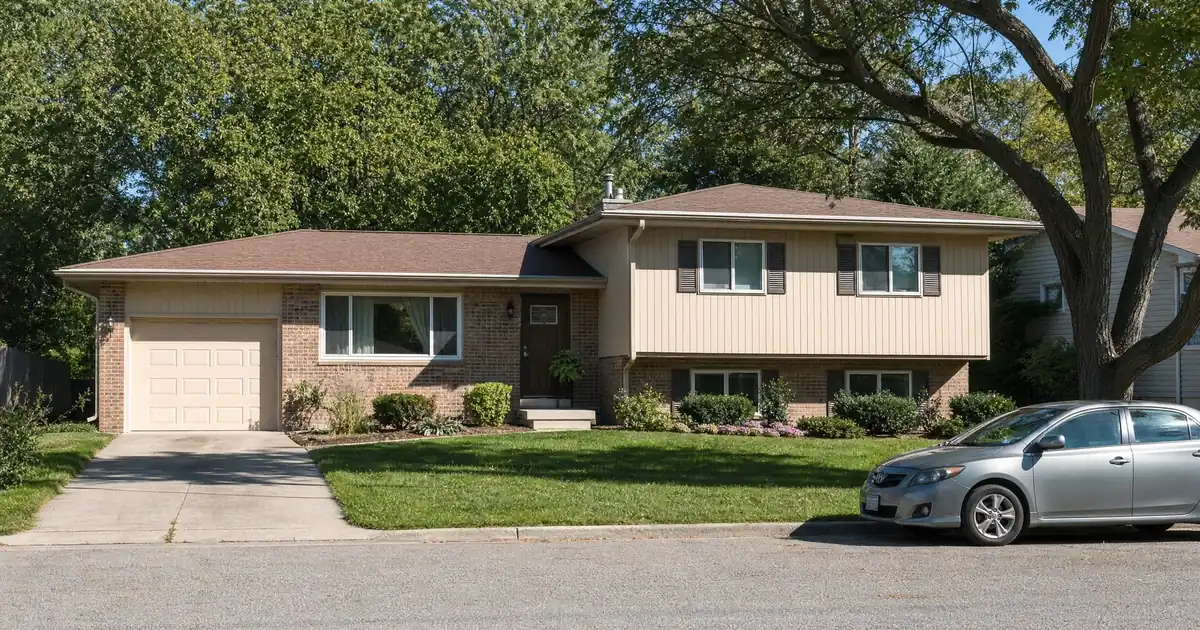
The Quick Read: Yes, if your plan document allows it — most 401(k) plans permit loans, though federal law doesn’t require them to. You can typically borrow the lesser of 50% of your vested balance or $50,000, and because it’s a loan against your own retirement assets, plans generally don’t run a credit check or debt-to-income review the way a mortgage lender would. The catch: because it’s not a primary residence purchase, you’re stuck with a standard five-year repayment term, not the longer window available for a home you’ll live in. Once the money lands in your account, it’s just cash — and when you go to finance the property itself, a DSCR loan is reviewed primarily on property-level rental income, subject to lender guidelines, which is where the real strategy questions start.
DSCR Calculator
Run the numbers in your market
Rate source: Freddie Mac 30-yr average via FRED® — Federal Reserve Bank of St. Louis · effective Jul 30, 2026
Prefilled with starting assumptions — enter your own rent or nightly figures, taxes, insurance, and HOA for a more accurate picture.
Program parameters update from Lendmire’s centralized guideline source. Taxes and insurance are editable estimates.
As of Jul 30, 2026 · General Freddie Mac market benchmark, not a Lendmire loan offer. Rent, nightly rate, occupancy, taxes, and insurance are editable estimates. Short-term rental figures are estimates only and vary significantly by season, property type, management approach, and local short-term-rental rules — confirm local regulations before relying on them. Qualifying income for short-term rentals varies by program — some use appraisal market rent, others use documented STR history or projections — and is confirmed in underwriting. Not a Loan Estimate, approval, or commitment to lend. Program availability and eligibility are subject to lender guidelines, credit approval, property review, and underwriting.
Here’s the thing most articles on this topic get backwards. They treat the 401(k) loan like it’s the whole story. It isn’t. The loan is a funding source — a way to get cash into your account. What happens next, when you actually go finance the property, is where the interesting mechanics live. And that’s the part a retirement-plan blog usually can’t tell you, because it’s not their business. It’s mine.
Can You Really Use a 401(k) Loan to Buy an Investment Property?
Plan-dependent, but generally yes. The IRS doesn’t restrict what you use the loan proceeds for — your specific plan document might, so the first move is always checking that document, not assuming.
The federal ceiling: you can borrow up to 50% of your vested account balance, capped at $50,000. If your balance is smaller, the plan can still permit a loan of the greater of $10,000 or 50% of your vested balance — so someone with a $40,000 balance could still pull $20,000 out. This comes straight from the IRS’s own guidance on retirement plan loans.
What trips people up is assuming every 401(k) works this way. It doesn’t. Plans aren’t required to offer loans at all — some don’t, some only allow them for specific hardship categories, some cap the number of loans you can carry at once.
The Five-Year Rule Nobody Reads the Fine Print On
Here’s the fact that separates a rental purchase from a home purchase, and it’s the single most important thing in this entire article: the extended repayment term only applies to a primary residence.
Under IRC guidance, a participant loan generally has to be repaid within five years, with payments made at least quarterly. The law carves out an exception — a longer amortization schedule — but only when the loan funds the purchase of your primary home. Buy a rental property with this money, and that exception doesn’t apply. You’re on the standard five-year clock, full stop, regardless of how generous your plan otherwise is.
That five-year window matters because it sets your monthly repayment obligation on the retirement-plan side. It’s a separate, parallel payment — it isn’t part of the mortgage on the property you’re buying. Keep those two threads distinct, because how a lender treats that obligation is exactly where this gets interesting for a rental buyer.
What Happens Once the Money Hits Your Account
Once disbursed, a 401(k) loan is just your own liquid cash — but it’s cash with a paper trail, and that trail matters enormously if you’re pairing it with a DSCR loan.
DSCR stands for debt-service coverage ratio — it’s a way of qualifying a rental purchase based on what the property’s rent brings in versus its housing payment, rather than your personal paycheck or W-2s. Lendmire’s complete DSCR loans guide walks through the full mechanics if you want the deeper version.
Here’s why the source of your down payment still matters even on a DSCR file. Nearly every non-QM lender wants down-payment funds sourced and seasoned — meaning documented, traceable, and sitting in your account for a stretch of time before closing. A 401(k) loan disbursement is exactly the kind of large deposit that gets flagged and questioned if it shows up out of nowhere right before your closing date. The fix is simple: move the funds into your account well ahead of applying, and keep the paper trail — the loan agreement, the plan statement showing the disbursement — ready to hand over.
Key Terms Defined
DSCR (debt-service coverage ratio): a ratio comparing a property’s rental income to its total monthly housing payment (principal, interest, taxes, insurance, and HOA dues, often called PITIA) — it’s how DSCR lenders qualify a rental purchase instead of using your personal income.
Seasoning: the length of time funds need to sit, documented, in your bank account before a lender will count them as legitimate down-payment or reserve money — usually measured in days before closing.
Deemed distribution: what the IRS calls it when a 401(k) loan violates its repayment terms or exceeds allowed limits — the unpaid balance becomes immediately taxable as if you’d withdrawn it outright.
QPLO (qualified plan loan offset): the rule that gives a departing employee extra time — up to their tax filing deadline, including extensions — to roll over an outstanding 401(k) loan balance into an IRA or new employer plan before it’s taxed as a distribution.
Non-QM / business-purpose loan: a mortgage underwritten outside conventional agency rules, typically for an investment property rather than a home you’ll live in — DSCR loans fall into this category.
Does a 401(k) Loan Payment Hurt My DSCR Qualification?
No — and this is the structural advantage that makes DSCR financing pair so cleanly with a 401(k) loan strategy. On a conventional mortgage, that monthly repayment coming out of your paycheck gets counted against your debt-to-income ratio, potentially shrinking what you qualify for. DSCR loans don’t run that calculation at all. Qualification is based on the property’s rent against its own payment — your personal DTI, your 401(k) repayment, your other obligations, none of it enters the math.
That’s worth sitting with for a second, because it’s counterintuitive. You’re taking on a new personal debt (the plan loan) at the exact moment you’re trying to qualify for a rental purchase — and on the DSCR side, that new debt is invisible to the underwriting. Lendmire’s no-income investment property loan page covers the broader version of this “property drives lender review, not you” approach if you want more on how far that principle extends.
Don’t confuse this with “no cost,” though. The repayment still comes out of your paycheck every month, whether or not it shows up in the DSCR math. It’s real money leaving your pocket regardless of what underwriting counts.
What Down Payment and Leverage Actually Look Like
Across the DSCR files Lendmire’s network places, most purchases land in the 75%-80% loan-to-value range — meaning 20%-25% down. A handful of high-leverage programs go up to 85% LTV, roughly 15% down, though those typically want a credit score in the 700s to get there.
Here’s the honest math problem with a 401(k) loan as your sole funding source: the average outstanding 401(k) loan balance sits around $10,700, according to Vanguard data reported by 401(k) Specialist Magazine — and 13% of Vanguard plan participants had a loan outstanding at year-end, per the same research. Against a 20-25% down payment on almost any investment property, a $10,000-$50,000 loan is rarely the whole solution. It’s more commonly a piece — closing costs, part of the down payment, a reserve cushion — layered alongside savings or other funds.
Reserves matter too. Most DSCR programs want somewhere around six months of PITIA held back after closing; loans above roughly $1,500,000 commonly step that up closer to nine months. On smaller, conservative rate-and-term files at modest leverage, some lenders will waive reserves altogether. None of this is universal — it varies by lender, leverage, loan size, and transaction type, so treat these as typical ranges, not guarantees.
And credit matters more here than on the retirement-loan side, where there’s no check at all. DSCR programs commonly want a score around 660, with a 620 floor available in parts of the network and the strongest leverage tiers opening up around 700 and above.
A Bigger Down Payment Helps — But It Doesn’t Fix Everything
Putting more down lowers your monthly obligation and can lift your DSCR ratio — but it doesn’t erase a leverage cap, a credit floor, a reserve requirement, or a property-type restriction. This is where investors sometimes talk themselves into a deal that isn’t actually there. Terms vary by lender guidelines, property type, leverage, credit profile, and full file review.
Say an investor pulls their full $50,000 401(k) loan and stacks it with savings to hit 25% down on a modest rental. That extra equity might push coverage from a marginal number up past 1.20x. Good move. But if that same investor has a 610 credit score, no amount of extra cash changes the fact that most programs in the network want at least 620, with many preferring closer to 660. The strongest files clear two separate tests: enough equity on one side, enough rental coverage on the other. A great down payment doesn’t substitute for a weak file on the credit or coverage side.
Worth being precise about DSCR math too: clearing 1.00 means rent covers PITIA — it is not the same thing as positive cash flow. Repairs, vacancy stretches, property management fees, utilities, and capital expenditures all sit outside that ratio. A property at exactly 1.00x can still lose money in a slow month. A no-ratio option is available for DSCR below 1.00 with stronger credit or higher down payment; qualification on that path rests on credit and equity rather than a rent-coverage calculation.
Where This Money Runs Out: Multi-Unit and Higher-Priced Deals
A 401(k) loan’s $50,000 ceiling starts to look thin fast once you’re above a modest single-family purchase, which is exactly why investors often pair it with other capital or look at smaller-balance properties first. Loan sizes across most DSCR programs run roughly $100,000 up through $3,000,000 on standard files, with anything above $2,500,000 generally steered toward 30-year fixed structures rather than shorter or adjustable terms.
If you’re eyeing a small multifamily property to house-hack or scale into rentals, it’s worth understanding how leverage shifts by unit count and occupancy — Lendmire’s investment property loan-to-value breakdown covers how that math changes across property types. And for veterans weighing a multi-unit owner-occupied strategy against a pure rental purchase, Lendmire’s guidance covers how VA loans can be used with investment property and where that occupancy-based path fits versus a straight DSCR purchase.
What Happens If You Change Jobs Mid-Loan
Leaving your employer accelerates the repayment clock — plan sponsors can require the full outstanding balance repaid immediately upon separation, and if you can’t, the unpaid amount becomes a taxable distribution reported on Form 1099-R. This is arguably the sharpest risk in the entire strategy, because it’s the one variable an investor can’t fully control.
There’s real relief available, though: a departing employee can roll over the outstanding loan balance into an IRA or a new employer’s retirement plan by their tax filing deadline (including extensions) for the year the loan turns into a distribution — this is the qualified plan loan offset rule. If you financed a rental down payment with a 401(k) loan and then change jobs mid-hold, that rollover deadline becomes the most important date on your calendar. Miss it, and the unpaid balance gets taxed as ordinary income, plus a possible 10% early-withdrawal penalty if you’re under 59½.
Default carries the same consequence even without a job change — miss payments, and the IRS treats the entire unpaid balance as a distribution in the year the default occurs.
A Solo 401(k) Is Not the Same Thing — At All
Don’t confuse a personal 401(k) loan with a Solo 401(k) directly owning rental property — these are two entirely different structures governed by different rule sets. A standard participant loan just puts cash in your pocket. A Solo 401(k) that owns real estate holds the property itself, in the plan’s name, with all rental income and sale proceeds flowing back into the plan rather than to you personally, per My Solo 401k Financial.
One genuine advantage on that side: Solo 401(k)s are exempt from Unrelated Debt-Financed Income tax when using non-recourse loans for real estate, something a Self-Directed IRA doesn’t get — though Unrelated Business Income Tax can still apply if the plan gets into an active business like flipping, according to Gatsby Investment. But that’s a fundamentally different product with its own prohibited-transaction exposure — not the topic of this article, and not something the standard participant loan touches.
Worth flagging plainly: a standard plan loan taken by a participant is explicitly not a prohibited transaction, provided it’s offered on the same terms available to every other plan participant. That’s a sharp contrast to a Self-Directed IRA, where the account owner and spouse are automatically treated as disqualified persons, and a prohibited transaction there can disqualify the entire IRA retroactive to the start of the tax year, per ArentFox Schiff’s analysis of self-directed IRA rules. A 401(k) participant loan used personally toward a rental purchase carries none of that self-dealing risk.
What Underwriters and Brokers Actually See on These Files
Across the DSCR files that come through Lendmire’s wholesale network, 401(k) loan proceeds show up most often as a supplemental funding piece rather than the entire cash-to-close — usually layered with savings, a gift, or proceeds from selling another asset. Files move faster through underwriting when the plan statement and loan agreement arrive upfront alongside bank statements showing the deposit seasoning properly, rather than surfacing mid-file as an unexplained large deposit. On the appraisal side, rent gets documented through the standard single-family rent schedule or the 2-4 unit operating income form, which anchors the rental income half of the DSCR calculation regardless of where the down payment came from.
State overlays are worth knowing too, if your target property sits in one: Connecticut, Florida, Illinois, New Jersey, and New York purchases generally cap near 75% LTV, and overlay-state deals often cap around $2,000,000 in loan size. None of that changes based on where your down payment came from — it’s a property-location rule, not a funding-source rule.
Tax treatment can depend on how the funds are used and how the property is held; investors should keep clear records and speak with a qualified tax professional before relying on any deduction.
DSCR loans are designed for non-owner-occupied investment properties. Because they’re business-purpose investor loans, they’re reviewed differently from a standard owner-occupied mortgage.
Frequently Asked Questions
Can I get an investment property loan using 401(k) loan funds as my down payment?
Yes, in most cases — the funds are just cash once disbursed to your account. The key is documenting the source (loan agreement and plan statement) and letting it season in your account, typically for around 60 days, before your lender counts it toward your down payment or reserves.
How do I get an investment property loan if my down payment comes partly from a 401(k) loan and partly from savings?
Combine and document both sources clearly. Lenders want a paper trail for each piece of the down payment — bank statements, the plan loan agreement, and any transfer records — so keep everything organized well before you apply, rather than scrambling once you’re under contract.
How do you get an investment property loan without using personal income to qualify?
DSCR loans are built exactly for this — they qualify the property on its rental income against its housing payment, not your paycheck or traditional personal-income documentation. Most programs want a coverage ratio around 1.00x or better, along with a credit score typically in the 660 range, though floors and ceilings vary by lender.
How to get an investment property loan when my 401(k) loan is still a small balance?
A smaller 401(k) loan (say, $15,000-$25,000) usually covers only part of a 20-25% down payment on most properties, so pair it with other savings or consider a lower-priced property where the gap is smaller. It rarely needs to be the entire funding source — it’s typically a supplement.
What happens to my investment property loan if I default on the 401(k) loan?
A 401(k) default doesn’t affect an already-closed mortgage — it’s a separate retirement-account matter that triggers a taxable distribution, not a mortgage default. But if it happens before your loan closes, the resulting tax hit could affect your liquidity and reserves, which a lender will want documented.
About Lendmire
Lendmire (NMLS# 2371349) is a mortgage broker that arranges DSCR investor financing through select lenders in its wholesale network, spanning 40 states plus Washington, D.C. — 41 markets total. Loan approval is never guaranteed, and nothing here is a commitment to lend. Every scenario described is subject to lender approval and to borrower, property, and program guidelines, and this article is general information — not financial, legal, or tax advice. Scotsman Guide named Lendmire a Top Mortgage Workplace in both 2025 and 2026.
If you’re weighing a 401(k) loan against other funding sources, or you already have the cash and want to see how it plays against DSCR leverage and coverage requirements on a specific property, Lendmire can help you compare options based on rental income, credit profile, and investor goals. Reach the team at 828-256-2183 or request a quote directly, including if you’re pulling equity from an existing rental instead of buying new.
Get Started
Ready to find the right loan for you?
In about 30 seconds you can review financing options available for your investment property. No commitment required.
Informational only. Not a Loan Estimate, approval, or commitment to lend. Program availability and eligibility are subject to lender guidelines, credit approval, property review, and underwriting.
References
1. 401(k) Specialist Magazine – Participants Hit All-Time Savings High
2. My Solo 401k Financial – Can a Solo 401k Own Real Estate?
3. Gatsby Investment – Investing in Real Estate with a Self-Directed Solo 401(k)
4. ArentFox Schiff – Self-Directed IRAs and the Prohibited Transaction Rules
This article is part of Lendmire’s DSCR loan program — full qualification details, guidelines, and scenarios live on the program page.
Related reading: Investment Property Cash Out Refinance Seasoning Rules · What Disqualifies You From Refinancing? · Priced Out Of Your Market Buy A Rental Somewhere Else
Brandon Miller
Founder & CEO, Mortgage Loan Originator, Lendmire LLC
- Mortgage Loan Originator · NMLS# 1129696 · Verify on NMLS Consumer Access
- North Carolina Real Estate Broker · License# 343312 · Verify on NCREC
- North Carolina Insurance Producer · License# 19053198 · Property, Casualty, Life, Health · Verify on NAIC SBS
- Lendmire LLC · Firm NMLS# 2371349 · Verify firm licensure
Compliance and disclosures. Lendmire (NMLS# 2371349) is a licensed mortgage broker and is not a direct lender, depository institution, financial advisor, or tax professional. Content in this article is general market analysis and educational information — not financial, legal, or tax advice for any specific situation. Lendmire does not guarantee loan approval; every transaction is subject to underwriting by the funding lender. Mortgage pricing and loan program guidelines are subject to change at any time without notice and vary by borrower characteristics, property type, and state regulations. Lendmire complies with Equal Housing Opportunity. Licensure verification: NMLS Consumer Access.