
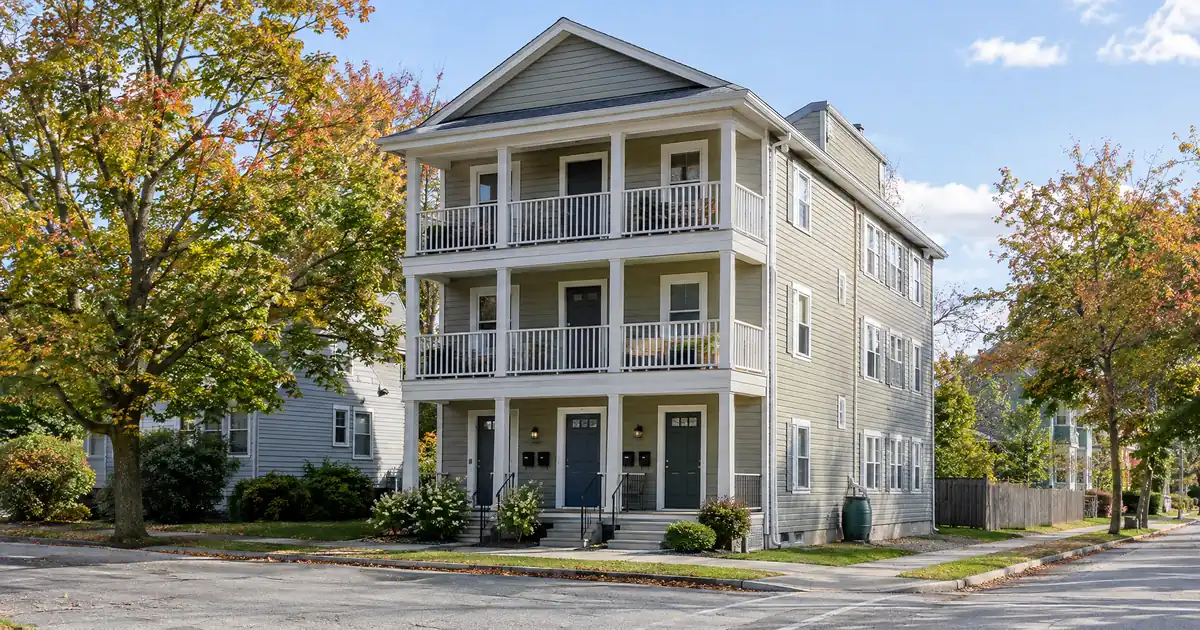
The Quick Read: Moving from 5 doors to 50 rarely turns a recourse loan into a non-recourse one; what changes is that larger balances, cleaner entity books, and a seasoned track record let you negotiate structure, while a natural-person guarantor still stands behind most LLC-held DSCR loans. The real graduation is about structure, not a label. It also means fewer, larger loans and a borrower file that looks the same on loan 18 as it did on loan 1.
- An LLC holds title, but a person usually signs the guaranty behind the loan.
- True non-recourse is negotiated on larger balances with seasoned owners, and it comes with carve-outs.
- Door count matters less than loan size, reserves, and how clean your books are.
- The choice at scale is separate notes versus a blanket loan, and how many lenders to spread across.
What Does Non-Recourse Actually Mean on a DSCR Loan?
Non-recourse means the lender’s claim stops at the collateral. If the property fails, the lender takes the property and cannot pursue your other assets. That promise is conditional. Bad acts by the borrower can pull personal liability back in.
DSCR Calculator
Run the numbers in your market
Rate source: Freddie Mac 30-yr average via FRED® — Federal Reserve Bank of St. Louis · effective Oct 15, 2026
Prefilled with starting assumptions — enter your own rent or nightly figures, taxes, insurance, and HOA for a more accurate picture.
Program parameters update from Lendmire’s centralized guideline source. Taxes and insurance are editable estimates.
As of Oct 15, 2026 · General Freddie Mac market benchmark, not a Lendmire loan offer. Rent, nightly rate, occupancy, taxes, and insurance are editable estimates. Short-term rental figures are estimates only and vary significantly by season, property type, management approach, and local short-term-rental rules — confirm local regulations before relying on them. Qualifying income for short-term rentals varies by program — some use appraisal market rent, others use documented STR history or projections — and is confirmed in underwriting. Not a Loan Estimate, approval, or commitment to lend. Program availability and eligibility are subject to lender guidelines, credit approval, property review, and underwriting.
Think of recourse as a spectrum with three points. Full recourse means you are personally liable for the whole debt. Limited recourse means you are liable only for a defined slice or defined triggers. Non-recourse means no personal liability beyond the collateral, except for carve-outs.
Those carve-outs sit in a separate document. The Adventures in CRE glossary calls it a guarantee of non-recourse carve-outs, also known as a bad-boy guarantee. It covers liability triggered by acts such as fraud, misrepresentation, or misuse of funds. So even a non-recourse loan has a guarantor behind it. The difference is what that guarantor is on the hook for.
Why Does an LLC Portfolio Start Out With a Personal Guaranty?
Because the LLC is the borrower, a lender wants a real person to answer for the loan. A DSCR loan to an LLC (subject to program terms) normally pairs the entity borrower with a natural-person guarantor. The entity protects you from property-level claims, like a tenant injury. It does not protect you from the lender.
DSCR stands for debt service coverage ratio. It is the property’s monthly rent divided by its full monthly obligation: principal, interest, taxes, insurance, and any association dues. A ratio of 1.00 means rent equals the payment. These loans qualify primarily on property-level rental income covering the payment, subject to lender guidelines. That is a different test from your traditional personal-income documentation, but it is not a zero-paperwork test. Expect entity documents, leases, an appraisal with a rent analysis, credit, and reserves.
On a multi-member LLC, who signs depends on the operating agreement and the lender’s policy. Some lenders want every member with meaningful ownership. Others accept one or a few. Silent partners are a common sticking point, so settle that question before you apply.
Lendmire’s complete DSCR loans guide walks through the basics if any of this is new. For the guaranty mechanics in detail, see Lendmire’s piece Personal Guaranty vs Non-Recourse on a DSCR Portfolio Loan.
What Actually Changes Between 5 Doors and 50?
Your question shifts. At 5 doors, the question is whether you qualify. At 50, the question is who is exposed and how the debt is built. Doors are only a proxy. Lenders underwrite loan balance, reserves, credit, property performance, and your history of handling debt.
Here is what moves as a portfolio grows.
- Loan size. Bigger balances bring lower maximum leverage, higher credit floors, and more scrutiny of the sponsor.
- Guarantor concentration. Most programs keep an internal limit on total exposure to one guarantor. Some cap the number of loans to one borrower. Others set no hard cap if reserves and coverage are strong.
- Paper trail. Every LLC-owned property is its own file. The friction on your eighteenth loan depends on how tidy the first seventeen look.
- Lender count. The practical fix for concentration is spreading loans across several lenders.
Property counts are not door counts, and each property can hold one to four units. A 50-door portfolio of fourplexes is a much smaller property count than 50 single-family homes.
Across the wholesale network, the files that move most smoothly at larger balances share a pattern. The owner keeps separate bank accounts per LLC, rent flows cleanly, and insurance and tax payments never lapse. Underwriters read those habits as evidence that carve-outs are unlikely to trigger. When a file is messy, no entity structure fixes it.
The Graduation Stages at a Glance
The table below maps typical stages. Treat it as a pattern, not a rulebook, because every file is underwritten individually.
| Stage | Typical structure | Recourse posture | Lender focus |
|---|---|---|---|
| About 5-10 doors | One LLC per property, separate notes | Personal guaranty | Coverage, credit, reserves |
| About 10-25 doors | Separate notes or first blanket | Guaranty, often multiple lenders | Track record, exposure limits |
| About 25-50 doors | Fewer, larger loans | Guaranty; limited terms may be negotiated | Books, liquidity, delinquency history |
| Large single balances | Super jumbo ladder, case by case | Negotiated, with carve-outs | Sponsor strength, appraisal, reserves |
The honest read: most owners spend the whole 5-to-50 range on guaranteed loans. Non-recourse terms, where a lender offers them, tend to appear at the bottom row, tied to balance and sponsor strength. Whether a given file can be structured that way is a lender-by-lender question, subject to underwriting. Lendmire’s piece Recourse vs Non-Recourse DSCR on an LLC Rental and Your Future Home DTI covers the personal-balance-sheet side.
Where Does the Size Ladder Fit?
As your balances grow, leverage steps down and credit floors rise. This is the part of “graduating” that is real and measurable. The figures below are ceilings available through select wholesale programs on investment property, subject to underwriting.
| Loan size | Purchase / rate-term LTV | Minimum credit |
|---|---|---|
| $150K-$1M | 80% | 660 |
| $1M-$1.5M | 75% | 700 |
| $1.5M-$3M | 75% | 720 |
| $3M-$4M | 65% | 700 |
| $4M-$10M | 60%, on review | 700 |
LTV means loan-to-value, the loan as a share of the property’s value. Cash-out works differently. On standard rentals it tops out at 75% in the smallest bracket, steps down from there, and does not exist above $3,000,000.
A few more parameters shape a larger file. Typical programs want 6 months of reserves on the subject property, and 12 months for first-time investors. Two appraisals apply above $2,000,000. Interest-only periods of 120 months are available on 30- and 40-year terms, up to 75% LTV, subject to underwriting. Final terms depend on lender guidelines, property type, leverage, and the borrower’s complete credit picture.
Coverage of 1.00 or higher earns full leverage. Coverage below 1.00 is a real path through select lenders in the network, up to $2,000,000, but LTV and terms adjust, subject to underwriting. Above $4,000,000, every request is reviewed case by case before submission, purchase or rate-and-term only.
Short-term rentals sit on a narrower track. They need coverage of 1.00 or higher, loan amounts to $2,000,000, and income counted at 80% of gross. Short-term rental rules can vary by city, county, HOA, and property type, so investors should confirm local rules before relying on projected rental income.
Blanket Loan or Separate Notes?
A blanket loan puts many properties under one note and one payment. Neither is better in every case, and the fork usually shows up somewhere between 10 and 25 doors.
| Factor | Separate notes | Blanket loan |
|---|---|---|
| Closings | One per property | One for the pool |
| Cross-collateral | None | All properties secure one debt |
| Selling one property | Pay off that note | Partial release, if allowed |
| Lender concentration | Spread across lenders | One lender holds it all |
| Flexibility | High | Lower |
The trade is fewer closings against contagion risk. If one asset in a blanket underperforms, it can drag on the whole pool. Partial releases exist at some lenders, but many blankets do not allow selling or refinancing one property out of the pool at all. Read the release clause before you sign, not after.
One common mistake: owners assume a blanket refinance frees up room for conventional financing. It does not. Lenders count financed properties of any type, so you still carry the same number after the refinance.
Carve-Outs: What Keeps Non-Recourse From Springing Back
Carve-outs are the reason non-recourse is never absolute. Janover’s glossary lists typical triggers: fraud, misapplied rents, voluntary bankruptcy, and environmental issues. The exact list varies by loan document, and some triggers do not require bad intent. A lapsed insurance policy or unpaid taxes can read as a covenant breach in some documents.
The practical defense is a set of operating habits.
- Keep rents in the property’s own account and out of personal funds.
- Pay taxes and insurance on time, every time.
- Never transfer ownership or add debt without checking the loan terms.
- Report accurately on every application and certification.
- Keep each LLC’s records current.
If those habits already describe your business, the carve-out risk is small. If they do not, a springing-recourse clause is a bigger exposure than the guaranty you were trying to escape.
Entity Architecture Before You Graduate
Set up the entities for the portfolio you plan to have, not the one you have now. The common pattern is one LLC per property, each with its own bank account and records. That keeps a claim against one property from reaching the others.
Know what a lender accepts. Entity vesting is welcome on select programs, but layered entities are not, meaning an LLC owned by another LLC. A holding company that sits on top of your property LLCs can therefore complicate a file. Check with a lender before you restructure. Whether a series LLC is accepted also varies by program.
Guarantor exposure stacks across entities. Each LLC shields you from property-level claims. Against the lender, you as guarantor are still on the hook, so your personal balance sheet carries every loan at once.
Where the General Rule Breaks
The business-purpose label can be challenged. DSCR loans are designed for non-owner-occupied investment properties. Because they are business-purpose investor loans, they are reviewed differently from a standard owner-occupied mortgage. The CFPB’s Regulation Z commentary says the creditor decides case by case whether a transaction is primarily for a business purpose, and the loan’s purpose controls, not just the collateral. The exemption text itself is public. Owner-occupied small rental buildings follow special rules, as Compliance Alliance explains. A personal-use loan does not fit the DSCR box.
Multi-member LLCs. Which members guarantee changes from lender to lender. One file may need one signer, and another may need three.
Large balances. Above $3,000,000, cash-out stops. The ladder carries qualified investors past the standard program’s limit, but each request above $4,000,000 gets reviewed on its own merits.
Carve-outs on innocent acts. Covered above. The trigger list is in the loan document, not in the label on the loan.
DSCR vs. conventional financing
There are two common ways to finance an investment property, and they qualify you differently — here’s how investors weigh them.
Why investors choose it
- Qualifies on the property’s rental income — no personal tax returns, W-2s, or pay stubs needed to document income.
- No personal debt-to-income ceiling to clear, so existing mortgages and obligations don’t cap your borrowing the same way.
- Can be closed in an LLC, keeping the property inside a business entity.
- Built for scaling — not held to the limit on number of financed properties that conventional financing applies.
- Underwriting centers on the deal: generally qualifies when the rent covers the payment, a 1.00x coverage ratio being a common baseline (confirmed in underwriting).
- Designed specifically for investment property, including long-term and, where the program allows, short-term rentals.
Where it’s strong
- Often the lowest ongoing financing cost for a buyer who fully qualifies on personal income — a fit for a first property or a cost-first purchase.
Trade-offs for investors
- Requires full personal income documentation and must fit within a debt-to-income limit — salary, existing debts, and other mortgages all count.
- Typically held in your personal name rather than a business entity.
- Caps how many financed properties you can carry, which can become a ceiling as a portfolio grows.
- Evaluates you as a borrower as much as the property, which usually means more paperwork.
How investors usually choose: a first or single property often optimizes for the lowest financing cost; portfolio builders often optimize for leverage, vesting in an LLC, and scaling past conventional caps. The right answer depends on your goals, the property, and current guidelines — both paths run through select lenders in Lendmire’s wholesale network, with eligibility and terms confirmed in underwriting.
Is Graduating Worth It?
Sometimes the guaranty is cheaper than the alternative. Non-recourse terms usually bring stricter covenants, tighter reporting, and more carve-outs. Pricing differs too, with non-recourse structures typically carrying a premium, so compare the full terms from each lender side by side before deciding.
The stronger play for most owners at 10 to 30 doors is probably better structure rather than a different label. That means separate LLCs, clean books, and loans spread across lenders. Owners with large, seasoned holdings and heavy liquidity are the ones for whom a negotiated non-recourse structure may pencil out.
It is a genuine toss-up for owners in the middle. If your personal net worth is large relative to the loans, limited recourse protects more. If it is small, the guaranty may matter less than the flexibility.
Readiness Checklist and Questions for Lenders
You are in good shape to explore bigger structures when most of these are true.
- Every property sits in an LLC with its own bank account.
- Rents clear above 1.00 coverage on most properties.
- You hold reserves beyond the minimum on the subject property.
- You have no late payments on existing mortgages.
- Your entity documents and vesting match across files.
Then ask each lender these questions.
- Which members must sign the guaranty?
- What is your limit on exposure to one guarantor?
- What triggers a carve-out, and is any of it loss-based only?
- Can a property be released from a blanket, and at what cost?
- Are layered entities or series LLCs accepted?
Key Terms Defined
Recourse means the lender can pursue your personal assets beyond the collateral. Tax forms use the same word in a different sense; this article means the lender’s.
Non-recourse means the lender’s claim is limited to the collateral, except for carve-outs.
Carve-out is a bad act, such as fraud or misused rents, that can restore personal liability.
Bad-boy guarantee is the separate guaranty that covers carve-out liability.
Cross-collateralization means several properties secure one debt, so trouble in one affects all.
Business-purpose loan is a loan made for investment or business use rather than personal use.
This article is general information, not legal or tax advice. Tax treatment can depend on how the funds are used and how the property is held; investors should keep clear records and speak with a qualified tax professional before relying on any deduction. Consult an attorney or CPA about your own entity structure and guaranty exposure.
Frequently Asked Questions
Does putting my rentals in an LLC remove my personal liability to the lender?
No. The LLC protects you from claims against the property, such as tenant injuries. The lender still expects a natural person to sign a guaranty behind the entity’s loan. Title and guaranty are separate questions.
How many properties can I finance before I need a different approach?
Select programs in the network typically allow up to 20 financed properties on a file, subject to underwriting. Past that point, owners usually move to larger consolidated balances or spread loans across several lenders. Individual lenders also keep their own exposure limits.
Can I get a non-recourse DSCR loan on a single rental?
Rarely. True non-recourse tends to be negotiated on larger balances with seasoned owners, and it comes with carve-outs. Availability depends on the lender, the property, and your profile, all subject to underwriting.
Do all LLC members have to sign the guaranty?
Not always. It depends on the operating agreement and the lender’s policy. Some lenders want every member with meaningful ownership, and others accept one or a few.
Does refinancing into a blanket loan open up room for conventional loans?
No. Lenders count financed properties of any type, so a blanket refinance leaves your count unchanged. It simplifies your payments, not your borrowing capacity.
Next Step
If you are buying or refinancing a high-balance rental property and want to see how the numbers work, Lendmire can help you compare super jumbo DSCR loan options based on the property income, the loan balance, credit profile, leverage, and investor goals. Lendmire arranges business-purpose investment financing through select lenders in its wholesale network across 41 markets, including Washington, D.C. Reach the team at 828-256-2183.
Lendmire’s self-employed mortgages page presents both super jumbo programs, bank statement and DSCR, side by side.
About Lendmire
Lendmire — NMLS# 2371349 — is a DSCR and non-QM mortgage brokerage with investor loan programs in 41 markets, including Washington, D.C. DSCR eligibility is commonly reviewed by the lender around property-level rent rather than personal income documentation, subject to lender guidelines, and the brokerage helps arrange financing for LLC-owned portfolios beyond conventional financed-property limits. Recognized by Scotsman Guide as a Top Mortgage Workplace in 2025 and 2026.
Get Started
Ready to find the right loan for you?
In about 30 seconds you can review financing options available for your investment property. No commitment required.
Informational only. Not a Loan Estimate, approval, or commitment to lend. Program availability and eligibility are subject to lender guidelines, credit approval, property review, and underwriting.
References
1. Adventures in CRE, Guarantee of Non-Recourse Carve-Outs
5. Compliance Alliance, Regulation Z and Investment Properties
This article is part of Lendmire’s super jumbo DSCR loan program — full qualification details, guidelines, and scenarios live on the program page.
Related reading: How to Finance a 2-4 Unit Luxury Portfolio With DSCR Loans · How to Scale Past 10 Financed Properties With DSCR Loans · How to Get Lender Approval to Deed a Super Jumbo DSCR Property Into an LLC
Brandon Miller
Founder & CEO, Mortgage Loan Originator, Lendmire LLC
- Mortgage Loan Originator · NMLS# 1129696 · Verify on NMLS Consumer Access
- North Carolina Real Estate Broker · License# 343312 · Verify on NCREC
- North Carolina Insurance Producer · License# 19053198 · Property, Casualty, Life, Health · Verify on NAIC SBS
- Lendmire LLC · Firm NMLS# 2371349 · Verify firm licensure
Important disclosures. Lendmire (NMLS# 2371349) is a licensed mortgage brokerage. Lendmire is not a direct lender, depository institution, or financial advisor. All loan inquiries are subject to lender underwriting; this article does not constitute a commitment to lend. Rates, terms, and program guidelines are subject to change without notice and vary by borrower profile, property type, and state. Information in this article is general in nature and is not financial, legal, or tax advice. Equal Housing Opportunity. NMLS Consumer Access: nmlsconsumeraccess.org.