
The Quick Read: The monthly cost is the new loan’s payment minus the old loan’s payment, and the $50K alone rarely tells you that number. A larger balance, a different term, or a new rate on the whole loan can move your cash flow more than the cash you took out. The rent has to carry the bigger payment, and DSCR (debt service coverage ratio, rent divided by the monthly housing payment) shows how much cushion remains.
- Taxes, insurance, and association dues do not change because you refinanced. Only principal and interest move.
- The whole new balance is repriced, not just the extra $50K.
- A cash-out on a standard rental tops out around 75% LTV (loan-to-value, the loan as a share of appraised value).
- Clearing 1.00 coverage is not the same as positive cash flow.
- Rent can shrink the loan before the LTV cap does. Each figure is subject to lender guidelines and a complete review of property type, leverage, and credit.
No payment dollars appear here, on purpose. The payment depends on term, structure, and the loan you are replacing. What follows is the method, and you can plug in your own numbers.
DSCR Cash-Out Calculator
Run the cash-out numbers in your market
Rate source: Freddie Mac 30-yr average via FRED® — Federal Reserve Bank of St. Louis · effective Oct 8, 2026
Prefilled with starting assumptions — enter your property’s value, balance, taxes, and insurance for a more accurate picture.
Program parameters update from Lendmire’s centralized guideline source. Taxes and insurance are editable estimates.
As of Oct 8, 2026 · General Freddie Mac market benchmark, not a Lendmire loan offer. Property value, balance, taxes, and insurance are editable estimates. Maximum loan-to-value varies by lender, program, property type, and seasoning. Not a Loan Estimate, approval, or commitment to lend. Program availability and eligibility are subject to lender guidelines, credit approval, property review, and underwriting.
How Does a $50K Draw Become a Monthly Cost?
It becomes a cost in several steps. The lender sizes a new loan, the new loan pays off the old one, and the leftover is your cash. Your monthly cash flow drops by the new payment minus the old payment, because taxes and insurance stay put.
Here is the sequence:
1. The lender orders its own appraisal. Your estimate of value is a planning number only.
2. The lender sets the loan ceiling. On a cash-out against a standard rental, most programs in the wholesale network top out around 75% LTV.
3. The lender checks rent coverage. If rent cannot carry the loan at the required coverage, the loan shrinks until it can.
4. The old loan is paid off. Closing costs and any reserve funding come out next.
5. You get what is left. That is the cash, and it is smaller than the gap between old and new loan if costs are financed in.
That last step matters. To net a full $50K, you borrow more than $50K above your old payoff. The extra covers costs, so the payment grows a bit more than the headline draw suggests.
Why the Whole Balance Reprices
Many investors assume only the new $50K carries a new cost. It does not. A cash-out replaces the entire old loan, so every dollar of the balance takes on the new loan’s terms.
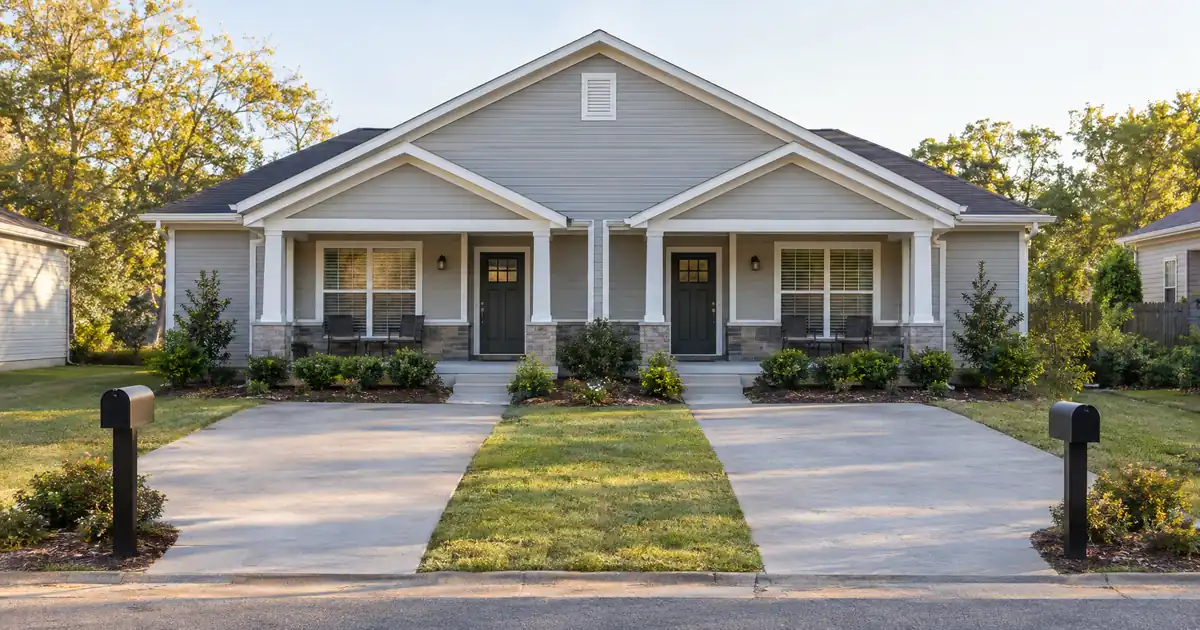
Picture a duplex owner with a legacy loan that has a long-ago, favorable cost of money. A $50K pull on that loan is not a $50K problem. The remaining balance now carries the new terms too. That is why two investors pulling the same $50K can see very different monthly changes.
Three things drive the shift:
- The cost of money on the new loan versus the old one. The bigger the gap, the larger the jump.
- The term. A longer term lowers the monthly payment per $1,000 borrowed. It also means paying longer. The core structure across the network is the 30-year fixed. Extended terms such as 40-year and interest-only periods are available through select lenders.
- Amortizing versus interest-only. An interest-only period lowers the monthly payment because the balance is not falling. The trade-off is that you owe the same amount when the period ends.
The Full Monthly Picture
Only the loan portion changes. This table shows what moves and what stays still.
| Monthly item | Changes with a cash-out? | Why |
|---|---|---|
| Principal and interest | Yes | Bigger balance, new terms |
| Property taxes | No | Set by the assessor |
| Insurance | No | Same coverage on same building |
| Association dues | No | Unchanged by the loan |
| Rent | Not directly | Only if you raise it |
DSCR uses all of these together. The formula is rent divided by PITIA (principal, interest, taxes, insurance, and association dues). When a loan has an interest-only period, coverage is typically figured on the interest-only payment instead.
What Does Rent Have to Cover?
Rent has to cover the new payment at the coverage level the program requires. A coverage ratio of 1.00 is where select programs start. A separate select-lender path takes coverage below 1.00, with leverage and terms adjusted. Stronger ratios usually open better pricing and leverage.
On a duplex, the lender usually looks at the lower of two numbers: actual lease rent or the appraiser’s market-rent opinion. Appraisers typically use Fannie Mae’s Form 1025 for 2-4 unit properties. It carries a comparable rent schedule with unit-level rents. This is only the appraisal form. It does not set the loan program’s rules.
Two practical effects follow:
- A vacant unit or a below-market lease can lower the rent used for review, even if value is unaffected.
- A vacant property generally uses the appraiser’s market rent, often with a letter of explanation.
A Modeled Look at Coverage as the Loan Grows
Here is a labeled illustration, not a market fact. Hold rent, taxes, and insurance fixed on a modeled property and raise the loan as a share of value. Coverage falls as leverage rises. In Lendmire’s own modeling, coverage runs about 1.50x at 50% of value and slides to about 1.00x at 75%.
That slope is the point. Every extra slice of cash costs a bit more coverage than the one before. By the time you reach the ceiling, the cushion may be gone. Sometimes rent, not equity, is the limit. The number to ask yourself is how much coverage you want left after the draw.
In practice, a cash-out sized for a comfortable 1.20x to 1.30x leaves breathing room. One sized to the edge of 1.00x leaves almost none.
Where the Rule Breaks
The general rule is that cost equals new payment minus old payment. These edge cases bend it.
Coverage of 1.00 does not mean positive cash flow. DSCR counts PITIA only. Vacancy, repairs, management, utilities, and capital expenses sit outside it. Inman’s BRRRR explainer makes the same point: the new loan should be covered by rent after debt service, taxes, insurance, vacancy, management, repairs, and capex.
Duplex vacancy is lumpy. One empty unit can be roughly half your rent. On a duplex, that is a bigger swing than on a four-unit building. This is an inference from how the rent is reported by unit, but it is a real stress to test.
Rent can cap the loan before equity does. A 75% ceiling is a ceiling, not a promise. A low appraisal or modest rent can size the loan lower.
An existing prepayment penalty comes out of proceeds. If you are refinancing an existing DSCR loan, check for one before you count on the full $50K.
Cash-out and reserves. Reserves commonly run around 6 months of PITIA, rising to about 9 months above $1,500,000. Rules vary by lender, leverage, loan size, and transaction type. Some programs may let proceeds count toward them, so ask before you assume.
Sub-1.00 files. Select lenders in the network will review coverage below 1.00, with leverage and terms adjusted. Expect different pricing from a file that clears 1.00.
The Rent-Offset Test for Your Own Duplex
Run this test before you ask for a quote. It uses ratios, so it works for any duplex.
1. Take current total rent from both units.
2. Divide by current PITIA to get your coverage today.
3. Estimate the new PITIA with the larger balance and new terms. Taxes, insurance, and dues stay the same.
4. Divide rent by the new PITIA to get coverage after the draw.
5. Subtract your own estimate of vacancy, repairs, management, and utilities from rent. That is your true operating cushion.
Now stress it. Cut rent in half to model one empty unit. If the result is deeply negative, size the draw smaller or keep reserves larger.
Three short cases show how it plays out:
- Both units rented, coverage stays comfortably above 1.00. The draw is manageable. Your monthly cushion is smaller, but real.
- One unit vacant for a stretch. Coverage on your own books drops sharply, even if the lender’s number looked fine. Reserves carry you through.
- The $50K funds a renovation that raises rent. The draw can pay for itself if the improvement supports higher rent. It may also support a higher appraised value, depending on comps and underwriter review. Both depend on execution.
Is It Worth the Monthly Cost?
It is worth it when the cash earns more than it costs each month. That usually means one of three uses: an improvement that raises rent, a down payment on another rental, or paying off higher-cost debt.
Weigh these questions:
- Will the $50K generate more monthly income than the added payment?
- After the draw, do you still have coverage and cash cushion for a vacant unit?
- Would a second lien or equity line cost less per month? A second lien adds a separate payment, while a cash-out enlarges the one you have. Both lower coverage. Investment-property HELOC lines in the network cap at $500,000 total.
- Does the new payment hurt more than the old balance did?
A stronger down payment on the next deal can lift coverage there, but it never erases leverage caps, credit floors, reserve rules, or property eligibility. The strongest files clear both tests: enough equity and enough rental coverage.
If you want the full picture of how these loans work, start with Lendmire’s complete DSCR loans guide. To see how credit score changes the amount, read Lendmire’s piece How Much a DSCR Cash-Out Refinance Lends at Each Credit Tier.
Key Terms Defined
Cash-out refinance: A new loan that pays off the old one and hands you the difference in cash.
PITIA: Principal, interest, taxes, insurance, and association dues, the full monthly housing payment lenders use.
LTV: Loan-to-value, the loan balance divided by the appraised value.
DSCR: Rent divided by PITIA. Above 1.00, rent covers the payment on the lender’s math.
Seasoning: The ownership waiting period before cash-out, about 6 months from title recording on most files.
Net proceeds: The cash you actually receive after payoff, closing costs, and any reserve funding.
Frequently Asked Questions
Does a cash-out increase my monthly payment?
Usually, yes. A bigger balance means a bigger principal and interest payment, unless a longer term or a lower-cost replacement loan offsets it. Taxes and insurance stay the same.
Can the payment fall even as I borrow more?
It can, when the new loan has a longer term or a cheaper cost of money than the old one. You would owe more in total over time, even with a smaller monthly bill. Compare total cost as well as the monthly figure.
How much do I have to borrow to net $50K?
More than $50K above your old payoff. Closing costs, any prepayment penalty, and reserve funding come out of proceeds. Financing those costs also raises the payment slightly.
Are cash-out proceeds taxable income?
Generally not, because the proceeds are debt. Tax treatment can depend on how the funds are used and how the property is held; investors should keep clear records and speak with a qualified tax professional before relying on any deduction. IRS Publication 527 covers the rental-property rules.
Can I do this if the duplex has a vacant unit?
Often, yes. The appraiser’s market-rent opinion generally fills in for the empty unit. Lower rent used for lender review can shrink the loan, and eligibility is subject to lender guidelines.
What to Do Next
If you are buying or refinancing a rental property and want to see how the numbers work, Lendmire can help you compare DSCR loan options based on the property income, credit profile, leverage, and investor goals. Lendmire is a broker arranging financing through select lenders in its wholesale network across 41 markets, including Washington, D.C. This is not a commitment to lend.
For how equity extraction works on an investment property, see Lendmire’s guide to cash-out refinance on an investment property.
About Lendmire
Lendmire, NMLS# 2371349, is a non-QM mortgage broker serving real estate investors in 41 markets, including Washington, D.C., through DSCR investor loan programs. Qualification is generally reviewed around the subject property’s rental income, not the borrower’s W-2 history — a practical fit for LLC-titled portfolios and self-employed investors. All scenarios remain subject to lender review and program guidelines. Two consecutive Scotsman Guide Top Mortgage Workplace recognitions (2025, 2026).
Get Started
Ready to find the right loan for you?
In about 30 seconds you can review financing options available for your investment property. No commitment required.
Informational only. Not a Loan Estimate, approval, or commitment to lend. Program availability and eligibility are subject to lender guidelines, credit approval, property review, and underwriting.
References
2. Inman, BRRRR method explainer
This article is part of Lendmire’s investment property cash-out refinance program — full qualification details, guidelines, and scenarios live on the program page.
Related reading: How to Cash Out One Short-Term Rental to Buy in Another Market · Rental Cash-Out Refinance Closing and Entity Rules in Several States · Cash-Out Refinance Appraisal Rules for a Paid-Off Rental
Brandon Miller
Founder & CEO, Mortgage Loan Originator, Lendmire LLC
- Mortgage Loan Originator · NMLS# 1129696 · Verify on NMLS Consumer Access
- North Carolina Real Estate Broker · License# 343312 · Verify on NCREC
- North Carolina Insurance Producer · License# 19053198 · Property, Casualty, Life, Health · Verify on NAIC SBS
- Lendmire LLC · Firm NMLS# 2371349 · Verify firm licensure
Disclosures. The information presented in this article is general market commentary, not financial, legal, or tax advice. Lendmire is a mortgage brokerage (NMLS# 2371349) — not a direct lender or depository institution — and loan placement is subject to lender underwriting. Nothing in this content represents a commitment to lend. Loan terms, pricing, and program availability vary based on borrower qualifications, property characteristics, and state of subject property, and are subject to change at any time. Lendmire complies with Equal Housing Opportunity requirements. Consumer access: nmlsconsumeraccess.org.