
80 Cash Out Refinance on Duplex Investment Property — The Quick Read: Across select lenders in Lendmire’s wholesale network, cash-out refinances on investment property — duplexes included — top out around 75% loan-to-value through most DSCR programs. Lenders typically want about six months of ownership before they’ll use the new appraised value in that calculation. That ceiling sits below the higher figures sometimes quoted for purchase transactions. The gap matters because it directly caps how much equity an investor can pull out and put into the next deal.
Where an investor lands within that ceiling depends on three things working together: the appraised value, the credit profile, and whether the duplex’s combined rent from both units clears the lender’s minimum debt-service coverage ratio (DSCR) against the new proposed payment. Clear all three and 75% is realistic. Fall short on any one, and the loan amount shrinks — even if the appraisal supports more.
DSCR Cash-Out Calculator
Run the cash-out numbers in your market
Rate source: Freddie Mac 30-yr average via FRED® — Federal Reserve Bank of St. Louis · effective Jul 30, 2026
Prefilled with local estimates — enter your property’s value, balance, taxes, and insurance for a more accurate picture.
Program parameters update from Lendmire’s centralized guideline source. Taxes and insurance are editable estimates.
As of Jul 30, 2026 · General Freddie Mac market benchmark, not a Lendmire loan offer. Property value, balance, taxes, and insurance are editable estimates. Maximum loan-to-value varies by lender, program, property type, and seasoning. Not a Loan Estimate, approval, or commitment to lend. Program availability and eligibility are subject to lender guidelines, credit approval, property review, and underwriting.
Key takeaways:
- 75% LTV, not 80%, is the realistic ceiling for a cash-out refinance on a duplex through most DSCR programs — 80% (and select tiers up to 85%) is closer to what high-leverage purchase programs offer, not cash-out.
- Roughly six months of ownership is the common seasoning window before a lender will use today’s appraised value instead of the original purchase price.
- DSCR loans qualify primarily on the property’s rental income covering the payment, subject to lender guidelines — not the investor’s traditional personal-income documentation or traditional employment income.
- A duplex uses a different appraisal document than a single-family rental, because two rent rolls have to be documented instead of one.
- Falling short of a 1.00 coverage ratio doesn’t automatically kill the file, but it does change the terms — usually lower leverage, stronger credit, or added reserves.
Key Terms Defined
DSCR (debt-service coverage ratio): Take the gross monthly rent and divide it by the loan’s full monthly obligation. That obligation includes principal, interest, taxes, insurance, and any HOA dues (PITIA). A ratio at or above 1.00 means the rent covers that payment on paper.
LTV (loan-to-value): This is the new loan amount, shown as a percentage of the property’s appraised value. On a cash-out refinance, this percentage sets the ceiling on how much of the property’s value can turn into a new loan.
Seasoning: This is how long a borrower has held title before a lender will use the property’s current appraised value — not the original purchase price — in the cash-out math.
PITIA: This stands for principal, interest, taxes, insurance, and association dues. It’s the full monthly obligation used as the bottom number in the DSCR calculation.
Cash-out refinance: This is a refinance where the new loan amount is bigger than what’s needed to pay off the old mortgage and closing costs. The borrower (or their entity) gets the difference in cash.
What Counts as a Duplex for Lending Purposes?
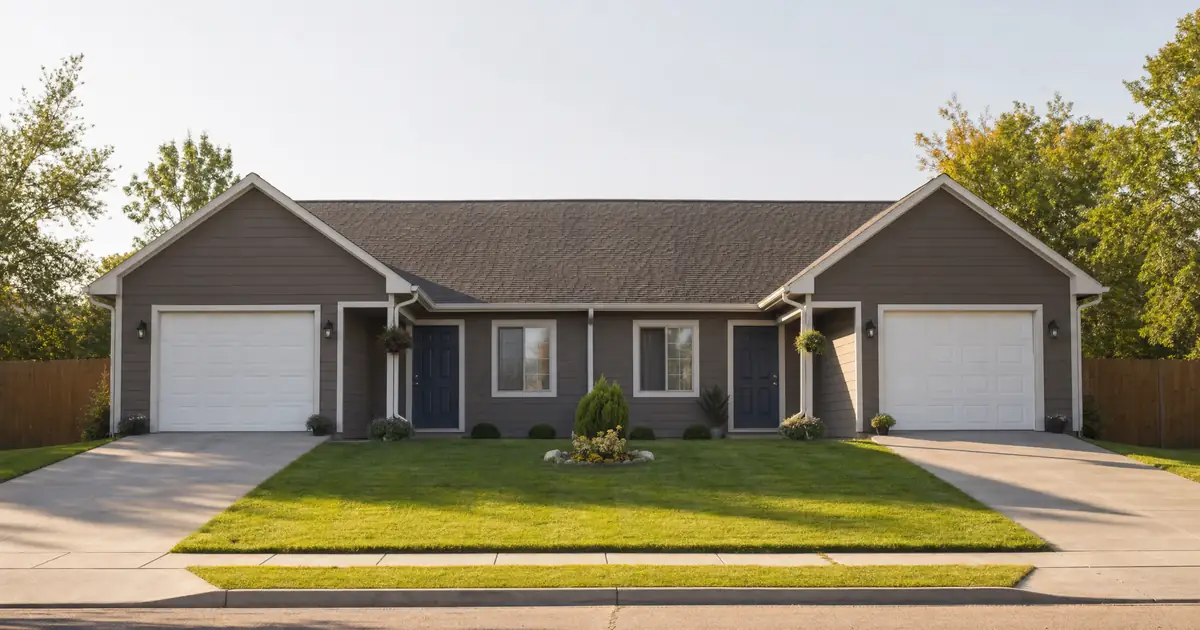
A duplex is one structure with two separate rental units. Lenders treat it very differently depending on whether the owner lives in one of those units. This article covers the pure non-owner-occupied version — both units rented to tenants. That’s the version that routes cleanly into a DSCR investor loan.
Owner-occupied duplexes work differently. Living in one unit while renting the other opens up government-backed and conventional financing paths that a pure rental duplex can’t use. But it also pulls the file out of business-purpose lending. DSCR loans are built for non-owner-occupied investment properties. Because they’re business-purpose investor loans, lenders review them differently than a standard owner-occupied mortgage. Qualification runs on the property’s income, not the borrower’s personal debt-to-income profile.
That distinction matters a lot for the “80%” question. Some higher-leverage purchase programs push toward 80% (and select high-leverage tiers go as high as 85% with a 700+ credit score) — but that’s purchase money, not cash-out. Cash-out proceeds on any duplex — whether it’s held free-and-clear or refinanced repeatedly — cap out lower than purchase leverage across most of the wholesale DSCR network. Every figure here varies by lender and program. Guidelines, property type, leverage, and credit profile all apply.
Why “80%” Isn’t the Number That Applies Here
Eighty percent gets repeated online for a simple reason: it’s the ceiling investors remember from purchase-money DSCR programs, or from conventional cash-out refinances on primary residences. It’s not from investment-property cash-out refinances. On a rental duplex, most DSCR lenders in Lendmire’s network cap cash-out leverage around 75%. That’s a meaningfully different number, even though it sounds close. Final terms depend on lender guidelines, property type, leverage, and the borrower’s full credit picture.
Why does cash-out run tighter than purchase leverage? The reason is simple. A purchase loan is backed by a fresh, arm’s-length sale price. A cash-out refinance relies on an appraiser’s opinion of value, and the lender is handing the borrower cash instead of financing a purchase. Tightening the ceiling by a few points is how the non-QM channel manages that added risk without shutting the door on the deal entirely.
For comparison: Fannie Mae’s conventional Selling Guide requires that, for a cash-out refinance to be eligible for sale to Fannie Mae, the existing first mortgage generally must be at least twelve months old — a full year, not six months (Fannie Mae Selling Guide, B2-1.3-03). That shorter window is one reason investors running acquisition-and-refinance strategies gravitate toward DSCR paper in the first place. It’s covered in more depth in Lendmire’s guide on using a cash-out refinance to buy investment property.
How Underwriting Actually Treats a Duplex Cash-Out File
Every cash-out file on a duplex moves through the same sequence. It doesn’t matter which lender in the network ends up placing it.
Step 1: Classification. The file gets sorted as rate-and-term (paying off the existing loan with no cash disbursed) or cash-out (new money leaves the deal at closing). This one decision sets the leverage ceiling before anything else gets reviewed. Rate-and-term refinances on 2-4 unit properties can generally run a bit higher than cash-out, since no equity is being pulled out.
Step 2: Seasoning check. The lender confirms how long the borrower has held title. Roughly six months from the recorded deed is the common expectation across most programs in the network. After that point, today’s appraised value — rather than the original purchase price — can be used as the LTV base.
Step 3: The appraisal does two jobs at once. An appraiser sets market value using comparable sales. At the same time, the appraiser documents rental income for both units. A duplex has two rent rolls instead of one. Because of that, most lenders in the network default to the same documentation used industry-wide for 2-4 unit properties: the Small Residential Income Property Appraisal Report, known as Fannie Mae Form 1025 (Fannie Mae, Form 1025). A single-family rental instead uses a one-unit rent schedule. It’s a subtle difference, but it changes what the appraiser must document and how the rental income gets built into the file.
Step 4: The DSCR math. Combined gross rent from both units gets divided by the proposed PITIA on the new loan. Most standard programs treat 1.00 as a starting floor for eligibility on select programs — never a universal standard. Stronger pricing and leverage generally open up above roughly 1.25.
Step 5: The leverage cap gets applied. Take two numbers: appraised value times the applicable LTV ceiling, and the amount the rent-to-PITIA math actually supports. The lower of the two becomes the maximum loan size. This is where a duplex with soft combined rent can end up capped well below 75%, even if the appraisal alone would support more. These specifics are subject to lender guidelines and a full review of property, leverage, and credit.
Step 6: Credit, reserves, and closing. Credit tiers commonly used across the network start around a 620 floor on select programs. Most files want closer to 660, and the strongest leverage tiers are reserved for scores of 700 or higher. Reserve requirements vary by lender, loan size, and leverage. Roughly six months of PITIA is common. Conservative rate-and-term files at modest leverage sometimes see that requirement waived, and larger loans typically step up toward nine months. Because this is a business-purpose loan, cash-out proceeds are generally expected to go toward business use — additional acquisitions, rehab, debt tied to the rental business — rather than personal spending. Lendmire’s DSCR cash-out refinance loan page walks through more of that documentation in detail.
The wider market backs up why lenders build this much structure into a business-purpose loan. Non-QM origination data reported through Scotsman Guide shows 2024-vintage non-QM production closed at an average 75% loan-to-value with a 776 credit score — metrics the publication calls indistinguishable from conforming lending. That’s a blended figure across purchase and refinance, one-unit and multi-unit files. Still, it confirms 75% is closer to reality across the non-QM channel broadly than 80% is. Terms vary by lender guidelines, property type, leverage, credit profile, and full file review.
Duplex vs. Single-Family vs. Triplex/Fourplex: How the Files Actually Differ
Unit count doesn’t change the leverage ceiling on its own in most of the network’s DSCR programs. A duplex, a triplex, and a fourplex generally sit under the same 75% cash-out cap as a single-family rental. What changes is the paperwork, the income basis, and how much rent-roll risk the file carries.
| Property Type | Appraisal Basis | Income Documented | Typical Program Fit |
|---|---|---|---|
| Single-family rental | One-unit market rent comparables | One lease or market rent | Standard DSCR 1-4 unit program |
| Duplex (2 units) | Small income-property appraisal, both units | Combined rent, two units | Standard DSCR 1-4 unit program |
| Triplex/Fourplex (3-4 units) | Small income-property appraisal, all units | Combined rent, 3-4 units | Standard DSCR 1-4 unit program |
| 5+ unit apartment | Net operating income analysis | NOI, not gross rent | Commercial multifamily — outside residential DSCR entirely |
That last row matters more than it looks. Once a property crosses from four units into five or more, it exits residential-style DSCR financing altogether. It moves into commercial multifamily underwriting, where the math shifts from gross rent to net operating income. That’s a different kind of program — not just a bigger version of the duplex loan.
Where the General Rule Breaks Down
No rental history yet. Say an investor bought a duplex for cash, rehabbed it, and hasn’t leased either unit yet. That investor often can’t get a cash-out refinance moving even after six months of ownership. Why? The DSCR input — actual or appraised rent — hasn’t been established through a lease or a completed rent-ready unit. Seasoning alone doesn’t fix a file with no income to document.
Coverage below 1.00. Some lenders in the network will still review a cash-out refinance where the combined rent from both units doesn’t fully cover the proposed payment on paper. But leverage and terms adjust to make up for it — usually through a lower LTV, stronger credit, and larger reserves, rather than a simple leverage swap. A no-ratio option is available for DSCR below 1.00 with stronger credit or higher down payment; qualification on that path rests on credit and equity rather than a rent-coverage calculation.
Mixed-use buildings. If commercial space — retail, office, a small restaurant — occupies part of the structure, the file generally routes into a separate mixed-use lane. That lane has its own loan-amount bands and its own leverage ceiling, distinct from a pure residential duplex.
State overlays. A handful of states, including Connecticut, Florida, Illinois, and New Jersey, carry program-level overlays across much of the wholesale non-QM network. These push purchase leverage down toward roughly 75% and cap total exposure on some deals, no matter the unit count.
Ineligible property types. Manufactured homes — single- or double-wide — along with log homes and barndominiums fall outside DSCR programs in the network entirely. That’s not a leverage or pricing penalty. Those property types simply aren’t offered under these guidelines.
Loan size at the top end. Standard DSCR programs generally run up to a defined maximum on a 1-4 unit property. Above a certain threshold, though, the network tends to hold to 30-year fixed structures rather than shorter or adjustable terms. Below that ceiling, 40-year amortization and interest-only periods are available through select lenders for investors who want to manage cash flow differently. Adjustable-rate structures exist too, for investors who prefer them.
Worth mentioning outside the non-QM channel: Texas layers its own constitutional cash-out rules on top of standard program guidelines. That’s covered separately in Lendmire’s Texas cash-out refinance guide.
A Modeled Duplex Scenario (Not a Quote)
This is a hypothetical walkthrough, not a quote of any kind. Actual terms depend on the property and the lender’s guidelines.
Picture an investor who bought a duplex, held it while completing light rehab on both units, and is now six months past closing with both units leased. A fresh appraisal comes back well above the original purchase price. At a modeled 75% cash-out ceiling, the appraised value alone would set one boundary on the new loan. Whether the file actually reaches that boundary depends on a second test: does the combined rent from both units clear a 1.00 DSCR against the new proposed payment? Exact terms depend on the lender’s guidelines, property type, leverage, and a full review of the borrower’s file.
Say the rent grid shows coverage running below 1.00 at maximum leverage. The investor typically has two paths. First: pull back leverage to a more moderate range, which usually restores coverage above 1.00 by lowering the payment. Second: bring the file to a lender that reviews sub-1.00 coverage with adjusted terms — generally meaning lower leverage and stronger credit and reserves, rather than the same terms at a lower ratio. Neither path guarantees approval. Every file is still subject to full underwriting, credit review, and property review.
For a broader look at how this plays out across a whole portfolio, Lendmire’s complete DSCR loans guide breaks down qualification mechanics beyond the cash-out-specific rules covered here.
HELOC and Rate-and-Term Alternatives
A cash-out refinance isn’t the only way to pull equity out of a duplex. An investment-property HELOC is a common alternative. But it comes with a hard limit worth knowing up front: total investment-property HELOC lines cap at a set ceiling across the network. There’s no higher tier available above that, no matter what the property is worth. For a duplex whose value has climbed well beyond what a HELOC line could tap, a cash-out refinance remains the only path to access the full 75% ceiling.
Rate-and-term refinancing is worth considering too, especially for an investor who doesn’t need cash out but wants to adjust the loan structure — moving off a shorter-term note, restructuring for an interest-only period, or simply resetting after a period of ownership. Because no cash leaves the deal, rate-and-term refinances on the same duplex generally see somewhat more leverage room than a cash-out transaction. Lendmire’s guide on refinancing an investment property for cash out compares both paths side by side.
Frequently Asked Questions
Is 80% cash-out LTV ever available on a duplex?
Not through the standard DSCR programs described here. Most lenders in the network cap cash-out refinances on 1-4 unit investment property, duplexes included, around 75% LTV. Figures closer to 80% tend to show up on select purchase-money programs, not cash-out refinances. Don’t assume that’s available for pulling equity out of an existing rental.
How long do I have to own a duplex before I can do a cash-out refinance?
Roughly six months of ownership is the common seasoning expectation across most of the wholesale DSCR network. That’s how long lenders wait before the current appraised value can replace the original purchase price in the LTV calculation. Some lenders may set a different window, and the property needs an established rent history for both units before the DSCR calculation can be completed.
Does my personal income matter on a duplex DSCR cash-out refinance?
It’s reviewed, but it’s not the main qualifying factor. DSCR loans qualify primarily on property-level rental income covering the payment, subject to lender guidelines. Credit score, the DSCR ratio, and loan-to-value are generally the three biggest factors driving pricing and terms — more than traditional personal-income documentation or W-2s.
What happens if my duplex’s combined rent doesn’t cover the new payment?
Some lenders in the network will still consider the file, but with adjusted terms — typically lower leverage, a stronger credit score, and larger reserves, rather than a straight leverage swap. Coverage below 1.00 doesn’t automatically disqualify a duplex, but it changes what the loan looks like.
Can I use cash-out proceeds from a duplex refinance however I want?
Generally, no. This is a business-purpose loan, so proceeds are typically expected to go toward business use — additional rental purchases, rehab on the same or another property, or debt tied to the rental business — rather than personal expenses. Specific restrictions vary by lender.
For how equity extraction works on an investment property, see cash-out refinance on an investment property.
About Lendmire
Lendmire, NMLS# 2371349, arranges DSCR investor financing through select lenders across a wholesale network spanning 40 markets, including Washington, D.C. Lendmire doesn’t fund or approve loans directly — the lender reviewing the file determines approval and terms. Investors weighing a duplex cash-out refinance against a HELOC or a portfolio-wide restructuring can call 828-256-2183 or request a rate scenario through Lendmire’s quote form to see how a specific file lines up against current program guidelines. Loans made to an LLC or other entity are subject to lender program eligibility. Every scenario above is general information, not a commitment to lend — actual leverage, pricing, and terms depend on the lender’s underwriting of the borrower, the property, and the file as a whole. Tax treatment of cash-out proceeds can depend on how the funds are used and how title is held. Investors should keep clear records and talk to a qualified tax professional before relying on any deduction. Scotsman Guide named Lendmire a Top Mortgage Workplace in both 2025 and 2026.
Get Started
Ready to find the right loan for you?
In about 30 seconds you can review financing options available for your home or investment property. No commitment required.
Informational only. Not a Loan Estimate, approval, or commitment to lend. Program availability and eligibility are subject to lender guidelines, credit approval, property review, and underwriting.
References
1. Fannie Mae Selling Guide — B2-1.3-03, Cash-Out Refinance Transactions
2. Fannie Mae Form 1025 — Small Residential Income Property Appraisal Report
3. Scotsman Guide — Which groups are driving non-QM lending?
Brandon Miller
Founder & CEO, Mortgage Loan Originator, Lendmire LLC
- Mortgage Loan Originator · NMLS# 1129696 · Verify on NMLS Consumer Access
- North Carolina Real Estate Broker · License# 343312 · Verify on NCREC
- North Carolina Insurance Producer · License# 19053198 · Property, Casualty, Life, Health · Verify on NAIC SBS
- Lendmire LLC · Firm NMLS# 2371349 · Verify firm licensure
Disclosures. The information presented in this article is general market commentary, not financial, legal, or tax advice. Lendmire is a mortgage brokerage (NMLS# 2371349) — not a direct lender or depository institution — and loan placement is subject to lender underwriting. Nothing in this content represents a commitment to lend. Loan terms, pricing, and program availability vary based on borrower qualifications, property characteristics, and state of subject property, and are subject to change at any time. Lendmire complies with Equal Housing Opportunity requirements. Consumer access: nmlsconsumeraccess.org.


