
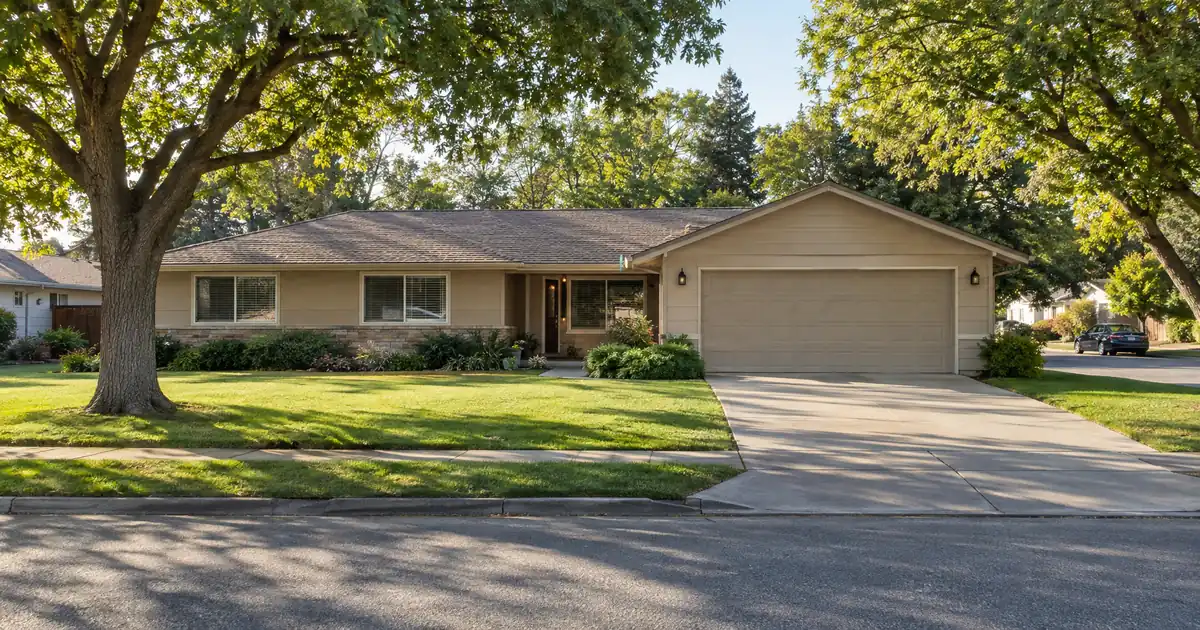
Can You Use The Equity In Your Home To Buy An Investment Property — The Quick Read: Yes. A homeowner can pull cash out through a HELOC, a home equity loan, or a cash-out refinance, then use that cash as the down payment on a separate rental purchase. The two loans are legally distinct, secured by two different properties, and the new rental usually qualifies through a DSCR loan that looks at the property’s own rent rather than the buyer’s personal income. The tradeoff is real: the investor now carries a payment on the equity draw and a payment on the new loan, and both have to hold up if the market softens.
Key Terms Defined
A few terms show up constantly in this conversation, and getting them straight matters before anything else does.
DSCR Calculator
Run the numbers in your market
Rate source: Freddie Mac 30-yr average via FRED® — Federal Reserve Bank of St. Louis · effective Sep 17, 2026
Prefilled with local estimates — enter your own rent or nightly figures, taxes, insurance, and HOA for a more accurate picture.
Program parameters update from Lendmire’s centralized guideline source. Taxes and insurance are editable estimates.
As of Sep 17, 2026 · General Freddie Mac market benchmark, not a Lendmire loan offer. Rent, nightly rate, occupancy, taxes, and insurance are editable estimates. Short-term rental figures are estimates only and vary significantly by season, property type, management approach, and local short-term-rental rules — confirm local regulations before relying on them. Qualifying income for short-term rentals varies by program — some use appraisal market rent, others use documented STR history or projections — and is confirmed in underwriting. Not a Loan Estimate, approval, or commitment to lend. Program availability and eligibility are subject to lender guidelines, credit approval, property review, and underwriting.
HELOC — a revolving line of credit secured by your home, similar to a credit card with a much larger limit and the house as collateral.
Home equity loan (HELOAN) — a lump-sum second mortgage with a fixed balance, taken out on top of your existing first mortgage.
Cash-out refinance — a new first mortgage that replaces the old one and pays out the difference between the new loan and the old balance in cash at closing.
DSCR loan — a rental-property loan that qualifies the borrower based on the ratio of the property’s rent to its full monthly obligation, rather than personal income documents.
PITIA — principal, interest, taxes, insurance, and association dues, the full monthly obligation a DSCR ratio measures rent against.
CLTV (combined loan-to-value) — every lien on a property, added together, divided by its value; this number caps how much equity is actually available to draw.
Seasoning — the waiting period a lender requires between when cash lands in a bank account (or a property is acquired) and when it can be used to qualify for a new loan.
Two Loans, Two Different Transactions
This strategy is really two separate financing decisions stitched together, and treating them as one loan is where confusion starts. The first transaction pulls cash out of a property you already own. The second transaction buys a new property using that cash as part of the down payment. They close separately, they’re underwritten separately, and in most cases they involve two different lenders entirely.
That separation matters most on the qualifying side. A conventional lender financing the new purchase would fold the new HELOC or home-equity-loan payment directly into your personal debt-to-income ratio, which can shrink how much you qualify to borrow. DSCR loans are designed for non-owner-occupied investment properties. Because they’re business-purpose investor loans, they get reviewed differently than a standard owner-occupied mortgage — the new property is qualified on its own rent-to-payment math, not on your household income statement. Lendmire’s complete DSCR loans guide walks through that qualification process in more depth.
Where Does the Down Payment Actually Come From?
There are really two versions of this play, and they carry different risks. Version one pulls equity from the home you live in. Version two pulls equity from a rental you already own.
Pulling from your primary residence is the more common path, and it isn’t unusual. More than half of repeat buyers — 54% — already use proceeds from selling a prior home to fund their next purchase, according to the National Association of Realtors’ 2025 Profile of Home Buyers and Sellers. Drawing a HELOC or cash-out refinance instead of selling is the same underlying idea — access the wealth trapped in the house without giving up the property or its existing financing.
Pulling equity from a rental you already own works mechanically the same way but scales differently for repeat investors. It keeps new debt off the home you live in, which some investors prefer for peace of mind. The tradeoff is that investment-property HELOC lines are smaller — most cap around $500,000 in total available credit — so this path works better for a modest down payment than for funding a large acquisition on its own.
Home Equity Loan vs. HELOC vs. Cash-Out Refinance vs. Just Saving Up
Each vehicle solves the “where does the down payment come from” question a little differently.
| Option | How It Works | Best For | Key Risk |
|---|---|---|---|
| Home Equity Loan | Lump-sum second lien, fixed payment | One clean draw for a known purchase | Adds a fixed second lien to your home |
| HELOC | Revolving line, draw as needed | Opportunistic buying over time | Line can be reduced if home value drops |
| Cash-Out Refinance | Replaces the first mortgage entirely | Investors also restructuring the original loan | Resets the whole first-lien balance |
| Saving Up | Cash from reserves, no new lien | Investors avoiding added debt on the primary home | Slower to reach the next purchase |
None of these is automatically “correct.” An investor with substantial equity and a stable primary-residence payment often leans toward a HELOC for flexibility. An investor who also wants to shed a higher first-mortgage balance sometimes prefers the cash-out refinance instead, even though it touches the entire loan rather than layering a second one on top.
How the New Rental Actually Qualifies
Once the cash is sourced and seasoned, the new purchase gets underwritten on its own. Most DSCR programs across Lendmire’s wholesale network set 1.00 coverage as a floor for specific programs — meaning rent covers the full PITIA payment — though that’s a program-level floor, not a universal rule, and stronger ratios generally open better leverage and pricing.
It’s worth being precise here: clearing 1.00 coverage is not the same thing as positive cash flow. The DSCR math compares rent to the mortgage payment only. Repairs, vacancy stretches, management fees, and capital expenses all sit outside that ratio, so a property that clears 1.00 can still run a negative month once real operating costs land.
For a one-unit rental where rental income is used to qualify, the appraiser typically completes the Single-Family Comparable Rent Schedule, comparing the subject property against similar rentals to support the market rent figure that drives the coverage math. That same tool wasn’t built for short-term rentals. Appraisers are cautioned against multiplying a nightly rate by 30 days to estimate monthly rent, since that approach skips over vacancy, business expenses, and furnishings. An investor planning to fund an Airbnb-style purchase with home equity should expect a different rent-support process — and different leverage. STR purchases in Lendmire’s network typically top out around 75% LTV with roughly a 700-plus credit score and about a year of hosting history, while STR refinances and cash-out both generally cap closer to 70% LTV.
Coverage below 1.00 isn’t automatically a dead end, either. Select lenders in the network review sub-1.00 files, with leverage and terms adjusted to compensate. Some borrowers who already own a primary residence may also qualify through a no-ratio structure that skips the rent-to-payment test entirely — available only through select lenders and generally reserved for stronger overall files.
In practice, files that lean on home equity for the down payment and also carry thin rental coverage tend to draw more scrutiny on reserves. Files with real equity cushion on the source property and coverage comfortably above 1.00 usually move through underwriting with fewer questions — the two strengths reinforce each other rather than substituting for one another.
The Process, Step by Step
1. Check your home’s current value against your outstanding mortgage balance to estimate available equity and combined loan-to-value. 2. Pick the extraction vehicle — HELOC, home equity loan, or cash-out refinance — based on whether you want a lump sum or a flexible line. 3. Let the cash season in a bank account. Lenders want to see funds sitting there, not landing the week before closing. 4. Shop the investment property and get a rent estimate an appraiser can actually support. 5. Apply for the acquisition loan. For a straight rental purchase, that’s typically a DSCR loan built around the property’s income rather than your traditional personal-income documentation. 6. Close both transactions. They’re separate loans on separate properties, often with separate lenders and separate timelines. 7. Manage two ongoing obligations: the equity-draw payment on the original home and the new investment loan on the rental.
A Worked Example
Say an investor uses a cash-out refinance on a primary residence, keeping the new first-lien balance within a 75% cap on that property (a cash-out ceiling on standard rentals, versus a 70% ceiling when the collateral is a short-term rental). The cash lands in a checking account, seasons for the required stretch, and becomes the down payment on a separate rental purchase.
On the acquisition side, most programs in the network want 20%-25% down — 75%-80% LTV — with a handful of high-leverage programs reaching 85% LTV for borrowers around a 700 credit score or higher. If the rent on that new rental clears the full monthly obligation at something like 1.20x or better, the file carries real cushion. A property landing closer to 1.00x still clears the select-program floor, but there’s less room to absorb a vacancy or an unplanned repair bill.
Standard DSCR programs in the network go up to $3 million on the acquisition side, with smaller balances available through select lenders as well. Reserve requirements move with leverage and loan size — commonly around six months of PITIA, sometimes waived on conservative, lower-leverage rate-term files under roughly $1.5 million, and stepping up toward nine months on larger loans.
What Could Go Wrong
The biggest risk isn’t the new rental — it’s the original home. A HELOC or home equity loan turns the house you live in into collateral for a second obligation. If the new rental sits vacant longer than expected or needs an unbudgeted repair, the investor is still on the hook for both payments, and the original home is exposed if things go sideways.
Not every homeowner actually has equity to tap, either. Owners who bought recently, carry a high first-mortgage balance, or live in a market that’s cooled may find they have far less room to borrow than a general “homeowners are equity-rich” headline suggests. Combined loan-to-value, credit, and lender overlays decide access — not a national average.
Tax treatment can also depend on how the funds are used and how the property is held; investors should keep clear records and talk to a qualified tax professional before relying on any deduction.
Second Home or Investment Property? The Line Matters
The label on the loan documents doesn’t settle how a property gets treated — occupancy and unit count do. This distinction usually only matters for house-hackers pulling equity from a primary residence that also has a rental unit attached. A purchase loan on that kind of property is deemed business-purpose only if it has more than two housing units, while a loan used to improve or maintain it needs more than four units, per CFPB commentary on Regulation Z. For a straight single-family rental with no owner-occupancy involved, that question doesn’t come up at all — it’s a business-purpose acquisition either way.
Is This the Right Move for You?
This strategy tends to make the most sense for an investor who already has meaningful equity, stable income to carry the original home’s payment, and a rental market where rents realistically clear a coverage ratio near or above 1.00. It tends to make less sense for someone whose equity cushion is thin, whose primary-residence payment already runs tight, or who’s eyeing a rental in a submarket where rents lag purchase prices badly enough that even a strong down payment won’t get coverage close to workable.
Investors weighing whether to draw against a primary home or an existing rental instead can compare both paths in more depth through Lendmire’s guide on using home equity to buy an investment property, and those specifically considering a home equity loan structure can look at how that product funds a rental purchase.
If you’re buying or refinancing a rental property and want to see how the numbers work, Lendmire — a DSCR-focused mortgage broker working with select lenders across 40 markets, including Washington, D.C. — can help compare loan options based on the property’s income, your credit profile, available leverage, and your broader investing goals.
Frequently Asked Questions
Can I use equity from a rental I already own instead of my primary home?
Yes — a HELOC on an existing rental works the same way mechanically, though the credit line typically caps around $500,000 total. It keeps new debt off the home you live in, which is why some repeat investors prefer this route once they own a property with real equity built up.
Does pulling equity from my home hurt my DTI on the new investment loan?
Not on a DSCR loan. Because DSCR lender review runs primarily on the property’s own rental income covering the payment, subject to lender guidelines, the new HELOC payment lives on the source property’s file rather than getting folded into a personal debt-to-income calculation for the acquisition loan.
Do I need extra cash reserves on top of the down payment?
Usually, yes. Reserve requirements vary by lender, leverage, and loan size, but roughly six months of PITIA is common on most files, with some lower-leverage rate-term deals under $1.5 million seeing reserves waived and larger loans stepping up toward nine months.
What credit score do I need for this strategy?
It depends on the program. Some lenders in the network go as low as 620, most want closer to 660, and a score around 700 or higher tends to unlock the strongest leverage tiers, including the higher-LTV purchase programs.
Can I use equity to fund a short-term rental purchase the same way?
Yes, but expect different numbers. STR purchases in the network typically top out around 75% LTV with a 700-plus credit score and roughly a year of hosting history, and the appraisal process for estimating rent works differently than it does for a standard long-term rental.
For current guidelines and terms, see Lendmire’s DSCR loan programs page.
About Lendmire
Lendmire is a non-QM mortgage brokerage (NMLS# 2371349) arranging DSCR investor loans in 40 markets, including Washington, D.C. DSCR eligibility is generally reviewed around property-level rental income rather than personal income, subject to lender and program guidelines, a fit for self-employed investors and LLC-owned portfolios. Lendmire was recognized as a Scotsman Guide Top Mortgage Workplace in 2025 and 2026.
Lendmire’s Top Mortgage Workplace recognition is documented by Scotsman Guide 2025 Top Mortgage Workplace and Scotsman Guide 2026 Top Mortgage Workplace.
Get Started
Ready to find the right loan for you?
In about 30 seconds you can review financing options available for your home or investment property. No commitment required.
Informational only. Not a Loan Estimate, approval, or commitment to lend. Program availability and eligibility are subject to lender guidelines, credit approval, property review, and underwriting.
References
1. NAR 2025 Profile of Home Buyers and Sellers
2. Fannie Mae — Single-Family Comparable Rent Schedule (Form 1007)
3. CFPB Comment for 1026.3 — Exempt Transactions
Brandon Miller
Founder & CEO, Mortgage Loan Originator, Lendmire LLC
- Mortgage Loan Originator · NMLS# 1129696 · Verify on NMLS Consumer Access
- North Carolina Real Estate Broker · License# 343312 · Verify on NCREC
- North Carolina Insurance Producer · License# 19053198 · Property, Casualty, Life, Health · Verify on NAIC SBS
- Lendmire LLC · Firm NMLS# 2371349 · Verify firm licensure
Disclosures. The information presented in this article is general market commentary, not financial, legal, or tax advice. Lendmire is a mortgage brokerage (NMLS# 2371349) — not a direct lender or depository institution — and loan placement is subject to lender underwriting. Nothing in this content represents a commitment to lend. Loan terms, pricing, and program availability vary based on borrower qualifications, property characteristics, and state of subject property, and are subject to change at any time. Lendmire complies with Equal Housing Opportunity requirements. Consumer access: nmlsconsumeraccess.org.


