
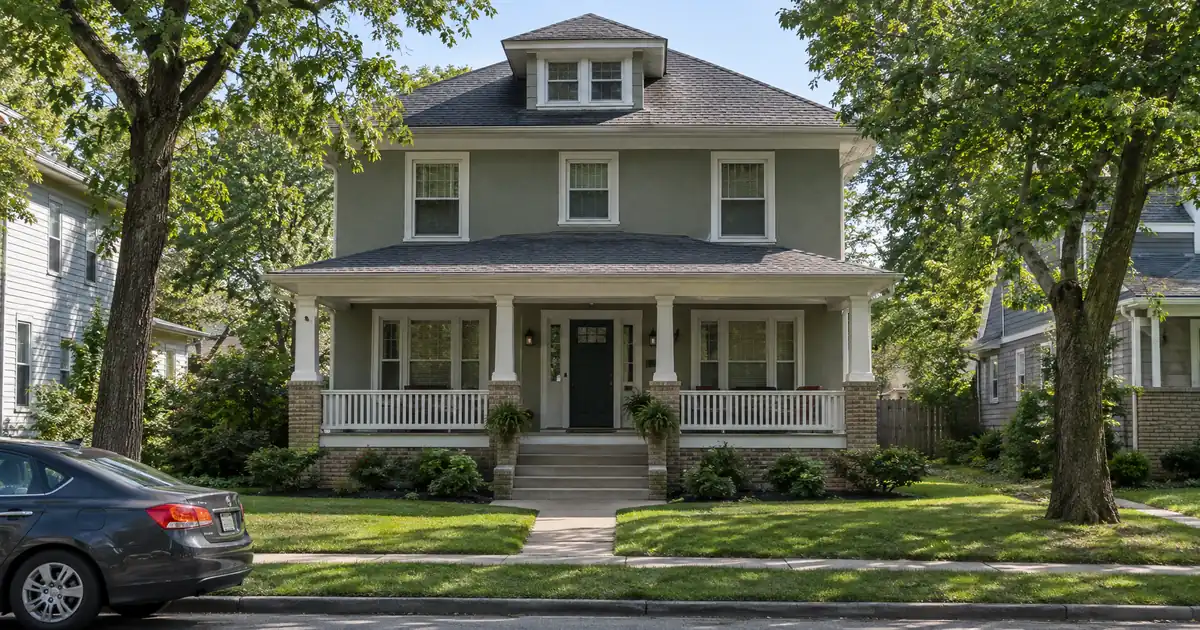
HELOC To Invest
HELOC To Invest — The Quick Read: A HELOC is a revolving credit line secured by home equity, and a lot of investors treat the draw as ready-made down-payment cash for a rental purchase instead of spending it directly on stocks or a business. That draw doesn’t disappear once it lands in a bank account — a lender still has to trace it, season it, and confirm it’s really the borrower’s own money before it can close a deal. What makes this pairing work for real estate specifically is that a DSCR loan, the acquisition loan on the other end, qualifies off the rental property’s own income rather than the borrower’s personal debt load — so a HELOC payment sitting on a different property usually doesn’t stack against the new loan the way it would on a standard mortgage.
Key Takeaways
- A HELOC draw used as a down payment is treated as sourced borrowed capital, not a gift — lenders still trace where it came from and how long it sat before closing.
- DSCR loans qualify on the subject property’s rent against its own payment, which is why a HELOC payment on another property usually doesn’t get folded into that math.
- Investment-property HELOC lines cap far lower than primary-residence lines — 70% combined loan-to-value and a $500,000 ceiling, against a 90% ceiling that exists only for the strongest primary-residence credit profiles.
- LLC-owned rentals generally can’t hold a HELOC directly — home equity lines want an individual borrower or a revocable living trust on title.
- The biggest overlooked risk isn’t the new rental — it’s the home behind the HELOC, which stays on the hook if the investment underperforms.
What Exactly Is a HELOC, and How Does the Draw Period Work?
A HELOC works like a credit card secured by your house. You get a credit limit, you draw against it as needed, and you pay interest only on what you’ve actually pulled — not the full limit.
How large a line the equity supports in your market.
An equity line is sized by combined loan-to-value, occupancy, and credit — not by rental coverage. Switch the occupancy or the credit band and the ceiling moves with it.
Investment-property lines require a 700 minimum credit score. Second-home tiers reach 640; primary-residence tiers reach 600.
A debt-to-income ratio above 45% requires 680+ credit. Profiles under 640 are limited to single-family homes. At least 75% of the approved line is drawn at closing. Ceilings, floors, and caps update from Lendmire’s centralized guideline source.
Line estimate
Illustrative estimate only — not a quote, Loan Estimate, approval, or commitment to lend. The rate is an editable assumption; equity-line pricing is variable through both the draw and repayment periods and never converts to fixed. Occupancy and credit drive the ceiling together: investment property runs to 70% combined LTV with a 700 credit floor and a $500,000 cap; a second home runs to 90% at a 640 floor with a $500,000 cap; a primary residence reaches up to 90% at a 600 floor, and its $750,000 maximum line applies only at 75% combined LTV or below with 720+ credit and a full appraisal. Lines above $500,000 require a full appraisal. Credit, debt-to-income, property type, and full underwriting review all affect the final line.
The Consumer Financial Protection Bureau describes the product in two phases. First comes the draw period, where you can pull money, repay it, and pull again, often making interest-only payments the whole time. Then comes the repayment period, where the ability to draw more money stops and the balance starts amortizing — often over ten to twenty years, depending on the program.
That transition matters more than most borrowers expect. Payments are usually much higher once repayment begins, and HELOC rates are usually variable, so the payment can move even before that switch happens.
Key Terms Defined
HELOC: a revolving credit line secured by home equity, usable and repayable in draws rather than a single lump-sum loan.
Draw period: the phase of a HELOC where the borrower can pull funds up to the credit limit, typically making interest-only payments.
Repayment period: the phase after the draw period ends, when new draws stop and the balance amortizes on a fixed schedule.
CLTV (combined loan-to-value): the balance of every lien on a property — first mortgage plus the HELOC — measured against the home’s value.
DSCR (debt service coverage ratio): a comparison of a rental property’s monthly rent against its own monthly payment, used to qualify the acquisition loan.
PITIA: the full monthly housing payment — principal, interest, taxes, insurance, and association dues — that a DSCR loan measures rent against.
Business-purpose loan: a loan made for a non-owner-occupied investment property rather than a personal residence, which changes how it gets reviewed and disclosed.
How Does Underwriting Actually Treat HELOC Money Used to Invest?
Underwriting treats a HELOC draw as sourced, borrowed capital — a legitimate down-payment source, but not a free pass. The receiving lender’s job is to confirm the money is really yours and that it landed in your account cleanly before closing.
Here’s the sequence most files actually follow:
First, the HELOC lender sets the credit limit based on home value, the existing lien balance, and your credit profile. Second, you draw against that limit during the draw period, and every dollar pulled for an investment purchase becomes part of the paper trail a lender will later want to see. Third, the receiving lender on the new purchase traces that deposit — confirming it wasn’t a disguised loan from an interested party and that it’s been sitting on your bank statements long enough to look seasoned, not last-minute.
Fourth — and this is the part that actually changes the math — qualification forks depending on what kind of loan is buying the new property. On a personal-income mortgage, that new HELOC payment gets added to your monthly liabilities before the new mortgage payment gets weighed against your income. On a DSCR loan, qualification runs off the subject property’s own rent relative to its own proposed payment. The HELOC sitting on a different property doesn’t automatically get folded into a debt-to-income calculation that doesn’t exist on a business-purpose investor loan in the first place. That’s the practical reason investors reach for HELOC-funded down payments when scaling a portfolio rather than buying one property at a time with cash.
DSCR loans are built for non-owner-occupied rentals specifically. Because they’re business-purpose investor loans, they get reviewed differently than a standard owner-occupied mortgage — and that different review is exactly what lets the rent, not your personal paycheck, carry the file.
What Structures and Variations Actually Exist?
Not every HELOC is the same product, and the tier you qualify for depends heavily on whose home is behind it. Across Lendmire’s wholesale network, the ceilings split sharply by occupancy.
On a primary residence, strong credit profiles — 720 and up — can reach a 90% combined loan-to-value ceiling, but only on lines capped at $500,000; a separate tier reaches 75% CLTV on lines up to $750,000 at that same 720+ profile (700+ also qualifies for the 75%/$750,000 tier). The program floor sits at a 600 credit score, though weaker credit pulls the ceiling down fast — a 600 profile tops out closer to 60% CLTV on a $400,000 line. Terms vary by lender guidelines, property type, leverage, credit profile, and full file review.
On a second home, the top tier is also 90% CLTV at 720+, but the cap stays at $500,000 and the credit floor is 640, not 600.
On an investment property — a HELOC secured by a rental you already own, rather than your primary home — the ceiling drops to 70% CLTV across the board, the credit floor jumps to 700, and the line caps at $500,000. There’s no higher tier above that for investment collateral; a 70% CLTV, $500,000 line is the ceiling, full stop.
Two draw structures exist on primary and second-home lines: a 3-year interest-only draw followed by 17 years of amortizing repayment, or a longer 5-year draw followed by 25 years of repayment (Tennessee shortens both to 3/12 and 5/10). Investment-property lines run the 5-year draw and 25-year repayment structure only — no shorter option. On both programs, at least 75% of the approved line has to be drawn at closing, and pricing floats through the entire life of the loan on both structures — it never converts to a fixed rate.
Reserve requirements on the acquisition side vary by lender, leverage, and loan size rather than following one fixed number. Many files land around six months of PITIA in reserve; a conservative rate-and-term refinance under roughly $1.5 million can sometimes see reserves waived entirely, while loan amounts above that threshold commonly step up toward nine months. None of that is universal — it moves file by file.
A HELOC can also sit in first or second lien position as a standalone line. Whether a DSCR-style acquisition loan can occupy second position behind an existing lien is program-specific too, which matters if you’re stacking a new HELOC behind a property that’s already DSCR-financed rather than pulling equity from a separate, unencumbered home.
Where Does the General Rule Break Down?
The biggest break in the general rule is title. Home equity lines want an individual borrower — or an inter vivos revocable living trust — on title. LLCs, corporations, partnerships, and irrevocable trusts can’t hold a HELOC at all. That’s the sharpest structural difference from a DSCR loan, which is built specifically to close in a LLC’s name, subject to lender program eligibility. If your rental is already deeded to an entity, a HELOC on that property isn’t an option — you’d need a vesting change first or a DSCR cash-out refinance instead, which does allow entity title.
Exposure limits break the rule too. A single borrower is capped at three HELOC lines total, with combined exposure across those lines topping out at $2,000,000 on the higher-leverage program and $750,000 on the longer-runway program. Own more than fifteen financed properties, and you’re outside eligibility on either program regardless of equity position.
Credit history breaks it further. Bankruptcy needs four years of seasoning from discharge or dismissal on both programs. Foreclosure history splits sharply — one program allows a foreclosure seven years out and a deed-in-lieu, pre-foreclosure, or short sale at four years; the other declines that history entirely, no matter how old it is. Investment-property lines follow the seven-and-four-year path. And below a 640 credit score, eligibility narrows to single-family homes with a clean twelve-month payment history — a restriction that, because second homes floor at 640 and investment properties floor at 700, only ever applies to primary-residence borrowers. Exact terms depend on the lender’s guidelines, property type, leverage, and a full review of the borrower’s file.
State overlays add another layer. Texas binds its 12-day waiting period, one-lien-at-a-time rule, and 12-month seasoning requirement to primary residences only — Texas second homes and investment properties close as non-homestead transactions instead, and Texas properties are capped at 10 acres regardless of occupancy. New Mexico and Ohio scale their CLTV cap to the credit profile rather than using one flat number. Indiana, North Carolina, Pennsylvania, Tennessee, Texas, and Washington won’t approve a property that’s been listed for sale, or was listed within the past 60 days.
Property type breaks the rule on both sides of the transaction. Manufactured homes, co-ops, condotels, log homes, commercial, mixed-use, and agriculturally zoned property don’t qualify for a home equity line in this network. On the acquisition side, the DSCR loan buying the new rental has its own no-go list — manufactured homes, log homes, and barndominiums simply aren’t offered through Lendmire’s DSCR programs. If the plan involves either of those property types, the HELOC-to-invest strategy hits a wall before financing ever gets to the underwriter.
One more break worth naming: a HELOC secured by your primary home typically carries a 3-business-day right of rescission and standard consumer disclosures under Truth in Lending, per Regulation Z — protections that don’t extend to the business-purpose DSCR loan on the acquisition side of the same transaction, since that loan is exempt from those consumer-disclosure rules by design. The two loans in one strategy can sit on opposite sides of that line.
Running the Numbers: HELOC Equity Into a DSCR Purchase
Picture an investor sitting on real equity in a primary home valued in the mid-$500,000s, currently financed near 50% loan-to-value, with a 720+ credit profile. That profile could reach the network’s 75% CLTV, $750,000-line tier, drawing a portion of that unused equity out as a HELOC and routing it straight to a closing table rather than a checking account used for groceries and bills.
On the other end, a DSCR purchase typically runs 75%-80% loan-to-value across most of Lendmire’s network, with select high-leverage programs reaching 85% at a 700+ score. Layer that against a modestly priced duplex or small multifamily, and a coverage ratio in the 1.1x-1.2x range — rent comfortably clearing the proposed payment — is a realistic target if market rents support it. Loan sizes across the network generally run up to $3,000,000 on standard programs (smaller balances available through select lenders), and anything above $2,500,000 typically lands in a 30-year fixed structure rather than an adjustable one.
Lendmire’s DSCR-focused brokerage sees this pattern constantly across its network: files where the down payment traces cleanly to a HELOC draw tend to move through underwriting with fewer conditions than files where a lump sum shows up in a bank account with no paper trail behind it. The strongest version of this file has two things lined up at once — enough sourced equity to satisfy the leverage requirement, and enough projected rent to clear the coverage floor. Neither one substitutes for the other.
If the projected rent comes in under full coverage, that doesn’t automatically end the file. Sub-1.00 coverage deals are available through select lenders in the network, with leverage and pricing adjusted to offset the lighter cash flow. And because a HELOC borrower already owns a primary residence by definition, that same file might also fit a no-ratio DSCR path — a structure available only through select lenders, generally reserved for borrowers who already hold a primary home. Neither path is guaranteed; both are subject to full lender review.
Some investors skip the HELOC step and pull equity straight out of an existing rental instead, through a DSCR cash-out refinance. That path tops out around 75% LTV on a standard rental and 70% LTV on a short-term-rental property, in the same breath, with roughly six months of seasoning expected first. Lendmire’s complete DSCR loans guide walks through how that coverage math is built if the rental-equity route looks better than tapping a primary home. Every figure here varies by lender and program — guidelines, property type, leverage, and credit profile all apply.
What Can Go Wrong?
Clearing a 1.00 coverage ratio is not the same thing as positive cash flow — that’s the single most common misread in this whole strategy. DSCR only compares rent to the payment itself. Repairs, vacancy, property management, utilities, and capital expenses all sit outside that number entirely, and a property that clears 1.00 can still lose money in a slow month once those costs hit.
The bigger risk sits behind the HELOC itself, not the new rental. If the HELOC is secured by your primary home, that home stays on the hook — a missed payment risks foreclosure on the house you live in, not just the investment property the draw helped buy. A HELOC payment not counting against you on a DSCR application doesn’t make the debt disappear; it’s still a real, recourse obligation secured by whatever property backs the line.
Payment shock deserves its own line of thinking. Because HELOCs usually carry variable rates and shift from interest-only draws to full amortization, the CFPB flags that transition as one of the primary drivers of borrower financial distress. Anyone leaving a large HELOC balance outstanding through the draw period, planning to service it with rental cash flow, should model what that payment looks like the day the line converts — not just what it costs today.
Tax treatment can depend on how the funds are used and how the property is held; investors should keep clear records and speak with a qualified tax professional before relying on any deduction.
What Does the Investor Decision Actually Look Like?
The decision usually comes down to one question: is there more usable equity sitting in your primary home than there is in the rental you’d otherwise cash-out refinance? If the primary home carries the bigger equity cushion and a strong credit profile, the HELOC route often opens a higher CLTV ceiling — up to 90% at 720+ on qualifying lines — than a rental-secured cash-out ever would. If the equity actually sits in the rental itself, a DSCR cash-out refinance skips the extra lien and the extra monthly obligation on the primary home altogether.
Pricing and available terms vary by lender, borrower profile, property type, and full underwriting review. DSCRLens — a range that lines up closely with what shows up across Lendmire’s own wholesale network at the higher end of its purchase leverage tiers.
Availability matters, too, and it’s not identical for both halves of this strategy. Lendmire brokers home equity lines directly in sixteen full-service states — Alabama, California, Colorado, Florida, Georgia, Indiana, Michigan, Montana, New Mexico, North Carolina, Ohio, Pennsylvania, Tennessee, Texas, Virginia, and Washington. Its DSCR investor-loan programs reach a much wider footprint — 39 states plus Washington, D.C., 40 markets total. An investor pulling equity in one of those sixteen states to buy a rental somewhere else entirely is well within reach; the geography of the down payment and the geography of the purchase don’t have to match.
If you’re weighing whether to pull equity now or hold off, Lendmire can help you compare DSCR loan options based on the property’s projected income, your credit profile, available leverage, and where you’re trying to take the portfolio next — reach the team at 828-256-2183. For investors specifically thinking about scaling a rental portfolio through recycled equity, the Morris Invest HELOC strategy breakdown and Lendmire’s broader look at using a HELOC to invest both dig deeper into the mechanics from different angles.
Frequently Asked Questions
Can I use a HELOC on my primary residence to buy a rental property?
Yes — this is one of the most common ways investors fund a down payment. The HELOC draw gets sourced and documented like any other borrowed capital, and the DSCR loan buying the rental qualifies off that property’s own rent rather than your personal income, subject to full lender review.
Does a HELOC payment count against me when I apply for a DSCR loan?
Not the way it would on a conventional mortgage. DSCR lender review runs off the rental property’s rent against its own proposed payment, not your aggregate personal debt — so a HELOC payment sitting on a different property usually doesn’t get folded into that ratio. It’s still a real obligation you need to be able to cover.
Can an LLC take out a HELOC on a rental it already owns?
Generally no. Home equity lines in this network want an individual borrower or a revocable living trust on title — LLCs, corporations, and partnerships can’t hold a HELOC directly. If the property is already deeded to an entity, a DSCR cash-out refinance, which does allow entity title, is usually the better path.
What happens if my HELOC converts to full repayment while I’m still using the money on an investment?
The payment typically jumps once the draw period ends and amortization starts, and HELOC rates are usually variable on top of that. Model that future payment before committing rental cash flow to service the line — waiting until the conversion date to find out is the mistake that catches investors off guard.
Is the interest on a HELOC used to buy a rental property tax-deductible?
It depends on how the funds are used and documented, not simply on the fact that the loan is secured by your home. Keep clean records tying the draw to the investment purchase and talk with a qualified tax professional before assuming any deduction applies.
About Lendmire
Lendmire is a DSCR-focused mortgage brokerage, NMLS# 2371349, placing investor loans across 40 markets, including Washington, D.C. DSCR eligibility is generally reviewed by the lender around a property’s rental income rather than personal income documentation, which fits LLC-held rentals, self-employed investors, and portfolios scaling past conventional financed-property limits. Scotsman Guide named Lendmire a Top Mortgage Workplace in both 2025 and 2026.
Get Started
Ready to find the right loan for you?
In about 30 seconds you can review financing options available for your home or investment property. No commitment required.
Informational only. Not a Loan Estimate, approval, or commitment to lend. Program availability and eligibility are subject to lender guidelines, credit approval, property review, and underwriting.
References
1. Consumer Financial Protection Bureau — Regulation Z, Right of Rescission
2. DSCRLens — DSCR Loan Down Payment Guide
Brandon Miller
Founder & CEO, Mortgage Loan Originator, Lendmire LLC
- Mortgage Loan Originator · NMLS# 1129696 · Verify on NMLS Consumer Access
- North Carolina Real Estate Broker · License# 343312 · Verify on NCREC
- North Carolina Insurance Producer · License# 19053198 · Property, Casualty, Life, Health · Verify on NAIC SBS
- Lendmire LLC · Firm NMLS# 2371349 · Verify firm licensure
Disclosures. The information presented in this article is general market commentary, not financial, legal, or tax advice. Lendmire is a mortgage brokerage (NMLS# 2371349) — not a direct lender or depository institution — and loan placement is subject to lender underwriting. Nothing in this content represents a commitment to lend. Loan terms, pricing, and program availability vary based on borrower qualifications, property characteristics, and state of subject property, and are subject to change at any time. Lendmire complies with Equal Housing Opportunity requirements. Consumer access: nmlsconsumeraccess.org.


