
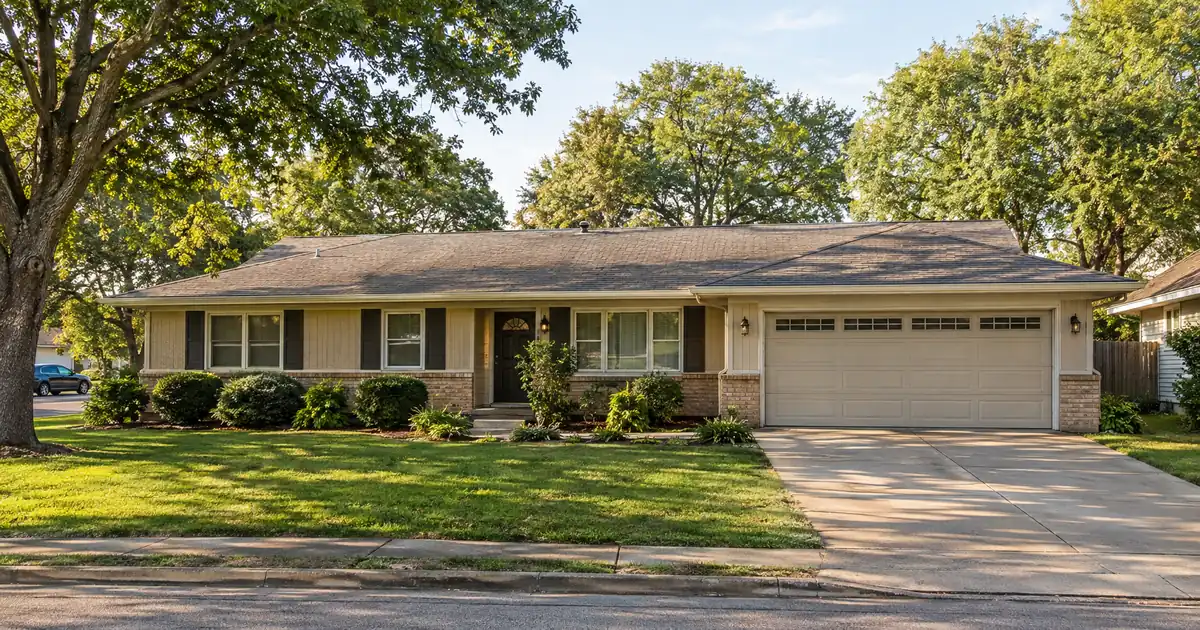
Home Equity Loan Against Rental Property
Home Equity Loan Against Rental Property — The Quick Read: A home equity loan or HELOC against a rental property is a second mortgage. It sits behind the existing loan and gets repaid based on your personal credit and debt-to-income, not the property’s rent. Across select wholesale programs, investment collateral typically caps near 70% combined loan-to-value, with a 700 minimum credit score and a $500,000 line ceiling. Because these lines usually require title in an individual’s name or a revocable trust, many landlords who hold rentals in an LLC end up choosing a DSCR cash-out refinance instead — subject to lender program eligibility.
Key Terms Defined
Home equity loan — a lump-sum loan secured by the equity in a property, paid back on a set schedule, separate from any existing first mortgage.
How large a line the equity supports in your market.
An equity line is sized by combined loan-to-value, occupancy, and credit — not by rental coverage. Switch the occupancy or the credit band and the ceiling moves with it.
Investment-property lines require a 700 minimum credit score. Second-home tiers reach 640; primary-residence tiers reach 600.
A debt-to-income ratio above 45% requires 680+ credit. Profiles under 640 are limited to single-family homes. At least 75% of the approved line is drawn at closing. Ceilings, floors, and caps update from Lendmire’s centralized guideline source.
Line estimate
Illustrative estimate only — not a quote, Loan Estimate, approval, or commitment to lend. The rate is an editable assumption; equity-line pricing is variable through both the draw and repayment periods and never converts to fixed. Occupancy and credit drive the ceiling together: investment property runs to 70% combined LTV with a 700 credit floor and a $500,000 cap; a second home runs to 90% at a 640 floor with a $500,000 cap; a primary residence reaches up to 90% at a 600 floor, and its $750,000 maximum line applies only at 75% combined LTV or below with 720+ credit and a full appraisal. Lines above $500,000 require a full appraisal. Credit, debt-to-income, property type, and full underwriting review all affect the final line.
HELOC — a revolving line of credit secured by property equity; you draw what you need, when you need it, instead of taking one lump sum.
CLTV (combined loan-to-value) — every mortgage against a property, added together, divided by the property’s value. This is the number that actually governs how much a second-lien equity product can lend, not the standalone loan-to-value of the new line alone.
Second lien / subordination — when a property already has a mortgage, any new loan against the same collateral is junior to it. The first mortgage gets repaid first if the property is ever foreclosed on; a subordination agreement documents that order.
DSCR (debt-service coverage ratio) — compares a rental property’s monthly rent to its monthly mortgage payment. It’s the qualification method behind DSCR loans, and it’s the opposite of how a home equity loan against a rental gets underwritten.
Business-purpose loan — a loan made for an investment or business reason rather than personal, family, or household use. This classification determines which federal consumer-lending protections attach to a loan and which don’t.
Key Takeaways
- On investment collateral, the network ceiling is 70% CLTV, full stop — there’s no higher tier at higher credit scores.
- This is a personal-credit product. Rent doesn’t drive qualification the way it does on a DSCR loan.
- Title generally has to sit with an individual or a revocable living trust — not an LLC.
- The line can sit behind an existing DSCR first mortgage. A DSCR loan itself, however, generally can’t occupy second-lien position.
- Investment lines run one draw structure only: a 5-year interest-only draw followed by 25-year full amortization.
What This Product Actually Is
A home equity loan against a rental property is a second mortgage — a junior lien layered behind the loan you already have. Scotsman Guide frames the category directly: a second mortgage is a loan taken out on a property that already carries a primary mortgage, and it’s commonly called a second lien because it’s subordinate to that first loan. The non-QM version of this product — the one built for non-owner-occupied collateral — emerged more recently than its owner-occupied counterpart, and it runs on a completely different underwriting engine than a DSCR loan.
The two structures inside this category work differently. A home equity loan hands you a lump sum with a fixed repayment schedule. A HELOC gives you a credit line you draw against over time, similar in concept to a credit card but secured by real property. Both sit behind the first mortgage. Neither replaces it.
This matters because it’s a genuinely different tool than a DSCR cash-out refinance, which replaces the first mortgage entirely and sizes the new loan on the property’s rent. A second-lien equity product leaves the existing first mortgage — and whatever rate it carries — untouched.
How Underwriting Actually Treats It, Step by Step
The math starts with CLTV, not standalone LTV. Add up every lien against the property, divide by value, and that’s the number a lender is watching. On investment collateral, that ceiling sits at 70% CLTV across the network — and it doesn’t move at higher credit. Both the 700 and 720 credit tiers land at the same 70% ceiling and the same $500,000 maximum line size. A stronger score buys eligibility here, not more leverage.
Second, qualification runs on the borrower, not the building. This is the single biggest mental shift for anyone coming from a DSCR file. A DSCR loan is reviewed primarily on property-level rental income covering the payment, subject to lender guidelines. A home equity loan or HELOC against that same property is reviewed differently — it’s based on personal credit and debt-to-income instead. Want a full breakdown of how property-rent-based lender review actually works? Lendmire’s complete DSCR loans guide covers the mechanics end to end.
Third, debt-to-income has its own ceiling. Fifty percent DTI is the general maximum, and it’s calculated on the interest-only payment at the maximum draw amount — not whatever you actually pull at closing. Below a 680 credit score, that ceiling tightens to 45%. Because investment collateral already floors at 700, an investor automatically clears the 680 threshold and qualifies for the fuller 50% DTI band without extra work. These specifics are subject to lender guidelines and a full review of property, leverage, and credit.
Fourth, the draw structure on investment lines is fixed: a 5-year interest-only draw period followed by 25-year full amortization. There’s no shorter alternative on investment collateral the way there sometimes is on primary residences. At least 75% of the approved line amount has to be drawn at closing on both structures across the network, and pricing floats through the entire draw and repayment period — it never converts to a fixed rate.
Fifth, valuation is lighter than most investors expect. Because full appraisals only trigger above $500,000, and investment collateral caps at exactly $500,000, an investment equity line is structurally always in the automated-valuation lane. Most files close on an automated valuation with no traditional appraisal at all, though a lender may still order a secondary valuation if the requested CLTV runs high.
Sixth, title and closing follow consumer-lending mechanics, not investor-lending mechanics. Fee simple or leasehold title has to sit with the individual borrower or an inter vivos revocable living trust. It can never sit with an LLC, corporation, partnership, or irrevocable trust. If a second-lien position is involved, expect a title search. You’ll also need a subordination agreement from the first-lien holder acknowledging the new junior debt.
The Structures and Variations That Exist
Not every occupancy type gets the same ceiling, and confusing them is a common mistake.
| Factor | Investment Property | Primary/Second Home |
|---|---|---|
| Max CLTV | 70% (flat, all tiers) | Up to 90% at 720+ credit |
| Min credit score | 700 | 600 program floor |
| Max line size | $500,000 | Up to $750,000 |
| Draw structure | 5-yr draw / 25-yr repay only | 3-yr/17-yr or 5-yr/25-yr options |
| Full appraisal trigger | Above $500,000 (rarely applies) | Above $500,000 |
Line size runs $25,000 to $750,000 across the broader program (Michigan carries a $10,000 floor), but anything above $500,000 is a primary-residence-only feature — it requires at least 700 credit (720 on the longer draw structure), caps at 75% CLTV, and always requires a full appraisal. Investment collateral simply doesn’t reach that upper tier.
Multiple properties add another wrinkle. A borrower can hold up to three of these lines at once, but investment lines run exclusively on the network’s 5-year-draw structure, and that structure’s combined exposure ceiling sits at $750,000 across all three lines — not three separate $500,000 maximums stacked together. An investor with a $500,000 line already open has roughly $250,000 of remaining room across any additional lines, not another full $500,000.
Property eligibility is fairly broad. Single-family homes, 2-4 unit properties, PUDs, townhomes, and condos all qualify — including non-warrantable condos. Modular factory-built homes are eligible too, since investment lines run on the same program structure that allows them. What’s off the table: manufactured homes (single- and double-wide), co-ops, condotels, log homes, barndominiums, commercial property, mixed-use property, and anything zoned agricultural. Those simply aren’t offered on this product.
One underwriting quirk worth knowing if you’re self-employed: business bank accounts need a 680 minimum for deposit-based income analysis on this program generally, but because investment collateral already floors at 700, that 680 threshold is never actually the binding constraint on an investment file. If your credit clears investment eligibility at all, bank-statement income analysis clears with it.
These are business-purpose products by nature when secured by non-owner-occupied collateral. Because of this, they’re generally reviewed differently from a standard owner-occupied mortgage disclosure track. Under federal regulation, extensions of credit made primarily for a business or commercial purpose fall outside standard consumer disclosure rules. But classification isn’t automatic. A small 1-2 unit rental can still get treated as consumer credit, depending on the borrower’s occupation and how the credit connects to it. That’s a fact-specific determination. It’s best confirmed with the lender, not assumed from the word “investment” on a listing.
Where the General Rule Breaks
A few structural realities catch investors off guard, and they’re worth naming directly.
A DSCR loan generally can’t sit in second-lien position. If you already hold a DSCR first mortgage and want to tap equity without disturbing it, this home equity line — first or second lien — is one of the few tools built to sit behind it. What you generally can’t do is stack a second DSCR loan behind the first. If DSCR-style qualification is what you want and a rewrite of the first mortgage is acceptable, a full DSCR cash-out refinance is the more common path, sized on rent rather than personal credit.
LLC vesting doesn’t work here. This is the sharpest structural break from how DSCR term loans are usually built. DSCR loans commonly allow LLC vesting for liability protection, subject to lender program eligibility. This equity line requires an individual or revocable trust on title. A property already deeded to an LLC needs either a re-vesting before closing or a different financing path entirely.
State overlays shift the picture in a few markets. Texas layers a 12-day waiting period, a one-lien-at-a-time rule, and 12-month seasoning — but only on primary residences; Texas investment properties and second homes are treated as non-homestead transactions and remain eligible, capped at 10 acres. New Mexico and Ohio adjust the maximum CLTV based on credit profile rather than applying a flat number. And in Indiana, North Carolina, Pennsylvania, Tennessee, Texas, and Washington, a property currently listed for sale — or listed within the past 60 days — isn’t eligible at all.
Derogatory credit follows its own timeline. A bankruptcy discharge or dismissal needs four years of seasoning across the program. Foreclosure history is treated more strictly: investment files follow a seven-year seasoning path for a completed foreclosure and a four-year path for a deed-in-lieu, pre-foreclosure sale, or short sale.
Coverage isn’t the underwriting engine — but it still matters if you’re comparing paths. If the alternative under consideration is a DSCR cash-out refinance instead of this equity line, know that select DSCR programs will review coverage below 1.00, with leverage and terms adjusted accordingly, and a handful of lenders in the network offer no-ratio structures for borrowers who already own a primary residence. Those are genuinely different underwriting worlds from the credit-and-DTI approach this equity line runs on.
Rental demand and property cash flow hold up regardless of the broader rate environment, which is part of why second-lien products have become more common lately. Mortgage holders nationwide are sitting on a record $18 trillion in home equity, with roughly $11.7 trillion of it classified as tappable, according to ICE Mortgage Technology data reported by KVIA. In the most recent quarter tracked, 54% of all equity extraction ran through second liens rather than full refinances — borrowers protecting favorable first-mortgage terms while still pulling cash out behind it.
What the Investor Decision Actually Looks Like
Three real pathways exist here, and they solve different problems.
| Pathway | Reviewed on | Investment Ceiling (network) | First Mortgage |
|---|---|---|---|
| Equity line on the rental | Borrower credit & DTI | 70% CLTV | Preserved, untouched |
| DSCR cash-out refinance | Property rent vs. payment | Up to ~75% (standard rental); ~70% (short-term rental) | Replaced |
| HELOC/equity loan on a primary home | Borrower credit & DTI | Up to 90% CLTV at 720+ | Preserved (on the primary) |
If preserving a below-market first-mortgage rate on the rental matters most, and your credit and DTI are strong, an equity line against the rental itself is the direct route — assuming title sits with an individual or trust, not an LLC.
If the rental is titled in an LLC, or you’d rather qualify on the property’s income instead of your own file, a DSCR cash-out refinance is generally the better fit. Credit floors run lower on that side of the ledger too — some programs in the network start near 620, though most want closer to 660, and 700-plus unlocks the strongest leverage tiers. That’s a meaningfully lower bar than the flat 700 floor on this equity-line product.
And if your own primary residence has meaningful equity and the rental doesn’t, tapping the primary residence’s HELOC to fund a rental purchase is worth a serious look. It’s a path both trade coverage and consumer guidance tend to underexplore, and the ceiling is notably higher — up to 70% CLTV at a 720-plus credit profile, versus the flat 70% cap on investment collateral itself. The tradeoff: your primary home, not the rental, becomes the collateral at risk if the line goes unpaid.
Run the numbers on a modeled rental valued at $450,000 carrying an existing first mortgage near $260,000. That balance alone sits at roughly 58% CLTV. The network’s 70% investment ceiling leaves about 12 percentage points of room — an amount an underwriter calculates during processing, subject to the network’s $500,000 line maximum regardless of how much room the math technically produces. That’s the ceiling doing its job: even a low existing balance doesn’t unlock unlimited access.
One pattern shows up across DSCR files handled through wholesale channels. Investors who already hold a DSCR first mortgage and want additional cash almost always ask about stacking another DSCR note behind it first. Once they learn a second DSCR note isn’t the available path, they almost always end up choosing between this equity-line structure or a full cash-out refinance. Working out that decision before submitting a file — rather than after a decline — saves a real amount of back-and-forth.
Availability is worth checking early, too. This equity-line product runs through Lendmire’s 16 full-service states, which is narrower than the DSCR footprint spanning 39 states plus Washington, D.C. An investor outside that 16-state list generally lands on the DSCR cash-out path by default, not by choice.
Tax treatment depends on how you use the loan proceeds and how you hold the property. Investors should keep clear records and talk to a qualified tax professional before assuming any interest is deductible. The IRS’s own guidance on home-secured debt applies narrowly to a taxpayer’s main or qualified second home. Rental-property tracing rules are a different analysis entirely.
Are you weighing a home equity loan against a rental property versus a DSCR cash-out refinance? Lendmire can help compare both paths. We’ll look at the property’s income, your credit profile, and your current leverage goals. Reach the team at 828-256-2183 or request a quote to see which structure actually fits the file.
Frequently Asked Questions
Can I get a home equity loan on a rental property that’s titled in an LLC?
Generally not directly — this product typically requires title in an individual’s name or a revocable living trust, not an LLC. A property already vested to an LLC usually needs to be re-vested before closing, or the investor moves to a DSCR cash-out refinance instead, which is commonly structured for entity ownership from the start, subject to lender program eligibility.
Does the rent on my rental property qualify me for this loan?
No. This product is underwritten on your personal credit and debt-to-income, not the property’s rent. That’s the core difference from a DSCR loan, which qualifies primarily on property-level rental income covering the payment, subject to lender guidelines.
Can I put a home equity line behind an existing DSCR loan?
Often, yes — this equity line can generally sit in second-lien position behind an existing first mortgage, DSCR or otherwise. What generally doesn’t work is placing a second DSCR loan itself into that junior position; DSCR loans are typically structured as first liens only.
What credit score do I need for a home equity loan on an investment property?
Most programs in the network floor investment collateral at 700, with no lower tier available the way there sometimes is on primary residences. A 720 score buys the same 70% CLTV ceiling as a 700 score on this product — it opens eligibility, not extra leverage.
Is a full appraisal required for a home equity loan on a rental property?
Usually not. Full appraisals typically trigger only above a $500,000 line amount, and investment collateral caps at exactly $500,000 across the network. Most investment files close on an automated valuation, though a lender can still request a secondary valuation if the requested CLTV runs high.
About Lendmire
Lendmire (NMLS# 2371349), a non-QM mortgage broker serving investors in 40 markets including Washington, D.C., helps structure DSCR scenarios commonly evaluated around a property’s rental income rather than personal income paperwork, subject to lender guidelines. A Scotsman Guide Top Mortgage Workplace in 2025 and 2026, Lendmire places loans through wholesale investor lenders and is not a direct lender.
Lendmire’s Top Mortgage Workplace recognition is documented by Scotsman Guide 2025 Top Mortgage Workplace and Scotsman Guide 2026 Top Mortgage Workplace.
Get Started
Ready to find the right loan for you?
In about 30 seconds you can review financing options available for your home or investment property. No commitment required.
Informational only. Not a Loan Estimate, approval, or commitment to lend. Program availability and eligibility are subject to lender guidelines, credit approval, property review, and underwriting.
References
1. Scotsman Guide – “Open the Vault”
2. eCFR – 12 CFR 1026.3 Exempt Transactions
3. KVIA / Stacker Real Estate – ICE Mortgage Monitor Data
Brandon Miller
Founder & CEO, Mortgage Loan Originator, Lendmire LLC
- Mortgage Loan Originator · NMLS# 1129696 · Verify on NMLS Consumer Access
- North Carolina Real Estate Broker · License# 343312 · Verify on NCREC
- North Carolina Insurance Producer · License# 19053198 · Property, Casualty, Life, Health · Verify on NAIC SBS
- Lendmire LLC · Firm NMLS# 2371349 · Verify firm licensure
Legal disclosures. Lendmire (NMLS# 2371349) is a state-licensed mortgage brokerage that arranges financing through wholesale lender relationships. Lendmire is not a direct lender, depository institution, or registered financial advisor. The discussion above is general informational content about real estate financing — it is not financial, legal, or tax advice, and readers should consult licensed professionals for guidance on their individual circumstances. Loan inquiries are subject to lender underwriting; this article does not represent a commitment to lend. Loan terms, rates, and qualification standards vary by borrower, property, and state, and are subject to change at any time. Equal Housing Opportunity. NMLS Consumer Access: nmlsconsumeraccess.org.


