
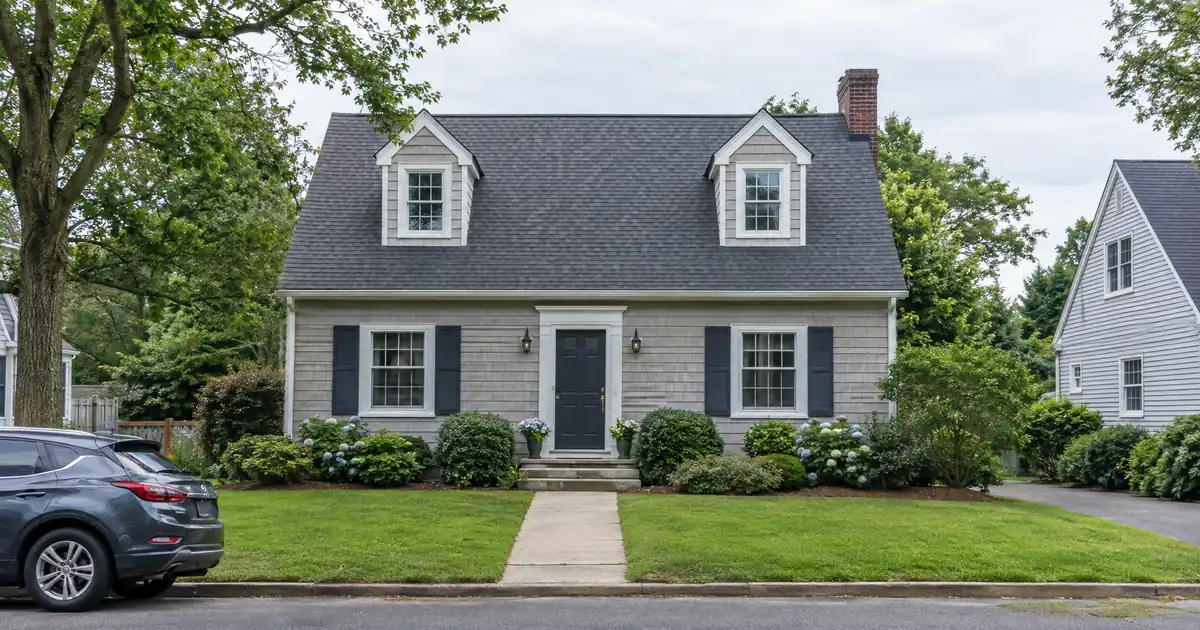
No Tax Return HELOC Requirements
No Tax Return HELOC Requirements — The Quick Read: A no tax return HELOC swaps personal income paperwork for a different underwriting path — credit score, home equity, and a debt-to-income calculation run on the interest-only payment, not two years of returns. The property’s occupancy — primary residence, second home, or investment — sets the leverage ceiling and the credit floor. Title has to sit in an individual name or a revocable living trust; an LLC can’t hold the deed on this structure. The paperwork shrinks. The underwriting doesn’t disappear.
Key Takeaways
- No tax return HELOCs still run full credit, equity, and debt-to-income review — the document changes, not the scrutiny.
- Occupancy sets the ceiling: primary residences and second homes can reach 90% CLTV, but only at a 720-or-better credit profile on lines capped at $500,000. Investment property lines cap at 70% CLTV regardless of credit tier — that ceiling doesn’t move.
- Title must sit in an individual name or an inter vivos revocable living trust. LLC-held rentals need a vesting change or a different loan structure entirely.
- Lines run from $25,000 up to $750,000 (a $10,000 floor applies in Michigan), and anything above $500,000 is restricted to primary residences with a full appraisal.
- Pricing floats through the draw period and the repayment period on every version of this product — it never converts to fixed.
Key Terms Defined
CLTV (combined loan-to-value): every lien on the property — the first mortgage plus the new line — divided by the home’s current value.
How large a line the equity supports in your market.
An equity line is sized by combined loan-to-value, occupancy, and credit — not by rental coverage. Switch the occupancy or the credit band and the ceiling moves with it.
Investment-property lines require a 700 minimum credit score. Second-home tiers reach 640; primary-residence tiers reach 600.
A debt-to-income ratio above 45% requires 680+ credit. Profiles under 640 are limited to single-family homes. At least 75% of the approved line is drawn at closing. Ceilings, floors, and caps update from Lendmire’s centralized guideline source.
Line estimate
Illustrative estimate only — not a quote, Loan Estimate, approval, or commitment to lend. The rate is an editable assumption; equity-line pricing is variable through both the draw and repayment periods and never converts to fixed. Occupancy and credit drive the ceiling together: investment property runs to 70% combined LTV with a 700 credit floor and a $500,000 cap; a second home runs to 90% at a 640 floor with a $500,000 cap; a primary residence reaches up to 90% at a 600 floor, and its $750,000 maximum line applies only at 75% combined LTV or below with 720+ credit and a full appraisal. Lines above $500,000 require a full appraisal. Credit, debt-to-income, property type, and full underwriting review all affect the final line.
Interest-only draw period: the early phase of the line where payments cover interest only, before the balance shifts into a fully amortizing repayment schedule.
AVM (automated valuation model): a computer-generated value estimate used instead of a walk-through appraisal on smaller lines.
Inter vivos revocable living trust: a trust a borrower creates and can amend or dissolve during their own lifetime — one of the only ownership forms besides individual title that this product accepts.
DSCR-style second lien: a cash-out structure that qualifies off the property’s rent-to-payment ratio rather than personal income — the usual path when a rental sits inside an LLC.
What ‘No Tax Return’ Actually Means
Skipping traditional personal-income documentation doesn’t mean skipping documentation altogether. It means substituting a different evidence trail. Lenders still pull credit history, still measure home equity, and still calculate debt-to-income. But they calculate it against the line’s interest-only payment at the maximum available draw — not a personal income statement built from Schedule C or Schedule E entries.
Self-employed borrowers and real estate investors feel this substitution most. Their legitimate deductions and depreciation can make reported income look low on paper — even when actual cash flow is strong. A rent-to-payment ratio or an equity-and-credit model measures something that traditional personal-income documentation often understates. Lendmire’s guide on required documentation walks through what still lands in the file. At minimum, that includes a credit report, title, insurance, and a property valuation.
How Underwriting Actually Treats the File
The file still moves through a real sequence. Nothing skips.
1. Occupancy classification comes first. Primary residence, second home, or investment property — this single call sets the CLTV ceiling, the credit floor, and whether an individual or trust vesting will even work for the structure being requested.
2. Credit gets pulled once, from one bureau, keyed to the primary wage earner. The report has to be no more than 90 days old at closing, and no rescores are allowed once pulled.
3. Valuation runs on an automated model for most lines. Anything at or below $500,000 typically clears with an AVM instead of a traditional appraisal, though a higher CLTV request can trigger a secondary valuation check. Anything above $500,000 requires a full appraisal — no exceptions — and a borrower can request one at any CLTV if they want it.
4. Debt-to-income gets calculated on the interest-only payment at the line’s maximum draw amount, not the eventual amortizing payment. The ceiling sits at 50% for most files, tightens to 45% for credit profiles between 600 and 679, and only opens back up above 45% for a 680-or-better score.
5. Title and vesting get checked against a short list. Individual ownership or an inter vivos revocable living trust clears. LLCs, corporations, partnerships, and irrevocable, blind, or land trusts do not.
6. Derogatory history and tradelines get reviewed last. Bankruptcy needs four years of seasoning from discharge or dismissal on either program version. Foreclosure history is where the two program tracks genuinely diverge — more on that below.
Why the Documentation Requirement Disappears
The short version: a home equity line is legally a different animal than a standard mortgage. Under the Consumer Financial Protection Bureau’s Regulation Z, the Ability-to-Repay rule normally forces income verification through documents like traditional personal-income documentation. But that rule applies to closed-end mortgages. A HELOC is open-end revolving credit, so it’s excluded from that section by its own scope language. That’s a structural exclusion, not a special favor written for any borrower type.
Investment-property lending has a second, separate reason the paperwork shrinks: DSCR loans are designed for non-owner-occupied investment properties. Because they are business-purpose investor loans, lenders review them differently than a standard owner-occupied mortgage. Institutional capital has followed that distinction at real scale. Scotsman Guide’s coverage of non-QM securitization activity describes DSCR loans as a type of non-QM product secured by the cash flow a property produces, backed by billions in ongoing bond issuance from major non-bank capital sources.
CLTV and Credit Tiers by Occupancy
Occupancy is the single biggest lever on this product. A file that looks identical on paper — same credit score, same equity — gets a different ceiling depending on whether the address is where the borrower sleeps at night or where a tenant does.
| Occupancy | Top Credit Tier | Max CLTV | Max Line Size |
|---|---|---|---|
| Primary residence | 720+ | 90% (lines to $500K) | $750,000 |
| Primary residence | 700+ | 75% (lines to $750K) | $750,000 |
| Second home | 720+ | 90% | $500,000 |
| Investment property | 700+ | 70% (network ceiling) | $500,000 |
The 90% figure only exists at a 720-or-better profile, and only on lines that stay at or under $500,000. Push past $500,000 on a primary residence and the ceiling drops to 75% CLTV with a full appraisal required. Investment property never sees a ceiling above 70% CLTV on this line, regardless of how strong the credit profile gets — that’s a network-wide floor, not a starting point that improves with a better score.
Below the top tiers, weaker credit profiles still qualify at lower leverage. A 600 credit score can still open a primary-residence line, generally around 60% CLTV on lines up to $400,000; a 640 score is the entry point for a second home. These are typical ranges reviewed under lender guidelines, not fixed guarantees — every file still runs through full underwriting.
The Two Draw Structures
Two structures exist on primary residences and second homes. One is a shorter three-year interest-only draw followed by a 17-year fully amortizing repayment period. The other is a longer five-year draw followed by a 25-year repayment period. (Tennessee shortens both to 3-year/12-year and 5-year/10-year.) Investment property lines run only the five-year draw and 25-year repayment structure — there’s no shorter-draw option on rental property.
Both structures require at least 75% of the approved line to be drawn at closing. Pricing floats across the entire life of the line, through both the draw period and the repayment period — it never converts to a fixed structure on either version. After closing, subsequent draws on the longer-runway program have a $1,000 minimum ($4,000 in Texas); the higher-leverage program doesn’t publish a subsequent-draw minimum at all.
Where Title Gets Complicated
This is the sharpest structural line in the whole product: title has to sit in the borrower’s individual name or an inter vivos revocable living trust. LLCs, corporations, partnerships, and irrevocable, blind, or land trusts cannot hold the deed — full stop, regardless of credit score or equity position.
That single rule pushes portfolio-scaling investors toward a different product entirely. A rental property already deeded to an LLC has two paths. Either it needs a vesting change back to an individual or trust before this HELOC works, or the investor pivots to a DSCR-style cash-out refinance. That refinance qualifies against the property’s rent-to-payment ratio instead of personal ownership form. Lendmire’s complete DSCR loans guide covers how that alternative structure works for LLC-held rental portfolios.
Edge Cases That Break the General Rule
Sub-640 credit gets boxed in. Under the longer-draw program, a credit profile below 640 is limited to single-family primary residences with a clean 12-month housing-payment history — no second homes, no investment property, no 2-4 unit buildings. Since second home eligibility floors at 640 and investment property floors at 700 anyway, this restriction only ever bites on primary-residence files.
Foreclosure history splits by program. One program track allows a foreclosure with seven years of seasoning and a deed-in-lieu, pre-foreclosure, or short sale with four years. The other program track declines any foreclosure-family history entirely, regardless of how old it is. Investment property files follow the seven-and-four-year seasoning path.
Property type has real limits. Single-family homes, 2-4 unit buildings (640 minimum credit), PUDs, townhomes, and condominiums — including non-warrantable condos — are all eligible. Modular factory-built homes are eligible only on the longer-runway program. Manufactured homes, co-ops, condotels, log homes, commercial and mixed-use property, and agricultural-zoned parcels are not eligible on either program version.
Borrower exposure caps out. A single borrower is limited to three of these lines at once. Combined exposure across those lines caps at $2,000,000 on the higher-leverage program and $750,000 on the longer-runway program, and a borrower who already owns more than 15 financed properties isn’t eligible at all.
State overlays change the math. Texas binds its 12-day waiting period, one-lien-at-a-time rule, and 12-month seasoning requirement to primary residences only — Texas second homes and investment properties close as non-homestead transactions, though every Texas property is capped at 10 acres. New Mexico and Ohio apply a CLTV cap that shifts with credit profile rather than a flat number. A handful of states — Indiana, North Carolina, Pennsylvania, Tennessee, Texas, and Washington — won’t take a property that’s currently listed for sale or was listed within the past 60 days.
Tax treatment on any of this can depend on how the funds get used and how the property is held; investors should keep clean records and talk to a qualified tax professional before counting on a specific deduction.
The Investor Decision
The decision usually comes down to three questions: how the property is titled, how much leverage the deal needs, and whether the borrower already owns rental property inside an entity.
An individual or revocable-trust-titled primary residence or second home with strong credit and a line need under $500,000 is the cleanest fit for this product — the 90% CLTV ceiling at 720-plus credit is hard to beat for straightforward home equity access. An investment property under the same title rules still works, just at the tighter 70% CLTV ceiling and a 700 credit floor. Anything already sitting in an LLC, or an investor who needs leverage this product’s ceilings won’t reach, generally points toward a DSCR-style second lien or cash-out refinance instead.
Availability matters here too. This HELOC structure runs through Lendmire’s 16 full-service states: Alabama, California, Colorado, Florida, Georgia, Indiana, Michigan, Montana, New Mexico, North Carolina, Ohio, Pennsylvania, Tennessee, Texas, Virginia, and Washington. That’s a narrower footprint than the 40-market DSCR platform. Lendmire (NMLS# 2371349) brokers these lines through select wholesale partners and is never the lender itself. Every figure above is subject to full underwriting and lender guidelines, and where the two program tracks differ, each figure applies only within its own program’s terms. For a side-by-side look at how different lenders in the network price and structure these lines, read Lendmire’s breakdown of which lenders offer no tax return HELOC options before applying.
If you’re weighing a no tax return HELOC against a DSCR-style cash-out on a rental property, Lendmire can help. The team can help sort through which structure actually fits the title, the leverage needed, and the credit profile on the table. Reach the team at 828-256-2183 or request a quote directly through Lendmire’s quote form.
Frequently Asked Questions
Can a property titled to an LLC use a no tax return HELOC?
No. This structure requires title in the borrower’s individual name or an inter vivos revocable living trust. LLCs, corporations, partnerships, and irrevocable trusts can’t hold the deed. Investors with LLC-titled rentals typically move to a DSCR-style cash-out structure instead, which qualifies off the property’s rental income rather than the ownership entity.
What’s the largest line available on an investment property?
$500,000, capped at 70% CLTV with a minimum 700 credit score. That ceiling holds regardless of how strong the rest of the file looks, since investment property sits in its own risk tier separate from owner-occupied housing. Terms vary by lender guidelines, property type, leverage, credit profile, and full file review.
Does the rate on this line ever convert to fixed?
No. Pricing floats through both the interest-only draw period and the fully amortizing repayment period on every version of this product. Neither program track includes a fixed-rate conversion option.
What happens if my credit score is below 640?
Under the longer-draw program, a sub-640 profile is limited to single-family primary residences with a clean 12-month housing-payment history — no second homes, no investment property, no multi-unit buildings. Since second home eligibility floors at 640 and investment property at 700, weak credit closes those doors before leverage even enters the conversation.
Can Texas investors use this product?
Yes, but homestead protections only bind owner-occupied Texas properties. Texas second homes and investment properties close as non-homestead transactions and skip the state’s 12-day waiting period and 12-month seasoning rule; every Texas property under this product is still capped at 10 acres.
About Lendmire
As a non-QM mortgage broker (NMLS# 2371349), Lendmire facilitates DSCR investor loans across 40 markets, including Washington, D.C. DSCR eligibility is generally reviewed around property-level rental income instead of personal income documentation, subject to lender guidelines, serving LLC-structured portfolios and self-employed borrowers who don’t fit conventional boxes. A two-time Scotsman Guide Top Mortgage Workplace (2025, 2026).
Lendmire’s Top Mortgage Workplace recognition is documented by Scotsman Guide 2025 Top Mortgage Workplace and Scotsman Guide 2026 Top Mortgage Workplace.
Get Started
Ready to find the right loan for you?
In about 30 seconds you can review financing options available for your home or investment property. No commitment required.
Informational only. Not a Loan Estimate, approval, or commitment to lend. Program availability and eligibility are subject to lender guidelines, credit approval, property review, and underwriting.
References
2. Scotsman Guide — “Alternative lending offers new pools for lenders to wade in”
Brandon Miller
Founder & CEO, Mortgage Loan Originator, Lendmire LLC
- Mortgage Loan Originator · NMLS# 1129696 · Verify on NMLS Consumer Access
- North Carolina Real Estate Broker · License# 343312 · Verify on NCREC
- North Carolina Insurance Producer · License# 19053198 · Property, Casualty, Life, Health · Verify on NAIC SBS
- Lendmire LLC · Firm NMLS# 2371349 · Verify firm licensure
Disclosures. The information presented in this article is general market commentary, not financial, legal, or tax advice. Lendmire is a mortgage brokerage (NMLS# 2371349) — not a direct lender or depository institution — and loan placement is subject to lender underwriting. Nothing in this content represents a commitment to lend. Loan terms, pricing, and program availability vary based on borrower qualifications, property characteristics, and state of subject property, and are subject to change at any time. Lendmire complies with Equal Housing Opportunity requirements. Consumer access: nmlsconsumeraccess.org.


