
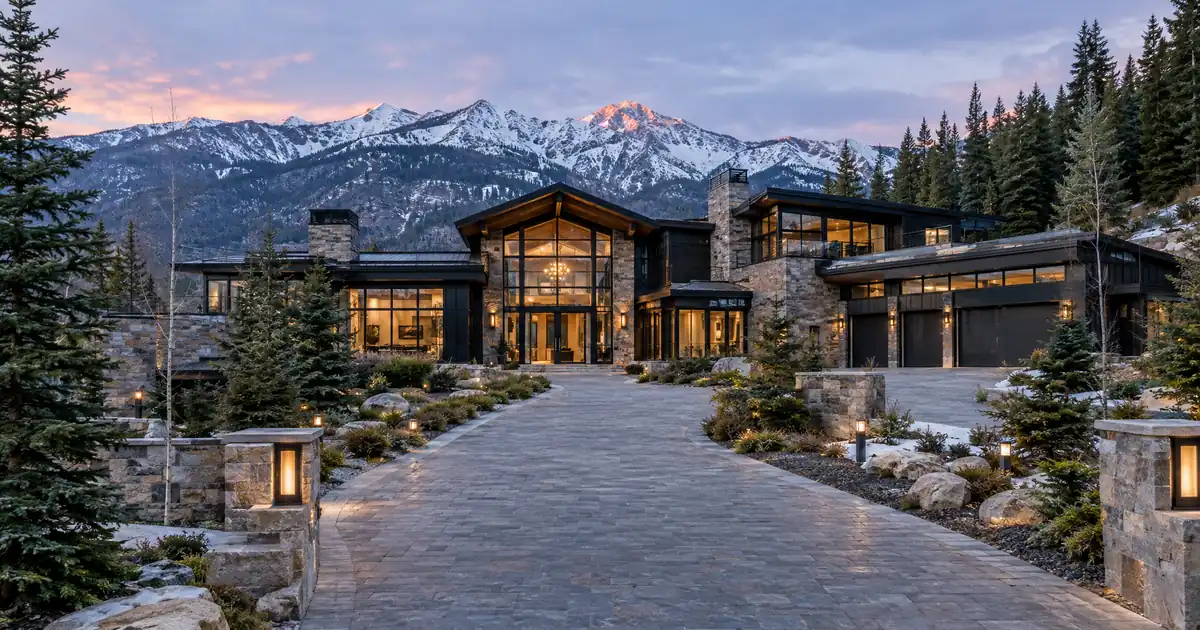
One Loan Per Short-term Rental Vs A Blanket For A Luxury Operator — The Quick Read: A single-property DSCR loan fits an operator who values flexibility and clean exits — sell or refinance one house without touching the others. A blanket loan fits an operator scaling several stabilized short-term rentals who wants fewer files and is comfortable letting a strong performer carry a weaker one. Neither is universally better — it comes down to how much cross-property risk you’re willing to accept in exchange for simpler management.
Every luxury short-term rental (STR) operator eventually hits this fork. You’ve got three, four, five high-end properties — coastal, mountain, maybe a couple of architecturally unusual builds — and you’re deciding whether to finance them one at a time or fold them into a single note. This isn’t a pricing question. Pricing lives in the calculator, not in this comparison. It’s a structural question: how much do you want your properties tied to each other?
Short-Term Rental Calculator
Run the STR numbers in your market
Rate source: Freddie Mac 30-yr average via FRED® — Federal Reserve Bank of St. Louis · effective Sep 17, 2026
Prefilled with local estimates — enter your nightly rate, occupancy, taxes, and insurance for a more accurate picture.
Short-term rental income is documented with a 12-month history or a market data report. Program parameters update from Lendmire’s centralized guideline source.
As of Sep 17, 2026 · General Freddie Mac market benchmark, not a Lendmire loan offer. Nightly rate, occupancy, taxes, and insurance are editable estimates. Qualifying income for short-term rentals varies by program — some use appraisal market rent, others use documented STR history or projections — and is confirmed in underwriting. Not a Loan Estimate, approval, or commitment to lend. Program availability and eligibility are subject to lender guidelines, credit approval, property review, and underwriting.
What Each Structure Actually Is
A standalone DSCR loan finances one property against its own rent. DSCR stands for debt-service coverage ratio — it measures whether the property’s rental income covers its full monthly obligation (principal, interest, taxes, insurance, and any HOA dues). A blanket loan, sometimes called a portfolio loan, is one note secured by two or more properties at once, underwritten on a blended coverage ratio — total rent across the pool divided by total debt service on the pool.
That blending is the whole point and the whole risk. A strong-performing lakefront cabin can carry a newer, thinner-performing desert property in the same pool. Lose that cushion, though, and every property in the note is exposed, not just the weak one.
Worth flagging here: “portfolio loan” gets used loosely in the industry. Sometimes it just means the lender keeps the loan on its own books rather than selling it — that alone says nothing about whether the properties are cross-collateralized. A true blanket structure is specifically one note, multiple properties pledged as collateral for the same debt.
Side-by-Side
| Factor | Single-Property DSCR | Blanket for STR Portfolio |
|---|---|---|
| Review basis | One property’s rent vs. its own payment | Combined rent vs. combined payment across pool |
| Documentation | Platform history, AirDNA projection, or appraisal rent analysis for that property | Same tools, applied to every property in the pool |
| Property types | 1-4 units, condos, condotels reviewed individually | Mixed types possible, but each must clear appraisal |
| Entity vesting | LLC with guarantor, standard | LLC with guarantor, same guaranty logic across pool |
| Exit mechanics | Sell or refinance freely at that property’s own balance | Release price required to pull one property out |
| Reserve expectations | Reserves sized to the one file | Reserves generally scale with total pool exposure |
| Cross-default exposure | None — each loan stands alone | Real — default on one property can affect the whole note |
| Timeline description | One file, one closing process | One closing, but every property must clear before funding |
When One Loan Per Property Is the Better Fit
Standalone financing fits the operator who wants each property to sink or swim on its own. If you’re actively trading properties, testing a new market, or you have a genuinely mixed portfolio — one house near a heavily regulated resort town, another in a market with a long unrestricted track record — keeping them separate means a problem in one doesn’t touch the others.
Across the wholesale network Lendmire works with, this program runs from $150,000 to $10,000,000, with the standard DSCR program stopping at $3,000,000 and select programs carrying qualified investors past that on a case-by-case basis. Leverage steps down as loan size climbs: typically up to 80% on purchases to $1,000,000, dropping to around 75% between $1,000,000 and $3,000,000, then tightening further to roughly 65% between $3,000,000 and $4,000,000 and around 60% on the largest files up to $10,000,000, reviewed case-by-case before submission. Cash-out follows its own, tighter ladder — typically up to 75% on standard rentals below $1,000,000, stepping down to around 70% and then 60% as the loan grows, with no cash-out available above $3,000,000.
For short-term rentals specifically, most files in the network qualify on twelve months of documented platform income on a refinance, or the appraiser’s short-term-rent analysis on a purchase — typically calculated at around 80% of gross rent, subject to underwriting. That haircut matters: gross bookings on Airbnb or Vrbo are never the number a lender qualifies against. STR loan amounts in this network typically cap around $2,000,000, and the borrower generally needs experience — commonly twelve months owning income property within the last three years.
Credit floors typically run around 660, stepping up to roughly 700 above $3,000,000. Reserve expectations are typically six months of the property’s monthly obligation (interest, taxes, insurance — ITIA on interest-only structures), often twelve for a first-time investor, with no extra reserve stacking required for other financed properties already in the portfolio. Two appraisals are typically required above $2,000,000 loan size. Interest-only structuring is commonly available for a 120-month period on 30- and 40-year terms, up to around 75% leverage, for files clearing roughly 0.75x coverage or better.
One underrated advantage of the standalone path for a luxury operator: a scarcity of comparable sales hits high-end STR appraisals harder than it hits ordinary rentals. A custom vacation cabin or an architecturally distinctive retreat may need a going-concern analysis, or even a cost-approach supplement. That’s because there simply aren’t enough comparable luxury short-term rentals nearby to rely on standard sales comps alone. If that valuation gets contested on a standalone loan, it delays one closing. In a blanket file, the same contested valuation can hold up funding on the entire pool.
Sub-1.00 coverage and no-ratio paths exist in the network too — reduced-leverage options up to $2,000,000 for coverage between roughly 0.75 and 0.99, and a no-ratio path (no minimum rent-to-debt ratio published) for borrowers with a clean seven-year housing history, both subject to underwriting and adjusted LTV and terms. Neither applies to short-term rental collateral, though — the no-ratio path is specifically off the table for STR files.
When a Blanket Structure Is the Better Fit
A blanket loan fits the operator who has already stabilized several properties and wants fewer moving parts. If you’re managing five short-term rentals with clean occupancy history and you don’t plan to sell any single one soon, consolidating into one note trims the paperwork load and lets a top-performing asset’s coverage offset a softer one — useful when a newer property hasn’t built full occupancy history yet.
The trade-off is concentration risk. Every property in the pool typically secures the whole debt through cross-collateralization, and cross-default provisions mean trouble tied to one property — a bad season, a permitting dispute, a valuation fight — can trigger remedies across the entire note, not just that one door. This is a structural fact of blanket lending generally, not specific to any one program, so read the actual note and security instrument language before assuming otherwise. Recourse, carve-outs, and guaranty terms are set by that paper — never assume a loan is non-recourse just because it’s labeled “portfolio” or “DSCR.”
Exit planning deserves real attention here. Pulling one property out of a cross-collateralized pool — to sell it, or to refinance it separately — typically requires paying a release price. This is more than simply retiring that property’s proportional share of the loan. Industry practice on the secondary market generally prices that release above the property’s simple allocated balance. That’s why an operator who expects to trade luxury assets individually within a few years should think hard before locking them into one note.
Regulatory exposure compounds across a pool in a way it doesn’t for standalone loans. Local short-term rental rules vary by city, county, and even HOA — a state’s general reputation for being STR-friendly doesn’t guarantee every municipality inside it follows the same rules. NAR’s policy overview frames this directly: local governments regulate land use and STR activity through zoning and police powers, and that authority is applied jurisdiction by jurisdiction, not statewide. A single new cap or ban in just one town can undercut the blended coverage math for an entire blanket pool spanning several markets, while the same event only threatens one loan under a standalone structure. Rules can and do change, so confirm local permitting for each specific property before relying on projected income — never assume STR use is permitted somewhere just because a nearby city allows it.
In practice, the files that come through a wholesale network with the cleanest blanket underwriting tend to share one trait: every property in the pool already has a full trailing twelve months of platform income, not a projection. Mixing a seasoned earner with a brand-new purchase in the same blended-DSCR pool is where coverage math gets shaky fastest — lenders in the network generally want to see the newer property carrying its own weight before it joins an established pool, rather than leaning on the pool average to paper over thin history.
Reserve expectations on larger, multi-property files tend to grow along with total exposure, rather than staying flat. Credit expectations firm up too. The network’s 700 credit-score floor above $3,000,000 becomes relevant fast once several luxury properties are combined into one note.
Where Luxury Complicates Both Paths
High-value STRs strain appraisal comps no matter how the loan is structured. Coastal and mountain destinations are the classic luxury STR markets. These areas can show tighter capitalization rates that act more like multifamily properties. Urban STRs in more heavily regulated markets often have wider cap rates instead. This reflects extra regulatory risk, according to appraisal industry coverage of the space. Non-warrantable condos and condotels shrink the comparable pool even further. The network’s guidelines allow non-warrantable condos and condotels up to 75% purchase / 65% refinance, with a $1,500,000 cap. Condotels specifically require meaningful cash-in-hand. These details apply whether the property sits in a standalone loan or a blanket pool.
The luxury STR asset class itself remains a real allocation, not a niche curiosity. Industry data pegs the broader U.S. short-term rental market at roughly $72 billion, with continued annual growth projected through the back half of the decade, per Lodgify’s market analysis. Separate market data pointed to coastal and mountain-lake destinations — again, the heart of the luxury STR map — showing some of the more favorable investment conditions heading into next year, with average daily rates forecast to strengthen, according to AirDNA’s outlook coverage. That backdrop supports continued acquisition either way — the question is only how you structure the debt once you’re buying.
For an operator approaching the top of the standard program, Lendmire’s super-jumbo DSCR program picks up qualified files above the standard cap. Lendmire’s complete DSCR loans guide walks through the underlying qualification mechanics in more depth. This is useful if it’s your first time structuring one of these files.
Which Path Fits an Operator With a Mixed Portfolio?
For many luxury operators, the realistic answer is neither path exclusively. Some properties stay standalone. Others get consolidated later, once they’ve built enough operating history. Say an operator has one long-established, high-occupancy property and two brand-new acquisitions. They might keep the new ones standalone until each has built twelve months of platform history. Then they could consider folding all three into a blanket loan, once every asset is pulling its own weight. Forcing a thin-history property into a blended pool too early just imports its risk into the properties that don’t deserve it.
Frequently Asked Questions
Can I sell one property out of a blanket loan without paying off the whole note?
Generally yes, through a release clause — but it typically requires paying a release price tied to that property’s allocated balance, not simply retiring its proportional share at face value. Read the actual note language before assuming a simple, low-cost exit is available.
Does cross-collateralization mean a lender can seize my other properties if one underperforms? It can, depending on the specific note and security instrument — cross-default provisions in many blanket structures allow default on one property to trigger remedies across the whole pool. This is a real structural exposure, not a theoretical one, and it’s the central trade-off against a blanket loan’s convenience.
Do short-term rental properties qualify for a blanket loan the same way they qualify individually? The same documentation tools apply — platform history or an appraisal’s short-term-rent analysis — but every property in the pool has to clear appraisal and income review before the blended file can fund. A contested valuation on one luxury asset can delay the whole closing, not just that door.
Is a blanket loan always cheaper than separate loans?
Not necessarily, and pricing specifics aren’t something this comparison covers — it lives in the calculator based on your actual file. What’s true structurally is that consolidating properties can reduce paperwork and closing overhead, but that convenience comes bundled with cross-collateralization and cross-default exposure that a standalone loan simply doesn’t have.
How many properties should I have before considering a blanket structure?
There’s no fixed number, but operators typically consider it once they have several stabilized, income-verified short-term rentals with clean occupancy history — not while properties are still building their first twelve months of operating income. Bringing a thin-history property into an established pool tends to be where blended coverage math gets shaky first.
DSCR loans are business-purpose investor loans. Lenders review them differently from a standard owner-occupied mortgage. Borrowers qualify mainly on whether the property’s rental income covers the payment, subject to lender guidelines, rather than through traditional personal-income documents. Tax treatment can depend on how the funds are used and how the property is held. Investors should keep clear records and talk to a qualified tax professional before relying on any deduction.
Reach Lendmire at 828-256-2183, or if you’re weighing a standalone file against consolidating a luxury STR portfolio, Lendmire can help you compare the leverage, coverage, and documentation path for each scenario based on your properties, credit profile, and goals.
Investors focused on short-term rentals can review DSCR loans for Airbnb and short-term rentals.
For current guidelines and terms, see Lendmire’s super jumbo DSCR loan programs page.
Self-employed borrowers can compare both super jumbo programs on Lendmire’s self-employed mortgages page.
About Lendmire
As a non-QM mortgage broker (NMLS# 2371349), Lendmire facilitates DSCR investor loans across 40 markets, including Washington, D.C. DSCR eligibility is generally reviewed around property-level rental income instead of personal income documentation, subject to lender guidelines, serving LLC-structured portfolios and self-employed borrowers who don’t fit conventional boxes. A two-time Scotsman Guide Top Mortgage Workplace (2025, 2026).
Lendmire’s Top Mortgage Workplace recognition is documented by Scotsman Guide 2025 Top Mortgage Workplace and Scotsman Guide 2026 Top Mortgage Workplace.
Get Started
Ready to find the right loan for you?
In about 30 seconds you can review financing options available for your home or investment property. No commitment required.
Informational only. Not a Loan Estimate, approval, or commitment to lend. Program availability and eligibility are subject to lender guidelines, credit approval, property review, and underwriting.
References
1. NAR — Short-Term Rental Restrictions
2. Lodgify — Best US STR Markets for Investing 2026
3. AirDNA — 2026 Will Be the Best Year to Invest in STRs
Brandon Miller
Founder & CEO, Mortgage Loan Originator, Lendmire LLC
- Mortgage Loan Originator · NMLS# 1129696 · Verify on NMLS Consumer Access
- North Carolina Real Estate Broker · License# 343312 · Verify on NCREC
- North Carolina Insurance Producer · License# 19053198 · Property, Casualty, Life, Health · Verify on NAIC SBS
- Lendmire LLC · Firm NMLS# 2371349 · Verify firm licensure
Disclosures. The information presented in this article is general market commentary, not financial, legal, or tax advice. Lendmire is a mortgage brokerage (NMLS# 2371349) — not a direct lender or depository institution — and loan placement is subject to lender underwriting. Nothing in this content represents a commitment to lend. Loan terms, pricing, and program availability vary based on borrower qualifications, property characteristics, and state of subject property, and are subject to change at any time. Lendmire complies with Equal Housing Opportunity requirements. Consumer access: nmlsconsumeraccess.org.


