
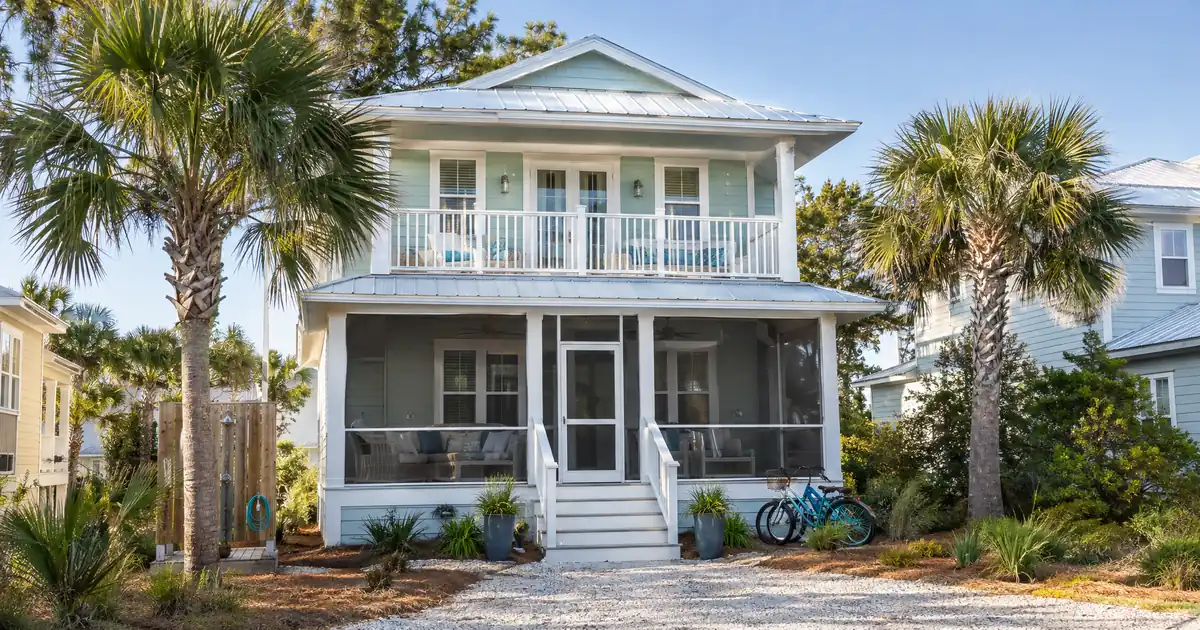
Buy A Beach Rental After A Liquidity Event — The Quick Read: A recent business sale, stock liquidation, or equity payout usually shows up as a lump-sum deposit, not steady income — and that’s a problem for bank-statement or full-doc underwriting. DSCR loans qualify primarily on the property’s rental income covering its payment, subject to lender guidelines, so a large one-time deposit doesn’t get treated as an anomaly the way it would on a conventional file. This makes DSCR the more natural fit for a beach rental purchase timed right after a windfall, though flood zone, appraisal, and reserve mechanics still shape what actually gets approved.
Why A Liquidity Event Breaks Normal Mortgage Underwriting
A liquidity event creates cash, not a documented income trail. Selling a business, exercising options, or cashing out a concentrated stock position produces a lump sum that a bank-statement lender treats as an anomaly rather than qualifying cash flow. The underlying transaction gets reported to the IRS through Form 8949, which details the sale or exchange of capital assets and then rolls into Schedule D — useful paperwork for taxes, but not something a conventional lender can convert into a monthly income figure.
DSCR Calculator
Run the numbers in your market
Rate source: Freddie Mac 30-yr average via FRED® — Federal Reserve Bank of St. Louis · effective Sep 17, 2026
Prefilled with local estimates — enter your own rent or nightly figures, taxes, insurance, and HOA for a more accurate picture.
Program parameters update from Lendmire’s centralized guideline source. Taxes and insurance are editable estimates.
As of Sep 17, 2026 · General Freddie Mac market benchmark, not a Lendmire loan offer. Rent, nightly rate, occupancy, taxes, and insurance are editable estimates. Short-term rental figures are estimates only and vary significantly by season, property type, management approach, and local short-term-rental rules — confirm local regulations before relying on them. Qualifying income for short-term rentals varies by program — some use appraisal market rent, others use documented STR history or projections — and is confirmed in underwriting. Not a Loan Estimate, approval, or commitment to lend. Program availability and eligibility are subject to lender guidelines, credit approval, property review, and underwriting.
Conventional and bank-statement underwriting are built around one question: does this person’s deposit history show steady, explainable cash flow? A liquidity event answers that question badly even when the borrower is objectively wealthier than before. The deposit is real. The income category it needs to slot into isn’t.
DSCR loans are business-purpose investor loans. That’s the regulatory reason a DSCR file can be built around the property’s rent instead of the borrower’s bank statements — it’s reviewed differently from a standard owner-occupied mortgage from the start.
What DSCR Actually Tests
DSCR asks one question: does the property’s rent cover its own payment? Personal income, traditional personal-income documentation, and W-2s aren’t part of that math. The property is tested, not the person.
That doesn’t mean the borrower disappears from the file. Credit, liquidity, reserves, entity documents, and property eligibility still matter — a liquidity event is highly relevant to down payment strength and reserve depth, it’s just not scrutinized as “income” the way a bank-statement lender would scrutinize it. Coverage of 1.00 or higher typically earns full leverage on most programs in Lendmire’s wholesale network. Coverage between roughly 0.75 and 0.99 is a real path on select programs up to $2,000,000, though LTV and terms adjust and qualification runs subject to underwriting. No-ratio options also exist through select wholesale programs up to $2,000,000, with a seven-year clean housing history and no major late payments in the past two years typically required — again subject to underwriting, and never with a published minimum ratio.
For a full walkthrough of how the ratio gets built, Lendmire’s complete DSCR loans guide covers the mechanics end to end.
How the Rent Number Gets Built — And Why Beach Properties Are Different
The appraisal is where the rent figure used in the DSCR ratio actually comes from, and beach properties are the case where that figure is most likely to understate real earning power. For a long-term-lease treatment, the appraiser completes a Form 1007 rent schedule, built around a twelve-month lease model. A beach house pulling strong peak-season nightly rates can show a much lower number on a Form 1007 than it actually earns as a short-term rental, because the form is pricing a year-round tenant, not a summer weekend guest.
Some lenders default to that long-term number as a conservative fallback. Investor-focused programs in the network typically use documented short-term rental income instead. That means either twelve months of platform payout history on a refinance, or the appraisal’s dedicated short-term-rent analysis on a purchase. Lenders generally apply this at a discount to gross collected rent. A borrower’s own calendar printout of nightly rates isn’t accepted as documentation on its own. The file needs either the operating history or the formal appraisal-based analysis.
This is the single biggest reason two lenders can produce noticeably different DSCR numbers on the exact same beach house. One is pricing a year-round tenant. The other is pricing the property’s actual peak-season earning power.
No STR History Yet? Here’s What Happens
An investor who hasn’t operated the beach house as a short-term rental yet has no platform track record to underwrite. In that case, the file typically runs on long-term market rent from the Form 1007 rather than a projected short-term figure, since there’s no operating history to document. Once the property has built roughly twelve months of platform history, a refinance into a short-term-rental-specific DSCR structure becomes the more natural next step — Lendmire’s guide to short-term rental DSCR loan requirements walks through what that documentation looks like. Because they’re extended for a business or investment purpose rather than a personal one, they fall outside the Truth in Lending Act’s Regulation Z consumer-disclosure framework that governs an owner-occupied mortgage.
Flood Insurance Is Not Negotiable on Beach Property
Flood insurance on a coastal property is a federal legal requirement, not just something lenders prefer. Communities that take part in the National Flood Insurance Program require owners in a mapped Special Flood Hazard Area to carry flood coverage. This is a condition of any federally backed mortgage. FEMA notes the program covers roughly 22,600 participating communities. Homes with federally backed financing in high-risk zones must carry the coverage, no matter the borrower’s credit profile or coverage ratio.
Most coastal beach properties sit in V or VE zones, which carry the strictest building code and elevation treatment of any flood designation. The standard NFIP policy also caps out at $250,000 for the building and $100,000 for contents — a ceiling that a higher-value beach rental will blow through fast, which is why private or excess flood coverage becomes part of the insurance stack on larger purchases. This isn’t a DSCR underwriting item. It’s baked into the property regardless of loan program, and it sits alongside — not instead of — the coverage-ratio math that determines leverage.
Sizing the Loan: What the Ladder Actually Looks Like
Loan size drives leverage, and the ladder steps down as the balance climbs. Across the network Lendmire places files with, the program runs from $150,000 up to $10,000,000 on the top-end investor tier, though Lendmire’s standard DSCR program stops at $3,000,000 and a separate ladder carries qualified borrowers past that point. Short-term-rental and no-ratio files cap out at $2,000,000.
On purchase and rate-and-term transactions with coverage at 1.00 or better, leverage typically runs 80% up to $1,000,000 with credit around 660 or higher, stepping to 75% between $1,000,000 and $3,000,000 with credit generally in the 700-720 range depending on the tier. Between $3,000,000 and $4,000,000, purchase and rate-term leverage typically steps down to around 65%, and cash-out isn’t available above $3,000,000 at all. From $4,000,000 to $10,000,000, leverage generally runs around 60% and every request in that range is reviewed case by case before submission — never a flat “up to” figure at that size.
Cash-out on standard rental collateral typically runs up to 75% at lower balances, then steps down as the loan grows. Proceeds run unlimited at or below roughly 60% LTV, with a cap around $1,500,000 above that threshold. On short-term-rental collateral specifically, cash-out leverage typically tops out closer to 70%. Reserves generally run around six months of the property’s payment (interest, taxes, insurance — using interest-only math where applicable) for repeat investors, with a higher reserve bar for first-time investors. Two appraisals typically come into play above $2,000,000.
An investor picture this: a $1.8 million beach house purchase, coverage running around 1.05x on the appraisal’s short-term-rent analysis. That size sits inside the $1.5M-$2M leverage step, so purchase leverage typically tops out in the mid-70s with credit in the low-to-mid 700s — a modeled scenario, not a quoted term, and every figure is subject to underwriting.
Recourse: The Part Post-Liquidity Buyers Often Skip Past
DSCR loans qualify on the property’s income, but that has nothing to do with whether the borrower personally guarantees the note. Most retail DSCR structures in the 1-4 unit and small multifamily space still carry a personal guarantee even though income isn’t underwritten the traditional way. True non-recourse structures exist elsewhere in the market, but they typically demand far heavier down payments and different scale than the standard investor product most beach-rental buyers use. A liquidity event doesn’t change that — the borrower is still on the hook on the note in the typical structure, regardless of how the file qualifies.
Entity Vesting and Reserves After the Windfall
Lendmire’s wholesale network generally welcomes properties vested in an LLC, without layered entity structures. That’s a common setup for a post-liquidity-event buyer who’s already restructured other holdings for liability purposes. Clean entity paperwork — operating agreement, EIN, good standing — keeps the file moving. Messy layered ownership is one of the more common reasons a file gets held up.
Personal income isn’t the qualifying test here. So reserves and documented liquidity carry more weight than on a standard agency file. That happens to be exactly the asset class a liquidity event produces in abundance. That said, asset verification still applies: the closing statement from the business sale, the brokerage 1099-B, and a clean wire trail all matter, even though the deposit itself isn’t graded as income. Fraud-detection tools flag investment-property files at a noticeably higher rate than owner-occupied files, industry-wide. That’s one more reason to have clean, traceable paperwork on the source of funds ready before submission, even on a business-purpose loan.
DSCR vs. conventional financing
Two common ways to finance an investment property in this market. They qualify you differently — here’s how investors weigh them.
Why investors choose it
- Qualifies on the property’s rental income — no personal tax returns, W-2s, or pay stubs needed to document income.
- No personal debt-to-income ceiling to clear, so existing mortgages and obligations don’t cap your borrowing the same way.
- Can be closed in an LLC, keeping the property inside a business entity.
- Built for scaling — not held to the limit on number of financed properties that conventional financing applies.
- Underwriting centers on the deal: generally qualifies when the rent covers the payment, a 1.00x coverage ratio being a common baseline (confirmed in underwriting).
- Designed specifically for investment property, including long-term and, where the program allows, short-term rentals.
Where it’s strong
- Often the lowest ongoing financing cost for a buyer who fully qualifies on personal income — a fit for a first property or a cost-first purchase.
Trade-offs for investors
- Requires full personal income documentation and must fit within a debt-to-income limit — salary, existing debts, and other mortgages all count.
- Typically held in your personal name rather than a business entity.
- Caps how many financed properties you can carry, which can become a ceiling as a portfolio grows.
- Evaluates you as a borrower as much as the property, which usually means more paperwork.
How investors usually choose: a first or single property often optimizes for the lowest financing cost; portfolio builders often optimize for leverage, vesting in an LLC, and scaling past conventional caps. The right answer depends on your goals, the property, and current guidelines — both paths run through select lenders in Lendmire’s wholesale network, with eligibility and terms confirmed in underwriting.
DSCR files that follow a liquidity event usually look cleaner than the typical bank-statement scramble. But there’s one common snag across the network: the rent number on seasonal coastal property. A file backed by twelve months of platform payout history and a formal short-term-rent appraisal analysis clears review much more smoothly than one that tries to argue for higher rent using just a bare calendar printout.
Local STR Rules Still Apply Regardless of Financing
Short-term rental rules can vary by city, county, HOA, and property type, so investors should confirm local rules before relying on projected rental income. Municipal permission to operate a short-term rental has to be documented for the specific property in question — it’s never assumed for a given city or state, and it’s checked separately from the loan approval itself. A property that pencils well on paper can still hit a wall if local licensing or HOA rules restrict short-term use, so that check belongs early in due diligence, not after the file is already in underwriting.
What Can Go Wrong
The most common derailment isn’t the borrower’s post-liquidity finances — it’s the property. Some files are just harder, no matter how strong the borrower’s liquidity looks. That includes a beach house with no comparable rental data nearby, one in a jurisdiction with unsettled short-term-rental rules, or one in a market too thin to support a reliable appraisal. Flood-zone classification can also surprise buyers late. A property assumed to carry standard coverage can turn out to need supplemental private flood insurance once the building’s replacement value clears the NFIP’s caps. This affects the total carrying cost, even though it doesn’t change the DSCR math directly.
Who This Fits — And Who It Doesn’t
This path tends to fit an investor with strong post-event liquidity, clean documentation of where the funds came from, and a beach property with either operating rental history or a market thick enough to support a credible short-term-rent appraisal. It fits less well for a buyer chasing a unique or hard-to-comp property, or one hoping to lean on a bare nightly-rate calendar in place of real documentation. It also isn’t a workaround for personal liability — the note still typically carries a personal guarantee even when income isn’t verified the traditional way.
This is not legal or tax advice. Tax treatment can depend on how the funds are used and how the property is held, and investors should keep clear records and speak with a qualified tax professional and, where entity or liability questions come up, an attorney about their own situation.
Frequently Asked Questions
Does a liquidity event disqualify me from a bank-statement loan entirely?
Not necessarily, but a one-time deposit tends to read as an anomaly rather than qualifying income on a bank-statement file, since that product still measures the borrower’s cash flow. DSCR sidesteps that specific friction by qualifying on the property’s rent instead, which is why it’s frequently the better structural fit right after a large liquidity event.
Do I need twelve months of Airbnb history to qualify on short-term rent?
On most programs in the network, yes for a refinance — twelve months of platform payout history is the typical documentation path. On a purchase with no operating history yet, the file generally runs on the appraisal’s short-term-rent analysis or falls back to long-term market rent, subject to underwriting.
Is flood insurance something I can negotiate with my lender?
No. Flood insurance in a mapped high-risk zone on a federally backed loan is a statutory requirement tied to the property’s flood-zone designation, not a discretionary lender add-on, per FEMA and the Congressional Research Service.
Does qualifying on rental income mean I’m not personally on the hook for the loan?
Not in the typical retail DSCR structure. Income documentation and loan recourse are separate concepts — most 1-4 unit DSCR loans still carry a personal guarantee even though personal income isn’t part of the underwriting test. Non-recourse DSCR products exist but require materially different leverage and scale.
Can I use my LLC to hold the beach rental?
Generally yes — entity vesting is commonly accepted across Lendmire’s wholesale network, subject to program eligibility and without layered ownership structures. Clean entity paperwork (operating agreement, EIN, good standing) keeps the file moving smoothly, subject to lender guidelines.
Are you weighing a beach rental purchase after a liquidity event? Want to see how the coverage ratio, leverage step, and reserve requirement actually line up for a specific property? Lendmire can help compare DSCR loan options based on the property’s income, credit profile, and investor goals. Lendmire arranges business-purpose financing through select lenders across 40 markets, including Washington, D.C. These specifics are subject to lender guidelines and a full review of property, leverage, and credit.
For current guidelines and terms, see Lendmire’s super jumbo DSCR loan programs page.
Self-employed borrowers can compare both super jumbo programs on Lendmire’s self-employed mortgages page.
About Lendmire
A non-QM mortgage broker (NMLS# 2371349), Lendmire arranges DSCR financing for real estate investors in 40 markets — 39 states plus Washington, D.C. Because deals are underwritten primarily on property cash flow rather than personal income documentation, the structure suits self-employed buyers and entity-owned portfolios. Lendmire places loans through wholesale investor lenders; it is not a direct lender. Scotsman Guide named Lendmire a Top Mortgage Workplace in both 2025 and 2026.
Get Started
Ready to find the right loan for you?
In about 30 seconds you can review financing options available for your home or investment property. No commitment required.
Informational only. Not a Loan Estimate, approval, or commitment to lend. Program availability and eligibility are subject to lender guidelines, credit approval, property review, and underwriting.
References
2. CFPB Reg Z Exempt Transactions
Brandon Miller
Founder & CEO, Mortgage Loan Originator, Lendmire LLC
- Mortgage Loan Originator · NMLS# 1129696 · Verify on NMLS Consumer Access
- North Carolina Real Estate Broker · License# 343312 · Verify on NCREC
- North Carolina Insurance Producer · License# 19053198 · Property, Casualty, Life, Health · Verify on NAIC SBS
- Lendmire LLC · Firm NMLS# 2371349 · Verify firm licensure
Required disclosures. Lendmire (NMLS# 2371349) operates as a licensed mortgage broker, not a direct lender or depository. The discussion in this article is general in nature and should not be relied upon as financial, legal, or tax advice — every investment scenario is unique and should be reviewed by a qualified professional. Any loan inquiry is subject to lender underwriting, and this article is not a commitment to lend or a guarantee of approval. Mortgage rates, loan terms, and program guidelines vary by borrower, property, and state, and may change without notice. Equal Housing Opportunity. Verify licensure at NMLS Consumer Access.


