
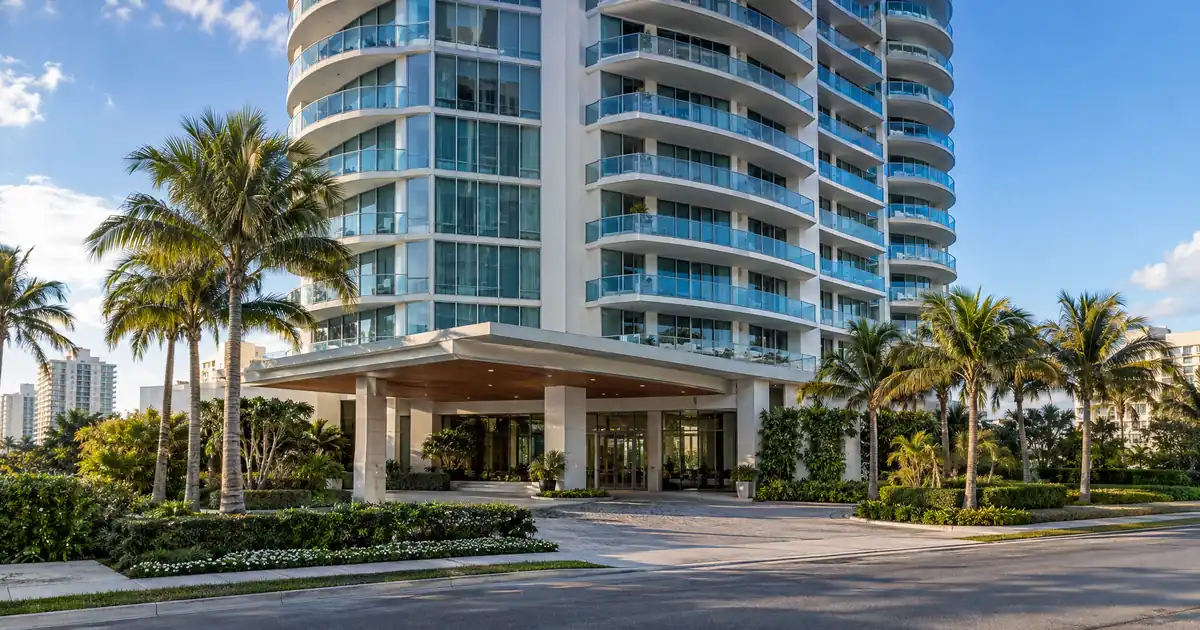
How A DSCR Lender Decides Condotel Eligibility For A Luxury Rental — The Quick Read: A DSCR lender treats condotel eligibility as a two-part test: the building has to clear a project review, and the unit’s rental income has to clear a coverage test. Neither piece alone gets a file approved. The building review looks at HOA reserves, insurance, rental-pool rules, and commercial space. The income review looks at what the unit actually earns as a short-term rental, discounted for realism. Get both right and a luxury condotel can finance up to 75% purchase, 65% refinance, and $1,500,000 in loan size, subject to underwriting.
Most buyers find this out the hard way. They put a luxury condotel unit under contract, call their regular mortgage broker, and get told no — flatly, no exceptions. That’s not a broker being difficult. It’s a rule written into the agency guidelines that govern almost every conventional mortgage in the country.
DSCR Calculator
Run the numbers in your market
Rate source: Freddie Mac 30-yr average via FRED® — Federal Reserve Bank of St. Louis · effective Sep 17, 2026
Prefilled with local estimates — enter your own rent or nightly figures, taxes, insurance, and HOA for a more accurate picture.
Program parameters update from Lendmire’s centralized guideline source. Taxes and insurance are editable estimates.
As of Sep 17, 2026 · General Freddie Mac market benchmark, not a Lendmire loan offer. Rent, nightly rate, occupancy, taxes, and insurance are editable estimates. Short-term rental figures are estimates only and vary significantly by season, property type, management approach, and local short-term-rental rules — confirm local regulations before relying on them. Qualifying income for short-term rentals varies by program — some use appraisal market rent, others use documented STR history or projections — and is confirmed in underwriting. Not a Loan Estimate, approval, or commitment to lend. Program availability and eligibility are subject to lender guidelines, credit approval, property review, and underwriting.
Why Won’t A Conventional Lender Touch A Condotel?
The short answer: agency rules exclude condotels by name. Fannie Mae’s own guidelines state that a project cannot be operated like a hotel — meaning the HOA can’t be licensed as a hotel, motel, or resort entity, and owners can’t be legally restricted from occupying their own unit, per Fannie Mae’s Selling Guide on ineligible projects. That single rule knocks out most condotel buildings before underwriting even starts.
Fannie Mae is direct about it elsewhere too: mortgages on condo or co-op hotel units simply aren’t purchased or securitized by the agency. That’s not a soft preference — it’s a hard exclusion. So the moment a buyer’s target property gets flagged as a condotel, conventional financing is off the table, full stop.
This is where DSCR loans come in. A DSCR loan — short for debt-service coverage ratio loan — qualifies a property based on the rent it generates rather than the borrower’s traditional personal-income documentation. Because DSCR lending sits outside agency guidelines, it can underwrite property types agencies won’t touch, condotels included. Investors who want the full walkthrough of how this works can check Lendmire’s complete DSCR loans guide.
What Exactly Is A Condotel?
A condotel is an individually owned unit inside a building that operates like a hotel — concierge desk, housekeeping, pool, sometimes a restaurant, all wrapped around units that are deeded and sold separately. Buyers own the unit outright. The building runs the amenities and, often, a rental program around it.
Don’t confuse this with a timeshare. A timeshare buyer holds a right-to-use interest — a slice of time, not a deed. A condotel buyer holds full title, just like any other condo owner. Fannie Mae draws this line clearly too, noting that timeshares and similar non-real-estate interests aren’t eligible for agency financing at all, separate from the hotel-operation exclusion (per the same Fannie Mae ineligible-projects guidance). The deed is what keeps a condotel inside real estate lending in the first place.
Key Terms Defined
DSCR (debt-service coverage ratio): a number that compares the property’s monthly rental income to its full monthly payment, including principal, interest, taxes, insurance, and HOA dues.
Condotel: an individually deeded unit inside a building that operates with hotel-style services and, often, a shared rental program.
Rental pool: an arrangement where unit owners place their units into a shared booking and revenue system managed by the building or a third-party operator.
Non-warrantable condo: a condo project that doesn’t meet standard agency eligibility rules — often due to high investor concentration, commercial space, or litigation — but that isn’t necessarily hotel-operated like a condotel.
Interest-only period: a stretch of the loan term where payments cover only interest, not principal, which can improve monthly coverage math on the property.
What Does A Lender Actually Check On The Building?
The building gets screened independently of the borrower, and either side can sink the file on its own. A weak HOA package stops a strong borrower cold. A perfect borrower file can’t rescue a building with underfunded reserves or a bad insurance certificate.
In practice, the building-level review covers a handful of documents: an HOA questionnaire, a certificate of insurance, a reserve study, and a litigation letter. Reviewers look for specific red flags. These include a master-insurance deductible that’s too high relative to the unit’s value, commercial space eating up too much of the building’s square footage, or HOA reserves funded below what the project needs to cover future repairs.
The rental-pool structure gets its own look, too. A voluntary program, where owners can opt in or out of the building’s rental management, reads very differently from a mandatory pool baked into the HOA’s governing documents. Mandatory pooling looks more like a hotel operation and draws tighter scrutiny — even if the sales brochure calls the building a “resort residence” instead of a condotel. Underwriters go by function, not marketing language.
Insurance gets a close read here, too. A condotel unit sits under a master policy that covers the building and common areas — not the unit’s interior or the owner’s belongings. On a condotel specifically, that master policy also has to account for hotel-style exposures: guest liability, higher turnover, and more foot traffic through common spaces. That’s more risk than a standard residential condo policy carries. That’s exactly why this document gets extra attention on a condotel file.
How Does A DSCR Lender Qualify The Rental Income?
Income qualification is based on the property’s rent, not the borrower’s paycheck. But a condotel’s income doesn’t look like a normal lease, so lenders handle it differently. Across Lendmire’s wholesale network, lenders typically qualify short-term-rental income on a condotel using twelve months of documented operating history for a refinance, or the appraisal’s short-term-rental analysis for a purchase. They generally count that income at 80% of gross, to build in a cushion for vacancy and seasonality.
That discount matters. A hotel-style rental swings with tourism season, local events, and platform pricing in a way a long-term lease never does. Discounting the gross figure before it ever hits the coverage ratio keeps the coverage figure realistic rather than optimistic.
Most programs in the network reserve this short-term-rental income path for experienced investors — typically someone who has owned an income property for at least twelve months within the last three years. First-time landlords buying their first-ever rental as a luxury condotel usually face a steeper climb, and that’s worth knowing before falling in love with a listing.
Appraisal matters here too. Lenders value a single condotel unit using Fannie Mae/Freddie Mac Form 1073, the Individual Condominium Unit Appraisal Report — the standard form for individual condo units. This form includes a project-analysis section that goes well beyond a normal valuation. It covers project condition, common elements, parking adequacy, and other details that can surface hotel-style operation red flags. As one practitioner source puts it, Form 1073’s condo-specific project analysis exists precisely to catch these project-level issues before they become underwriting surprises. Above $2,000,000 in loan size, most files in the network require two separate appraisals instead of one. This adds another layer of valuation scrutiny for larger luxury units.
Where Does Leverage Land On A Condotel?
Leverage on a condotel is lower than on a standard rental, and it caps out earlier. Across select programs in Lendmire’s wholesale network, condotels typically qualify to 75% loan-to-value on a purchase, 65% on a refinance, and a maximum loan size of $1,500,000, with $250,000 in cash-in-hand often required as part of the structure — all subject to underwriting.
Compare that with a standard 1-4 unit rental, where purchase leverage on smaller loan sizes can run to 80%. The condotel discount reflects the added building-level risk: hotel-style operation, thinner comparable sales data, and income that moves with tourism rather than a signed twelve-month lease.
| Property Type | Typical Purchase LTV | Typical Refi LTV | Loan Cap |
|---|---|---|---|
| Standard 1-4 unit rental | Up to 80% (smaller loans) | Up to 80% | Up to $10M portfolio program |
| Non-warrantable condo | Up to 75% | Up to 75% | $1,500,000 |
| Condotel | Up to 75% | Up to 65% | $1,500,000 |
Credit usually needs a 660 score or higher on most files. Lenders also want reserves in the bank — typically about six months of the property’s monthly costs (principal, interest, taxes, insurance, and any HOA dues combined). These are typical terms from select wholesale-network guidelines, not universal rules. Every file gets underwritten on its own.
Does A Building Have To Call Itself A “Condotel” To Get Treated Like One?
No — and this trips people up constantly. Underwriting looks at how a building actually operates, not what the sales brochure calls it. A project with heavy short-term rental turnover, a front desk, and daily housekeeping can get treated as a condotel regardless of its formal legal classification, even if it markets itself as luxury residences or a “resort community.”
That functional read cuts both ways. A building with the word “condotel” in its marketing but genuinely optional, low-turnover rentals and no hotel-style services might get reviewed more like a standard non-warrantable condo — a different, generally less restrictive risk category. Warrantability and condotel status aren’t the same question. A condo can fail agency warrantability tests without being a condotel at all, and it still gets reviewed through the DSCR non-warrantable condo path rather than the tighter condotel path. For readers weighing that specific distinction, Lendmire’s piece on luxury short-term rental DSCR financing walks through where the lines actually sit.
DSCR vs. conventional financing
Two common ways to finance an investment property in this market. They qualify you differently — here’s how investors weigh them.
Why investors choose it
- Qualifies on the property’s rental income — no personal tax returns, W-2s, or pay stubs needed to document income.
- No personal debt-to-income ceiling to clear, so existing mortgages and obligations don’t cap your borrowing the same way.
- Can be closed in an LLC, keeping the property inside a business entity.
- Built for scaling — not held to the limit on number of financed properties that conventional financing applies.
- Underwriting centers on the deal: generally qualifies when the rent covers the payment, a 1.00x coverage ratio being a common baseline (confirmed in underwriting).
- Designed specifically for investment property, including long-term and, where the program allows, short-term rentals.
Where it’s strong
- Often the lowest ongoing financing cost for a buyer who fully qualifies on personal income — a fit for a first property or a cost-first purchase.
Trade-offs for investors
- Requires full personal income documentation and must fit within a debt-to-income limit — salary, existing debts, and other mortgages all count.
- Typically held in your personal name rather than a business entity.
- Caps how many financed properties you can carry, which can become a ceiling as a portfolio grows.
- Evaluates you as a borrower as much as the property, which usually means more paperwork.
How investors usually choose: a first or single property often optimizes for the lowest financing cost; portfolio builders often optimize for leverage, vesting in an LLC, and scaling past conventional caps. The right answer depends on your goals, the property, and current guidelines — both paths run through select lenders in Lendmire’s wholesale network, with eligibility and terms confirmed in underwriting.
What Actually Kills A Condotel File?
The building’s insurance and reserve file is the most common silent killer. A borrower can show strong credit, solid reserves, and clean rental history and still get stopped because the HOA’s master policy carries too high a deductible, or the reserve study shows the building underfunded for future repairs. That’s a structural problem no amount of borrower strength offsets.
Brand affiliation changes are another quiet risk. If a branded condotel loses its hotel-brand relationship, the income history tied to that brand’s reservation system stops being a reliable predictor of future performance — something worth asking about before buying into a branded building on the strength of its past numbers alone.
Local short-term-rental rules add a separate layer entirely, and it’s one lenders will document at the property level rather than assume. Short-term rental rules can vary by city, county, HOA, and property type, so investors should confirm local rules before relying on projected rental income. A building can clear every underwriting gate and still hit a wall if the unit isn’t legally permitted to operate as a short-term rental where it sits.
Across the files that come through the wholesale network, one pattern holds true: condotel deals move fastest through underwriting when the buyer pulls the HOA questionnaire, insurance certificate, and reserve study before making an offer — not after. Buildings with genuinely optional rental pools and clean reserve funding tend to sail through the building-level review. Buildings with mandatory pooling and thin reserves generate the most back-and-forth, no matter how strong the borrower’s own file looks.
How Does Interest-Only Structuring Help A Condotel’s Coverage Ratio?
An interest-only period lowers the monthly obligation used in the coverage math. That can push a marginal condotel deal over the line. Programs in the network typically offer up to 120 months of interest-only structuring on 30- and 40-year terms, generally up to 75% loan-to-value, for properties that clear roughly 0.75 coverage or better. Lenders qualify these loans on the interest-only payment, not a fully amortizing one.
That matters a lot on a condotel, where seasonal income swings can leave a property borderline on a fully amortizing coverage test but comfortably positive on an interest-only basis. This isn’t a workaround. It’s a structural tool that changes the math the lender is actually testing against.
What About Coverage Below 1.00, Or No-Ratio Files?
Coverage of 1.00 or better earns the strongest available leverage, but it isn’t the only door open. Select programs in Lendmire’s wholesale network will review files with coverage between roughly 0.75 and 0.99, and even no-ratio files where no coverage figure is calculated at all — though both paths come with LTV and terms that adjust downward, subject to underwriting. Short-term-rental income specifically isn’t eligible on the no-ratio path in the network; that structure applies elsewhere.
For a luxury condotel where seasonal swings make full 1.00 coverage tough to hit on paper, that reduced-leverage path is often the more realistic route rather than a dealbreaker.
Frequently Asked Questions
Can a first-time investor buy a luxury condotel with a DSCR loan?
It’s harder, not impossible. Most short-term-rental income qualification in the network requires the borrower to have owned an income property for at least twelve months within the past three years — so a first-time landlord may need a different qualifying approach or a longer runway before this specific property type is realistic.
Does the appraisal treat a condotel differently than a regular condo?
Yes. A single condotel unit still uses Form 1073, but the appraiser’s project-analysis section gets more attention because it’s where hotel-style operation, thin comparables, and building condition issues get documented.
Can I do a cash-out refinance on a condotel?
Condotel refinances in the network typically top out around 65% loan-to-value, and cash-out generally isn’t available above $3,000,000 across the broader program ladder — condotels sit at the smaller end of that range with their own $1,500,000 loan cap, so cash-out capacity is limited compared with a standard rental.
What happens if the building loses its hotel brand affiliation?
The income history tied to that brand’s booking system becomes less predictive of future performance, and a lender reviewing the file may ask harder questions about post-brand income stability before finalizing terms.
Is a non-warrantable condo the same underwriting problem as a condotel?
No. They’re separate risk categories. A non-warrantable condo fails certain agency-style project tests without necessarily operating like a hotel, while a condotel adds hotel-operation risk — mandatory rental pools, front-desk services, hospitality-style insurance exposure — on top of whatever else is going on with the building.
Buying or refinancing a condotel or another specialty luxury rental property comes down to matching the file to a lender whose overlays fit the building. Lendmire can help compare DSCR loan options based on the property’s income, the building’s project profile, credit, and leverage goals — reach the team at 828-256-2183 or request a quote directly.
For current guidelines and terms, see Lendmire’s super jumbo DSCR loan programs page.
Self-employed borrowers can compare both super jumbo programs on Lendmire’s self-employed mortgages page.
About Lendmire
Lendmire (NMLS# 2371349) is a mortgage brokerage built around DSCR investor lending, with programs available in 40 markets, including Washington, D.C. DSCR lenders commonly evaluate rental-income coverage instead of personal income paperwork — a practical fit for LLC-owned and multi-property investors. Terms vary by lender, property, leverage, and program. Scotsman Guide named Lendmire a Top Mortgage Workplace in both 2025 and 2026.
Get Started
Ready to find the right loan for you?
In about 30 seconds you can review financing options available for your home or investment property. No commitment required.
Informational only. Not a Loan Estimate, approval, or commitment to lend. Program availability and eligibility are subject to lender guidelines, credit approval, property review, and underwriting.
References
1. Fannie Mae Selling Guide B4-2.1-03, Ineligible Projects
2. Fannie Mae Form 1073, Individual Condominium Unit Appraisal Report
3. Barnes Walker Legal Glossary — Form 1073
Brandon Miller
Founder & CEO, Mortgage Loan Originator, Lendmire LLC
- Mortgage Loan Originator · NMLS# 1129696 · Verify on NMLS Consumer Access
- North Carolina Real Estate Broker · License# 343312 · Verify on NCREC
- North Carolina Insurance Producer · License# 19053198 · Property, Casualty, Life, Health · Verify on NAIC SBS
- Lendmire LLC · Firm NMLS# 2371349 · Verify firm licensure
Legal disclosures. Lendmire (NMLS# 2371349) is a state-licensed mortgage brokerage that arranges financing through wholesale lender relationships. Lendmire is not a direct lender, depository institution, or registered financial advisor. The discussion above is general informational content about real estate financing — it is not financial, legal, or tax advice, and readers should consult licensed professionals for guidance on their individual circumstances. Loan inquiries are subject to lender underwriting; this article does not represent a commitment to lend. Loan terms, rates, and qualification standards vary by borrower, property, and state, and are subject to change at any time. Equal Housing Opportunity. NMLS Consumer Access: nmlsconsumeraccess.org.


