
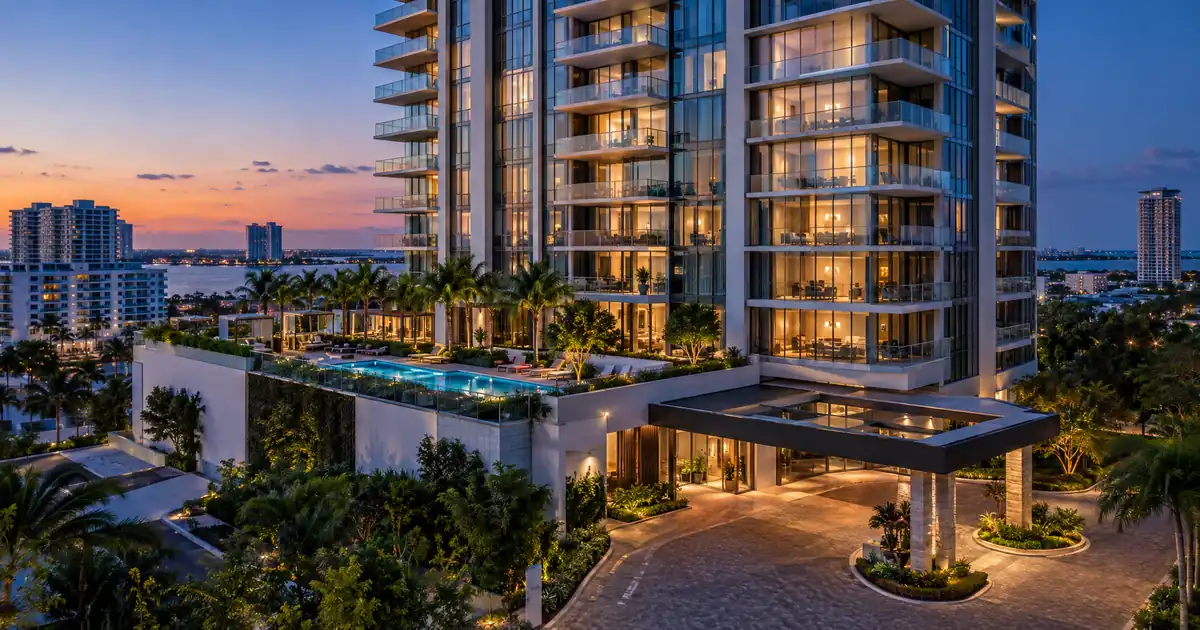
Condotel Qualify For A Luxury Short-term Rental — The Quick Read: Yes, a condotel can qualify for a DSCR loan, but not through Fannie Mae or Freddie Mac — those agencies flatly exclude condotels from conventional financing. The path runs through non-QM lending instead, where select lenders in the wholesale network treat condotels as their own property class with tighter leverage, more documentation, and stricter income rules than a standard investment condo. It’s reviewable. It’s just not financed the same way.
That’s the honest answer. Now here’s what actually happens on a file.
Short-Term Rental Calculator
Run the STR numbers in your market
Rate source: Freddie Mac 30-yr average via FRED® — Federal Reserve Bank of St. Louis · effective Sep 17, 2026
Prefilled with local estimates — enter your nightly rate, occupancy, taxes, and insurance for a more accurate picture.
Short-term rental income is documented with a 12-month history or a market data report. Program parameters update from Lendmire’s centralized guideline source.
As of Sep 17, 2026 · General Freddie Mac market benchmark, not a Lendmire loan offer. Nightly rate, occupancy, taxes, and insurance are editable estimates. Qualifying income for short-term rentals varies by program — some use appraisal market rent, others use documented STR history or projections — and is confirmed in underwriting. Not a Loan Estimate, approval, or commitment to lend. Program availability and eligibility are subject to lender guidelines, credit approval, property review, and underwriting.
What Exactly Is A Condotel, And Why Does It Trip Up Lenders?
A condotel is an individually deeded condo unit sitting inside a building that operates like a hotel — front desk, daily housekeeping, a management company running bookings, sometimes a rental pool that pulls owners into shared revenue. You own the unit outright, same as any condo. The building just runs hotel-style.
That operational layer is exactly what conventional lending can’t stomach. Fannie Mae’s Selling Guide lists projects “managed, licensed and operated as a hotel or motel, resort, hospitality entity” as ineligible for delivery, and Fannie Mae’s own condo-project data shows condotel characteristics remain one of the more common reasons a project gets flagged, per the Fannie Mae Condo Status Finder. HUD draws the same line for FHA loans, stating condo hotels and similar hospitality-run buildings don’t meet FHA condominium approval standards.
So agency financing is off the table before you even get to underwriting mechanics. That’s not a lender being cautious — it’s a structural exclusion baked into the guidelines both agencies publish. Business-purpose DSCR lending sits outside that agency box entirely, which is exactly why it can reach properties agency guidelines can’t touch.
How Does A DSCR Lender Actually Classify A Condotel?
Classification happens at intake, before pricing or income even get discussed. Every file gets tagged — warrantable condo, non-warrantable condo, condotel, single-family, small multifamily — and that tag drives every leverage decision downstream.
Here’s the part investors miss: the HOA paperwork doesn’t need to say “condotel” for a building to get treated like one. Heavy short-term rental activity or a visible Airbnb booking presence across the building can pull an otherwise ordinary condo into condotel-style underwriting, even when the declaration reads like any standard project. Lenders look past the label to the actual operation.
Non-warrantable and condotel also get confused constantly, and they’re not the same problem. Non-warrantable status covers a wide range of agency-eligibility misses — pending litigation, thin reserves, too much commercial space, low owner-occupancy. Condotel status is narrower and specific: it’s about hotel-style operation and who controls occupancy. A building can be non-warrantable without being a condotel. It can also be a condotel while technically clearing every other warrantability box. The two labels solve different problems, and a lender working a file needs to know which one it’s actually facing.
What Leverage Can A Condotel Actually Get?
Across select lenders in Lendmire’s wholesale network, condotel purchases typically run to 75% loan-to-value, refinances to 65%, capped at $1,500,000, with cash-out on a condotel requiring $250,000 in cash-in-hand on top of the leverage limit — all subject to underwriting. That’s a real step down from what the same investor would see on a cleaner property type.
For comparison, warrantable condos in the same network typically reach 85% LTV, and non-warrantable condos typically reach 80%. Condotels sit a full tier below both. That gap isn’t arbitrary — it reflects the thinner buyer pool, the operational risk of a management contract, and the insurance complexity baked into hotel-style buildings.
| Property Type | Typical Purchase LTV | Notes |
|---|---|---|
| Warrantable condo | ~85% | Cleanest agency-eligible profile |
| Non-warrantable condo | ~80% | Fails one or more agency criteria |
| Condotel | ~75%, capped at $1,500,000 | 65% on refinance; $250,000 cash-in-hand for cash-out |
On the luxury end, this leverage step-down matters more, not less. A high-value condotel purchase already needs a bigger equity check than a comparable single-family rental at the same price point. Investors sizing a seven-figure condotel deal should plan on meaningfully more cash down than they’d need for a standard investment condo at the same price, since the leverage ceiling sits lower across the board.
Coverage still matters here too. A DSCR of 1.00 or higher typically earns full leverage on the ladder above; coverage between roughly 0.75 and 0.99 is a real path through select programs at reduced leverage, subject to underwriting — never assume the lower coverage carries the same terms as a fully covering file.
How Does Rental Income On A Condotel Get Calculated?
This is where condotel underwriting diverges hardest from a standard rental. A regular investment property gets its income estimated with Form 1007, the standard rent schedule appraisers fill out using three comparable long-term rentals. That form was built for monthly leases. It was never built for nightly bookings, and appraisal-industry commentary is blunt about it: Form 1007 cannot be used to support short-term rental appraisals because using it to reflect nightly pricing or seasonal occupancy can produce a misleading report.
Some appraisers try a shortcut anyway — take the nightly rate, multiply by 30, call it monthly rent. That methodology is explicitly wrong, and it’s exactly why STR DSCR programs run their own income analysis instead of forcing a long-term-rent form to answer a short-term question.
For a condotel specifically, most files in the network want at least twelve months of trailing rental-pool statements — actual occupancy and revenue history from the management company — rather than a projection built off a single appraisal snapshot. On a purchase where trailing history doesn’t exist yet, the appraisal’s own short-term-rent analysis typically steps in, with income counted at a discount to gross rent rather than full face value. Twelve months of operating history on a refinance, or the appraisal’s STR analysis on a purchase, both feed into the coverage ratio at that discounted rate — and short-term-rental income treatment generally applies to experienced investors who’ve owned income property recently, not a first-time landlord’s opening file. Lendmire’s complete DSCR loans guide covers how that coverage ratio gets built in more detail across property types.
What Documents Actually Decide The Outcome?
Four documents carry most of the weight on a condotel file, and none of them are optional.
- The HOA/condo questionnaire. It tells the lender the owner-occupancy percentage, pending litigation, reserve fund status, and whether a mandatory rental pool exists. A slow or incomplete questionnaire is one of the most common bottlenecks on any condo file.
- The rental-pool agreement. Voluntary participation reads very differently from a mandatory pooling clause built into the HOA documents. That distinction — not the “condotel” label itself — often decides how a lender treats occupancy control.
- The insurance stack. Master policies generally come in three tiers, and the tier matters as much as the price. A condotel’s guest-liability exposure sits on top of that baseline coverage, and underwriting reviews it more closely than on a standard investment condo.
- Trailing operating statements. Twelve months of actual rental-pool revenue is the evidence base for the income side of the coverage ratio.
An asset-based or cash-flow-heavy qualification path doesn’t skip any of this. Property-level review and borrower qualification run on two separate tracks — a well-qualified investor still faces the same building-level screen a first-time buyer would.
What About Personal Use — Does That Change Qualification?
Business-purpose DSCR loans are built around non-owner-occupied properties. A condotel purchased with heavy personal-use intentions doesn’t fit the DSCR frame the same way a pure rental does, since qualification is designed around the property’s rental income covering the payment, subject to lender guidelines — not around a borrower splitting time between personal stays and paying guests. Investors planning meaningful personal use should expect that to factor into how a lender views the file, separate from the property-type classification itself.
The Edge Cases That Trip Investors Up
A condotel is not a timeshare. A timeshare buyer holds a right-to-use interest with no full deed and no unrestricted resale. A condotel buyer holds a normal deeded title — it can be sold, willed, or borrowed against like any real property. The constraint is the rental-pool agreement layered on top, not the ownership structure. That’s exactly why a condotel can be underwritten as investment real estate while a timeshare generally can’t.
Losing a hotel brand affiliation matters later, not just at purchase. A branded condotel that loses its brand doesn’t just change marketing — it changes how the building operates, and that shift can resurface at the next refinance even if it never came up at purchase.
Paying cash today doesn’t make the building’s classification disappear. Project-level review is a separate track from how the current owner financed the purchase. The next buyer, or the same owner’s next refinance, faces the same screen.
Resale liquidity is genuinely thinner. Because so few loan programs support condotels, the buyer pool shrinks on the resale side too. That’s a durable structural fact worth pricing into any exit assumption, not just a financing hurdle at entry.
DSCR vs. conventional financing
Two common ways to finance an investment property in this market. They qualify you differently — here’s how investors weigh them.
Why investors choose it
- Qualifies on the property’s rental income — no personal tax returns, W-2s, or pay stubs needed to document income.
- No personal debt-to-income ceiling to clear, so existing mortgages and obligations don’t cap your borrowing the same way.
- Can be closed in an LLC, keeping the property inside a business entity.
- Built for scaling — not held to the limit on number of financed properties that conventional financing applies.
- Underwriting centers on the deal: generally qualifies when the rent covers the payment, a 1.00x coverage ratio being a common baseline (confirmed in underwriting).
- Designed specifically for investment property, including long-term and, where the program allows, short-term rentals.
Where it’s strong
- Often the lowest ongoing financing cost for a buyer who fully qualifies on personal income — a fit for a first property or a cost-first purchase.
Trade-offs for investors
- Requires full personal income documentation and must fit within a debt-to-income limit — salary, existing debts, and other mortgages all count.
- Typically held in your personal name rather than a business entity.
- Caps how many financed properties you can carry, which can become a ceiling as a portfolio grows.
- Evaluates you as a borrower as much as the property, which usually means more paperwork.
How investors usually choose: a first or single property often optimizes for the lowest financing cost; portfolio builders often optimize for leverage, vesting in an LLC, and scaling past conventional caps. The right answer depends on your goals, the property, and current guidelines — both paths run through select lenders in Lendmire’s wholesale network, with eligibility and terms confirmed in underwriting.
Experienced brokers see this pattern repeat across condotel files: the building’s operating agreement and the master insurance certificate decide more of the outcome than the borrower’s credit file does. Two borrowers with identical financials can get very different leverage on two different condotel buildings, purely because one management contract is voluntary and the other is mandatory pooling.
Condotel vs. Standard Investment Condo — What’s Actually Different?
| Factor | Standard Investment Condo | Condotel |
|---|---|---|
| Agency financing | Often eligible (warrantable) | Never eligible — excluded outright |
| Typical purchase LTV (network) | ~80-85% | ~75%, capped at $1,500,000 |
| Income basis | Form 1007 long-term rent schedule | 12-month trailing operating history or STR appraisal analysis, discounted |
| Cash-out | Standard cash-out terms apply | Requires $250,000 cash-in-hand on top of leverage limit |
| Resale liquidity | Broader buyer pool | Thinner buyer pool, fewer loan programs |
Why This Matters For The Luxury STR Segment Specifically
Luxury-tier short-term rentals are currently outperforming on rate compared to budget-tier listings, with average daily rates up meaningfully year over year for upscale properties while budget listings saw rates decline, according to industry data compiled by StayFi’s VRM Insider. Since condotel income is inherently short-term-rental-based, that luxury-tier outperformance flows directly into how strong the trailing operating history looks — and therefore how the coverage ratio pencils on the file.
That said, a strong ADR trend doesn’t offset the structural leverage gap. Even a condotel throwing off excellent revenue still tops out at the leverage ceilings above, because the discount applies at the classification level, not the income level.
What Investors Should Actually Do Before Making An Offer
Get the HOA questionnaire and rental-pool agreement before writing an offer, not after. Ask the management company directly whether participation is voluntary or mandatory — that answer shapes leverage more than almost anything else on the file. Request twelve months of trailing rental-pool statements up front if the seller has them; a purchase without that history leans harder on the appraisal’s STR analysis, which runs at a discount to gross rent. And budget more calendar time for document collection than a standard single-family DSCR file requires, since the questionnaire, insurance stack, and operating statements all take longer to assemble than a one-unit rental file.
DSCR loans are business-purpose investor loans, reviewed differently from a standard owner-occupied mortgage — that framing matters here specifically because a condotel purchased with mixed personal-and-rental intent doesn’t fit the model as cleanly as a pure rental unit does. For a broader look at how DSCR loans work across property types generally, Lendmire’s DSCR vs. conventional comparison walks through the qualification difference in more depth.
Frequently Asked Questions
Does a condotel need a formal “condotel” label in the HOA documents to be treated like one? No. Heavy short-term rental activity or a visible booking presence on platforms like Airbnb can pull a nominally standard condo into condotel-style underwriting, regardless of what the declaration calls it. Lenders look at how the building actually operates, not just the paperwork’s wording.
Can a wealthy cash buyer skip the condotel property review by qualifying on assets instead of income? No. Property-level classification and borrower qualification run on separate tracks. Even an asset-qualifier file still faces the same building-level screen — the HOA questionnaire, the rental-pool structure, and the insurance stack all get reviewed regardless of how the borrower is qualifying.
Is a condotel the same thing as a timeshare for financing purposes?
No, and this distinction matters. A condotel buyer holds a full deeded title that can be sold, willed, or borrowed against; a timeshare buyer typically holds a right-to-use interest with no full deed. That difference in ownership structure is exactly why a condotel can be financed as investment real estate while a timeshare generally cannot.
Why can’t an appraiser just use the nightly rate times 30 to estimate condotel income?
Because that shortcut produces a misleading estimate and creates compliance risk — it was never how the standard rent-schedule form was designed to work. Condotel and STR income instead typically runs through trailing operating statements or a dedicated short-term-rent appraisal analysis, at a discount to gross rent.
Does losing a hotel brand affiliation affect an existing condotel loan?
It can affect the next financing event, even if it didn’t matter at the original purchase. Losing brand affiliation changes how a building operates going forward, and that shift can resurface when the owner goes to refinance, since project classification gets re-reviewed at each new loan.
If you’re weighing a condotel purchase or refinance and want to see how the leverage, coverage ratio, and documentation requirements actually apply to your property, Lendmire can help you compare DSCR loan options based on the property’s rental history, credit profile, and investor goals. Reach Lendmire at 828-256-2183 or request a quote directly to start that conversation.
Investors focused on short-term rentals can review DSCR loans for Airbnb and short-term rentals.
For current guidelines and terms, see Lendmire’s super jumbo DSCR loan programs page.
Self-employed borrowers can compare both super jumbo programs on Lendmire’s self-employed mortgages page.
About Lendmire
As a non-QM mortgage broker (NMLS# 2371349), Lendmire facilitates DSCR investor loans across 40 markets, including Washington, D.C. DSCR eligibility is generally reviewed around property-level rental income instead of personal income documentation, subject to lender guidelines, serving LLC-structured portfolios and self-employed borrowers who don’t fit conventional boxes. A two-time Scotsman Guide Top Mortgage Workplace (2025, 2026).
Lendmire’s Top Mortgage Workplace recognition is documented by Scotsman Guide 2025 Top Mortgage Workplace and Scotsman Guide 2026 Top Mortgage Workplace.
Get Started
Ready to find the right loan for you?
In about 30 seconds you can review financing options available for your home or investment property. No commitment required.
Informational only. Not a Loan Estimate, approval, or commitment to lend. Program availability and eligibility are subject to lender guidelines, credit approval, property review, and underwriting.
References
1. Fannie Mae Selling Guide – Ineligible Projects
2. Fannie Mae Condo Status Finder
3. ClassValuation – Why Form 1007 Can’t Be Used For Short-Term Rentals
4. StayFi VRM Insider – Vacation Rental Statistics
Brandon Miller
Founder & CEO, Mortgage Loan Originator, Lendmire LLC
- Mortgage Loan Originator · NMLS# 1129696 · Verify on NMLS Consumer Access
- North Carolina Real Estate Broker · License# 343312 · Verify on NCREC
- North Carolina Insurance Producer · License# 19053198 · Property, Casualty, Life, Health · Verify on NAIC SBS
- Lendmire LLC · Firm NMLS# 2371349 · Verify firm licensure
Compliance and disclosures. Lendmire (NMLS# 2371349) is a licensed mortgage broker and is not a direct lender, depository institution, financial advisor, or tax professional. Content in this article is general market analysis and educational information — not financial, legal, or tax advice for any specific situation. Lendmire does not guarantee loan approval; every transaction is subject to underwriting by the funding lender. Mortgage pricing and loan program guidelines are subject to change at any time without notice and vary by borrower characteristics, property type, and state regulations. Lendmire complies with Equal Housing Opportunity. Licensure verification: NMLS Consumer Access.


