
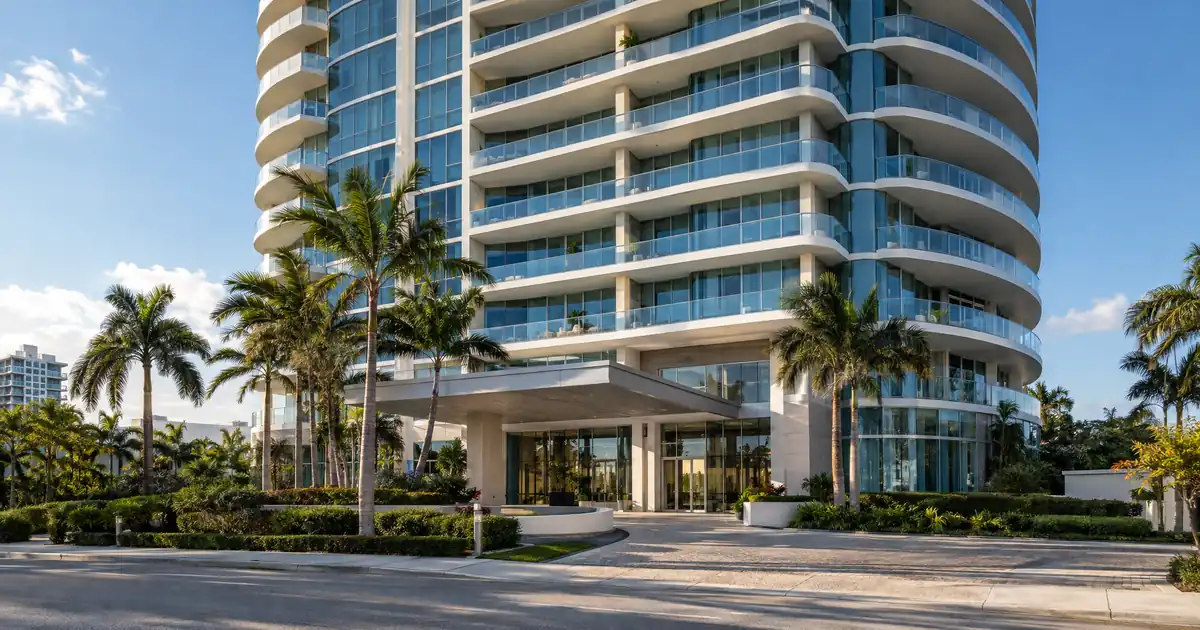
Condotel Eligibility Is Decided On A Short-term Rental DSCR Loan — The Quick Read: A condotel is reviewed on two separate tracks that both have to clear: the building itself, and the rental income. Lenders check whether the project operates like a hotel — front desk, rental pool, housekeeping — then check whether the documented short-term rental income covers the payment. In Lendmire’s network, condotels get financed up to 75% loan-to-value on a purchase and 65% on a refinance, capped at $1,500,000, subject to underwriting. Miss either track and the file stalls, no matter how strong the other one looks.
Key Terms Defined
Condotel — a condo unit inside a project that runs day-to-day like a hotel, with rental-pool participation, a front desk, or housekeeping built into the ownership structure.
Short-Term Rental Calculator
Run the STR numbers in your market
Rate source: Freddie Mac 30-yr average via FRED® — Federal Reserve Bank of St. Louis · effective Sep 17, 2026
Prefilled with local estimates — enter your nightly rate, occupancy, taxes, and insurance for a more accurate picture.
Short-term rental income is documented with a 12-month history or a market data report. Program parameters update from Lendmire’s centralized guideline source.
As of Sep 17, 2026 · General Freddie Mac market benchmark, not a Lendmire loan offer. Nightly rate, occupancy, taxes, and insurance are editable estimates. Qualifying income for short-term rentals varies by program — some use appraisal market rent, others use documented STR history or projections — and is confirmed in underwriting. Not a Loan Estimate, approval, or commitment to lend. Program availability and eligibility are subject to lender guidelines, credit approval, property review, and underwriting.
DSCR (debt-service coverage ratio) — a coverage ratio that divides the property’s rental income by its full monthly obligation; a ratio at or above 1.00 means the rent covers the payment.
Non-warrantable condo — a condo project that doesn’t meet standard agency eligibility rules, often because of high investor concentration, litigation, or commercial-style rental activity.
HO-6 policy — a personal walls-in insurance policy a unit owner carries on top of the building’s master policy, covering interior finishes and personal property the master policy skips.
Business-purpose loan — a loan made to a non-owner-occupied investment property rather than a primary residence, which is why DSCR loans are reviewed differently than a standard home mortgage.
What Actually Makes a Property a Condotel?
A building becomes a condotel based on how it operates, not what its sign says. Mandatory rental-pool participation, a front desk that checks guests in and out, and daily housekeeping are the classic markers. A project can be branded a “resort residence” and still get treated the same way if guests book nightly stays through a central desk.
Fannie Mae’s Selling Guide disqualifies any project that “operates as a hotel, motel, or resort or exhibits the characteristics of such properties” from agency financing. That single line explains why every condotel purchase or refinance with rental-income-based underwriting lands in the non-QM space. Agencies aren’t in that business. DSCR lenders are, but each one draws the line a little differently.
This matters because the label doesn’t decide anything on its own. A building with an on-site management company that only handles maintenance — not rental bookings — can sometimes avoid condotel classification even if it looks similar from the parking lot. The operating agreement is what a reviewer actually reads.
Why Conventional Financing Won’t Touch These Deals
Conventional and agency loans don’t allow condotels at all. That’s why almost every condotel purchase goes straight to non-QM loans instead. DSCR loans are built for non-owner-occupied investment properties. Because they are business-purpose loans for investors, lenders review them differently than a standard owner-occupied mortgage.
The exclusion rate tells the story. Fannie Mae’s Condo Status Finder shows only 3.6% of reviewed projects come back as ineligible. Condotel features show up as a common reason for this, along with insufficient master insurance and pending lawsuits. Overall, this is rare, but it happens mostly where hotel-style operations exist. That’s the group of properties DSCR underwriting is designed to serve.
The Two Gates a Condotel File Has to Clear
Every condotel DSCR file runs through a project-level screen and an income-level screen, and both have to hold up on their own. A clean building with weak income documentation stalls. Strong rental income behind a thin master insurance policy stalls too. Neither side gets a pass because the other looks good.
Gate one: the building. Underwriting a condotel file starts with the HOA declaration, the rental-management agreement, and any hotel-brand affiliation. The question is whether rental-pool participation is mandatory or optional, since that detail shapes how strict the review gets. Litigation and HOA financial health also get a look here — Condo-Approval.com notes that a delinquency rate above 15% signals an HOA that can’t reliably fund maintenance, a red flag reviewers weigh alongside condotel-specific characteristics rather than in isolation.
Gate two: the income. This is where most condotel files actually get built or broken. Standard rent-schedule forms used to document market rent weren’t built for nightly-rate properties. As appraisal trade press puts it, the form was built exclusively to estimate long-term monthly market rent, and relying on it for a short-term rental produces an artificially low coverage number that doesn’t reflect how the property actually performs — a real risk for any nightly-stay building, condotels included, per Class Valuation. In Lendmire’s network, short-term rental income gets documented through twelve months of operating history on a refinance, or the appraisal’s own short-term rental analysis on a purchase, counted at 80% of gross — not the long-term rent schedule at all. That distinction is what keeps a genuinely strong-performing condotel from getting undervalued on paper.
What Leverage Actually Looks Like for a Condotel
Condotels typically clear at 75% loan-to-value on a purchase and 65% on a refinance, capped at $1,500,000, through select programs in Lendmire’s wholesale network, subject to underwriting. That’s tighter than a standard rental condo, and it comes with a documented cash requirement — files at this size on most programs carry a $250,000 cash-in-hand condition, reflecting how much more conservatively the collateral gets treated.
Credit requirements step up with the file. The general floor across the network runs around 660, but files above $1,000,000 typically need something closer to 700, alongside a clean housing-payment history. Reserve requirements on most files run six months of PITIA held on the subject property, with first-time investors generally asked for closer to twelve.
On the short-term rental path, condotels included, no-ratio qualification is available only through select lenders in the network, with leverage and terms set by that program. Outside of that route, coverage still has to reach 1.00 or better on the documented rental income to hit standard leverage on these files. That’s a firmer line than on a long-term-lease rental, where a handful of lenders in the network will work with coverage below 1.00 at reduced leverage, subject to underwriting.
Looking at condotel files that pass through a wholesale network like this one, a clear pattern shows up. The properties that stall usually don’t have weak rental income. Instead, they stall because no one pulled the HOA’s rental-management agreement early enough to check if participation is required. Reviewing that document before underwriting starts saves a round trip almost every time.
Insurance Is Where a Lot of Condotel Files Go Sideways
A weak master insurance policy can quietly hurt a coverage ratio months into underwriting. That’s why it’s important to check it before submitting the file, not after. SoFi’s coverage breakdown explains the three common master-policy types: bare walls, single entity, and all-in. Because condotels have more guest traffic, lenders scrutinize their master policies more closely than they would for a standard condo.
If the master policy only covers bare walls, the owner needs a personal HO-6 policy to cover interior finishes. This dwelling coverage can cost a lot. Cover Forge USA estimates bare-walls dwelling coverage typically costs roughly $50,000 to $150,000 or more. Many people wrongly assume the HOA’s master policy covers everything — usually, it doesn’t. This gap has left many condo owners without enough protection after a loss. This coverage and premium decision affects the property’s monthly costs, which directly impacts the coverage ratio.
Edge Cases That Change the Outcome
Not every gray-area condotel gets the same answer, and a few patterns come up often enough to name directly.
Voluntary versus mandatory rental pools. A building where owners can opt into a rental program reads very differently than one where the HOA’s governing documents require it. Mandatory pooling is a much stronger hotel-operation signal and pushes a file further into condotel treatment.
Dropped hotel-brand affiliation. A property that loses its franchise hotel-brand management can shift classification, because operating characteristics — not the marketing name — drive the outcome.
New or short-history properties. A condotel with less than twelve months of operating history on a refinance doesn’t have the trailing income a lender wants to see. On a purchase, that gap gets bridged with the appraisal’s own short-term rental analysis instead — which is exactly why that analysis exists as a separate documentation path in the network’s guidelines.
Litigation severity, not litigation existence. A single lawsuit against an HOA doesn’t automatically sink a file. The financial-health trigger reviewers actually watch is a delinquency rate crossing that 15% threshold — a sign the association can’t fund its own upkeep — which matters more than whether any legal action exists at all.
DSCR vs. conventional financing
Two common ways to finance an investment property in this market. They qualify you differently — here’s how investors weigh them.
Why investors choose it
- Qualifies on the property’s rental income — no personal tax returns, W-2s, or pay stubs needed to document income.
- No personal debt-to-income ceiling to clear, so existing mortgages and obligations don’t cap your borrowing the same way.
- Can be closed in an LLC, keeping the property inside a business entity.
- Built for scaling — not held to the limit on number of financed properties that conventional financing applies.
- Underwriting centers on the deal: generally qualifies when the rent covers the payment, a 1.00x coverage ratio being a common baseline (confirmed in underwriting).
- Designed specifically for investment property, including long-term and, where the program allows, short-term rentals.
Where it’s strong
- Often the lowest ongoing financing cost for a buyer who fully qualifies on personal income — a fit for a first property or a cost-first purchase.
Trade-offs for investors
- Requires full personal income documentation and must fit within a debt-to-income limit — salary, existing debts, and other mortgages all count.
- Typically held in your personal name rather than a business entity.
- Caps how many financed properties you can carry, which can become a ceiling as a portfolio grows.
- Evaluates you as a borrower as much as the property, which usually means more paperwork.
How investors usually choose: a first or single property often optimizes for the lowest financing cost; portfolio builders often optimize for leverage, vesting in an LLC, and scaling past conventional caps. The right answer depends on your goals, the property, and current guidelines — both paths run through select lenders in Lendmire’s wholesale network, with eligibility and terms confirmed in underwriting.
Want to know how a property gets checked before anyone even looks at income? Lendmire’s guide to short-term rental property eligibility walks through those same checks, but from the property side. The condotel-versus-condo breakdown explains what makes the two different on paper.
What This Means for the Investor Actually Buying One
Buying a condotel means you’re shopping in the non-QM world from the first phone call, not as a fallback after a conventional lender says no. That affects leverage, documentation, and — worth thinking about now — how easy the unit is to resell to the next buyer, since they’ll face the same financing universe you did. The insurance gap can force real cash into the deal through a personal HO-6 policy, which changes the monthly obligation feeding your coverage ratio. And because standard rent-schedule appraisal tools don’t fit nightly-rate income, your documentation path looks different from a normal long-term-lease DSCR file from day one — not more restrictive, just structured around actual operating history instead of a projected lease. Rules on operating a short-term rental at all can vary by city, county, HOA, and property type, so confirming local permission for the specific unit belongs on the checklist before the loan application does.
For the fuller picture of how DSCR underwriting works end to end — beyond condotels specifically — Lendmire’s complete DSCR loans guide covers the mechanics from qualification through closing.
Tax treatment can depend on how the funds are used and how the property is held; investors should keep clear records and speak with a qualified tax professional before relying on any deduction.
Frequently Asked Questions
Does a condotel need a higher credit score than a regular rental condo?
Not necessarily higher across the board, but the size of the loan matters more than the property type. Files above $1,000,000 generally need credit closer to 700 rather than the 660 floor that applies to smaller loans, and that threshold applies to condotels the same way it applies to any DSCR file at that size.
Can I use projected short-term rental income if the condotel is new to me?
On a purchase, yes — the appraisal’s own short-term rental analysis fills that role instead of a trailing history you don’t have yet. On a refinance, most programs want to see twelve months of actual operating history before counting that income toward coverage.
Is no-ratio financing an option for a condotel?
It depends on the program. The short-term rental path, which condotels fall under, typically works from documented coverage of 1.00 or better to reach standard leverage. No-ratio qualification is available through select lenders in Lendmire’s network, with leverage and terms set by that program.
Why does the master insurance policy matter so much for a condotel loan?
Because a thin master policy pushes real cost onto the owner through a personal HO-6 policy, and that added premium factors into the monthly obligation the coverage ratio is measured against. A condotel’s guest traffic tends to draw closer insurance review than a standard owner-occupied-style condo would get.
Does one lawsuit against the HOA disqualify a condotel automatically?
Not on its own. Reviewers look at financial-health signals like an HOA delinquency rate crossing roughly 15%, which suggests the association can’t fund its own maintenance — that matters more than the mere existence of a legal claim.
Are you buying or refinancing a condotel and want to see how the numbers work? Lendmire can help you compare DSCR loan options. We look at the property’s rental income, the building’s classification, your credit profile, and your investment goals. Reach out at 828-256-2183 or request a quote to go over a specific file.
For current guidelines and terms, see Lendmire’s super jumbo DSCR loan programs page.
Self-employed borrowers can compare both super jumbo programs on Lendmire’s self-employed mortgages page.
About Lendmire
A DSCR-focused mortgage broker, Lendmire (NMLS# 2371349) places investor financing across 40 markets — 39 states plus Washington, D.C. — with DSCR eligibility generally reviewed by the lender on property cash flow instead of tax returns, subject to lender guidelines. Scotsman Guide named Lendmire a Top Mortgage Workplace in 2025 and 2026.
Investors focused on short-term rentals can review DSCR loans for Airbnb and short-term rentals.
Lendmire’s Top Mortgage Workplace recognition is documented by Scotsman Guide 2025 Top Mortgage Workplace and Scotsman Guide 2026 Top Mortgage Workplace.
Get Started
Ready to find the right loan for you?
In about 30 seconds you can review financing options available for your home or investment property. No commitment required.
Informational only. Not a Loan Estimate, approval, or commitment to lend. Program availability and eligibility are subject to lender guidelines, credit approval, property review, and underwriting.
References
1. Fannie Mae Selling Guide – Ineligible Projects (B4-2.1-03)
2. Fannie Mae Condo Status Finder
3. Condo-Approval.com – Fannie Mae Condo Approval Guide
4. Class Valuation – Why Form 1007 Can’t Be Used for Short-Term Rentals
5. SoFi – Do I Need Condo Insurance With an HOA?
6. Cover Forge USA – HO-6 Insurance Guide
Brandon Miller
Founder & CEO, Mortgage Loan Originator, Lendmire LLC
- Mortgage Loan Originator · NMLS# 1129696 · Verify on NMLS Consumer Access
- North Carolina Real Estate Broker · License# 343312 · Verify on NCREC
- North Carolina Insurance Producer · License# 19053198 · Property, Casualty, Life, Health · Verify on NAIC SBS
- Lendmire LLC · Firm NMLS# 2371349 · Verify firm licensure
Important disclosures. Lendmire (NMLS# 2371349) is a licensed mortgage brokerage. Lendmire is not a direct lender, depository institution, or financial advisor. All loan inquiries are subject to lender underwriting; this article does not constitute a commitment to lend. Rates, terms, and program guidelines are subject to change without notice and vary by borrower profile, property type, and state. Information in this article is general in nature and is not financial, legal, or tax advice. Equal Housing Opportunity. NMLS Consumer Access: nmlsconsumeraccess.org.


